Today, 1 in 6 kids have sensory processing difficulties, and a conservative estimate from one large kindergarten screening found that about 5% of children met screening criteria for Sensory Processing Disorder based on what their parents reported. Sensory issues in kids show up as sensitivity to everyday surroundings, from loud noises to scratchy clothing tags, which can cause distress and overwhelm. These everyday sensations can be difficult to tune out and may lead to severe emotional outbursts or a complete shutdown.
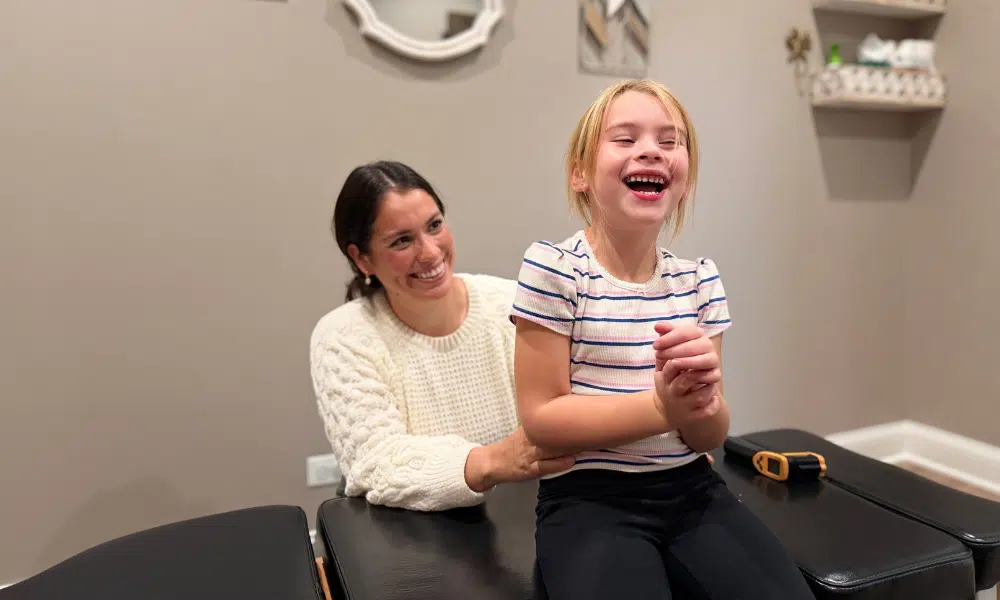
If your child’s reactions to sensory input feel confusing or exhausting, and every day has become a struggle for the whole family, you’re not alone. That was the case for Audrey’s family, as her Sensory Processing Disorder (SPD) challenges took over and only got worse the older she became. Just like Audrey, many children with autism spectrum disorder (ASD) experience sensory issues that limit their everyday joy.
Let’s explore what sensory issues are, what the signs look like, the underlying neurological causes, and the drug-free, nervous system-focused path that helps kids with sensory needs thrive.
What Are Sensory Issues?
Sensory issues refer to difficulties in receiving, processing, and responding to input from one or multiple senses. Most of us learned about five senses in school (sight, sound, smell, taste, and touch), but the nervous system relies on three more: proprioception (body awareness), the vestibular sense (balance and movement), and interoception (internal cues like hunger, temperature, and needing the bathroom).
Here’s what most parents never hear. When a child struggles with the outside world (the noisy cafeteria, the itchy sock), it’s usually because their internal sensory processing is disrupted first. The meltdowns you see are the visible result.
The real scientific story here centers around what’s called proprioception and mechanoreception, which are nerdy neurological terms for afferent, or incoming signals of movement into the brain and central nervous system. When you’re stressed, you go for a walk because movement calms your nervous system. Most children struggling with sensory issues have disrupted proprioceptive signals, causing abnormal “output” of energy, movement, and coordination as well.
When the nervous system is functioning well, children can filter important signals smoothly from irrelevant stimuli so the brain can focus on what matters. Sensory processing dysfunction creates traffic jams instead, leading to misinterpretation of critical sensory information and outsized reactions.
Sensory issues can manifest in three main ways, and many kids show a mix of all three:
- Hypersensitivity (over-responsivity) involves overreaction to stimuli, such as loud sounds, bright lights, or certain textures, causing distress.
- Hyposensitivity (under-responsivity) involves underreaction, requiring exaggerated input to register sensations.
- Sensory seeking involves frenzied efforts to obtain sensory stimulation to fulfill neurological needs.
Sensory Processing Disorder isn’t listed in the DSM-5, so sensory struggles are often folded into autism, ADHD, or anxiety, or flagged by an occupational therapist using questionnaires like the Sensory Profile. A 2020 review puts prevalence at 5% to 15% of children, yet notes many health professionals still aren’t familiar with it, leaving families frustrated. Too often, these symptoms get written off as a phase instead of traced to their neurological root.
What Are the Signs of Sensory Issues in Kids?
Every child’s sensory profile is different, and signs shift with the day, the setting, and how much stress your child is already carrying. Here’s what parents most commonly notice.
Over-responsive (sensory avoiding) signs:
- Covering ears at everyday sounds like the vacuum or hand dryers
- Melting down over clothing tags, seams, or socks
- Extreme picky eating or gagging on certain food textures
- Fighting haircuts, teeth brushing, or face washing
- Big reactions to small changes in routine
Under-responsive and sensory seeking signs:
- Crashing, jumping, spinning, or climbing on everything
- Chewing on shirts or putting objects in the mouth
- Unusually high pain tolerance
- Seeming “checked out” or slow to respond to their name
Motor and body awareness signs:
- Clumsiness or bumping into things
- Trouble with fine motor tasks like buttons or holding a pencil
- Poor posture or low muscle tone
Clinically, we often see two patterns: the “raging bull” who can’t sit still (sympathetic overdrive) and the “drunken bull” who’s uncoordinated. Many kids are both. And a nervous system that stays in overdrive long enough runs out of gas, so a once-hypersensitive child starts to look shut down. That’s neurological exhaustion, not a child growing out of it.
What Causes Sensory Issues in Kids?
Genetics alone can’t explain sensory dysfunction. Instead, stressors accumulate over time and hinder healthy neurological development. I often refer to the combination of factors that can lead to sensory issues as The Perfect Storm™, the framework I developed. This concept describes how a series of events and stressors, often beginning early in life, can create a cascading effect that disrupts the normal development and function of the nervous system.
High levels of stress during pregnancy trigger the first phase, overwhelming the mother’s nervous system and shifting it into sympathetic overdrive. This stress can be passed along to the baby, disrupting development of the calming vagus nerve and the parasympathetic side of the infant’s nervous system. Research shows that higher maternal depression and anxiety symptoms during pregnancy are linked to more sensory avoidance in toddlers at 18 months.
Birth trauma continues the sequence. A 2022 pilot study found that children born prematurely or by C-section were more likely to show Sensory Processing Disorder than full-term, vaginally born children. Forceps and vacuum extraction, in particular, can twist the upper neck, which houses key sensory pathways. This creates subluxation, a combination of misalignment, fixation (joints that are stuck and not moving properly), and the neurological interference that disrupts communication between the brain and body. The upper neck and brainstem area is also home to the most important sensory processing and nervous system regulation nerve in the whole body, the vagus nerve.
Subluxation then obstructs drainage, making children more susceptible to fluid congestion and ear infections. Repeated use of antibiotics disrupts the balance of the gut microbiome, which is vital for neurological health.
Many parents are told their child will grow out of it. Clinically, we see the opposite. Kids don’t grow out of colic and into calm. They grow into tantrums, meltdowns, and developmental delays, because the nervous system stress underneath never got addressed.
Ultimately, sustained sympathetic stress, impaired drainage, and inflammation together are a major driver of sensory issues. Research shows that children with severe sensory modulation challenges tend to have lower parasympathetic activity at rest, meaning the calming, regulating side of the nervous system isn’t pulling its weight.
Think of it like a car. The Sympathetic Nervous System is the gas pedal, and the Parasympathetic Nervous System is the brake pedal. Most sensory kids have the gas jammed down and a brake that never fully developed. Even at rest, they’re idling high, one loud sound or schedule change away from redlining.
The Neurological Communication Breakdown
Sensory processing depends on how well our nerves communicate with the brain, especially the vagus nerve. Some nerves, like the vestibular, trigeminal, and vagus nerve, can be easily affected by birth trauma, inflammation, and subluxation.
The vagus nerve runs the body’s “rest, regulate, and digest” system. An injury along its path, from the neck to the chest and abdomen, makes it harder to recover from “fight or flight.”
The vestibular and trigeminal nerves send sensory signals directly to the brainstem, which controls our reactions to stimuli. When they aren’t working properly, children can have more extreme reactions and developmental delays. Clinically, the upper neck is where we most often find subluxation patterns that line up with a child’s sensory struggles.
Objective Heart Rate Variability scans can show how neurological interference disrupts these pathways, so Neurologically Focused Pediatric Chiropractors can pinpoint the interference and restore proper movement (proprioception), tone, and function.
How Do Sensory Issues Affect Daily Life?
Chronic hypersensitivity or hyposensitivity touches every part of a child’s day. Simple tasks like falling asleep, getting dressed, or going to a birthday party can become overwhelming and exhausting.
- Learning can be affected by sensory overload, which can trigger meltdowns, attention difficulties, and underachievement.
- Social skills can suffer when kids misread social cues or withdraw to avoid overstimulation.
- Mental health is strained, as trying to self-regulate amid neurological chaos taxes behavioral and emotional control.
- Speech and motor development can lag, since both depend on clean sensory input.
- Autonomic imbalance from constant hyperarousal can show up as sleep problems, chronic constipation, bedwetting, and stomach pains.
Unfortunately, children often receive diagnoses or labels like ADHD, autism spectrum disorder, anxiety, or Sensory Processing Disorder without anyone addressing the root cause. Transformation can begin when the neurological storm starts calming down.

How Can Neurologically Focused Chiropractic Care Help Sensory Kids?
Occupational therapy is the most common conventional support, using sensory integration activities and a personalized “sensory diet” of movement and heavy work. OT, physical, and speech therapy are valuable, but they often aren’t enough on their own, because they’re building on a nervous system still stuck in the storm. You can’t build a house on sand and expect it to hold. The subluxation and nervous system imbalance driving sensory dysfunction must be addressed first.
It All Starts with INSiGHT Scans
The most important first step for parents concerned about their child’s sensory issues is a set of INSiGHT Scans. This technology uses three sensory-friendly, non-invasive scans (HRV, sEMG, and thermal) to show whether neurological dysfunction, subluxation, and dysregulation exist in your child’s nervous system, to what extent, and where. Nothing goes into your child’s body. The scans simply read information from it.
The most important scan for sensory issues in kids is Heart Rate Variability (HRV), which measures autonomic activity, vagal tone, and overall nervous system adaptability. sEMG shows how much tension the motor system is carrying, and thermal shows how well autonomic regulation is working along the neurospinal system.
It’s important to note that this technology does not diagnose medical conditions, and Neurologically Focused Chiropractic Care is certainly not a treatment or cure for Sensory Processing Disorder or any other condition, not even back pain. Instead, these INSiGHT Scans help us track down the root cause of nervous system dysfunction and dysregulation, and build customized care plans and adjusting protocols to help shift the nervous system back into a state of balance, regulation, and resilience.
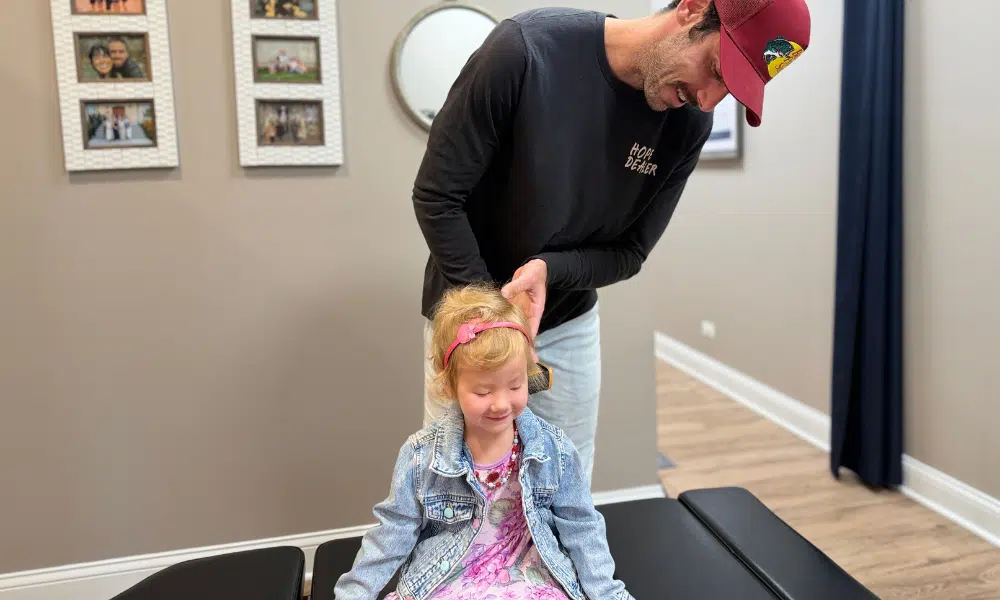
Paired with your child’s case history, these scans set a baseline for a personalized care plan. Then gentle, specific adjustments help release built-up sympathetic tension and stimulate the parasympathetic system and vagus nerve, restoring balance and regulation. Healing from the storm doesn’t happen by shutting off the gas pedal. It happens by reawakening the brake pedal.
As regulation improves, families commonly notice changes like:
- better gut and digestive function
- calmer responses to previous triggers
- improved sleep quality
- refined motor skills and coordination
- a happier disposition with more resilience and adaptability
Results vary by child. Clinically, we also see OT, speech therapy, and sensory diets work far better once the nervous system is regulated. Fix the foundation first, and everything else sticks. For more on how this care fits with other therapies, read our guide on chiropractic and SPD.
More Tips on Supporting Kids with Sensory Issues
Alongside care that retrains neurological pathways, a few day-to-day changes help sensory kids:
- Build in heavy work like carrying groceries, climbing, or outdoor chores for calming proprioceptive input
- Keep routines predictable and give a heads-up before transitions
- Protect bedtime and quality sleep
- Offer a quiet, dim space or noise-canceling headphones when your child is overwhelmed
- Keep a simple sensory diary of triggers to share with your provider
- Work on your own regulation too, since kids borrow calm from the adults around them (co-regulation)
Stay flexible with accommodations while gently encouraging social connection at a comfortable pace.
The Roadmap to Transformation
Sensory issues shouldn’t define a child’s future or your family’s days. With proper neurological care, a child’s nervous system can regain flexibility and progress toward developmental milestones, friendships, and focus.
Sensory kids also carry real gifts: situational awareness, an eye for patterns others miss, deep passion, and outside-the-box creativity. When their nervous system is regulated, those traits become superpowers instead of sources of overwhelm.
The first changes many families see are better sleep, appetite, and digestion as vagus nerve function comes back online. As concentration, coordination, and emotional regulation improve, real breakthroughs follow.
Through it all, we don’t guess. We test. Your child’s first INSiGHT Scan shows where their nervous system is today, and progress scans show whether it’s responding, with HRV trending toward healthier regulation and tension patterns getting more organized. If the data says we’re on track, we keep building. If something needs to shift, we adjust. That keeps care honest and anchored to what’s really happening inside.
Visit the PX Docs Directory to find a Neurologically Focused Chiropractor near you. Your child isn’t broken, and they aren’t being difficult. Their nervous system has been overwhelmed, and it is designed to heal.