
You can do everything right, the counseling, the therapy, the safest home imaginable, and still watch your child swing from rage to shutdown like somebody else is flipping the switch.
Yes, trauma is stored in the body, and the place it gets stored is the nervous system. When a child can’t escape or process an overwhelming stressor, the Autonomic Nervous System holds onto the survival response it built to get through it. That response then keeps running physically: in heart rhythm, muscle tone, hormone output, and digestion, long after the event itself has ended.
So when parents tell us they’ve done the talk therapy, the counseling, and sometimes the medication and their child is still stuck, we don’t hear failure. We hear that there’s one place nobody has been able to reach yet. Clinically, the pattern is hard to miss: a child who is wound up and worn out at the same time, hypervigilant one minute and completely checked out the next.
So let’s look at what’s actually happening. Where stored trauma lives in the body, why talking about it isn’t enough to release it, and how it can be measured instead of guessed at.
Is Trauma Stored in the Body or Only in Memory?
It’s stored in both, but the body is where it keeps running the program. Researchers call this biological embedding: the process by which early adverse experience alters how the nervous, endocrine, immune, and metabolic systems function. Research has shown that childhood psychosocial adversity produces wide-ranging changes across neural, endocrine, immune, and metabolic physiology, including neuroendocrine stress dysregulation and chronic inflammation.
That’s a very different claim than “trauma is emotional.” It means the experience gets written into how the body operates day to day.
The American Academy of Pediatrics reached the same conclusion from a different direction. In their technical report on toxic stress, they laid out an ecobiodevelopmental framework describing how early experience leaves a lasting signature on brain architecture and long-term health, with prolonged activation of the stress response as the mechanism doing the damage.
Here’s the reframe that matters most for parents. Trauma isn’t necessarily the event. Trauma is what the nervous system hasn’t yet been able to process, resolve, and repair. Two children can go through the same thing and come out of it completely differently, not because one is stronger, but because one system had the capacity to discharge the stress and the other one didn’t. When you can’t clear it, you store it.
The Four Systems That Hold Stored Stress
Stored trauma isn’t floating somewhere vague. It shows up in four measurable systems: the Autonomic Nervous System, muscle tone, the hormone axis, and the gut. Each one leaves a physical fingerprint, which is exactly why “it’s all in your head” has never matched what parents are actually watching.
The Autonomic Nervous System. This is the automatic side of the nervous system, the part running heart rate, breathing, digestion, immune response, and sleep without you thinking about it. It has two sides. The sympathetic branch is the gas pedal (fight, flight, or freeze). The parasympathetic branch is the brake pedal (rest, digest, and regulate). A child carrying stored survival stress lives with a stuck gas pedal and a brake that barely works, a state called sympathetic dominance.
The clearest window into this is heart rate variability, or HRV, which measures the tiny beat-to-beat variation in heart rhythm and reflects vagal tone, the working capacity of the vagus nerve. The vagus nerve is the longest cranial nerve in the body, carrying parasympathetic signals between the brainstem and the heart, lungs, and digestive system. A 2020 meta-analysis found reduced parasympathetic activity and elevated heart rate in people with PTSD compared with controls, with medium effects for total variability.
Worth saying plainly: this evidence isn’t uniform. A three-level meta-analysis found no blanket association between childhood adversity and resting vagal activity across all samples. The association appeared specifically in samples that included children with a psychiatric diagnosis, and where the adversity was direct, such as maltreatment. In other words, it shows up most clearly in the kids who are visibly struggling.
- Muscle tone. Psychological stress raises muscle tension, and it does so in a predictable place. Studies have measured surface EMG activity in the trapezius muscle across 62 participants and found that mental stress alone significantly increased muscle activity, with no physical load required. Blood pressure, heart rate, and salivary cortisol rose alongside it. That’s the guarded, shoulders-up posture you can spot across a room.
- The hormone axis. The HPA axis (hypothalamic-pituitary-adrenal) is the slower stress system that pushes cortisol into circulation. When it stays switched on for years, you get the pattern of dysregulation parents describe as a kid who is exhausted but can’t settle.
- The gut-brain axis. The gut and brain talk constantly through the vagus nerve, the enteric nervous system, and immune signaling. An overview of the microbiota-gut-brain axis documented how early-life factors, including birth mode, antibiotic exposure, and environmental stress, shape this system during a formative window. Ever had a nervous stomach? Now imagine living there.
What Does Stored Trauma Look Like in a Child?
It looks like a nervous system stuck in protection, not a child making bad choices. The most common presentation is a child who is wound up and worn out simultaneously, swinging unpredictably between overdrive and shutdown within the same hour. Parents often describe it as living on a roller coaster nobody else can see.
Common signs of stored survival stress in children include:
- Hypervigilance, or scanning constantly for what might go wrong
- Explosive reactions to small triggers, then genuine remorse afterward
- Shutdown, dissociation, or “spacing out” that looks like not listening
- Shoulders and neck held high and tight, a braced or guarded posture
- Trouble falling asleep, staying asleep, or waking up rested
- Digestive problems including constipation, reflux, or poor appetite
- Sensory defensiveness to sound, touch, clothing tags, or crowds
- Difficulty with transitions, even pleasant ones
- Frequent illness, inflammation, or a slow-to-recover immune system
- Compliance that looks like good behavior but is actually a fawn response
Children carrying stored survival stress frequently also carry diagnoses of Autism, ADHD, Sensory Processing Disorder, or anxiety. That overlap isn’t coincidence. All of these conditions share a common thread of Autonomic Nervous System dysfunction: a sympathetic branch locked on, a vagus nerve underpowered, and a system that can’t shift states on demand. Pediatric dysautonomia, the term for this autonomic dysregulation in children, is the shared mechanism underneath conditions that are look at as entirely separate problems.
Why You Can’t Talk a Nervous System Out of Survival Mode
Because you can’t think your way out of something that’s wired into the body. Talk therapy, counseling, and cognitive work are genuinely valuable, and we often recommend them. But they require a nervous system regulated enough to receive them. A child sitting in a counselor’s office with their system pinned in sympathetic dominance is not in a physiological state to integrate what’s being said.
The parasympathetics are what let a person connect, reflect, and process emotion. When vagal tone is depleted, a family can be doing everything right, and the work still won’t stick. Not because the therapy is bad. Because the foundation underneath it is missing.
This is the piece most families have never been offered. If trauma stores neurologically and physically, then healing has to happen neurologically and physically too.
How The Perfect Storm™ Loads a System Before Trauma Ever Arrives
Some children arrive at a traumatic experience with far less reserve than others, and the reason usually starts long before the event. The Perfect Storm™, a framework developed by Dr. Tony Ebel, describes the accumulation that sets this up: prenatal stress, then birth trauma from interventions like C-section, forceps, vacuum extraction, or prolonged labor, then early childhood stressors including repeated antibiotics, chronic ear infections, and toxic load. Each layer reduces a developing system’s capacity.
The research supports the timing. A review on fetal autonomic development identified critical windows during gestation when the vagus nerve and Autonomic Nervous System are most vulnerable to disruption. Research shows that maternal cortisol during pregnancy is associated with alterations in fetal heart rate and HRV.
Physically, this accumulation produces subluxation. Not the medical definition of a slipped joint, but a three-part pattern within the neurospinal system:
- Misalignment, fixation (loss of normal motion)
- Neurological interference that disrupts signaling between brain and body.
- That third component is the one that matters.
Subluxation is a communication problem first and a structural one second.
So a child who then goes through emotional or physical trauma isn’t starting from zero. They’re starting from a system already running hot with less room to absorb it.
Where Stored Stress Sets Up Shop in the Neurospinal System
Predictable locations exist, and they aren’t where most people assume. Across twenty years of clinical scanning, the pattern in children with significant stored stress shows up first at the cervicothoracic junction, the transition between the neck and upper back where the traps and shoulders anchor. That’s the guarded posture made physical, and it lines up directly with the trapezius EMG findings above.
The second common location sits in the lower thoracic region around the adrenals, the fight-or-flight glands producing adrenaline and cortisol. The third sits just below that at the thoracolumbar junction, tied to digestion, which is why so many of these kids end up with gut problems that nobody can explain. Fourth is the sacrum and pelvis. Fifth, and this surprises people, is the upper cervical and brainstem region.
Upper cervical is usually the first place a chiropractor looks, and in acute cases it often is the primary site. But stored stress migrates. The longer it sits, the deeper it moves into the system, and the presentation changes with it.
This is why sequencing matters so much in care, and why nervous system dysregulation that’s been building for years doesn’t respond the same way as something recent.
How Is Trauma Stored in the Nervous System Measured?
Through objective neurological scanning rather than symptom reporting alone. INSiGHT scanning technology, developed by the Chiropractic Leadership Alliance (CLA) and used by Neurologically-Focused Chiropractic Care providers, runs three assessments: HRV to measure autonomic balance and reserve, surface EMG (sEMG) to measure neuromotor tone and tension patterns, and thermal scanning to measure autonomic regulation of the organs.
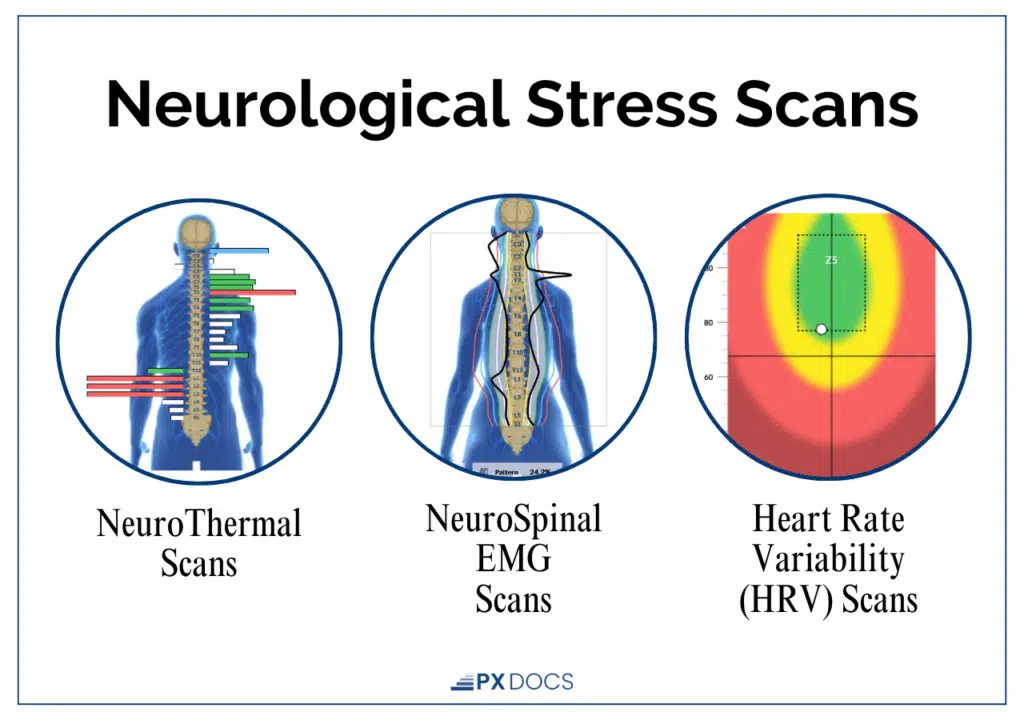
INSiGHT scans don’t diagnose Autism, ADHD, PTSD, or anything else. What they do is show where a nervous system currently sits and how it’s organized.
In children with significant stored stress, HRV tells the clearest story. The scan produces two scores. One reflects overall reserve capacity, essentially how charged the battery is. The other reflects balance between the sympathetic and parasympathetic branches. Kids carrying years of survival stress frequently show depleted reserve alongside a balance score skewed hard toward sympathetic dominance. Some move past that into a state where both branches read as depleted, which is a different and deeper picture than simple fight-or-flight.
The sEMG scan tends to light up through the cervical and thoracic regions in these cases, matching the guarded tension pattern. The thermal scan picks up the neuro-immune and neuro-digestive consequences: the kids who are sick constantly, inflamed constantly, or living with hormones that never settle.
What Healing From Stored Trauma Actually Looks Like
It isn’t erasing the past. You can’t, and anyone promising that is selling something. What’s possible is changing how the nervous system responds to what already happened.
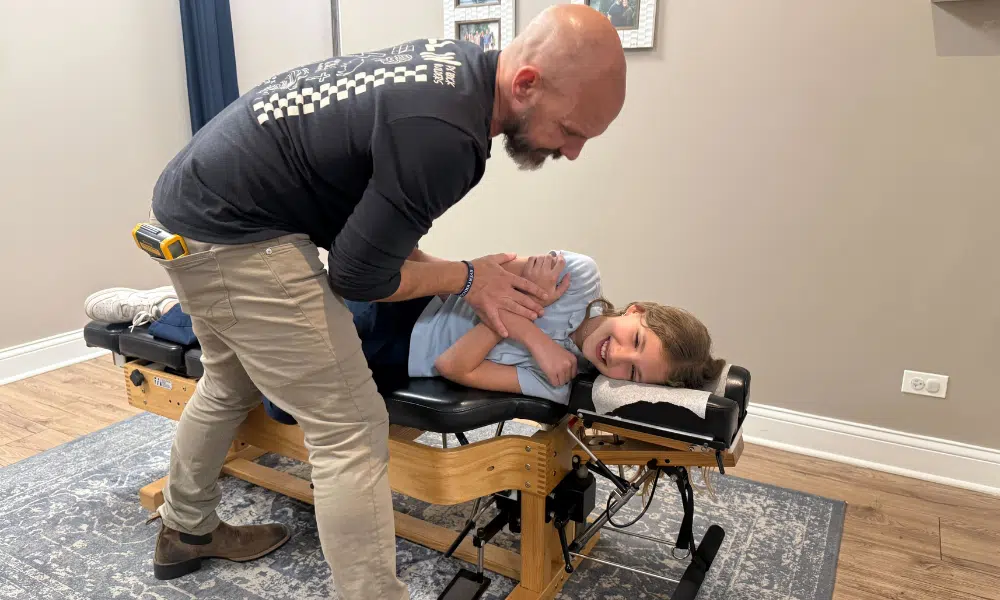
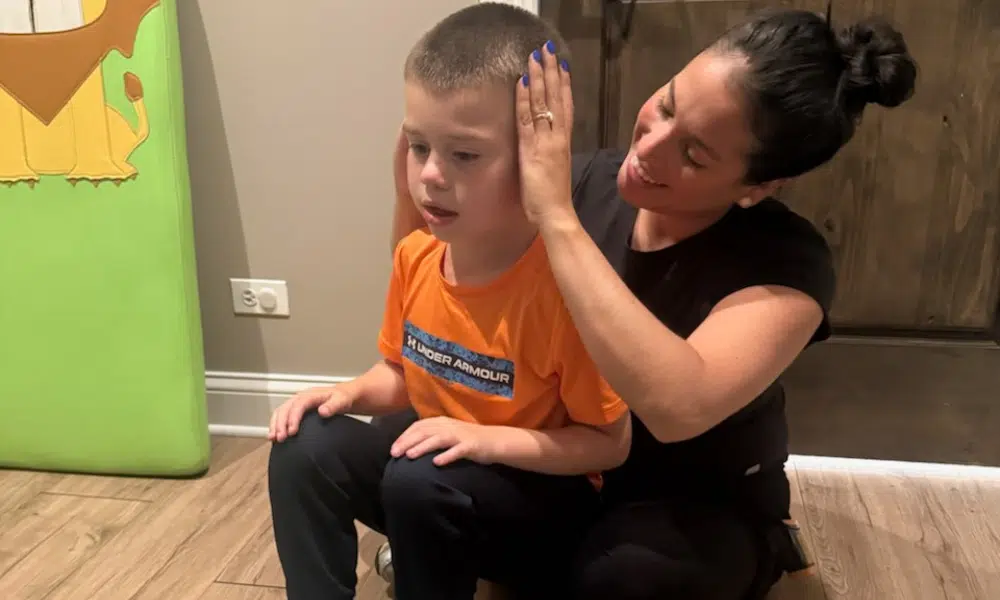
Neurologically-Focused Chiropractic Care works by addressing subluxation patterns within the neurospinal system and the neurological interference they create, supporting the system’s ability to shift out of a locked survival state. Nerves that fire together wire together, and it works both ways. The same mechanism that installed a protective pattern can install a better one, given enough repetition over enough time.
That’s why care plans for these cases run longer and go deeper than a typical case. The stress has been there for years. The rebuild takes a while too. What families usually notice first isn’t the headline behavior. It’s sleep getting deeper, digestion settling, a shorter recovery window after a hard moment. Those are regulation signals, and they tend to show up before the things you’re actually waiting for. Behavior and emotional capacity follow the physiology, not the other way around, so watching for the small markers keeps expectations honest during the stretch where progress is real but quiet.
And here’s what usually happens once that foundation improves: the other work starts landing. The counseling begins to stick. The sensory and occupational therapy produces more. The child who couldn’t sit through a conversation can finally have one. None of these approaches compete with each other. They just have an order.
Your child isn’t broken, and they won’t be stuck here forever. Their nervous system is doing exactly what it was designed to do. It’s protecting them the only way it knows how.
Where This Leaves You
Stored trauma is real; it’s physical, and it lives in the nervous system rather than only in memory. It shows up in heart rhythm, muscle tension, hormone output, and digestion. And critically, none of that is something you have to take on faith.
We don’t guess. We test. A baseline set of INSiGHT scans shows where your child’s nervous system actually sits today: how much reserve is left in the HRV, whether the balance has skewed into sympathetic dominance, and where tension is held through the neurospinal system. That’s the starting point, not a formality.
From there, repeat scans at intervals show whether the system is genuinely responding. For a child carrying stored survival stress, the signal we watch most closely is HRV reserve climbing back up, because that’s the capacity that makes everything else in their care possible. If the numbers confirm we’re on track, we keep building. If they show something isn’t moving, we change the plan before more months go by. That’s what keeps care anchored to what’s actually happening inside your child, not how things look on a hard week.
If your child has been through something, and you’ve done the right things and still feel like a piece is missing, it’s worth finding out where that stress landed. Sit down with a PX Doc, walk through the history, and get the scans. You can find a Neurologically-Focused Chiropractor near you in the PX Docs Directory.
This article is educational and isn’t medical advice. Please talk with your child’s healthcare provider about their specific situation. Neurologically-Focused Chiropractic is not a treatment or a cure for any condition, not even back pain.