
Your kid can’t sit still. Waistbands and shirt tags set them off. The bedwetting hasn’t stopped, and everyone keeps telling you it’s just a phase. The Spinal Galant reflex is an involuntary, brainstem-driven movement pattern that appears around 32 weeks of gestation and normally fades between 4 and 6 months of age. Stroke one side of a newborn’s back and the trunk curls toward that side with the hip swinging up. It’s thought to help a baby wiggle down the birth canal. When it’s still firing well past infancy, that’s a retained Spinal Galant reflex.
Here’s where most of what you’ll read online stops short. It tells you the retained reflex is the root cause of the fidgeting and the wetting, then hands you a set of exercises. That’s partially accurate, but it’s incomplete. Something has to be holding that reflex in place, and when families work the reflex hard and leave that something untouched, progress tends to stall.
So let’s walk through it: what this reflex is, what a retained one actually looks like, how doctors test for it, and what’s keeping it switched on in the first place.
What Is the Spinal Galant Reflex?
The Spinal Galant reflex, also called truncal incurvation, is one of a handful of primitive reflexes every baby is born with. Primitive reflexes are automatic motor responses run out of the brainstem, not the thinking part of the brain. They handle survival and early movement before a child has any voluntary control. As the cortex matures, it gradually inhibits them, usually between 4 and 6 months of age.
Galant has a specific job. During labor, pressure from the uterine wall against one side of a baby’s lower back triggers lateral flexion on that side. That wiggle helps the baby work down and out. The same pattern later feeds hip mobility for crawling and walking.
What matters for parents is the timing. A strong Galant response in a newborn is a good sign. The same response in a seven-year-old signals that the nervous system never finished a developmental step it was supposed to. And it’s more common than most parents expect. A study of healthy 4 to 6 year olds found that 65% still carried primitive reflexes at a residual level, with only 11% showing none at all.
What Are the Signs of a Retained Spinal Galant Reflex?
A retained Spinal Galant reflex shows up as involuntary reactions to light touch or pressure along the lower back, plus the downstream effects of a body that can’t settle. Because clothing, chair backs, and car seats all brush that trigger zone, these children look restless in ways that get read as behavior problems rather than neurology.
Common signs of a retained Spinal Galant reflex in children include:
- Constant fidgeting, squirming, or rocking while seated
- Bedwetting past the age it would typically resolve
- Strong dislike of waistbands, belts, tags, or fitted shirts
- Hip rotation to one side when walking or standing
- Trouble sitting through meals, classes, or car rides
- Poor concentration and short working memory
- One-sided posture, or a trunk that rotates when the child writes
- Difficulty with fine motor tasks like handwriting
Two of those, enuresis and seated fidgeting, are specifically documented alongside poor concentration and fine motor difficulty in the clinical literature on retained Galant. The postural piece has support too. A 2018 study linked persistent primitive reflexes, including Galant, to measurable trunk rotation in early school-age children.
Retention isn’t all-or-nothing either. A 2026 systematic review found that most children without neurodevelopmental diagnoses carry at least one persisting reflex without obvious consequence, but that higher levels of persistence, seen in roughly 55% of children studied, tracked with lower fundamental motor skills and cognitive scores. Degree matters more than presence.
How Do You Test for the Spinal Galant Reflex?
Testing is simple and takes seconds. With an infant held face-down in ventral suspension, or an older child on hands and knees, the examiner strokes down one side of the back about a centimeter out from the spinal column, from shoulder height toward the hip. A retained reflex produces flexion toward that side, a hip hike, twitching, or visible bracing. Both sides get tested separately, because asymmetry is meaningful on its own.
A few things worth knowing before you try this at home. Technique changes the answer. Improper positioning or stimulus produces false positives and false negatives, which is one reason primitive reflex testing has never been fully standardized across professions. A child who giggles and wiggles because it tickles has not demonstrated a retained reflex.
More importantly, the test answers one question and only one question. It tells you that the reflex is still active. It tells you nothing about why. That distinction is where most care plans go sideways.
Where a Retained Reflex Actually Comes From
Primitive reflexes get inhibited when a child’s nervous system is regulated enough to move forward developmentally. When that system is stuck in defense mode, it holds on. So a retained Spinal Galant reflex is better understood as a readout of Autonomic Nervous System dysfunction than as a standalone problem to be drilled away.
Think of the Autonomic Nervous System as a car with two pedals. The sympathetic branch is the gas pedal, the fight-or-flight side. The parasympathetic branch is the brake pedal, the rest-and-digest side. A regulated child moves between the two. A child in sympathetic dominance has a stuck gas pedal, and a body that believes it’s under threat does not release its protective reflexes. It keeps them loaded.
That state has a name. Pediatric dysautonomia is dysfunction of the Autonomic Nervous System, the system running heart rate, digestion, immune response, and sleep without any conscious input. In children, it shows up as broad nervous system dysregulation rather than one tidy symptom.
Children with a retained Spinal Galant reflex frequently also carry diagnoses of Autism, ADHD, or Sensory Processing Disorder. That overlap isn’t a coincidence. All four run through the same autonomic machinery: a nervous system biased toward sympathetic dominance, with poor sensory gating and a weak parasympathetic brake underneath. Researchers documented elevated rates of retained reflexes in children with autism. A separate study found primitive reflex disinhibition in ADHD, and other researchers have tied reflex activity to sensory profile differences in otherwise healthy preschoolers. Same root, different branches.
The vagus nerve sits at the center of that imbalance. It’s the longest cranial nerve in the body, carrying parasympathetic signals between the brainstem and the heart, lungs, and digestive tract. Vagal tone, a measurable marker of how well that nerve is working, tracks with immune regulation, emotional resilience, and digestion. Weak vagal tone means a weak brake pedal.
And this can be set before a child is ever born. A 2024 longitudinal study followed 233 mothers and their infants across the first year of life and found that exposure to prenatal stressors was associated with altered infant heart rate variability, suggesting changes in vagally mediated function and in a baby’s ability to recover after stress. High-risk newborns show the pattern too: infants born premature or with low birth weight, perinatal asphyxia, or prenatal substance exposure demonstrate abnormal primitive reflex responses at much higher rates.
Do Kids Grow Out of a Retained Spinal Galant Reflex?
Some do. Many don’t, and the ones who don’t tend to be the children whose nervous systems are carrying the most load. Reflex inhibition isn’t a calendar event that happens on schedule regardless of conditions. It happens when the brain has the regulation and the maturity to take over, so a child whose system is stuck in defense mode can sit at the same level of retention for years.
The research reflects that. Comparing preschoolers to school-age children, reflex activity does drop with age for a good portion of kids, which tells us self-integration is real. But active reflexes still show up in a large share of the school-age population, meaning spontaneous resolution doesn’t arrive at the same rate for everyone.
This is where the “wait and see” advice quietly costs families time. A five-year-old who squirms through dinner and wets the bed is usually described as immature, and the plan is patience. Two years later, the squirming has become a focus problem at school, and the bedwetting has become a confidence problem at sleepovers. Nothing was outgrown. The demands just changed, and the same underregulated system started failing in new places.
Dr. Ebel puts it bluntly: kids don’t grow out of this; they grow into it. Waiting isn’t neutral. It’s a choice to let the pattern keep compounding while the window of greatest neuroplasticity narrows.
The Perfect Storm™ Behind a Stuck Nervous System
If sympathetic dominance is what’s holding the reflex, the next question is what caused the sympathetic dominance. Dr. Tony Ebel calls the answer The Perfect Storm™, and it’s a sequence, not a list.
It usually starts before birth. High-stress pregnancies, fertility struggles, and chronic maternal stress shape the tone of a baby’s developing nervous system, which is exactly what the prenatal stress research above points to.
Then comes birth trauma. C-section, forceps, vacuum extraction, prolonged labor, cord complications, and other factors all put mechanical strain on a newborn’s head, neck, and upper neurospinal system. That’s the exact real estate where the brainstem and vagus nerve live. Physical strain there creates subluxation, which means three things occurring together:
- A physical misalignment
- Fixation where the joint stops moving the way it should
- Neurological interference that garbles the signals traveling between brain and body.
Early childhood piles on from there. Repeated ear infections, courses of antibiotics, feeding struggles, falls, and constipation each add another load to a system already running hot.
Now look at where the Galant reflex sits in that chain. The reflex didn’t cause the storm. It’s downstream of it. It’s the middleman, not the origin. And once it’s retained, it does feed back into the loop, adding more sensory noise and more sympathetic activation. That’s real. It’s just not the first.
Why Reflex Integration Exercises Often Stall Out
Reflex integration work is legitimate. Occupational therapists, physical therapists, and developmental specialists doing movement-based reflex work help a lot of kids, and there’s evidence behind it.
The problem isn’t the tool. It’s the order.
Clinically, we’ve watched what happens when a child in deep sympathetic dominance gets loaded with intensive reflex drills, vestibular work, and visual therapy before their Autonomic Nervous System has any stability underneath. Sometimes nothing moves. Sometimes things go backward, with old sensory reactions and behaviors resurfacing. A system with no reserve capacity doesn’t have much left to give when you ask it to reorganize.
Dr. Ebel spent years running a multi-provider clinic built around that exact model, stacking reflex work, vestibular training, vision therapy, and biomedical protocols early and all at once, before concluding that results got worse the more they piled on up front. The shift wasn’t to abandon those therapies. It was to sequence them. Address the neurological foundation first, then bring in the movement work, when the child’s system can actually absorb it.
It’s a recipe problem. You can have every right ingredient and still ruin the dish by adding them in the wrong order.
This is also why so many parents land here after trying everything. The supplements, the elimination diet, the exercises, the therapies- none of it was wrong. It was asked to work on a system that had no capacity to respond. Change that, and the same interventions often start producing the results they were supposed to produce the first time.
Measuring What’s Underneath With INSiGHT Scans
You can see a retained reflex. You can’t see vagal tone, sympathetic load, or where a child’s neurospinal system is holding tension. That’s what neurological scanning is for.
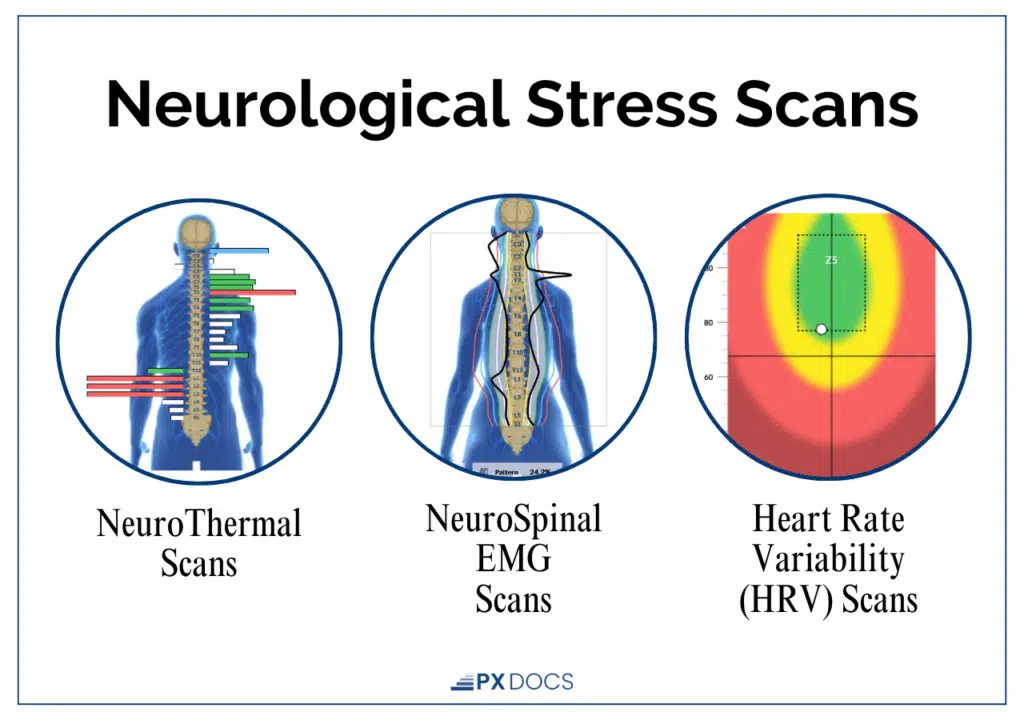
INSiGHT scanning technology, developed and owned by the Chiropractic Leadership Alliance, gives doctors practicing Neurologically-Focused Chiropractic Care three measurements.
- Heart rate variability (HRV) measures autonomic balance and a child’s reserve.
- Surface electromyography (sEMG) maps muscle tension patterns along the neurospinal system.
- Thermal scanning reflects autonomic function and regulation.
To be clear about what these are and aren’t: INSiGHT scans are not a treatment or a cure for any condition, not even back pain. They don’t diagnose Autism, ADHD, or anything else. They measure how the nervous system is functioning, which is different and more useful than guessing.
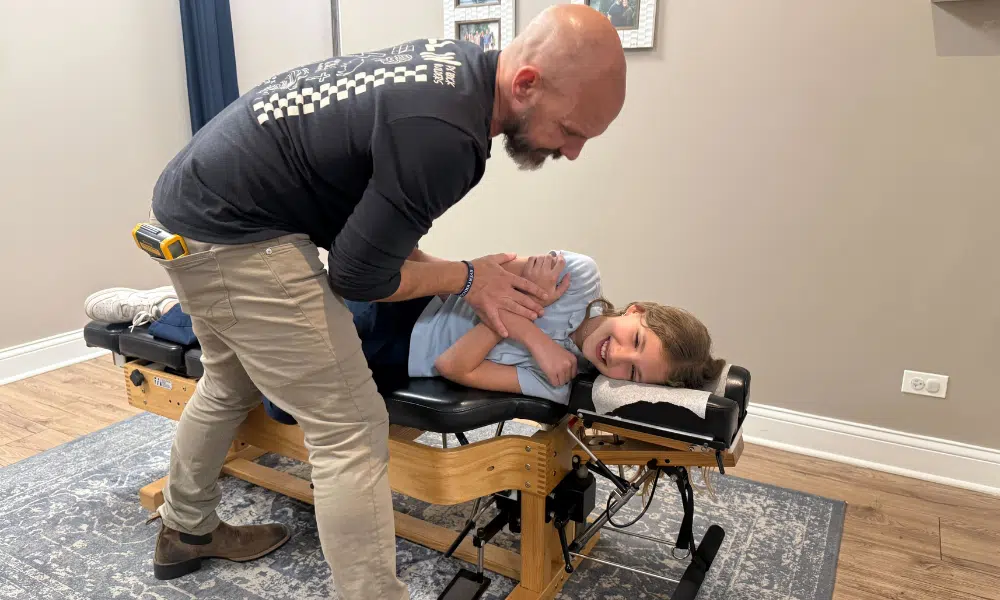
Neurologically-Focused Chiropractic Care itself is a specialized form of pediatric chiropractic that targets subluxation patterns affecting the Autonomic Nervous System, using those scans plus gentle, child-specific adjustments. Adjustments here aren’t about straightening crooked bones. They’re about reducing interference so the nervous system can communicate efficiently and regulate again.
What the Care Sequence Actually Looks Like
Care moves in stages, and the first one is the longest.
- Release. The initial phase focuses on reducing stuck sympathetic activation and stimulating the Parasympathetic Nervous System. For kids carrying significant dysregulation, this commonly takes 90 to 100 days of consistent care, sometimes longer.
- Restore and reorganize. As the brake pedal comes back online, doctors look for the basics to normalize first. Sleep. Digestion. Immune resilience. Gross motor coordination. Body before brain, in that order.
- Build momentum. Once scans and clinical signs show the system holding steady, that’s when movement-based therapy, OT, PT, and speech work tend to land differently. Same therapies, different nervous system receiving them.
Timelines vary more than any parent wants to hear. Some children show meaningful change inside a few months. Others, especially those carrying a heavier Perfect Storm™ history, need six to twelve months of consistent care before the foundation is solid. What shouldn’t vary is whether anyone can tell you where your child is in that process, which is the whole reason scanning exists.
What about the reflex itself? In practice, once sympathetic dominance eases, retained primitive reflexes often resolve without being targeted directly. Not always, and not on a guaranteed timeline. Every child’s storm is different, and some need the movement work regardless. But it stops being the first move.
Where This Leaves You
A retained Spinal Galant reflex is worth paying attention to. It’s a real finding with real consequences for how your child sits, sleeps, focuses, and feels in their own skin. It just isn’t the bottom of the stack. Underneath it is a nervous system that never got the chance to shift out of protection mode.
So the question isn’t only whether the reflex is retained. It’s where your child’s nervous system actually sits right now. And that’s a question worth measuring rather than assuming.
We don’t guess. We test. A baseline set of INSiGHT scans shows where a child’s autonomic balance, neurospinal tension, and regulation stand today, before anyone commits to a plan. From there, repeat scans at intervals tell us whether the system is genuinely reorganizing: HRV climbing back toward the green zone, tension patterns settling, the foundation holding under load. If the data says we’re on track, we keep building. If it says something needs to change, we change it, rather than running the same protocol for another six months and hoping. That’s what keeps care honest with you.
Your child isn’t broken, and they’re not lazy or defiant for squirming out of their chair. They’ve been running a nervous system that never got to stand down. Talk with your child’s healthcare provider about your concerns, and if you want to know what’s happening underneath the reflex, find a PX Doc near you and start with a scan instead of a guess.