
You called the pediatrician because your child said their chest hurt and they couldn’t breathe. Everything came back normal.
A panic attack in a child looks less like fear and more like a medical emergency. It starts suddenly, peaks within minutes, and shows up in the body first: a racing heart, gasping or hyperventilating, chest pain, a stomachache, shaking hands, sweating, and a desperate need to escape the room. Younger kids rarely say “I’m panicking.” They say they feel sick, they scream, they cling, or they simply refuse to move.
That gap between what you see and what you’re told is why so many parents end up in urgent care instead of getting answers. Here’s the piece almost nobody explains: those physical signs aren’t side effects of a scary thought; they’re the nervous system firing an alarm that never got shut off. In our offices, we see the same pattern over and over: kids whose panic came with years of stomach trouble, sleep struggles, and a neck so tight you can feel it.
So let’s walk through it.
What Does a Panic Attack Look Like in a Child?
A panic attack in a child is a sudden surge of intense fear or discomfort that reaches full intensity within minutes and produces obvious physical signs alongside a sense of dread or loss of control. In children, the physical side dominates. Compared with adults, panic attacks in kids and teens tend to be more dramatic in presentation, involving screaming, crying, and hyperventilation that can be alarming to watch.
Common signs of a panic attack in children include:
- Racing or pounding heart that the child may describe as their “heart being loud” or “beating fast”
- Trouble breathing or rapid, shallow breathing through the upper chest and shoulders
- Chest pain or tightness, which is why panic attacks are frequently mistaken for a heart problem
- Stomachache, nausea, or an urgent need to use the bathroom
- Shaking, trembling, or visibly clammy hands
- Dizziness, lightheadedness, or a complaint of feeling “floaty” or unreal
- Sudden crying, screaming, or a full meltdown that seems out of proportion
- Frantic escape behavior: bolting for the door, hiding, or clinging to a parent
- Statements of dread: older children may say they think they’re dying or going crazy
- Complete refusal to move or speak, a shutdown response some kids default to instead
Research on children with anxiety disorders backs up the physical-first pattern. In a study of 128 children ages 6 to 17, the most frequently reported somatic symptoms were restlessness (74%), stomachaches (70%), heart palpitations (48%), muscle tension (45%), sweating (45%), and trembling or shaking (43%). Nearly every child in that sample reported at least one physical symptom, averaging six each.
Those physical complaints deserve weight rather than dismissal. Tracking 1,420 participants over roughly two decades, researchers found that frequent, recurring childhood stomachaches, headaches, and muscle aches predicted anxiety and depressive disorders in young adulthood.
The mistake parents are told to make is treating this as a discipline problem. A child mid-attack isn’t choosing to overreact. Their physiology has already committed.
How Long Does a Panic Attack Last in a Child?
Most panic attacks in children build to peak intensity within about ten minutes and resolve within roughly 15 to 20 minutes, though the exhaustion afterward can stretch across the rest of the day. That aftermath is the part parents most often miss: a kid who is flat, clingy, wrung out, or unable to face school hours after the attack itself ended.
The reason the recovery drags is that the surge doesn’t just switch off. Once the body has run a full stress response, it takes time for heart rate, breathing, and digestion to come back online. A child whose calming system is already weak takes considerably longer to land.
One practical note: because panic symptoms overlap with cardiac and respiratory conditions, a first episode deserves a medical evaluation. The American Academy of Pediatrics notes that features of panic can mimic those of a heart attack, and a child with chest pain, palpitations, and shortness of breath should be assessed to identify the underlying cause. Rule things out first. Then look deeper.
What a Panic Attack Looks Like at Different Ages
Age changes the presentation more than most parents expect, which is a large part of why panic gets missed in younger children.
- Ages 3 to 6. Almost entirely physical and behavioral. There’s no vocabulary for it yet, so it surfaces as sudden inconsolable screaming, gagging, a stomachache before daycare, or wild resistance at a doorway. Parents describe it as a meltdown that came out of nowhere and burned hotter than usual.
- Ages 7 to 11. Kids start reporting sensations without naming the cause: “my heart is going too fast,” “I can’t get air,” “my tummy hurts.” School refusal often begins here, along with a shrinking list of places they’ll agree to go.
- Ages 12 and up. The cognitive layer arrives. Teens can articulate a fear of dying or losing control and start actively avoiding anywhere an attack happened before. Panic disorder most often begins during adolescence, though it can start earlier (American Academy of Child & Adolescent Psychiatry).
Anxiety diagnoses in kids have climbed steadily. Roughly 11% of U.S. children ages 3 to 17 had a current, diagnosed anxiety condition in 2022 to 2023, and among adolescents 12 to 17, diagnosed anxiety reached 16.1% in 2023, up 61% from 2016. Dr. Tony Ebel has described the shift plainly from nearly 20 years of practice: panic and anxiety used to walk in during high school. Now they walk in during kindergarten.
Why the Body Panics Before the Mind Does
Panic runs in a specific order, and understanding that order is what changes everything for parents. It goes perception, then chemistry, then physical symptoms. The nervous system detects a threat, the brain signals stress hormones, and the body executes. Medicine tends to aim at steps two and three. The problem starts at step one.
Here’s the part that gets skipped: a nervous system can get stuck making the wrong call at step one. It reads a crowded gym, a substitute teacher, or a car ride as danger and still fires a full alarm. As Dr. Tony puts it, panic ends up in the brain, but it often starts from the body.
Sympathetic dominance is the gas pedal stuck down: fight-or-flight running around the clock. The brake pedal is the parasympathetic side, driven mainly by the vagus nerve, the longest cranial nerve in the body, which carries rest-and-digest signals between the brainstem and the heart, lungs, and digestive system.
Vagal tone, a measurable index of how well that nerve is working, tracks closely with emotional resilience, immune regulation, and digestive function. When the two sides fall out of balance, the clinical term is dysautonomia, dysfunction of the Autonomic Nervous System that governs heart rate, digestion, immunity, and sleep. In kids, this presents as pediatric dysautonomia, and it’s the shared engine underneath a surprising range of childhood conditions.
What locks that imbalance in place is subluxation, which in Neurologically-Focused Chiropractic Care means three things at once: misalignment within the neurospinal system, fixation or lost joint motion, and neurological interference that disrupts communication between brain and body. The upper neck matters most here, because that’s where the vagus nerve exits the brainstem.
Children who have panic attacks frequently also carry diagnoses of ADHD, Sensory Processing Disorder, or Autism, and often chronic constipation or reflux alongside them. That overlap isn’t coincidence. All of these run through the same autonomic machinery: a sympathetic system stuck on, a vagus nerve turned down, and a brain that can’t get reliable information about whether the body is safe. Different symptom, same wiring.
What Causes Panic Attacks in Children?
Panic attacks in children develop when a nervous system that has been accumulating stress for years finally loses the ability to regulate itself. At PX Docs, we call that accumulation The Perfect Storm™, a framework Dr. Tony Ebel developed to describe how dysregulation builds: prenatal stress, then birth trauma, then early childhood stressors, then nervous system dysregulation that surfaces later as a named condition.
Each layer leaves a mark.
- Prenatal stress. A meta-analysis of 71 studies found maternal prenatal depression and anxiety associated with children’s socioemotional development, including difficult temperament and behavioral dysregulation up to 18 years later.
- Birth intervention. C-section, forceps, vacuum extraction, induction, and prolonged labor apply mechanical stress to the upper neck and brainstem, exactly where vagal regulation originates. A traumatic birth is routinely dismissed once mother and baby are discharged healthy, and the nervous system consequences go unexamined.
- Early childhood stressors. Colic, reflux, chronic ear infections, repeated antibiotic courses, corticosteroids for asthma, and other early stressors stack on top. Dr. Tony’s clinical observation across two decades: the overwhelming majority of anxious kids and teens he takes in also carry a long history of gut and immune problems, and he can usually trace the pattern straight back through the case history to pregnancy and delivery.
- Modern load. Screens, sleep debt, and a chemically busy environment keep the gas pedal pressed. None of it is the root, but all of it is fuel.
Why Mornings and Bedtime Are the Hardest
If your child’s hardest moments cluster at wake-up and lights-out, pay attention to that pattern. It’s not random, and it’s rarely manipulation.
Cortisol is designed to rise in the morning to get a kid up and moving, and taper off at night so the body can rest. When a child’s stress response runs in overdrive for a long time, that rhythm can lose its shape. Research shows chronic stress can flatten the curve, with less of a morning lift and less of an evening wind-down. The result looks a lot like what you’re living: mornings where your child can’t seem to get going, and nights where their body won’t settle.
Cortisol is one piece of a bigger picture. It’s part of how a dysregulated nervous system shows up in the body, and it’s why these struggles so often travel with what we see more broadly in nervous system dysregulation.
The Physical Signs You Can See Between Attacks
Between episodes, the body leaves evidence. This is where parents gain real diagnostic-quality observation, and it costs nothing.
Watch how your child breathes at rest. A kid stuck in sympathetic dominance breathes through the shoulders and neck rather than the diaphragm, so you’ll see the shoulders lift, and the belly stay still. Dr. Tony calls this reading their neuro posture, and it’s one of the fastest tells there is.
Then put your hands on the upper back. In children carrying this pattern, the traps, SCMs, rhomboids, and levators sit locked in tension, because muscle tone matches autonomic tone. Sympathetics ramp up, muscles clamp down. You can often feel it running from the shoulders up behind the ears.
Here’s why the tension matters mechanically. Stuck muscles and joints suppress proprioception, the sense that tells the brain where the body is in space. Proprioceptive input is calming input. When it drops, the parasympathetic side drops with it, letting the sympathetic side climb higher and tighten the muscles more. That’s a closed loop, and it explains why breathing exercises and talk strategies keep hitting a wall. They’re excellent tools, but they ask a system to regulate when it needs repair.
Other between-attack signs worth tracking: chronic constipation or reflux (the nervous stomach is a vagus nerve issue traveling the gut-brain axis, not a food issue), frequent headaches, teeth grinding, cold hands, startling easily, and a child who is fine Tuesday and unraveled Wednesday with nothing obvious to explain the difference. If that inconsistency sounds familiar, you’re watching capacity fluctuate, not character. Our guide to vagus nerve dysfunction covers the full symptom picture.
How Panic in Children Is Actually Measured
Most parents are handed a questionnaire. Neurologically-Focused Chiropractic Care starts with objective measurement of nervous system function instead, using INSiGHT scanning technology (developed and owned by CLA, not PX Docs). Three scans, three different windows:
- Heart Rate Variability (HRV) measures vagal tone and autonomic balance directly, showing whether the brake pedal is available.
- Surface electromyography (sEMG) measures the muscle tension patterns along the neurospinal system described above.
- Thermal scanning measures autonomic regulation through the temperature control the nervous system governs.
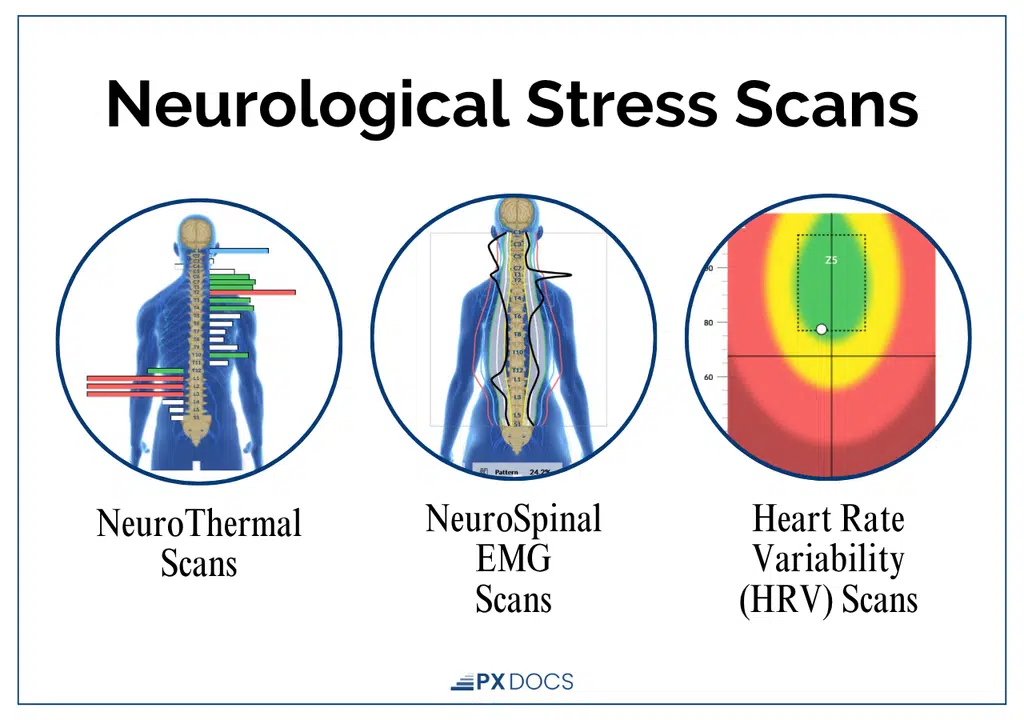
The HRV piece has real research behind it. A meta-analysis of 36 studies covering 2,086 patients found anxiety conditions characterized by lower heart rate variability than healthy controls, with panic disorder among the diagnoses examined. A later systematic review confirmed lower resting HRV in anxiety conditions while noting that pediatric subgroups remain underpowered. Separately, data from more than 5,000 children and adolescents found lower resting vagal activity in girls than boys, which the authors link to risk for internalizing conditions.
INSiGHT scans are not a treatment or cure for any condition, including back pain. They measure function. They don’t diagnose panic disorder, and they don’t replace evaluation by your child’s medical provider. What they do is show whether nervous system dysregulation is present and where, so care addresses something measurable rather than something assumed.
What Parents Can Do During and Between Attacks
During an attack, go for the body, not the thought. Debating whether the fear is realistic asks the prefrontal cortex to do work it can’t do mid-surge. Lower your voice, slow your breathing, apply firm, steady pressure across the shoulders, or hug them if your child accepts touch, and gently get them moving if they’ll move. Reassurance about safety helps most after the physiology starts to settle, not before.
Between attacks, build capacity. Daily outdoor movement and sunlight, consistent sleep and wake times, real food, and less screen time before bed all feed vagal tone. Simple vagus nerve exercises for kids like humming, singing, and gargling engage the nerve directly. Therapy and counseling also have genuine value here, and nothing in this article argues against them.
The honest limitation: every one of these asks something of your child’s nervous system. A child has to be regulated enough to hum, settle enough to sleep, and feel safe enough to engage in therapy. When the nervous system itself is stuck in survival mode, those tools have very little to grab onto. It’s not that they’re the wrong tools. They’re being asked to build on a foundation that still needs repair.
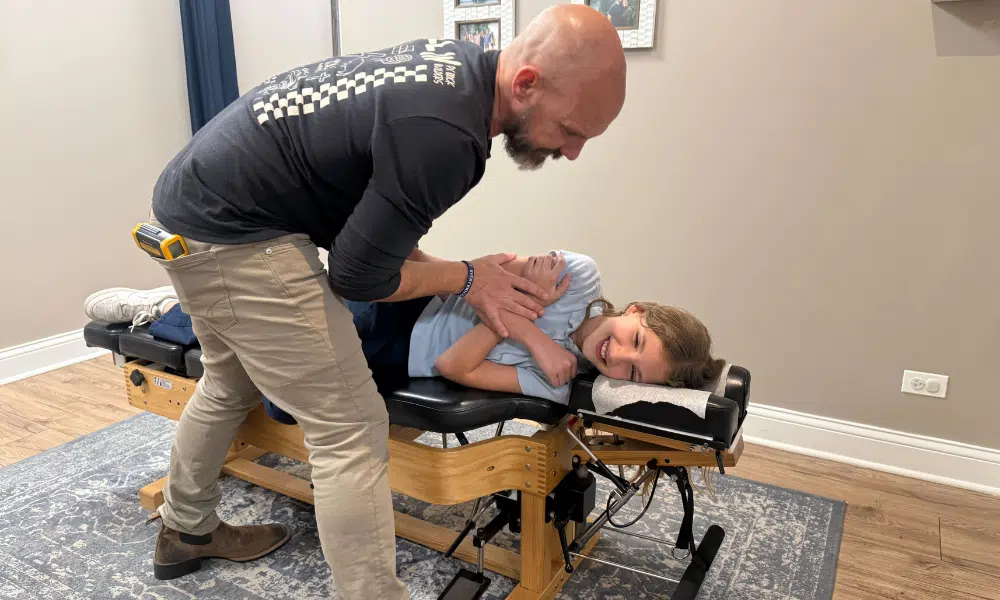
That’s the gap Neurologically-Focused Chiropractic Care fills. Specific adjustments to areas of subluxation work to restore regulation at the source, whether or not your child can do anything to help themselves that week. As that foundation stabilizes, breathing, movement, sleep routines, and therapy finally start to take hold and work the way they were meant to.
Bringing It All Together
A panic attack in a child looks like a body in emergency mode, because that’s what it is. Racing heart, air hunger, chest pain, a stomach in knots, and an overwhelming pull to escape. What you’re seeing is real; it’s physiological, and it’s measurable.
We don’t guess, we test. The first step is a baseline set of INSiGHT scans to see exactly where your child’s nervous system sits right now: how suppressed vagal tone has become, how much tension the neurospinal system is holding, how far into sympathetic dominance they’ve drifted. That baseline turns a vague label into a specific picture.
From there, progress scans do the accountability work. When HRV starts climbing toward the green, and the sEMG bars along the upper neck begin to release, that’s objective evidence the brake pedal is coming back online, and it usually shows up in real life as attacks that arrive less often and end faster. If the scans say we’re on track, we keep building. If something looks off, we adjust the plan rather than repeating it and hoping. Either way, the scans keep care anchored in what’s actually happening inside your child, not in how last week felt.
Your child isn’t broken, and you haven’t failed them. Their nervous system has been carrying more than it could hold, and nervous systems are built to adapt when you give them the right input. You don’t have to keep wondering. Get your child’s nervous system measured and see what’s really going on.
Find a trained doctor near you in the PX Docs directory and start with a set of scans.