

PANDAS syndrome rash refers to the skin-related signs, most commonly a scarlet fever rash (scarlatina) or perianal rash, that can appear alongside or just before the sudden-onset neuropsychiatric symptoms of PANDAS (Pediatric Autoimmune Neuropsychiatric Disorders Associated with Streptococcal Infections). Because rashes are a visible marker of the underlying Group A Streptococcal (GAS) infection that triggers PANDAS, they serve as a critical early warning sign that a child’s immune system and nervous system may be under significant stress.
If your child broke out in a strange rash and then seemingly changed overnight, suddenly struggling with OCD behaviors, intense anxiety, tics, or explosive meltdowns, you’re not imagining things, and you’re not alone. Many parents describe this exact sequence: the rash shows up first, and then their child becomes a completely different person.
Here’s what most articles about PANDAS won’t tell you: the rash is just the visible surface. Underneath that skin reaction, there’s a much deeper storm brewing inside your child’s nervous system, one that often started long before that strep infection ever hit. Understanding the full picture, from the rash on the surface to the neurological dysfunction underneath, is what gives parents the real answers they’ve been searching for.
What Is PANDAS Syndrome?
PANDAS stands for Pediatric Autoimmune Neuropsychiatric Disorders Associated with Streptococcal Infections. It’s a condition where a child’s immune system, while fighting off a strep infection, mistakenly attacks healthy brain cells, particularly in a region called the basal ganglia, which controls movement, behavior, and emotions.
This autoimmune process is called molecular mimicry. The strep bacteria are clever; they disguise themselves to look like the child’s own brain tissue. So when the immune system mounts its attack, it can’t tell the difference between the bacteria and the brain. The result is inflammation and dysfunction in the basal ganglia that shows up as sudden, dramatic neuropsychiatric symptoms.
PANDAS typically affects children between the ages of 3 and 12, and research from the PANDAS Network suggests it may affect as many as 1 in 200 children in the United States. The hallmark feature is that symptoms come on suddenly; parents often describe their child changing “overnight,” and they’re directly connected to a strep infection like strep throat or scarlet fever.
The most commonly reported symptoms of PANDAS include:
- Sudden onset of OCD-like behaviors
- Motor and vocal tics
- Severe anxiety and separation anxiety
- Emotional lability and rage episodes
- Bedwetting and urinary frequency
- Sleep disturbances
- Sensory sensitivities
- Handwriting deterioration
- Cognitive changes, including difficulty concentrating
But what many parents notice first, before any of these behavioral changes, is a rash.
What Does a PANDAS Syndrome Rash Look Like?
The rash associated with PANDAS isn’t actually caused by the PANDAS autoimmune response itself—it’s caused by the underlying strep infection that triggers the condition. Understanding what these rashes look like is important because they can be your first clue that a GAS infection is present, even when your child doesn’t complain of a sore throat.
There are several types of rashes linked to strep infections that may appear before or alongside PANDAS symptoms.
- Scarlet fever rash (scarlatina) is the most recognized strep-related rash. According to the Mayo Clinic, it looks like a sunburn and feels like sandpaper to the touch. It typically begins on the face or neck and spreads to the trunk, arms, and legs. If you press on the reddened skin, it briefly turns pale. The skin folds around the groin, armpits, elbows, and knees often become a deeper red than the surrounding areas. Children may also develop a “strawberry tongue”—a red, bumpy tongue that’s characteristic of scarlet fever.
- Perianal strep rash is often overlooked but is an important diagnostic clue. The PANDAS Physicians Network recommends that clinicians examine the skin for scarlatina or perianal rash when evaluating a child for PANDAS. This rash appears as bright redness around the anus and may be accompanied by itching, pain with bowel movements, and sometimes blood-streaked stools. Many children with perianal strep don’t have throat symptoms at all, which means the strep infection and its potential to trigger PANDAS can easily be missed.
- Impetigo and other skin infections caused by GAS can also appear on the face, arms, and legs as honey-colored, crusty sores. Research published in the journal Microorganism notes that GAS can infect the skin, nasal cavity, perineum, and genitals, causing scarlatiniform rash, impetigo, and perianal or genital dermatitis.
Here’s the key takeaway: any of these strep-related rashes can serve as the trigger for a PANDAS episode. And in many cases, the rash appears before the behavioral storm hits—making it a valuable early warning sign for parents.
Why Does the Rash Matter So Much for PANDAS Diagnosis?
One of the biggest challenges with PANDAS is that many children don’t present with classic strep throat symptoms. They don’t complain about a sore throat, they don’t have a fever—but they’re still harboring a strep infection that’s quietly triggering an autoimmune attack on their brain.
This is where the rash becomes incredibly important. The PANDAS Physicians Network emphasizes that clinicians should look beyond the throat when evaluating for strep. Their clinical guidelines specifically recommend examining the skin for rashes, swabbing perianal and vaginal areas when indicated, and testing close family members who may be carriers.
Research shows that more than 37% of children with positive GAS cultures may not show elevated antibody titers even when testing is correctly timed. This means that standard blood tests can miss the infection entirely. A visible rash can be the missing diagnostic piece that connects a child’s sudden behavioral changes back to the strep trigger.
For diagnostic purposes, five criteria are generally used to identify PANDAS:
- The presence of OCD and/or tic conditions
- Prepubertal symptom onset
- Sudden, dramatic onset of symptoms
- Evidence of a temporal connection to a strep infection
- Presence of neurological abnormalities.
A strep-related rash, such as that seen in scarlet fever, satisfies that fourth criterion, providing the direct link between the infection and the neuropsychiatric symptoms.
What’s Really Happening Inside Your Child’s Nervous System?
Now here’s where most articles about PANDAS stop. They explain the strep infection, the autoimmune attack on the basal ganglia, and the resulting symptoms. But what they miss is the bigger picture—why some children develop PANDAS while the majority of kids who get strep recover without any neuropsychiatric issues at all.
At PX Docs, we’ve observed a pattern in virtually every PANDAS case that comes through our doors. These children didn’t just suddenly become vulnerable to this autoimmune response out of nowhere. Their nervous systems were already struggling before the strep infection hit.
This is what Dr. Tony Ebel calls “The Perfect Storm.” It’s the accumulation of stressors—prenatal stress, birth trauma, and early childhood toxic load—that builds up and overwhelms a child’s developing nervous system over time. As PX Docs puts it, if there was ever a condition that is “The Perfect Storm” personified, it’s PANDAS and PANS. It’s literally the accumulation of every stressor hitting a vulnerable nervous system until it breaks.
Here’s the sequence we see again and again: a high-stress pregnancy or fertility challenges set the stage, followed by significant birth trauma (often involving interventions like C-sections, vacuum extraction, or forceps), then early immune challenges and multiple rounds of antibiotics. By the time the trigger infection arrives, the strep that produces the rash has already left that child’s nervous system hanging by a thread.
Think of it this way: the strep infection and the rash are the match, but “The Perfect Storm” built the powder keg. The autoimmune response that attacks the basal ganglia is really the final straw for a nervous system that was already stuck in a state of chronic sympathetic “fight or flight” dominance.
How Do Subluxation and Dysautonomia Contribute to PANDAS?
This is the layer that conventional medicine and even most integrative approaches to PANDAS completely miss. Beyond the autoimmune and inflammatory components, there’s a foundational neurological issue that makes some children more susceptible to PANDAS in the first place: subluxation and dysautonomia.
Subluxation is a pattern of neurological dysfunction in the spine characterized by three components:
- Misalignment within the neurospinal system
- Fixation or restricted joint motion
- Neurological interference that disrupts communication between the brain and body.
When subluxation is present, especially in the upper cervical region near the brainstem, it can impair the function of the vagus nerve, the longest cranial nerve in the body, and the primary driver of the Parasympathetic Nervous System.
Dysautonomia is an imbalance within the Autonomic Nervous System—specifically, an overactivation of the sympathetic “fight or flight” response and an underactivation of the parasympathetic “rest, digest, and regulate” response, driven primarily by the vagus nerve. Think of it like a car with the gas pedal stuck to the floor while the brake pedal barely works. That child’s nervous system is constantly revving, constantly stressed, constantly on high alert.
When the vagus nerve is dysfunctional, it can’t effectively regulate the immune system’s inflammatory response. This is why some children’s immune systems overreact to a strep infection with such a dramatic autoimmune response, while other children fight off the same infection without any neuropsychiatric consequences. The children who develop PANDAS often have lower vagal tone, meaning their parasympathetic “brake pedal” system is already compromised.
This is why many families report staying stuck on the PANDAS rollercoaster even after implementing anti-inflammatory diets, detox protocols, and supplement regimens. While those integrative steps are absolutely valuable and necessary, they often fail to address the foundational nervous system dysregulation—subluxation and dysautonomia—that were present before the strep infection ever triggered the autoimmune cascade.
What Are the Conventional Treatments for PANDAS?
Understanding the full range of treatment options is important for every PANDAS family. The conventional approach to PANDAS typically includes several components.
- Antibiotics are the first-line treatment. When an active strep infection is identified, whether through a positive throat culture, a perianal swab, or elevated anti-streptococcal antibody titers, antibiotics are prescribed to clear the infection. Some providers recommend prophylactic long-term antibiotics to prevent reinfection, although this approach remains debated.
- Cognitive behavioral therapy (CBT) can help children manage OCD symptoms, anxiety, and behavioral challenges. CBT focuses on identifying and modifying negative thought patterns and teaching children coping strategies.
- Selective serotonin reuptake inhibitors (SSRIs) may be prescribed in some cases to help manage OCD and anxiety traits, though these are used cautiously in children.
- Immunomodulatory therapies like Intravenous Immunoglobulin (IVIG) and plasmapheresis are sometimes considered for severe cases. A 2024 Delphi consensus study noted that while these therapies show promise, there is still no strong consensus regarding optimal treatment protocols for PANDAS.
While these treatments can provide important relief, many parents find that they don’t fully resolve the issue—especially when the child’s nervous system dysfunction isn’t being addressed at a foundational level.
How Can Neurologically-Focused Chiropractic Care Help Children with PANDAS?
This is where the PX Docs approach differs from both conventional and integrative medicine. We understand that PANDAS isn’t just an autoimmune condition; it’s a complex condition that involves deep neurological dysfunction and imbalance that was often present long before the triggering strep infection.
It’s important to note that INSiGHT Scans do not diagnose medical conditions, and Neurologically-Focused Chiropractic Care is certainly not a treatment or cure for PANDAS or any other condition, not even back pain. Instead, these INSiGHT Scans help us track down the root cause of nervous system dysfunction and dysregulation, and build customized care plans and adjusting protocols to help shift the nervous system back into a state of balance, regulation, and resilience.
INSiGHT Scans include three primary components:
- NeuroThermal scans that measure temperature differences along the neurospinal system, indicating areas of dysautonomia
- NeuroSpinal EMG scans that assess neurosensory and motor tension and disorganization
- Heart Rate Variability (HRV) testing that evaluates the balance between the sympathetic and Parasympathetic Nervous Systems.
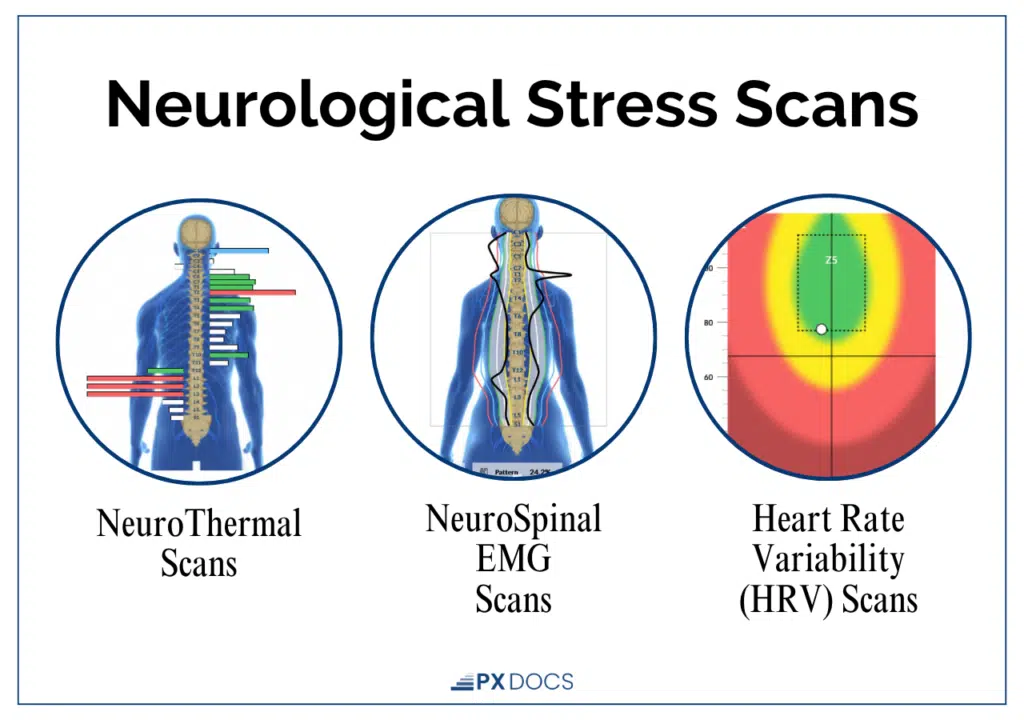
For children with PANDAS, these scans frequently reveal exactly what we’d expect: significant sympathetic dominance, reduced vagal tone, and patterns of subluxation concentrated in the upper cervical region near the brainstem. By identifying these specific patterns, Neurologically-Focused Chiropractors can create targeted care plans that work to restore proper nervous system function from the inside out.
The goal isn’t to treat PANDAS directly. The goal is to address the subluxation and dysautonomia that made the child’s nervous system vulnerable in the first place, helping to restore the balance between the “gas pedal” and “brake pedal” systems so the body can better regulate its own immune response, reduce chronic inflammation, and support the healing process.
When that balance starts to return, real change follows — as it did for Caleb, whose PANDAS diagnosis brought on major motor tics, mood swings, and difficulty focusing that left him feeling like an outcast at school despite seeing specialist after specialist. Once his family committed to a customized care plan built around this exact approach, his tics decreased by 90%, his grades began climbing, and his mood grew far more stable.
How Does PANDAS Connect to Other Childhood Conditions?
One of the most important things for PANDAS parents to understand is that this condition doesn’t exist in isolation. The same Autonomic Nervous System dysfunction that contributes to PANDAS often shows up in other ways, too.
Many children with PANDAS also have a history of or concurrent challenges with:
- ADHD symptoms, including hyperactivity, inattention, and fidgeting
- Sensory Processing Disorder, with heightened sensitivity to light, sound, and touch
- Emotional dysregulation, including rage episodes, anxiety, and mood swings
- Autism spectrum traits (in some cases)
- Chronic digestive issues
- Sleep disturbances
- Immune challenges
This isn’t a coincidence. These conditions share a common root in Autonomic Nervous System dysfunction—specifically, the chronic sympathetic dominance and vagal nerve impairment that characterizes dysautonomia. Understanding this shared mechanism helps explain why addressing the foundational nervous system dysfunction can create improvements across multiple symptoms and conditions simultaneously, rather than chasing one diagnosis at a time.
Taking the Next Step for Your Child
If your child has been dealing with the rollercoaster of PANDAS—the rashes, the sudden behavioral changes, the OCD, the anxiety, the tics—know that there’s hope and there are answers that go deeper than what you’ve been told.
The rash is the signal. The strep infection is the trigger. But the real story is what’s been happening inside your child’s nervous system, often since before they were born. By addressing “The Perfect Storm” of stressors that created the vulnerability in the first place, and by restoring proper nervous system function through Neurologically-Focused Chiropractic Care, many families are finding a path forward that they didn’t know existed.
You don’t have to keep riding the PANDAS rollercoaster alone. Start by visiting the PX Docs Directory to find a trained Neurologically-Focused Chiropractor near you who can perform INSiGHT Scans and help identify the neurological patterns contributing to your child’s challenges. And as always, continue working with your child’s trusted medical or functional team to ensure the infectious and immunological components are being properly managed.
Your child’s nervous system has an incredible capacity to heal when given the right support. It’s time to look beyond the rash and get to the root.
Frequently Asked Questions About PANDAS Syndrome Rash
Does PANDAS itself cause a rash?
PANDAS doesn’t directly cause a rash. The rashes associated with PANDAS, including scarlet fever, perianal strep, and impetigo, are caused by the underlying Group A Streptococcal infection that triggers the autoimmune response. The rash is a sign of the strep infection, not the autoimmune process itself.
Can my child have PANDAS without a rash?
Yes. Many children with PANDAS present with strep throat or even asymptomatic strep carriage without any visible rash. The rash, when present, is a helpful diagnostic clue, but its absence doesn’t rule out PANDAS.
How quickly do PANDAS symptoms appear after a rash?
Symptoms can appear within days of the strep infection, though some parents report a delay of several weeks. In some cases, the behavioral changes seem to coincide almost exactly with the rash’s appearance.
Should I ask my child’s doctor about PANDAS if they have a strep rash and sudden behavior changes?
Absolutely. If your child develops a strep-related rash and then shows sudden, dramatic behavioral changes—especially OCD behaviors, tics, severe anxiety, or emotional meltdowns—bring this to your healthcare provider’s attention right away and ask specifically about PANDAS evaluation.
Can PANDAS symptoms go away on their own?
PANDAS symptoms may wax and wane, and some children experience periods of improvement. However, without addressing both the infection trigger and the underlying nervous system dysfunction, symptoms often return with subsequent strep exposures, sometimes with greater severity.
What makes Neurologically-Focused Chiropractic Care different from regular chiropractic?
Neurologically-Focused Chiropractic Care specifically addresses neurological dysfunction and dysautonomia that contribute to conditions like PANDAS. Using advanced INSiGHT scanning technology, these practitioners can objectively measure nervous system imbalance and create precise care plans targeting subluxation patterns—rather than simply addressing back pain or spinal alignment.