
Your child’s teacher offers a gentle correction, and forty minutes later, they’re still on the bathroom floor. Rejection Sensitive Dysphoria (RSD) describes exactly that: an immediate, overwhelming wave of emotional pain set off by real or perceived rejection, criticism, or failure. In children with autism, it tends to arrive as a full-body reaction rather than a mood, because the nervous system isn’t processing the correction as feedback; it’s registering it as a threat.
That distinction changes what you do next. Most guidance treats rejection sensitivity as a thinking problem to coach, or a coping-skills gap to train. But if your child’s Autonomic Nervous System is already running on high alert before anyone opens their mouth, no script is going to land.
Below, we’ll look at what the research actually shows about Rejection Sensitive Dysphoria (RSD) and autism, what’s happening neurologically underneath it, and the piece almost nobody addresses: where that hair-trigger came from in the first place.
What Is Rejection Sensitive Dysphoria in Autism?
Rejection-sensitive dysphoria is an intense, fast, and often physical response to perceived rejection, criticism, or disapproval. For a child with autism, a raised eyebrow, a shift in tone, or a redirected instruction can land the way a genuine threat would: heart racing, chest tight, tears or rage arriving before any thought does. The response isn’t proportional to the event, and that’s the point. It isn’t being generated by the event.
Part of why it hits so hard is that social rejection isn’t processed as a purely emotional experience. Research on social pain has found that rejection activates neural regions overlapping with those involved in physical pain, which is why the everyday language of “hurt feelings” turns out to be more literal than metaphorical. A study examining rejection-induced social pain found that higher levels of autism traits were associated with heightened sensitivity to that pain.
So when your child tells you it hurts, they’re not reaching for a dramatic word. They’re describing what their body is doing.
Is Rejection Sensitive Dysphoria a Real Diagnosis?
No, and it’s worth being straight with you about that, because a lot of what you’ll read online isn’t. RSD does not appear in the DSM-5 or the ICD-11. The term was popularized by psychiatrist William Dodson in 2016, based largely on clinical observation in ADHD, and it spread through neurodivergent communities on social media long before researchers began studying it directly.
A 2026 scoping review in Neurodiversity mapped the evidence for RSD in people with autism and found 12 eligible studies, none of which used the term itself. The authors reported that quantitative findings on the intensity of rejection-related distress were inconsistent, while interviews with adults with autism consistently described these experiences as profound. They also noted that no study had examined responses to criticism specifically, and none had tested any intervention.
Here’s how we’d read that honestly. RSD is a useful description of something real that families and people with autism recognize immediately. It is not a validated clinical entity, and anyone selling you a protocol for it is ahead of the science. What the research does support is that a meaningful subset of autistic children experience social rejection as genuinely overwhelming, and that this distress travels with anxiety and low mood.
Which raises the more useful question: what determines how loudly a given child’s system responds?
What Does Rejection Sensitive Dysphoria Look Like in Autistic Kids?
Common signs of rejection sensitivity in children with autism include:
- Meltdowns triggered by correction, losing a game, or being told “not right now”
- Emotional reactions that seem far out of scale to what happened
- Long recovery time, replaying a comment or interaction for hours or days
- Sudden shutdown and withdrawal instead of an outward reaction
- Refusing to try anything new where failure is possible
- Extreme people-pleasing, apologizing constantly, checking “are you mad at me?”
- Masking, working hard to hide traits to avoid being corrected
- Physical complaints alongside the emotional ones: stomachaches, headaches, poor sleep
Two of those deserve more attention than they usually get. The first is shutdown. Because a rejection response is a stress response, it can present as withdrawal rather than explosion, which is why quieter kids often go years without anyone recognizing what’s happening. A study of ostracism in adults with autism measured physiological responses alongside self-report, a reminder that the internal reaction and the visible one don’t always match.
The second is masking. When adults with autism described their own emotion dysregulation in a 2024 study, they pointed to environments that were never built for them. Masking is what a child does when the room feels unsafe. It works briefly, and it is exhausting, and the exhaustion lowers the threshold for the next meltdown.
Why It Gets Missed in Some Kids Entirely
Children whose rejection sensitivity is recognized early are usually the ones who react outward. The ones who get missed are the ones who comply.
A child who masks well can look regulated at school and fall apart the second they’re in the car, and adults in each setting will describe two different children. Teachers report a quiet, agreeable kid. You describe nightly meltdowns, and nobody quite believes you. Both accounts are accurate. School is where the mask holds, and home is where it comes off, because home is the only place safe enough to let go.
This pattern is more often flagged in girls with autism and in kids identified later, though it isn’t limited to either group. If you’ve been told your child “seems fine here,” this is evidence that the cost is being paid somewhere you can see, and they can’t hide it.
Children with rejection sensitivity frequently also carry diagnoses of autism, ADHD, and Sensory Processing Disorder, along with anxiety and sleep struggles. That clustering isn’t a coincidence or bad luck. All of these share a common thread of nervous system dysregulation: an Autonomic Nervous System stuck in a threat-scanning state, where sensory input, social input, and transitions all get filed under danger before the thinking brain gets a vote.
Is RSD the Same in Autism as It Is in ADHD?
The experience overlaps. The physiology underneath may not, and that matters for what helps.
A study of 106 children and adolescents recorded heart rate variability across resting, passive, and active conditions. Children with autism showed hyper-arousal during the active task, while children with ADHD showed hypo-arousal at rest and during the passive task. Regardless of diagnosis, the children whose profile was hyper-aroused had more severe autistic symptomatology, higher anxiety, and lower global functioning than those who were hypo-aroused.
Read that again, because it’s the whole article in one finding. The label mattered less than the arousal state. A child with autism running hot is a child whose system has less capacity left over for a correction, a transition, or a disappointed look.
This is where the picture around ADHD mood swings and rejection sensitivity in autism diverges in practice. Two children can have the same meltdown and need nearly opposite things: one needs the volume turned down; the other needs engagement turned up. Which is why generic emotional-regulation advice so often fails both of them.
Inside the Nervous System That Reads Criticism as Danger
The nervous system’s first job is perception. Before your child reacts to anything, their system has to take in what’s happening, decide what it means, and then coordinate a response. That sequence- input, then interpretation, then output- is where rejection sensitivity actually lives.
Dr. Tony Ebel puts it this way about autism meltdowns, and it applies here directly: they look like an output problem, a behavior problem. They’re not. They’re an input problem. The meltdown is the last thing to happen, not the first.
Two systems govern that interpretation. The Sympathetic Nervous System is the gas pedal, the fight-or-flight side. The parasympathetic side, carried largely by the vagus nerve, is the brake pedal: rest, digest, recover, calm down. A regulated child moves between them fluidly. A child in sympathetic dominance has a stuck gas pedal and a brake that barely responds, a pattern reflected in low vagal tone and reduced heart rate variability.
Now add the social layer. Work on social safety theory argues that the perception of safety or threat in our social world is not just psychological but biologically embedded, shaping physiological stress responses over time. A child whose system is already primed to detect threat, living in a world that frequently does correct and exclude them, is reading the environment with the gain turned all the way up.
Underneath that gain setting, we’re looking for subluxation. In Neurologically-Focused Chiropractic Care, subluxation means three things happening together:
- Misalignment within the neurospinal system
- Fixation where normal motion is lost
- Neurological interference that disrupts & distorts the signaling between brain and body.
That interference distorts the sensory input the brain is working from, and it locks the system into the sympathetic side of the dial. Sustained long enough, this is Autonomic Nervous System dysfunction, or what’s often called pediatric dysautonomia (dysautonomia in children), and it’s the same mechanism showing up in the sleep problems, the gut issues through the gut-brain axis, and the sensory reactivity you’re likely also managing.
Where This Sensitivity Actually Starts
No child develops a hair-trigger threat response out of nowhere. It’s built, and usually earlier than anyone looks.
We call the sequence “The Perfect Storm,” a framework developed by Dr. Tony Ebel to explain how nervous system dysregulation accumulates during the most sensitive windows of development. It runs in a specific order. Prenatal stress and maternal stress hormones shape a developing Autonomic Nervous System before birth. Then birth trauma, including C-section, forceps, vacuum extraction, induction, or prolonged labor, places mechanical strain on the upper neck and brainstem, precisely where autonomic regulation is organized. Then early childhood stressors stack on top: rounds of antibiotics, chronic ear infections, reflux, eczema, falls, screens, and a schedule that never lets the system downshift.
This is all about sequence. A child can arrive in the world with a system already leaning toward threat detection, and every layer after that narrows the margin.
Then the social layer compounds it. A recent systematic review and meta-analysis reported disproportionately high rates of bullying and interpersonal adversity among people with autism compared with non-autistic peers. This is the loop that traps families: once a nervous system is overloaded, it becomes hyper-reactive to the very environment that overloaded it. More correction produces more sensitivity, which produces more correction.
Which is exactly why coaching alone rarely resolves this, and why the environmental piece, though real and worth addressing, is only half the job.
Measuring a Nervous System Stuck on High Alert
You can’t manage what you can’t see, and behavioral assessments and lab work simply don’t capture this part of the picture. Threat sensitivity doesn’t show up in bloodwork, stool testing, or genetic panels.
INSiGHT scans, a three-part neurological assessment technology owned by CLA and used within Neurologically-Focused Chiropractic Care, measure it directly:
- Heart rate variability (HRV) shows the balance between the gas pedal and the brake, and how much adaptive reserve a child actually has on a given day.
- Surface electromyography (sEMG) maps the tension patterns held along the neurospinal system, the physical signature of a system that hasn’t been able to stand down.
- Thermal scanning assesses autonomic function and how well the system is regulating what it’s supposed to run automatically.
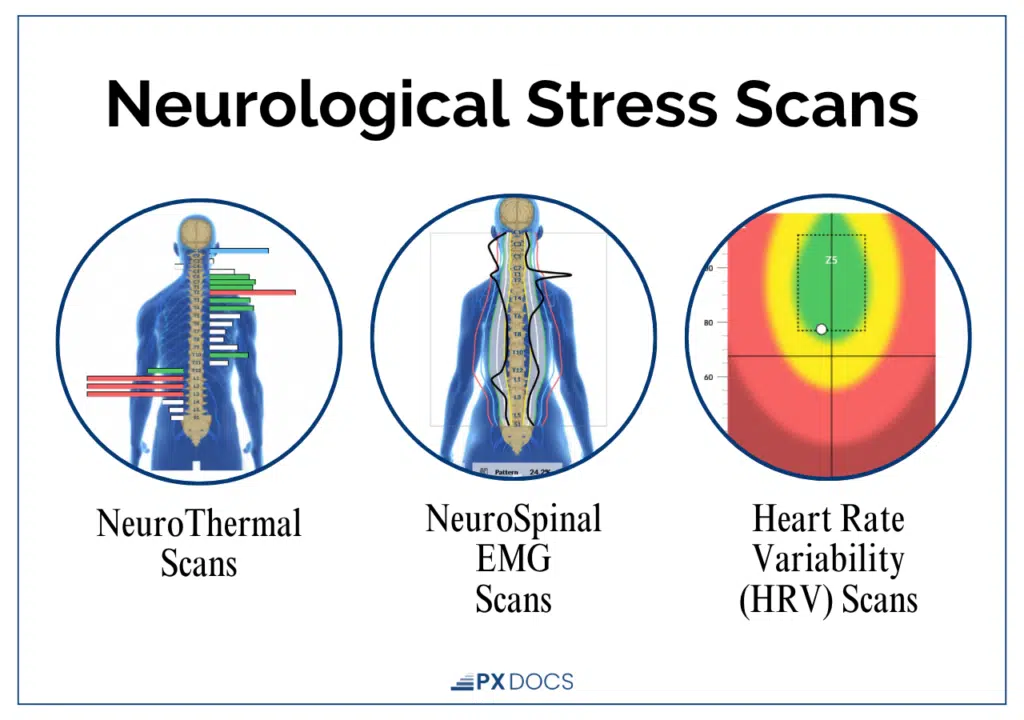
INSiGHT scans are not a treatment or a cure for any condition, not even back pain. They don’t diagnose autism, RSD, or anxiety, and they aren’t a substitute for evaluation by your child’s medical team. What they do is show the state of the nervous system underneath the behavior, which is information most families have never been given.
Clinically, the pattern we see in children with significant rejection sensitivity is fairly consistent: low HRV, elevated and asymmetric tension through the upper cervical region, and thermal findings pointing to a system stuck on the sympathetic side. It isn’t a diagnosis. It’s a starting point.
What Actually Helps a Child With Rejection Sensitivity
This is won on two fronts at once, and most families get stuck when they skip either one.
On the outside, reduce the load. Fewer transitions crammed together. More warning before them. Correction delivered privately rather than in front of peers. Repair after a rupture rather than a lecture during one. And genuinely consider whether the therapy schedule is helping. Adults with autism describing their own coping have pointed toward self-understanding and connection with others with autism as meaningful supports, which is a different thing than more hours of intervention. A well-meaning schedule that runs a dysregulated child ragged will increase meltdowns rather than reduce them.
In the moment, stop trying to reason. When a child is in a threat response, the part of the brain that handles perspective and logic is not the part currently driving. Explaining that the teacher wasn’t mad, or that it was only a game, asks them to do something their system can’t do yet. Lower your voice, reduce input, drop the demand, and wait. Talk about it later, when the brake pedal is working again.
On the inside, raise the threshold. This is the piece that’s usually missing. Addressing subluxation and restoring better autonomic balance doesn’t change your child’s environment or their autism. It changes how much their system can absorb before it flips into threat mode. When vagal tone improves and sympathetic dominance eases, families typically notice the sequence in a familiar order: sleep consolidates first, then recovery time after an upset gets shorter, then the upsets themselves get less frequent.
We’re not treating Rejection Sensitive Dysphoria, and we’re not treating autism. We’re addressing the nervous system dysfunction sitting underneath a child’s ability to feel safe, regulate, and recover. Your child doesn’t need to be less sensitive. They need more room between the input and the reaction.
Where This Leaves You
Rejection Sensitive Dysphoria isn’t a character flaw, a discipline gap, or your child being dramatic. In a child with autism, it’s what a threat-primed nervous system does when the social world delivers what it has learned to expect. The label is new and still contested. The physiology isn’t.
So, how do you find out where your own child actually sits? Not by guessing. We don’t guess; we test. A baseline set of INSiGHT scans shows where your child’s nervous system is right now, including how much adaptive reserve they have and where the neurospinal tension is concentrated. From there, repeat scans at regular intervals confirm the system is genuinely reorganizing: HRV trending up toward green, cervical tension patterns settling, autonomic readings evening out. When the data tracks, care keeps building on it. When it doesn’t, the plan changes, and it changes early rather than after another year of hoping. That’s what keeps your child’s care anchored to what’s happening inside them, not how a hard week happened to look.
Talk with your child’s healthcare provider about what you’re seeing, and if you want the neurological layer examined, find a PX Doc near you to get a baseline.