

PANDAS (Pediatric Autoimmune Neuropsychiatric Disorders Associated with Streptococcal Infections) is a condition in which a child’s immune system produces antibodies to fight a strep infection, but those antibodies mistakenly attack healthy brain cells—particularly in the basal ganglia—triggering the sudden onset of severe Obsessive-Compulsive Disorder (OCD), tics, anxiety, and other neuropsychiatric symptoms in children typically between the ages of 3 and 12.
If your child went from perfectly fine to completely different seemingly overnight, suddenly terrified of germs, washing their hands raw, or refusing to leave your side, you’re not imagining things. Parents dealing with PANDAS-related OCD describe it as watching their child become a completely different person in a matter of hours.
What most conventional resources won’t tell you is that the strep infection isn’t the whole story. There’s almost always a deeper pattern of nervous system dysregulation building long before that trigger infection. In this article, we’ll cover the signs, conventional approaches, and the neurological root causes that most doctors overlook.
What Is PANDAS and How Does It Cause OCD in Children?
PANDAS is a neuroimmune condition where a Group A Streptococcal (GAS) infection, most commonly strep throat or scarlet fever, triggers a misdirected immune response that attacks the child’s own brain tissue. This process, known as molecular mimicry, occurs when antibodies produced to fight the strep bacteria cross-react with proteins in the basal ganglia, a brain region responsible for motor control, behavior, and emotional regulation.
The basal ganglia plays a central role in regulating repetitive behaviors, habits, and impulse control. When autoantibodies attack this region, the resulting inflammation and neurological dysfunction give rise to OCD traits—intrusive thoughts, compulsive rituals, and overwhelming anxiety that can appear literally overnight.
PANDAS falls under the broader category of PANS (Pediatric Acute-onset Neuropsychiatric Syndrome), which includes cases triggered by infections beyond strep. What makes PANDAS OCD different from typical childhood OCD is the speed of onset—while conventional OCD develops gradually, PANDAS OCD reaches full intensity within 24 to 48 hours.
Research suggests the condition affects boys more frequently, with a male-to-female ratio between 2.6 and 4.7 to 1 and an average OCD onset around age 7. Children with PANDAS frequently also present with ADHD traits, tic conditions, Sensory Processing Disorder, and emotional dysregulation, a co-occurrence pointing to shared Autonomic Nervous System dysfunction as the common thread.
What Are the Signs and Symptoms of PANDAS OCD?
The hallmark of PANDAS OCD is a dramatic, sudden change in your child’s behavior and personality. Parents often describe it as their child being “possessed” or “replaced by someone else.” One day they’re fine, and the next they’re consumed by fears, rituals, and behaviors they’ve never shown before.
The OCD symptoms in PANDAS can take many forms:
- Sudden obsession with contamination and handwashing until skin bleeds
- Constant reassurance-seeking
- Elaborate rituals around bedtime or eating
- Intense fears of harm to themselves or family members
- Rigid fixation on symmetry and counting.
But PANDAS OCD rarely shows up on its own. The NIMH identifies several additional neuropsychiatric symptoms that typically accompany OCD, including:
- Severe separation anxiety (sometimes so overwhelming that a 10-year-old suddenly can’t leave a parent’s side)
- Emotional lability with unexplained crying or rage episodes
- Motor or vocal tics
- Sudden handwriting deterioration
- Bedwetting or urinary frequency
- Sleep disturbances
- Dramatic decline in school performance.
Many parents also notice significant sensory sensitivities—their child suddenly can’t tolerate certain textures, sounds, or lights. Food restriction is another common feature, with children severely limiting what they’ll eat due to intense fears of contamination, choking, or vomiting. In some cases, this restricted eating can develop into a clinical eating disorder.
PANDAS is also episodic; signs may improve and then suddenly worsen after another infection, creating a “rollercoaster” pattern that’s exhausting for the entire family.
How Is PANDAS OCD Diagnosed?
PANDAS is diagnosed clinically based on five criteria established by the National Institute of Mental Health:
- The presence of OCD and/or tics
- Prepubertal onset
- Acute symptom onset with an episodic course
- Temporal association with a Group A Streptococcal infection
- Associated neurological abnormalities.
There is no single lab test that confirms the diagnosis.
One of the trickiest parts of diagnosis is documenting the connection to strep. Throat cultures may come back negative by the time behavioral signs appear, and some children carry “occult” or hidden strep infections without ever developing a sore throat. Research estimates that approximately 86% of acute-onset OCD cases in children are linked to strep, yet many of these children never showed classic strep traits.
Studies indicate it takes an average of three years and visits to twelve different providers before a child receives a PANDAS diagnosis. This delay means children are suffering longer than they need to, and the underlying neurological dysfunction may deepen with each passing episode.
What Are the Conventional Treatment Options for PANDAS OCD?
Conventional care options for PANDAS OCD typically involve three categories. Antibiotics are the first line, aimed at clearing active strep and preventing future infections. While addressing the infection is important, the evidence supporting long-term prophylactic antibiotic use remains mixed, and there’s growing concern about the impact of repeated antibiotic courses on the gut microbiome and immune function.
Cognitive Behavioral Therapy (CBT) with Exposure and Response Prevention (ERP) is the most widely recommended psychiatric approach for OCD, though children in an acute PANDAS flare with severe neuroinflammation may not be in a state to engage effectively with cognitive therapy. For severe cases, immunomodulatory therapies such as IVIG or plasmapheresis may be recommended, though they are expensive, invasive, and not always accessible.
Many parents also pursue functional and integrative approaches, such as anti-inflammatory diets, gut-supporting supplements, and detoxification protocols. These can be helpful pieces of the puzzle, but as we’ll explore next, they often miss a critical foundational layer.
Why Does Your Child’s Nervous System Matter More Than You Think?
The nervous system controls immune regulation, inflammation responses, and autonomic function, all of which are central to PANDAS OCD. Children who develop PANDAS typically have pre-existing nervous system dysregulation and pediatric dysautonomia that makes their immune system more likely to mount the misdirected autoimmune response that attacks the basal ganglia after a strep infection.
Here’s what most doctors and even many integrative practitioners miss: the strep infection is a trigger, not the whole cause. Research shows that strep infections are incredibly common among school-aged children, yet only a small fraction ever develop PANDAS. So what makes certain children vulnerable? The answer lies in what we call “The Perfect Storm.”
In clinical practice, the pattern is remarkably consistent. Children who develop PANDAS almost always have a history that includes a high-stress pregnancy or fertility challenges, significant birth trauma from interventions like forceps, vacuum extraction, induction, or C-section delivery, early immune challenges, and multiple rounds of antibiotics before the trigger strep infection ever occurs.
Each of these stressors compounds the others, creating a cascade of nervous system dysregulation that begins long before the PANDAS episode. Think of your child’s nervous system like a cup—prenatal stress fills it partway, birth trauma fills it more, and early illness pushes it higher. By the time that strep infection hits, the cup overflows into a full-blown neuroimmune crisis.
This is why many families stay stuck on the PANDAS rollercoaster even after shifting to an anti-inflammatory, integrative approach. Diet changes, supplements, and detoxes are important, but if the foundational nervous system dysregulation isn’t addressed, the child remains vulnerable to the next trigger.
What Role Does the Vagus Nerve Play in PANDAS OCD?
The vagus nerve regulates the body’s immune and inflammatory responses through the cholinergic anti-inflammatory pathway. Children with PANDAS typically show reduced vagal tone, meaning their parasympathetic “brake pedal” can’t properly prevent the immune system from overreacting to strep infections, leaving them vulnerable to the misdirected autoimmune attack on the basal ganglia that drives OCD traits.
When functioning well, the vagus nerve releases acetylcholine, a neurotransmitter that signals immune cells to reduce inflammatory responses. Research has confirmed this pathway is essential for preventing autoimmune cascades—exactly what goes wrong in PANDAS. When vagal tone is low, it creates dysautonomia, an imbalance between the sympathetic “gas pedal” (fight-or-flight) and parasympathetic “brake pedal” (rest-and-regulate) branches of the Autonomic Nervous System.
Several factors compromise vagus nerve function in these children: physical strain during birth (especially from C-sections or forceps), gut dysbiosis from antibiotic overuse disrupting the gut-brain axis, and chronic emotional stress pushing the nervous system into sympathetic dominance.
PANDAS isn’t just about the strep infection attacking the brain—it’s about a nervous system that was already dysregulated and a vagus nerve that couldn’t regulate the immune response when the infection hit.
How Does Neurologically-Focused Chiropractic Care Help Children with PANDAS OCD?
Neurologically-Focused Chiropractic Care addresses the foundational subluxation patterns, particularly in the upper cervical spine, where the vagus nerve originates, that contribute to Autonomic Nervous System dysfunction and impaired immune regulation in children with PANDAS.
Subluxation isn’t just about bones being “out of place.” It’s a pattern of neurological interference—particularly in the upper cervical spine and brainstem region where the vagus nerve originates. When subluxation is present, it interferes with the nervous system’s ability to regulate immune function, manage inflammation, and shift between sympathetic activation and parasympathetic recovery.
It’s important to note that INSiGHT Scanning technology does not diagnose medical conditions, and Neurologically-Focused Chiropractic Care is certainly not a treatment or cure for PANDAS, OCD, or any other condition, not even back pain. Instead, these INSiGHT Scans help us track down the root cause of nervous system dysfunction and dysregulation, and build customized care plans and adjusting protocols to help shift the nervous system back into a state of balance, regulation, and resilience.
INSiGHT Scans include three primary components:
- NeuroThermal Scans that measure temperature differences along the neurospinal system, indicating areas of dysautonomia
- NeuroSpinal EMG Scans that assess neurosensory and motor tension and disorganization
- Heart Rate Variability (HRV) Scans that evaluate the balance between the sympathetic and Parasympathetic Nervous Systems, providing an objective measure of vagal tone and overall autonomic function.
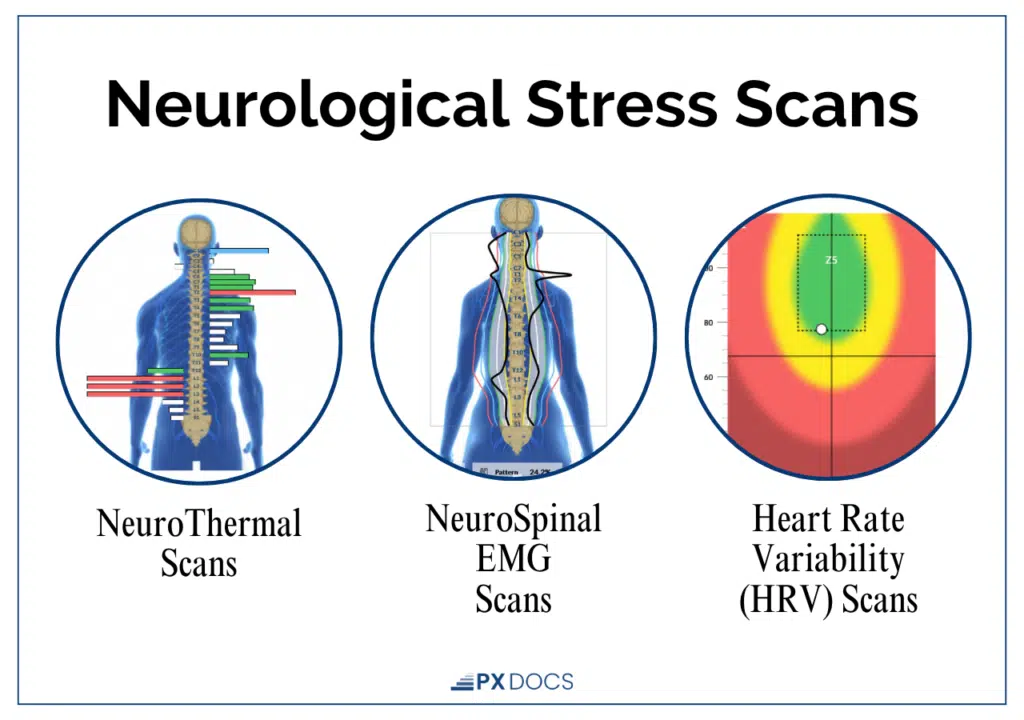
For children with PANDAS, HRV results are often particularly revealing. Low HRV indicates sympathetic dominance; the child’s “gas pedal” is floored, while their vagus nerve “brake pedal” isn’t working. This objective data helps explain why their immune system overreacted to the strep infection and why they’re struggling to recover.
By identifying specific patterns of subluxation and nervous system dysregulation, Neurologically-Focused Chiropractic Care creates a targeted approach to restoring proper vagal tone and autonomic balance—supporting the child’s overall healing alongside whatever medical or integrative care plans they’re already pursuing.
How Does PANDAS OCD Connect to Other Childhood Conditions?
One pattern that consistently shows up in clinical practice is the overlap between PANDAS and other conditions rooted in Autonomic Nervous System dysfunction. Many children with PANDAS OCD also carry diagnoses of ADHD, Autism, Sensory Processing Disorder, emotional dysregulation, and chronic gut or immune challenges.
This isn’t a coincidence. Research on PANDAS has noted a strong overlap between OCD, tics, and ADHD in affected children, with the basal ganglia serving as the shared neuroanatomical substrate. Studies have also found that nearly half of children in PANDAS cohorts have family members with OCD, tics, or other neurological conditions, suggesting genetic vulnerability in how the nervous system responds to immune triggers.
From a Neurologically-Focused perspective, these overlapping conditions share a common root: pediatric dysautonomia and nervous system dysregulation. When a child’s Autonomic Nervous System is stuck in sympathetic dominance, it doesn’t just affect immune regulation; it impacts sensory processing, emotional regulation, gut function, focus, and behavior all at once.
This is why many PANDAS families find that when they start addressing the foundational nervous system dysfunction, improvements show up across multiple areas simultaneously.
What Steps Can Parents Take Right Now?
If your child is showing signs of sudden-onset OCD or other neuropsychiatric changes, trust your instincts and start documenting everything—when symptoms began, any recent infections, and how quickly behaviors escalated. This temporal data is exactly what helps establish a PANDAS connection.
Work with your child’s medical or integrative team to investigate active infections, and don’t hesitate to seek a second opinion if your concerns are dismissed. At the same time, consider looking deeper at your child’s nervous system function. A Neurologically-Focused Chiropractor trained in pediatric care and equipped with INSiGHT Scanning technology can objectively assess whether subluxation and vagus nerve dysfunction are contributing factors—providing data-driven insight into the autonomic dysregulation that may be making them vulnerable to neuroimmune episodes.
You don’t have to choose between appropriate medical care and neurological care. The most comprehensive approach addresses the infection, supports the immune system, and restores nervous system regulation simultaneously. Visit the PX Docs Directory to find a trained Neurologically-Focused Chiropractor near you.