

As a parent of a child with autism, you have probably spent more late nights researching your child’s health than you ever imagined you would. You have read about the gut. You have read about detox pathways. And somewhere along the way, you ran into the word that sent you down another rabbit hole at 2 am: mitochondria. Maybe a functional medicine doctor mentioned it. Maybe a supplement company promised it was the answer. And now you are here, trying to figure out what mitochondrial dysfunction actually has to do with your child, and whether fixing it is the key you have been missing.
You are not crazy for chasing this. The science linking energy production and autism is real and growing fast. But there is a part of this story that almost nobody is telling parents, and it is the part that finally makes everything click. Your child’s mitochondria are not the beginning of the problem. They are caught in the middle of it.
In this article, we will walk through what mitochondrial dysfunction in autism really means, what the newest research actually says, and why the energy problem you keep reading about is downstream of something deeper: your child’s nervous system. Once you see how these pieces connect, you will understand why so many families spend thousands on mitochondrial support and still feel stuck, and where the real change happens.
What Is Mitochondrial Dysfunction in Autism?
Mitochondria are the tiny power plants inside nearly every cell in your child’s body. Their main job is to turn food and oxygen into usable energy. The brain is the hungriest organ of all, burning roughly 20% of the body’s total energy while making up about 2% of its weight. So when the power plants underperform, the brain feels it first.
Mitochondrial dysfunction simply means those cellular power plants are not producing energy the way they should. In children with autism, researchers have found signs of this at the biochemical level: sluggish activity in the electron transport chain (the assembly line that generates cellular energy), higher markers of oxidative stress, and problems with how cells handle calcium and clear out damaged parts.
A 2024 review in the journal Molecular Psychiatry put it plainly. The authors describe how impaired energy production can have a significant negative effect on brain development and function, to the point that some scientists have proposed autism itself may be, in part, a mitochondrial disease. That is a striking claim, and it deserves to be taken seriously.
At the same time, that same review is refreshingly honest about the biggest open question in this entire field, which we will come back to shortly.
How Common Is Mitochondrial Dysfunction in Kids With Autism?
This is where the numbers get interesting and where many parents get misled.
Classic, inherited mitochondrial disease, the kind caused by a specific genetic mutation, is actually rare in autism. But signs of mitochondrial dysfunction, meaning the power plants are struggling even without a classic genetic diagnosis, appear to be far more common. One widely cited analysis found that more than 30% of children with autism show biomarkers of abnormal mitochondrial function. The idea itself is not new. The concept of autism as a mitochondrial disease was first proposed back in 1998, and the evidence has only accumulated since.
So the takeaway is this. A large group of kids on the spectrum genuinely do have struggling mitochondria. But very few of them have a broken gene as the cause. That distinction matters enormously, because it points away from “your child was born this way, and there is nothing to do” and toward a much more hopeful question: what is putting so much strain on these kids’ energy systems in the first place?
Signs a Child’s Energy System May Be Struggling
Mitochondrial strain does not show up on a single, obvious test. It shows up as a pattern. Parents of kids with autism often notice their child:
- Fatigues quickly or seems to “run out of gas” faster than other kids
- Has low muscle tone, poor endurance, or a floppy, “leans on everything” quality
- Regresses or loses skills during or after illnesses, fevers, or infections
- Struggles more when sick, stressed, or sleep-deprived
- Has ongoing digestive issues alongside developmental challenges
- Shows delays in motor milestones, coordination, and postural control
- Has trouble recovering after big meltdowns, as if the tank is fully empty
If several of these sound familiar, you are seeing what a strained energy system can look like from the outside. But here is the piece almost nobody connects for you: many of these same signs are also the classic fingerprint of a dysregulated nervous system. That overlap is not a coincidence.
The Question the Research Keeps Asking: Cause or Consequence?
Here is the honest heart of this whole conversation, and it is the part the supplement ads skip.
That 2024 Molecular Psychiatry review that lays out the mitochondria-autism connection in such detail also states directly that scientists still do not know whether mitochondrial dysfunction is a cause of autism or a consequence of it. Read that again, because it changes everything. The researchers driving this field are openly saying the energy problem might be a downstream effect, not the origin.
Think about what that means for your family. If mitochondrial dysfunction were the root cause, then loading a child up with mitochondrial supplements should reliably fix things. And yet you have probably talked to plenty of parents (or lived it yourself) who did exactly that and saw modest or short-lived results. That gap between the theory and the reality is your clue. If the mitochondria are the middle of the story rather than the beginning, then supporting them alone will never be enough. You have to ask what is driving the energy demand and the oxidative stress in the first place.
That question leads directly to the one system that controls how much energy your child’s body is asked to burn every second of the day: the nervous system.
The Fourth M Word: Movement and the Nervous System
Walk into the natural health and biomedical autism world, and you will hear three words over and over: Microbiome, Mitochondria, and Methylation. Parents pour time and money into all three, and all three matter. But there is a fourth layer that almost nobody names, and it sits beneath the other three. We call it Movement, or more precisely, the neuro-sensory-motor system, and it is governed by the nervous system.
Here is the principle that reframes the whole picture. Your child’s Autonomic Nervous System is the master regulator that decides, moment to moment, how much energy the body burns and how much it saves. It runs on two modes. The Sympathetic Nervous System is the gas pedal: fight, flight, alarm, high energy burn. The parasympathetic side is the brake pedal: rest, digest, repair, and crucially, recharge. Healthy kids shift smoothly between the two all day long.
When a child is stuck in a chronic state we call dysautonomia, that smooth shifting breaks down. It is like driving with one foot jammed on the gas and one on the brake at the same time. The body is running its engine at redline for hours on end, never dropping into the parasympathetic “rest and repair” state where the mitochondria actually recover.
Now picture what that does to a power plant. If the nervous system is constantly demanding maximum output while never allowing downtime for maintenance, the mitochondria are forced to burn hot and never rebuild. Chronic sympathetic overdrive can drive up oxidative stress and inflammation in the brain, the exact same damage seen in the mitochondrial research. In other words, a nervous system stuck in fight-or-flight can create the perfect conditions for mitochondrial dysfunction to develop and persist. The nervous system sets the energy demand. The mitochondria just try to keep up.
This is why we say no supplement fixes corrupted data. You can feed the power plants all the raw materials in the world, but if the system controlling them is stuck screaming “emergency” around the clock, the energy crisis continues.
The “Perfect Storm,” Where the Whole Pattern Begins
If chronic nervous system dysregulation can drive the energy crisis, the next fair question is: why is a child’s nervous system stuck in fight-or-flight in the first place? This is where “The Perfect Storm” comes in, the framework Dr. Tony Ebel developed to explain the root-cause sequence behind so many childhood neurological challenges. It unfolds in three core layers.
- Early neurological stress (before birth). Prenatal stress, maternal health struggles, and a highly activated environment in the womb can prime a baby’s developing nervous system toward sympathetic dominance before they ever take a breath.
- Birth trauma and intervention. Birth trauma from interventions like C-section, forceps, vacuum extraction, or a long, stalled labor can place real strain on the upper neck and brainstem, the exact region that runs autonomic regulation. Even a “normal” delivery involves significant force on a baby’s delicate neck and nervous system.
- Early childhood toxic load. After birth, the modern world piles on: environmental toxins, repeated antibiotics, frequent illnesses, and chronic stressors that overwhelm a developing neuro-immune system.
Stack these together, and you get a nervous system that never fully learned to settle into rest, repair, and regulation. It gets stuck on the gas pedal early, and stays there. That is the upstream storm that the mitochondrial dysfunction, the gut issues, and the methylation struggles all sit downstream of.
Subluxation: The Neurological Interference Beneath the Energy Crisis
When “The Perfect Storm” overwhelms a developing nervous system, it often leaves behind what we call subluxation. This is not just “a bone out of place,” and understanding it correctly is important. Subluxation is a neurological dysfunction with three components working together:
- Misalignment (altered positioning within the neurospinal system)
- Fixation and restricted motion (tension and reduced movement in those segments)
- Neurological interference (the resulting disruption of the sensory information flowing into the brain).
That third component is the one that matters most for the energy conversation. When movement and position sensors in the spine and neck are not sending clean signals, the brain is essentially working with corrupted input. It cannot accurately gauge where the body is, whether it is safe, or how much energy to spend. The predictable result is a nervous system that leans toward alarm and overdrive, which loops us right back to the chronic sympathetic state that taxes the mitochondria.
This is also where the vagus nerve enters the story. The vagus nerve is the body’s main parasympathetic pathway, the one responsible for calming, digesting, and repairing. When it is suppressed by ongoing nervous system dysregulation, the brake pedal barely works, and the body loses its ability to enter the restorative state in which cellular energy is rebuilt.
Why Conventional and Even Functional Approaches Often Fall Short
Conventional medicine tends to care for autism as a behavioral and genetic condition, managing symptoms with therapy and sometimes medication, while rarely investigating the neurological and energetic roots underneath. Many parents leave those appointments feeling dismissed, told their concerns are just part of the diagnosis.
Functional and biomedical approaches go further and deserve real credit. They are the ones digging into the microbiome, the mitochondria, and methylation, and that work genuinely helps some kids. But even excellent functional medicine often stops one layer short. It supports the power plants and the gut without first addressing the nervous system that controls both. That is why the right interventions in the wrong order so often produce disappointing results. It is like remodeling a house without first checking whether the foundation is cracked.
The order matters. The nervous system comes first, then the motor and developmental foundation, then gut and immune support, including targeted supplements, and finally the brain-based therapies like speech, OT, and ABA. When done in that sequence, each layer works better because it builds on a stable base.
How Neurologically-Focused Chiropractic Care Addresses the Root
This is where Neurologically-Focused Chiropractic Care fits into your child’s journey. Before we go further, an important note. It’s important to note that this technology does not diagnose medical conditions, and Neurologically-Focused Chiropractic Care is certainly not a treatment or cure for autism or any other condition, not even back pain. Instead, these INSiGHT Scans help us track down the root cause of nervous system dysfunction and dysregulation, and build customized care plans and adjusting protocols to help shift the nervous system back into a state of balance, regulation, and resilience.
We do not guess; we test. The INSiGHT Scans, a technology developed by the Chiropractic Leadership Alliance (CLA), provide an objective look at how a child’s nervous system is functioning. Three scans work together: thermal scanning to assess autonomic and organ regulation, surface EMG to measure how much energy the muscles and nervous system are burning, and Heart Rate Variability to reveal the balance between the gas pedal and the brake pedal. That EMG piece is especially relevant here, because it can show us a nervous system that is burning energy at redline all day long, exactly the kind of chronic demand that drains a child’s mitochondria.
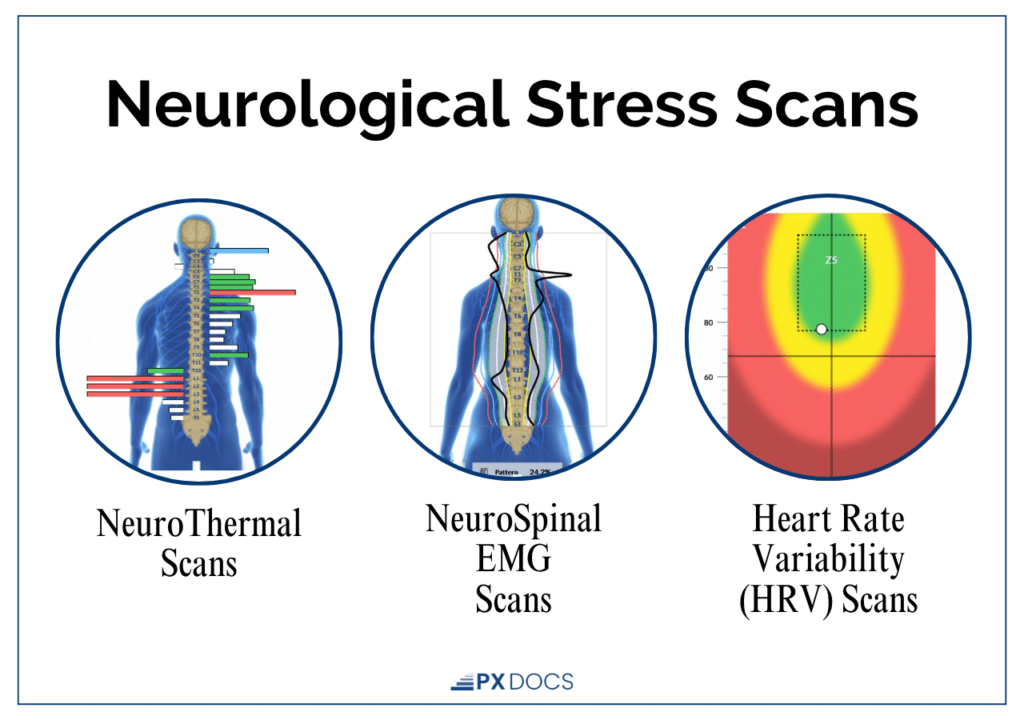
From there, gentle, specific neuro-tonal adjustments work to reduce the neurological interference, calm sympathetic overdrive, and restore parasympathetic tone through the vagus nerve. The goal is not to force change but to help the nervous system finally shift out of survival mode and into the rest-and-repair state where healing, development, and yes, cellular energy recovery, can actually happen. When the demand side calms down, the supply side finally gets a chance to catch up.
Bringing It All Together for Your Child
If you came here searching for answers about mitochondrial dysfunction and autism, here is what we hope you take away. The energy research is real and important, and your instinct to dig into it was a good one. But the mitochondria are likely the middle of your child’s story, not the beginning. Even the researchers leading this field admit they cannot yet say whether the energy problem is a cause or a consequence. Our clinical experience and the logic of how the body regulates energy point strongly toward a nervous system stuck in overdrive as the upstream driver.
That reframe is genuinely hopeful. It means your child is not simply broken at the cellular level. It means there is a foundational layer, the nervous system, that can be assessed, supported, and helped to regulate, so that everything you are already doing for the gut, the mitochondria, and the methylation finally has a stable base to work from.
If this resonates with what you have been seeing in your child, the next step is to have their nervous system evaluated by someone trained to look at it this way. You can find a PX Doc near you in our directory and schedule an INSiGHT Scan to see what is really happening underneath the surface. For a deeper look at the neurological root-cause approach to the spectrum, A Deep Dive Into All Things Autism episode of the Experience Miracles Podcast is a great place to start.
Your child’s story is not over. In many cases, it is just finally being told from the right beginning.
P.S. from Dr. Tony Ebel: I spent years watching families do everything “right” on the gut and supplement side and still feel stuck, and it broke my heart until I understood the order this all has to happen in. If you have been pouring energy into mitochondrial support and not seeing what you hoped for, please do not read that as failure. Read it as a sign that there is a deeper layer worth checking. Get the scans. Find out if the nervous system is the piece you have been missing. Your child was designed to heal, and so often the body just needs the interference removed and the right order restored.