
Your child has watched the same eleven minutes of the same show every day for four months, or can name every excavator model on the job site down the street, but can’t tell you how school went.
Autism obsessions, called restricted interests or special interests in clinical settings, are intensely focused fixations on a specific topic, object, activity, or routine. They’re one of the core diagnostic features of Autism, and they are not a behavior problem. Neurologically, they work as a regulation strategy: a nervous system running in high alert reaches for the most predictable input it can find, because predictability is the only brake it has left.
The CDC notes that a DSM-5 Autism diagnosis requires at least two of four types of restricted, repetitive behaviors, so parents get plenty of confirmation that fixations are “part of Autism.” What they rarely get is an explanation of why the nervous system needs them, or why the intensity climbs during some seasons and eases during others.
We’ll cover what Autism obsessions actually are, how to tell them apart from OCD and stimming, what’s driving them at the level of the Autonomic Nervous System, and when the intensity is telling you something you shouldn’t ignore.
What Are Autism Obsessions?
Autism obsessions are highly restricted, fixated interests that are unusual in their intensity or focus. Clinicians group them under restricted and repetitive behaviors and interests (RRBIs), alongside repetitive movements, insistence on sameness, and sensory-seeking or sensory-avoiding behaviors. The interest itself is often ordinary (trains, weather, elevators, a video game). What sets it apart is the depth of absorption and the distress that shows up when access is interrupted.
Researchers generally classify RRBIs into two clusters: motor-driven and cognitively driven. The motor-driven ones are hand flapping, rocking, and spinning objects. The cognitively driven ones include insistence on sameness, rigid routines, and circumscribed interests. Autism obsessions sit in that second group, which matters clinically, because those behaviors track much more closely with anxiety and stress load than the motor ones do.
A 2024 meta-analysis covering 33 studies and 8,347 participants with autism found positive correlations between restricted/repetitive behaviors, intolerance of uncertainty, and anxiety. All three move together. The relationship between anxiety and intolerance of uncertainty was strongest in younger participants.
Read that finding again, because it reframes everything. The fixation isn’t sitting next to the anxiety by coincidence. It’s what the child does about the anxiety.
Worth noting on language: many people with autism and clinicians prefer “special interests” or “restricted interests” over “obsessions,” because “obsession” implies something to be removed. We use both here so parents searching the term they know can find real answers. But the framing matters, and we agree with the community on this one.
What Do Autism Obsessions Look Like in Children?
Autism obsessions show up as a narrow set of topics or activities that dominate a child’s attention, conversation, and play far beyond what’s typical for their age. The clearest marker isn’t the interest itself; it’s what happens when you try to redirect away from it.
Common signs of autism obsessions in children include:
- Repeating the same media on a loop: the same episode, the same song, the same page of the same book, sometimes dozens of times a day
- Amassing facts on one topic (dinosaurs, flags, train schedules, HVAC systems) with encyclopedic recall
- Collecting or arranging objects in a specific order, with visible distress if the order changes
- Scripting: reciting lines from shows, ads, or past conversations verbatim
- Rigid routines around the interest, such as the same route, same seat, same cup, same sequence
- Steering every conversation back to the topic, regardless of context
- Fascination with parts of objects rather than the whole (wheels, fans, hinges, spinning things)
- Big emotional escalation when the interest is interrupted, taken away, or unavailable
- Interference with basics like eating, sleeping, toileting, or leaving the house
One pattern that gets overlooked: the interest often intensifies right around illness, poor sleep, schedule changes, a new school year, or a growth spurt. Parents frequently describe it as their child “getting more stuck.” Clinically, that’s rarely a coincidence. A review found that RRBIs serve regulatory and adaptive roles, helping people with autism manage sensory experiences, cope with anxiety, and introduce control into their environment.
Why Does My Child with Autism Fixate on One Thing?
Children with autism fixate because their nervous system is running with the gas pedal down and the brake pedal barely working, and a predictable, controllable interest is the most reliable way to bring the arousal level down. When a child’s system can’t self-regulate internally, it borrows regulation from the outside world, and sameness is the cheapest, fastest source available.
That “gas pedal and brake pedal” framing is how we explain autonomic balance to parents. The Sympathetic Nervous System is the gas pedal (fight or flight, activation). The Parasympathetic branch is the brake pedal (rest, digest, regulate). Children living in sympathetic dominance have a stuck gas pedal. They can’t downshift into rest, digestion, sleep, or emotional regulation on their own.
The research backs this up. Studies have measured reduced cardiac parasympathetic activity in children with Autism. More recently, a 2022 study recorded heart rate variability in 106 children and adolescents and found that children with Autism showed hyper-arousal during demanding tasks. Across every diagnostic group, the children characterized by hyper-arousal had more severe autism traits, more anxiety, and lower global functioning.
The vagus nerve is central to this. It’s the longest cranial nerve in the body, carrying parasympathetic signals between the brain and the heart, lungs, and digestive organs. Vagal tone, a measurable indicator of how well that nerve is working, is closely tied to emotional resilience, immune regulation, and digestive health. When vagal tone is low, a child has almost no capacity to recover from ordinary stress, so they hunt for the one input that never surprises them.
That’s what a special interest delivers. Total predictability. No social ambiguity, no sensory surprises, no demands. Research has found that sensory processing difficulties were directly associated with repetitive behaviors in children with Autism. The harder the sensory world is to process, the more the repetitive behavior gets used.
The Connection Parents Notice But Rarely Get Explained
Children with intense Autism obsessions frequently also have ADHD, Sensory Processing Disorder, anxiety, constipation, and sleep struggles. That co-occurrence isn’t a coincidence or bad luck. All of these trace back to the same root: Autonomic Nervous System dysfunction, or pediatric dysautonomia, where the sympathetic and parasympathetic branches are out of balance. In the previous 2022 study, they mentioned that Autism and ADHD showed nearly opposite arousal profiles from the same underlying autonomic instability. One system, many labels. The gut-brain axis explains why digestion so often struggles right alongside behavior.
Are Autism Obsessions the Same as OCD or Stimming?
No. Autism obsessions, OCD compulsions, and stimming can look similar from across the room, but they feel completely different from the inside, and they serve different purposes.
- Autism obsessions are usually experienced as wanted. The child seeks out the interest, enjoys it, and finds it calming. Distress comes from losing access, not from the interest itself.
- OCD compulsions are usually experienced as unwanted. They’re driven by intrusive thoughts and a feeling of dread, and the ritual brings relief rather than pleasure. A child with OCD often wishes they could stop.
- Stimming is repetitive movement or sound (hand flapping, toe walking, teeth grinding) used to discharge built-up neurological tension. It’s typically automatic rather than chosen.
The overlap makes sense once you see the shared driver. All three sit downstream of a dysregulated nervous system, trying to find safety. A child can absolutely have all three at once, which is why sorting them by behavior alone leads parents in circles. Sorting them by function and by what the nervous system is trying to accomplish is far more useful.
When Should Parents Worry About an Autism Obsession?
The interest itself is almost never the problem. The intensity is the signal worth watching, because intensity helps track how much stress the nervous system is carrying.
A published study in Autism Research found that special interests were associated with higher subjective well-being and greater life satisfaction across domains, including social contact and leisure. But very high-intensity engagement was negatively related to well-being. The interest helps. Being consumed by it does not.
That gives parents a practical gauge. Watch for:
- The interest is crowding out sleep, food, toileting, or safety
- Escalating rage or meltdowns when access is interrupted, beyond what used to happen
- Needing more of it than before to reach the same level of calm
- Losing skills or flexibility that the child previously had
- The whole family reorganizes daily life around it
That fourth and third point together describe something we see constantly. Repetition wires pathways deeper. Nerves that fire together wire together, which is why practicing a free throw makes you better at free throws. The same principle applies here: the more a child leans on one interest to regulate, the more they need it to get the same effect. That’s neurology, and it signals the underlying regulation problem hasn’t been addressed.
The Nervous System Dysregulation Behind Autism Obsessions
The nervous system dysregulation driving intense fixations typically develops long before the fixations show up, through an accumulating sequence of early stressors. At PX Docs, we call this sequence “The Perfect Storm,” a framework developed by Dr. Tony Ebel.
It unfolds in three phases:
- Preconception & Prenatal stress. Fertility struggles, high maternal stress or illness, and medication use during pregnancy expose the developing nervous system to elevated stress hormones. Prenatal stress can shift a baby’s autonomic balance toward sympathetic dominance before birth.
- Birth trauma. C-section, forceps, vacuum extraction, induction, and prolonged or stalled labor place strain on the upper neck and brainstem, the region most densely packed with the sensory receptors the brain depends on. Birth trauma can lock tension into the neurospinal system from day one.
- Early childhood stressors. Repeated antibiotics, chronic ear infections, environmental toxins, falls, and illness stack additional load onto a system that never had slack to begin with.
What ties these together neurologically is subluxation. Subluxation involves three things at once: physical misalignment, joint fixation (loss of normal motion), and neurological interference that disrupts and distorts the signaling between brain and body. That third component is the one that matters most here. When the upper neck and brainstem carry that interference, the brain receives less movement-based sensory input than it needs to stay calm, and more stress-signaling input that keeps the gas pedal down.
The result is a child whose system reads ordinary life as threatening. And a child who reads the world as threatening will build a fortress out of whatever is predictable, whether that’s a train timetable or eleven minutes of the same episode.
Using INSiGHT Scans to Measure What’s Driving Autism Obsessions
INSiGHT Scans are a three-part neurological assessment used in Neurologically-Focused Chiropractic Care to measure how a child’s nervous system is actually functioning. Heart rate variability (HRV) shows autonomic balance and vagal tone. Surface electromyography (sEMG) maps muscle tension patterns along the neurospinal system. Thermal scanning reads temperature differences that point to autonomic dysfunction.
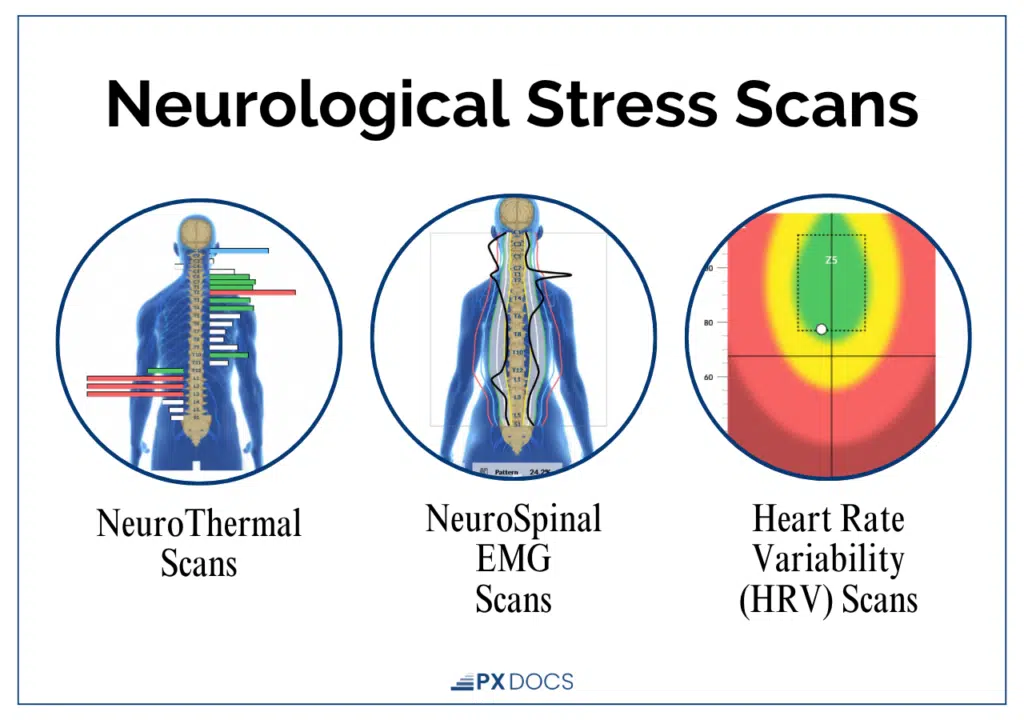
For a child with intense fixations, this changes the conversation. Instead of guessing whether the interest is “too much,” a doctor can look at objective data: is this child sitting in sympathetic dominance, and how much reserve do they have left?
This technology does not diagnose medical conditions, and Neurologically-Focused Chiropractic Care is certainly not a treatment or cure for Autism or any other condition, not even back pain. These scans track down the root cause of nervous system dysfunction and dysregulation, so a doctor can build a care plan aimed at shifting the system back toward balance, regulation, and resilience.
Adjustments in this model address subluxation and the neurological interference that comes with it. As that interference reduces, many families report that the fixations loosen on their own, not because anyone took the interest away, but because the child stopped needing it so badly.
How Parents Can Support a Child With Intense Interests
Support the interest and reduce the load. Those two moves together do far more than trying to shrink the interest directly.
Practical steps that work with the nervous system rather than against it:
- Don’t remove it abruptly. Pulling away a child’s primary regulation tool during a stressful stretch reliably produces a meltdown, because you’ve removed the brake without fixing the gas pedal.
- Give real transition warnings. Timers, visual countdowns, and consistent language reduce uncertainty, which is exactly the variable the Bird meta-analysis flagged.
- Build it into learning and connection. Interests are the fastest route to language, emotional regulation practice, and shared attention.
- Watch your own sequencing. Families often stack four or five therapies at once. If a child’s nervous system is already overwhelmed, adding more input can make the fixations worse, not better. Sometimes doing less accomplishes more.
- Track the pattern, not the day. Note what the interest looks like during good weeks versus hard ones. That log is genuinely useful information for any provider.
Avoid treating the fixation as defiance. It isn’t a choice. A child cannot decide their way out of a stuck autonomic state any more than they can decide their way out of a fever.
The Next Step for Your Child
Your child’s fixations aren’t a character flaw or a habit to break. They’re an adaptation, and a fairly intelligent one, built by a nervous system doing its best to find safety in a world that reads as too loud, too fast, and too unpredictable. The interest is the solution your child found. Our job is to address the problem underneath it.
That’s why we don’t guess- we test. A baseline INSiGHT Scan shows where your child’s nervous system actually sits right now: how much sympathetic drive is running, how much vagal tone is available, where tension is locked into the neurospinal system. Then repeat scans at intervals throughout care tell us whether the system is genuinely responding, whether HRV is climbing back toward the green zone, and whether patterns are organizing. When the data says we’re on track, we keep building. When it says something needs to change, we adjust the plan instead of waiting and hoping. For a child whose interest has been the only thing holding them together, that difference matters, because it keeps care anchored to what’s actually happening inside rather than to how a hard week looked from the outside.
Always talk with your child’s healthcare provider about their specific situation, and know that progress here is rarely linear.
You know your child better than any chart does. If you’ve been sensing that the fixations are a signal rather than the problem, that instinct is worth following. Find a PX Doc near you and get a clear picture of what your child’s nervous system is really doing.