
As a parent, watching your child grow and achieve new milestones is one of the greatest joys. From the first smile to the first step, these moments mark the incredible development happening in their brain and body. But for many families, the excitement of these milestones is overshadowed by concern when their child seems to lag behind.
In recent years, the rates of motor delays and neurological conditions in children have skyrocketed. Studies show that 1 in 6 children now have a developmental disability, ranging from mild speech delays to more severe conditions like cerebral palsy and Autism. For parents navigating this challenging journey, the search for answers can be overwhelming.
We view motor milestones through a different lens. Our focus is on the critical role of the nervous system in orchestrating every aspect of child development. Just like a computer controls all the functions in a car, the brain and nervous system control every function in the body—including motor skills.
If you’ve ever wondered if there’s a missing piece to your child’s health puzzle, this information could be the key to unlocking their full potential. Let’s start by understanding the building blocks of movement—motor milestones.
What are Motor Milestones?
What exactly are motor milestones? These are the observable skills that mark a child’s physical development over time, reflecting the maturation of their brain and nervous system. Motor milestones are typically categorized into two main areas:
- Gross motor skills: These involve the large muscle groups and include abilities like rolling, sitting up, crawling, standing, and walking.
- Fine motor skills: These involve the smaller muscles, particularly in the hands, and include grasping objects, stacking blocks, drawing, and using utensils.
Usually, physical development milestones emerge in a predictable sequence as the brain develops and integrates information from various regions. For example, a baby first learns to hold their head up, then to roll, sit, crawl, and finally stand and walk. This order is not random—each skill builds upon the neurological foundations laid by the previous one.
Some key motor milestones by age range include:
- 3 months: Lifting head and chest during tummy time, opening and closing hands, bringing hands to mouth
- 6 months: Rolling over, sitting with support, transferring objects between hands
- 9 months: Crawling, pulling to stand, picking up small objects with a pincer grasp
- 12 months: Cruising along furniture, standing alone, taking first steps, stacking two blocks
- 18 months: Walking independently, scribbling with crayons, turning pages in a book
While the exact timing may vary, it is important that the sequence of these milestones tends to be consistent. This is because motor development follows a hierarchical progression, with skills at each stage integrating and building upon those that came before.
Think of it like constructing a house: You wouldn’t put up the walls until you’ve laid a strong foundation. Similarly, a baby can’t walk properly until they’ve developed the core strength, balance, and coordination to sit and crawl.
Over time, these motor challenges can influence a child’s overall development. Gross motor delays may limit a child’s opportunities for social interaction and play, while fine motor difficulties can impact self-care and academic skills.
But it goes even deeper than that. Movement isn’t just about physical milestones — it’s how the nervous system grows, strengthens, and wires itself. Crawling, rolling, walking, climbing — all of these actions help build and organize the brain and nervous system, laying the foundation for higher-level functions. So when motor tone is off or movement is delayed, it can interfere with the healthy development of the nervous system, which in turn impacts everything else down the line — digestion and gut health, immune function, sensory processing and integration, and even emotional regulation and social connection.
Simply put, movement is not just a milestone — it’s a critical building block for lifelong health, development, and nervous system regulation.
Red Flags for Motor Delays
As a parent, it’s natural to wonder if your child’s development is on track. While every child grows and learns at their own unique pace, there are certain red flags that could indicate a more significant delay in motor skills. Here are some signs to watch for:
By 3 months:
- Not lifting head during tummy time
- Keeping hands constantly fisted
- Not bringing hands to mouth
- Stiff legs with little or no movement
By 6 months:
- Not rolling over in either direction
- Unable to sit with support
- Not reaching for objects
- Keeping one hand fisted while reaching with the other
By 9 months:
- Not sitting independently
- Not crawling or scooting
- Unable to support weight on legs
- Difficulty transitioning between positions
By 12 months:
- Not pulling to stand
- Not cruising along furniture
- Not using a pincer grasp to pick up small objects
- Not using both hands together
By 18 months:
- Not walking independently
- Walking only on tiptoes
- Not climbing on or off furniture
- Not scribbling spontaneously
While an isolated delay in one area might not always signal a major concern, it’s essential to consider the pattern and sequence of your child’s development — not just whether they’re checking milestone boxes “on time.”
For example, some babies who were born prematurely or spent time in the NICU may have a different developmental timeline — and that’s expected. Likewise, larger babies may take a bit longer to hit motor milestones simply due to size and coordination demands. These variations can be normal as long as the child is progressing in a steady and sequential way.
But sometimes development moves too fast — and that’s not always a good thing either. For instance, while some babies may skip crawling and go straight to walking, crawling is a critical step for organizing the brain and nervous system. Skipping it isn’t just a quirky detour — it can be a sign of underlying neurological stress.
If you notice your child falling behind in multiple developmental milestones or progressing out of sequence, don’t just rely on the “wait and see” approach — it’s time to dig deeper and get real answers.
The risk of waiting is that it can delay intervention during a vital window. The first three years of life are a period of rapid brain development and plasticity — when the nervous system is most open to input and change. In fact, 80% of a child’s brain development happens within the first 1,000 days.
Research shows that early intervention for developmental delays can make a significant difference in outcomes. If you have concerns about your child’s development, trust your instincts. You know your child best — and if something feels off, it’s always better to act early than to wait.
Seek providers who go beyond milestone charts — who know how to evaluate the neurological root causes of delays and create a care plan that truly helps your child thrive.
Conventional View vs. PX Docs Approach
When a child is not meeting their motor milestones, the conventional medical approach often attributes the delays to factors like prematurity, genetic conditions, or a lack of stimulation in the environment. The standard recommendations may include more tummy time, physical therapy to practice specific skills, or even medications to manage muscle tone.
While these interventions can be helpful in some cases, they often target the surface-level challenges — not the neurological root cause driving them. It’s like noticing a crack in the wall of a house and simply patching it over without checking the stability of the foundation.
We take a different approach, viewing motor delays and challenges as a signal that there may be an underlying dysfunction in the child’s nervous system. This dysfunction, known as subluxation, occurs when there is neurological interference within the neurospinal system that disrupts the brain’s ability to properly activate and coordinate muscle tone and movement, often contributing to disrupted movement patterns or developmental delays.
One of the most common effects we see with subluxation is weakness or imbalance in what we call the neuro core — the deep neurological connection between the brain and the postural, stabilizing muscles of the trunk and spine. When this system is under stress, children may struggle with coordination, posture, and balance, making it harder for them to hit milestones like crawling, sitting, or walking in the right sequence.
And because this core neurological foundation is essential for everything from fine motor skills to speech and sensory processing, delays in this area can have a ripple effect across all aspects of development. That’s why addressing subluxation doesn’t just address movement — it helps restore communication and regulation throughout the entire nervous system.
The “Perfect Storm” of Prenatal & Birth Factors
In our experience at PX Docs, motor delays are rarely the result of a single factor. More often, they are the outcome of what we call the “Perfect Storm“—a combination of stressors that converge to disrupt a child’s neurological development through subluxation. This storm often begins brewing before a child is even born.
- Prenatal stress: Studies have shown that maternal stress during pregnancy can have a significant impact on fetal brain development. When a mother experiences high levels of stress, her body releases cortisol, a hormone that can cross the placental barrier and alter the developing nervous system. This can affect the formation of neural pathways involved in motor control and coordination.
- Birth trauma: The storm can intensify during childbirth. The overuse of interventions like C-sections, forceps, and vacuum extractions can stress a baby’s delicate spine and nervous system, potentially causing dysautonomia or subluxations in the upper cervical region and brainstem.
- Vagus Nerve Dysfunction: The vagus nerve is a key to activating the Parasympathetic Nervous System, the part of the nervous system responsible for rest, digestion, and development. When it’s not functioning optimally (vagus nerve dysfunction) due to subluxation or birth trauma, kids can get stuck in fight-or-flight mode. And here’s the key: a child can’t be in growth and development mode while they’re stuck in protection mode. This stress state disrupts motor coordination, speech, behavior, and more.
It’s important to note that not every baby who experiences stress in utero or birth interventions will go on to have motor delays or neurological challenges. However, this early trauma can make a child’s nervous system much more vulnerable to future stressors.
At PX Docs, we take time to dig into every child’s case history to uncover the major stressors that may have disrupted their development — and more importantly, how we can help get their nervous system back on track
Early Childhood Stress
Stress on a child’s nervous system doesn’t end at birth — it can continue through early childhood and contribute to motor delays. Big falls, repeated stumbles, or even well-meaning efforts like propping a child up or helping them walk too soon can all add layers of stress to an already sensitive system. These small stressors, especially when stacked on top of birth trauma or early developmental challenges, can interfere with a child’s ability to build strength, coordination, and balance in the right sequence.
This isn’t about blame — kids are going to fall, and as parents, we’re all learning as we go. But recognizing how these everyday experiences impact the nervous system gives us the opportunity to address them. With the right care, we can help unwind that stress and support the body in getting back on track developmentally
Using INSiGHT Scans and Chiropractic Adjustments
So, how do we identify this underlying neurological imbalance? At PX Docs, we use state-of-the-art technology called INSiGHT scans to objectively measure nervous system function.
INSiGHT scans include:
- Heart Rate Variability (HRV): Measures the balance and adaptability of the Autonomic Nervous System. Low HRV is a marker of sympathetic dominance and stress.
- Surface EMG: Measures the energy and activity within the paraspinal muscles, which are directly controlled by the nerves coming from the spinal cord. These muscles play a major role in posture, stability, and motor coordination. When the scan shows abnormal patterns — such as areas of high tension or low energy — it’s a sign that the nervous system isn’t communicating properly with the muscles.
- Thermal Scanning: Detects inflammation along the spine, which can be a sign of autonomic imbalance and altered blood flow.
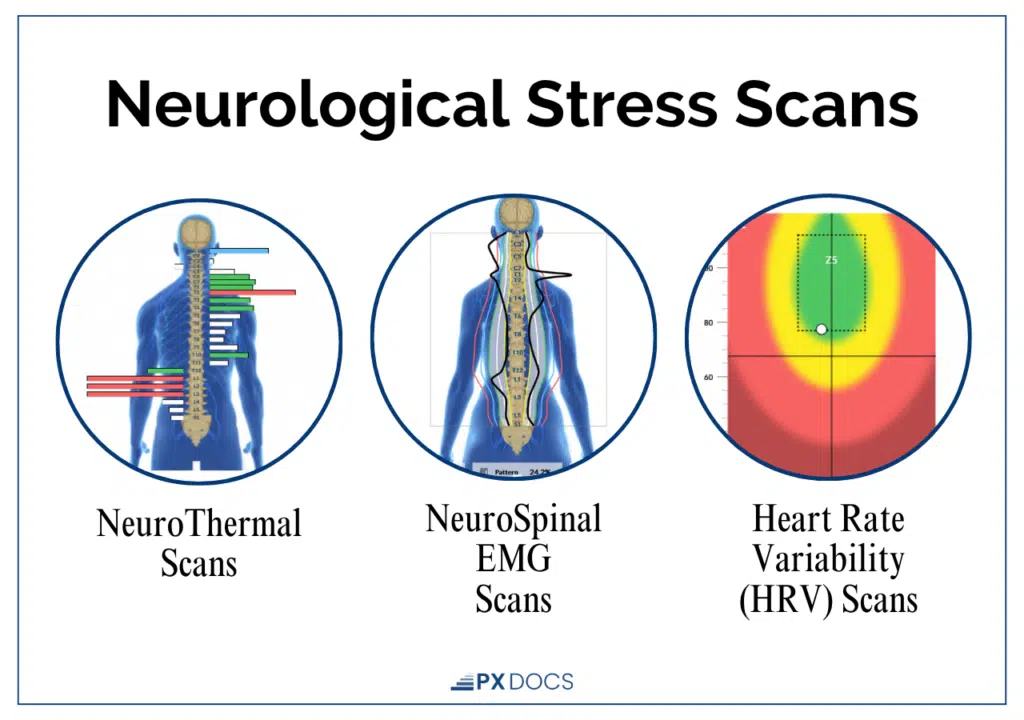
This objective data is crucial for creating a customized care plan to support each child’s unique needs. It also allows us to track progress over time, ensuring that our interventions are having a measurable impact on nervous system function.
With the insights gained from these scans, Neurologically-Focused Chiropractors can provide targeted adjustments to restore balance to the nervous system. These adjustments are highly specialized, gentle, and tailored to each child’s age and developmental stage.
By combining in-office care with a nurturing home environment, we create the conditions for a child’s nervous system to thrive. Over time, countless parents report seeing improvements not just in motor skills, but in sleep, digestion, behavior, and overall resilience.
Reaching Your Child’s Full Potential
Motor development milestones are so much more than a checklist of skills to achieve. They are a reflection of a child’s neurological health and a window into their future potential. When we shift our focus from external signs to the internal workings of the nervous system, we open up a world of possibilities for our children.
We are committed to helping children achieve optimal health and development by identifying and addressing the root causes of dysfunction. Our INSiGHT scans and Neurologically-Focused adjustments are transforming the way we approach pediatric care.
If you suspect your child may be struggling with motor delays or other neurological challenges, we encourage you to visit our directory and find a PX Docs practitioner near you. With the right support and care, your child’s nervous system can be restored to its full potential, allowing them to grow, thrive, and achieve their unique milestones.
The path to healing is not always easy, but it is always worth it. At PX Docs, we are honored to be your partners in unlocking your child’s full potential.