
Your child gets sick. Again. This time it’s another ear infection, the third one in four months. The pediatrician prescribes antibiotics, reassures you with “some kids just get sick more,” and sends you home. Three weeks later, you’re back with a different infection. But this time it drives in deeper, now settling into their chest and leaving them coughing all night and struggling to breathe properly.
The cycle repeats until you lose count of how many rounds of antibiotics your child has been on before their fifth birthday, and how many times you’ve had to use the nebulizer and steroid-based medications to try and help them clear up the congestion, suppress the inflammation, and just make it through.
We hear this story from parents every single day. Approximately 40% of children now struggle with chronic health conditions, and 70% of children receive a course of antibiotics before age two. While other kids bounce back from a cold in days, your child holds onto it for weeks. They look pale and exhausted. Dark circles have become permanent fixtures under their eyes. The congestion never fully clears.
What most conventional pediatricians, and often even holistic or functional providers, don’t discuss is that your child’s immune system doesn’t operate independently, and rock-solid immune health goes deeper than just fixing the gut and restoring the microbiome. The immune system is directly controlled by their nervous system, specifically, by a single nerve that may have been injured during the most vulnerable moment of their life.
What Is Immune System Dysregulation?
Immune system dysregulation is a breakdown in the body’s control of its own immune response. The immune system isn’t simply weak or strong; it’s miscalibrated. It responds when it shouldn’t, fails to respond when it should, or can’t shut a response off once the threat is gone.
Clinically, that shows up in three broad patterns:
- Under-reactive (immune suppression): the child catches everything going around and holds onto it far longer than their peers. Infections settle in deep and keep coming back.
- Over-reactive (immune hypersensitivity): the system treats harmless things as threats. Severe allergies, eczema, asthma, and outsized reactions to minor triggers like a bug bite.
- Both at once: the most common pattern we see in kids, and the most confusing for parents. The same child who can’t fight off a simple cold is also reacting violently to foods, pollen, and seasonal changes.
That third pattern is the tell. A child who is simultaneously under-defended and over-inflamed doesn’t have a “weak immune system”; they have an immune system that has lost its regulator. And in children, that regulator is the nervous system.
This is why “boost the immune system” advice so often falls flat. You cannot boost your way out of a control problem. If the thermostat is broken, adding more heat doesn’t fix the room.
What Immune System Dysregulation Looks Like in Kids
Parents usually recognize this picture long before anyone gives it a name. As Dr. Tony Ebel puts it, you can spot a chronically sick kid from a mile away: bags under the eyes, a permanent nasal quality to their voice, and skin that just looks tired.
The everyday signs cluster like this:
- Frequent infections (ears, sinuses, throat, chest) that recur as soon as the last round of medication ends
- Illnesses that last weeks rather than days, with lingering congestion or a cough that never fully resolves
- Eczema, rashes, or skin reactions that don’t clear
- Severe seasonal, environmental, or food reactions
- Inflammation markers that come back elevated with no clear explanation
- Chronic fatigue, poor sleep, and low stamina even between illnesses
- Digestive issues running alongside all of it, chronic constipation, reflux, bloating
- Sudden behavioral or neurological changes following an infection, a pattern that can look like PANDAS or PANS
Here’s the piece that matters most. Getting sick is not, by itself, dysregulation. Kids are supposed to get some fevers and some congestion in their first few years. That’s how a developing immune system learns its job. Dysregulation is when the system can’t finish the job, when it never gets to the other side and comes out stronger.
The Multi-Faceted System Your Pediatrician Doesn’t Discuss
Your child’s nervous, immune, and hormonal systems aren’t three separate systems working independently. They function as a single integrated unit, a system researchers call the neuroendocrine-immune (NEI) supersystem. Think of it like a three-legged stool. If one leg becomes wobbly, the entire thing tips over. You can’t stabilize it by only focusing on the legs that look fine. Add the gut as a fourth leg, and now you’re sitting on a chair, but the principle holds.
The connections are anatomical, biological, and direct. Autonomic nerves from your child’s nervous system literally connect to their immune organs: the spleen, thymus, and lymph nodes. These systems communicate constantly through shared chemical messengers. Neurotransmitters, which we think of as “brain chemicals,” also tell immune cells what to do.
Hormones that we associate with stress affect how the immune system responds to threats. Cytokines are chemical messengers that immune cells release to fight infections also send signals back to the brain, influencing everything from mood to sleep to appetite. This is bidirectional communication happening 24/7.
So why doesn’t your pediatrician talk about this? Medical specialization creates silos. Immunologists study the immune system, neurologists the nervous system, endocrinologists the hormones. Each becomes an expert in their domain, but the connections between them get lost. Most pediatricians learned these systems as separate chapters in medical school, so their care approach reflects that: suppress the fever, kill the bacteria, reduce the inflammation. Manage the symptoms, not the system that controls them.
Here’s what changes everything: the nervous system is the air traffic control tower for every other system. It regulates immune responses, determines whether inflammation turns on or off, and decides whether your child mounts an appropriate defense or an excessive one.
When the nervous system is dysregulated, which happens far more often than most parents realize, immune function becomes disrupted, dysfunctional, and off track. This explains why your child stays sick while other kids in the same classroom, exposed to the same germs, stay healthy. The difference isn’t just immune system strength; it’s whether the nervous system can properly control the immune system. And the key to that control lies in one nerve most parents have never heard of.
The Vagus Nerve, Your Child’s Immune System “Off Switch”
The vagus nerve is the longest cranial nerve in your child’s body. It wanders from the brainstem down through the neck, past the heart and lungs, all the way to the digestive system. Its name literally means “wandering nerve” in Latin. This nerve controls what’s called the Parasympathetic Nervous System, the “rest, digest, and regulate” functions that allow your child’s body to heal, recover, and function normally.
Here’s why location matters: the vagus nerve exits the skull through the upper neck, right where birth trauma tends to occur. Then it travels down to connect with the gut, where 70-80% of the immune system lives. The vagus nerve is the main communication highway between your child’s brain and immune system.
Scientists call this the cholinergic anti-inflammatory pathway, but here’s what it actually means: the vagus nerve acts as your child’s inflammation off-switch. When it’s working properly, here’s what happens:
- Detection Phase: The vagus nerve is the body’s security camera system, running around the clock. Its sensors detect inflammation, pathogens, mucus, and congestion anywhere in the body.
- Processing Phase: This information travels up to the brainstem, where it’s evaluated and graded. Is this a real threat? How strong should the response be?
- Response Phase: The vagus nerve sends signals back down, releasing a chemical called acetylcholine, the “calm down” messenger. This suppresses excessive inflammatory chemicals (cytokines like TNF-alpha and interleukins) and keeps the immune response from spiraling.
- Resolution Phase: The inflammation does its job. Fights the infection, repairs the damage, and then turns off. Your child recovers and returns to baseline.
When the vagus nerve isn’t functioning properly, kids get stuck between detection and response. Their body recognizes the problem, tries to respond, but can’t complete the cycle. The fire alarm keeps blaring even after the fire is out. Chronic inflammation becomes their baseline instead of the exception.
Think of it like a car with two pedals. The Sympathetic Nervous System is the gas pedal; it activates fight-or-flight, ramps up inflammation, and prepares the body for threats. The Parasympathetic Nervous System, controlled by the vagus nerve, is the brake pedal; it calms everything down, turns off inflammation, and allows rest and recovery. Many kids today are stuck with the gas pedal pressed to the floor and a brake pedal that barely works.
Why would stress mode drive up inflammation in the first place? Picture the caveman running from the saber-tooth tiger. If that tiger catches him, there are going to be wounds. So the body pre-loads a pro-inflammatory state to handle injury that hasn’t happened yet. That’s brilliant design for outrunning a predator. It’s terrible design for making it through a school year without getting sick.
Because kids with chronic neuro-immune dysregulation can never fully “kick the sick,” the system stays on constant alert even when no illness is present, leaving the child chronically exhausted. When that cycle tips from dysregulation into full-on exhaustion, that’s when chronic illness, autoimmune conditions, and even neurodevelopmental conditions show up as the net result.
The common thread? The vagus nerve and Autonomic Nervous System can’t do their job as the immune system’s off-switch.
How Birth Trauma Damages the Immune System Connection
Put simply, the neck and brainstem house and protect the on-off switch. It sounds simple, but understanding the anatomy shows why birth matters so much to immune function.
The upper cervical spine houses two critical structures: the brainstem (where the entire Autonomic Nervous System originates) and the vagus nerve exit point (where it leaves the skull through a small opening called the jugular foramen).
During birth, especially with interventions, these delicate structures experience forces they weren’t designed to handle. C-sections require pulling a baby through an incision much smaller than the birth canal. Forceps clamp onto the skull and create traction through the neck. Vacuum extraction (essentially a gigantic plunger) applies pulling forces that can exceed 100 pounds. Even induction with Pitocin creates stronger, longer contractions that increase compression on the baby.
This isn’t about blaming mothers or vilifying birth interventions. These procedures save lives. But they have neurological consequences that need to be addressed afterward, and almost never are.
The physical trauma creates what we call subluxation. Misalignment, fixation, or restricted motion, and neurological interference in the upper cervical spine and throughout the entire neurospinal system. All three components matter, and it’s the third that does the damage here: the interference disrupts the vagus nerve’s ability to communicate between the brain and the body. Your baby’s nervous system gets stuck in survival mode before they even have a chance to thrive. The gas pedal locks down, the brake pedal stops working, and the immune system loses its master control.
Watch what happens next. Parents notice early warning signs that get dismissed:
- Colic that they’re told “all babies have,” but it’s actually vagus nerve dysfunction affecting digestion
- Reflux cared for with Nexium or Prevacid, suppressing signs while the gut-immune connection stays broken
- Ear infections starting at 4-6 months, when the ears, nose, throat, and lymphatic system can’t drain properly
- Tongue ties and difficulty latching, since the vagus nerve controls the muscles of swallowing
- Torticollis (head tilted to one side), visible evidence of upper cervical tension
- Chronic constipation from the start, since the vagus nerve controls gut motility
Here’s the truth most parents aren’t told: kids don’t grow out of it, they grow into it. The colic at 2 months becomes constipation at 6 months. The constipation can lead to chronic ear infections by 12 months. Ear infections lead to immune dysregulation by age 3. The neurology doesn’t change. Medicine just gives it different diagnosis labels, as the same underlying problem shows up differently at each stage.
The Perfect Storm™: Why Some Kids Can’t Kick the Sick
It’s never just one thing. It’s the accumulation of stressors, triggers, and toxins stacking up during the most sensitive period of development. Some kids absorb more before their system tips. Others reach their threshold with fewer hits. This is why siblings raised in the same home can have completely different health outcomes.
The Perfect Storm, Dr. Tony Ebel’s framework for how this unfolds, describes three compounding stages.
- Stage one happens before birth. Prenatal stress, fertility challenges, maternal anxiety during pregnancy. The umbilical cord isn’t just a nutrient delivery system; it’s an electrical power cord between mom’s nervous system and baby’s developing nervous system. When mom experiences chronic stress, it influences the baby’s nervous system, and that stressed state becomes their baseline “normal” from the start.
- Stage two is the birth trauma we just discussed, happening during the most plastic, impressionable period of neurological development. Stage three is the early childhood toxic overload cascade: antibiotics disrupting the gut microbiome, environmental toxins, dietary issues, and sleep deprivation preventing immune recovery. Each stressor hits an already compromised system.
Here’s the vicious cycle parents live in: a nervous system stuck in fight-or-flight leads to poor gut function, which weakens immunity, which causes frequent infections, which require antibiotics, which further damage gut function, which worsens immunity, which leads to more infections. The body stays sick because the nervous system can’t get unstuck. This is why supplements, diet changes, and other interventions plateau – you’re trying to strengthen the immune system while the control center is offline.

What Conventional Medicine Gets Wrong About Childhood Immunity
Pediatricians treat the immune system as if it works independently. The focus stays on symptom suppression: antibiotics for infections, steroids for inflammation, immunosuppressants when the immune system overreacts. What’s missing? Any assessment of nervous system function. No evaluation of vagus nerve tone. No examination of upper cervical integrity.
Antibiotics deserve special mention. They’re necessary for acute bacterial infections, but here’s what happens with repeated use: each round further weakens the gut microbiome. The child becomes less able to fight infections naturally. And antibiotics don’t address why the child couldn’t fight the infection in the first place.
The prescribing data backs this up. A study published in the American Academy of Pediatrics’ journal Pediatrics reviewed more than 2.1 million ear infection episodes and found that 77.8% were cared for with antibiotics within three days, despite guidelines supporting watchful waiting for uncomplicated cases. Other research has found that most cases resolve without antibiotics, and that watchful waiting has similarly low failure rates.
Often, there’s a drainage problem. Think of it as poor plumbing: upper cervical subluxation prevents proper lymphatic drainage from the ears and sinuses, and fluid that can’t move becomes a breeding ground for bacteria. Antibiotics clear the current infection, but the plumbing stays clogged, which all but guarantees the next one.
You can’t fix an immune system if you never address what controls it.
When Immune Dysregulation Needs Medical Evaluation
Everything above describes the far more common pattern: a nervous system that’s lost control of a fundamentally intact immune system. But a small number of children have an underlying primary immunodeficiency, and those kids need a pediatric immunologist.
The Jeffrey Modell Foundation publishes 10 warning signs for exactly this reason, and recommends parents ask their doctor about primary immunodeficiency if a child has two or more. Signs include four or more new ear infections within a year, two or more serious sinus infections or pneumonias in a year, recurrent deep skin or organ abscesses, persistent thrush or fungal infection, needing intravenous antibiotics to clear infections, failure to gain weight or grow normally, and a family history of immune deficiency.
If your child fits that picture, please get the medical work-up. Addressing nervous system function and pursuing appropriate medical care are not mutually exclusive, and nothing here should replace evaluation by your child’s physician.
The PX Docs Approach to Restoring Nervous System Control
At PX Docs, we operate from a different paradigm: the gut is more dependent upon nervous system function than the nervous system is dependent upon gut function. You must address the foundation before the body’s other systems can heal, restore, and function properly again.
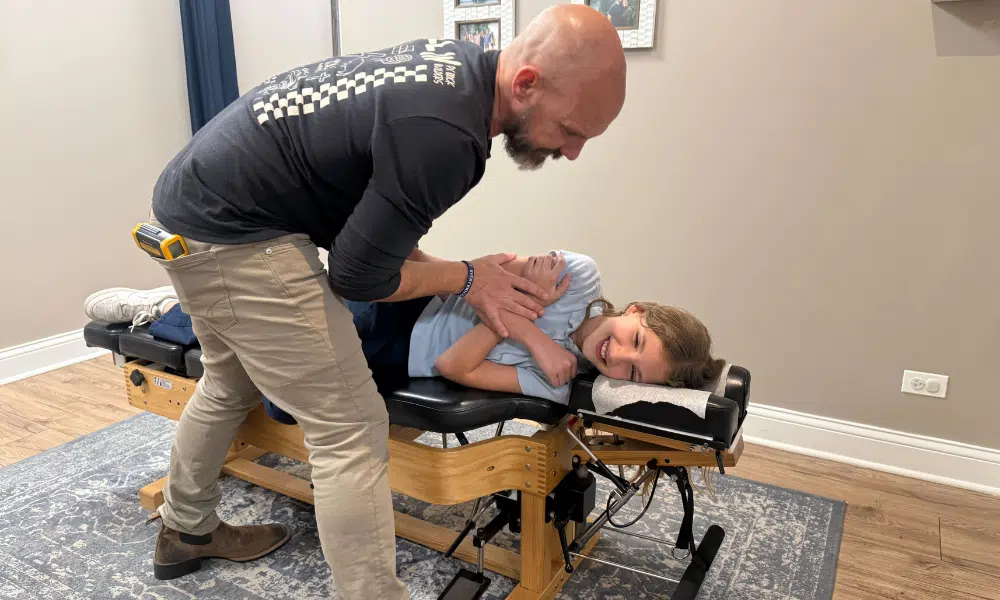
Neurologically-Focused Chiropractic Care uses gentle, specific adjustments targeting the exact areas of subluxation. The goal isn’t to “boost” the immune system with more supplements or interventions. The goal is to remove neurological interference so the body can regulate itself as designed.
We don’t guess; we test. The INSiGHT scans, developed by the Chiropractic Leadership Alliance (CLA), provide an objective measurement of nervous system function from the very beginning of care. Thermal scanning assesses dysautonomia and autonomic regulation. Neurospinal sEMG maps where sympathetic tension and exhaustion sit in the neuromotor system. Heart rate variability gives a whole-system view of how balanced or overdriven the autonomic nervous system is.
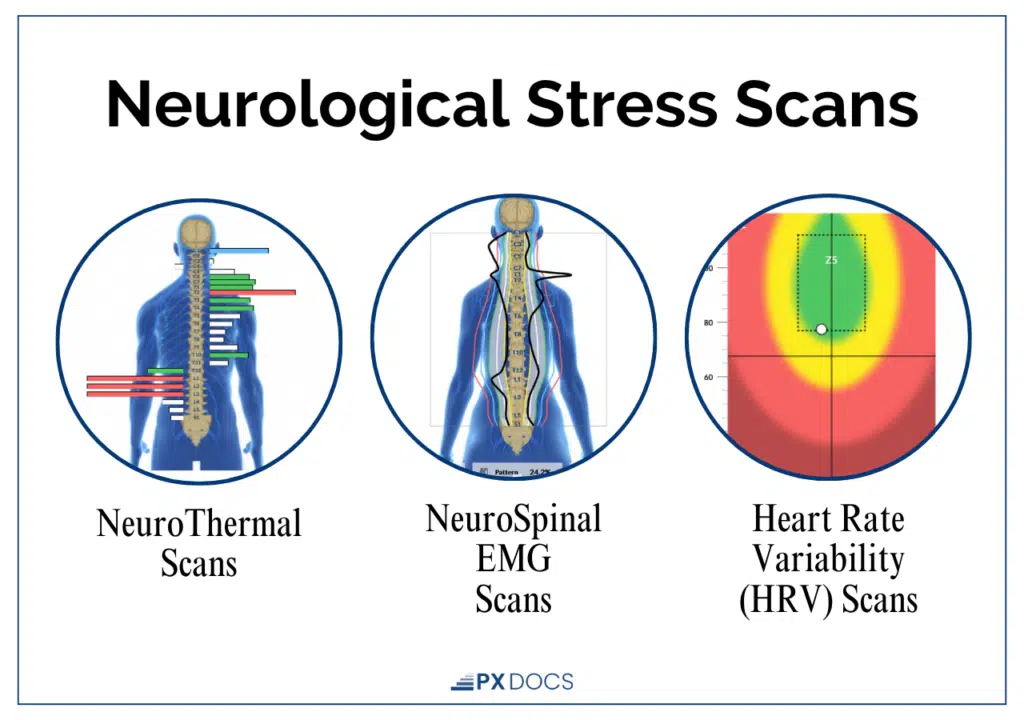
It’s important to note that this technology does not diagnose medical conditions, and Neurologically-Focused Chiropractic Care is certainly not a treatment or cure for immune system dysregulation or any other condition, not even back pain. Instead, these INSiGHT Scans help us track down the root cause of nervous system dysfunction and dysregulation, and build customized care plans and adjusting protocols to help shift the nervous system back into a state of balance, regulation, and resilience.
Your Child Is Designed to Heal
Your child isn’t destined to be the kid who’s always sick. Their body is designed to heal when you remove the interference. This isn’t about boosting immunity from the outside in with vitamins and supplements, though those can help once the foundation is restored. It’s about restoring the nervous system’s ability to regulate immunity naturally, the way it functioned before that first stressor hit.
We encourage you to visit the PX Docs directory to find a PX Docs Certified Pediatric Chiropractor and schedule an INSiGHT scan. The scan is objective, non-invasive, and helps pinpoint where nervous system dysfunction shows up.
The sooner you address the neurological foundation, the sooner your child can experience the health and resilience they’re designed for – and the sooner you can stop bracing for every seasonal shift, sneeze, and first sign of congestion.
The immune system and nervous system aren’t just connected. They’re inseparable. And when you finally address the one that controls the other, everything changes!