
ADHD and sleep problems are a linked pair of challenges where children diagnosed with ADHD struggle to fall asleep, stay asleep, or reach restorative deep sleep at much higher rates than their peers. Research shows up to 70% of children with ADHD experience a sleep condition, ranging from delayed sleep onset and frequent night wakings to restless legs, snoring, and early-morning rising.
The connection isn’t a coincidence. Both ADHD symptoms and sleep dysfunction share a common root in an Autonomic Nervous System stuck in overdrive, unable to shift into the “rest and digest” state that quality sleep requires.
If your child with ADHD can’t wind down at night, wakes up five times before midnight, or seems exhausted but wired at bedtime, you’re not imagining it. Here’s what most pediatricians won’t explain: the sleep problems aren’t a separate issue from the ADHD. They’re the same issue showing up at a different time of day. When your child’s brain can’t slow down to sleep, it’s the same nervous system that can’t slow down to focus in class.
Why Is Sleep Such a Struggle for Kids with ADHD?
Sleep struggles affect the majority of children with ADHD because their nervous systems are stuck in a chronic state of sympathetic (“fight or flight”) activation that makes the physiological shift into sleep extremely difficult. Clinical research estimates that 25% to 50% of children with ADHD have clinically significant sleep problems.
These are physiological; they don’t make you a bad parent. A child’s ability to fall asleep and stay asleep depends on a smooth handoff from the Sympathetic Nervous System (the gas pedal) to the Parasympathetic Nervous System (the brake pedal). In kids with ADHD, that handoff doesn’t happen cleanly. The gas pedal stays stuck down.
Conventional explanations usually stop at “ADHD brains are different” or “it’s a neurotransmitter issue.” That’s incomplete. The underlying driver is nervous system dysregulation, which is a body stuck in stress mode that can’t physically downshift into rest. A 2015 randomized controlled trial published in BMJ found that a behavioral sleep intervention in kids with ADHD significantly reduced ADHD symptoms at three and six months, confirming the tight link between sleep and attention.
What Sleep Problems Are Most Common in Children with ADHD?
Children with ADHD experience a specific cluster of sleep problems, including delayed sleep onset, frequent night wakings, restless sleep, early-morning rising, sleep-disordered breathing, and restless legs syndrome. These map directly onto a nervous system that can’t properly regulate arousal, breathing, and movement during the sleep cycle.
Here are the sleep issues that show up most often in kids with ADHD:
- Delayed sleep onset and bedtime resistance. 60+ minutes to fall asleep even when tired, often with arguments and stalling that get misread as defiance. It’s really a dysregulated nervous system unable to transition.
- Frequent night wakings and restless sleep. Multiple wake-ups, kicking, thrashing, sweating, grinding teeth. The body stays in “go” mode even while unconscious, and sleep architecture is too light to maintain deep restorative phases.
- Early-morning rising. Awake at 4:30 or 5:00 a.m., fully alert, no matter what time they went to bed. Classic sympathetic-dominance pattern.
- Sleep-disordered breathing. Snoring, mouth breathing, and pauses in breathing. Research has found that children with sleep-disordered breathing are significantly more likely to show ADHD symptoms, and treating the breathing issue often improves attention and behavior.
- Restless legs, periodic limb movement, and parasomnias. Uncomfortable leg sensations, repetitive leg movements, sleepwalking, night terrors, and bedwetting all occur at substantially higher rates in kids with ADHD than in the general pediatric population.
The through-line across all of these is the same: the child’s Autonomic Nervous System can’t cycle properly between arousal and rest. Sleep architecture depends on that cycling. When it breaks down, sleep breaks down with it.
Why Does ADHD Make It So Hard to Fall Asleep?
ADHD makes sleep difficult because the Autonomic Nervous System in these children is stuck in sympathetic dominance. The “gas pedal” of the body is pushed down far more than it should be, while the “brake pedal” (the parasympathetic system, led by the vagus nerve) is underactive and can’t slow things down. Sleep requires the brake pedal to take over. In a dysregulated nervous system, it never does.
The vagus nerve is the longest cranial nerve in the body, extending from the brainstem through the neck, chest, and abdomen, and it serves as the primary driver of the parasympathetic “rest and digest” system. It’s what initiates the physiological cascade that lets a child shift from alertness to sleep: heart rate slows, breathing deepens, digestion activates, muscles relax, and melatonin is released on schedule.
In children with ADHD and related neurodevelopmental conditions, vagal tone is measurably reduced, and that reduction is the physiological reason the shift into sleep doesn’t happen.
This is also why sleep problems in ADHD kids aren’t just about falling asleep. The vagus nerve plays a direct role in:
- Initiating sleep transitions. Without good vagal function, the body can’t shift gears.
- Maintaining deep sleep phases. Light, fragmented sleep is a hallmark of low vagal tone.
- Regulating breathing during sleep. Sleep-disordered breathing is a vagus nerve issue.
- Controlling heart rate variability. Research consistently links reduced heart rate variability (HRV) to both ADHD and poor sleep in children.
- Melatonin production and circadian rhythm. Children with ADHD frequently show delayed melatonin onset, which pushes their sleep schedule later and disrupts the whole circadian system.
So when a parent says their ADHD child “just can’t turn their brain off,” that’s accurate, but the brain isn’t the starting point. The nervous system below the brain is. Fix the regulation, and the brain follows.
This is also why kids with ADHD and sleep problems frequently struggle with anxiety, Sensory Processing Disorder, and pediatric dysautonomia. The co-occurrence isn’t coincidental. All of these conditions share the same underlying mechanism of Autonomic Nervous System dysfunction, which is why root-cause nervous system care often improves sleep, attention, and sensory or emotional signs together rather than one at a time.
Do ADHD Medications Cause Sleep Problems?
Stimulant medications commonly prescribed for ADHD, including methylphenidate and amphetamine-based drugs, frequently cause or worsen sleep problems as a direct side effect. These medications work by increasing the Sympathetic Nervous System activity, which is the exact opposite of what the body needs to fall asleep. For many children, the medication that helps them focus during the day is also the medication keeping them awake at night.
The clinical picture that shows up again and again in our offices looks like this: a child is diagnosed with ADHD and prescribed a stimulant. Focus improves during school, but sleep onset gets dramatically harder. Poor sleep worsens next-day focus and behavior, so the dose is often increased or a second medication is added to help with sleep.
This is the medication cascade, and it’s exhausting for families. We’re not telling any family what to do with their child’s medication. That’s a conversation with your prescribing doctor. What we are saying is this: if stimulants are making sleep worse, and poor sleep is making ADHD symptoms worse, it’s worth asking whether there’s a root-cause approach that addresses the nervous system dysregulation driving both.
How Are ADHD, Sleep, and Other Conditions Connected?
ADHD, sleep conditions, anxiety, Sensory Processing Disorder, pediatric dysautonomia, and Autism are connected because they share a common underlying cause: Autonomic Nervous System dysfunction.
Dysautonomia is an imbalance within the Autonomic Nervous System, specifically an overactivation of the sympathetic “fight or flight” response and an underactivation of the parasympathetic “rest, digest, and regulate” response driven primarily by the vagus nerve. Different labels describe different dominant symptoms, but the underlying neurology is the same. This is why so many children carry multiple diagnoses, and why improving nervous system regulation often improves all of them at once.
Parents of kids with ADHD almost always recognize this pattern. Their child doesn’t just have ADHD. They also have:
- Anxiety, panic episodes, or emotional dysregulation and meltdowns
- Sensory Processing Disorder or sensory overwhelm
- Chronic digestive issues or constipation
- A history of colic, reflux, or chronic ear infections as a baby
- Signs of dysautonomia (dizziness, temperature dysregulation, headaches) or features of the Autism spectrum
These aren’t separate conditions piling up randomly. They’re different expressions of the same dysregulated neurology. Sleep sits at the center of this web: without restorative sleep, the nervous system can’t repair, so dysregulation deepens, and ADHD, sensory, and emotional symptoms all get worse.
Sleep is one of the “core four” developmental functions (along with digestion, immune function, and emotional regulation) that must be online for a child to heal and thrive.
What Does the Root Cause of ADHD Sleep Problems Look Like?
The root cause of ADHD sleep problems in most children follows a predictable pattern we call “The Perfect Storm”: prenatal stress, birth trauma, and early childhood stressors that combine to create subluxation and nervous system dysregulation, leaving the child’s Autonomic Nervous System stuck in sympathetic dominance with a weakened vagal brake. This is a clinical pattern we see in the vast majority of ADHD kids who walk into our offices.
“The Perfect Storm” describes three overlapping phases:
- Phase 1: Prenatal stress. High-stress pregnancies expose the developing fetal brain to elevated maternal cortisol and inflammation. Research on prenatal stress shows it’s associated with higher rates of ADHD, Autism, and sleep problems in children years later. The developing nervous system gets pre-programmed for hypervigilance before birth.
- Phase 2: Birth trauma. Interventions like induction, Pitocin, prolonged labor, vacuum extraction, forceps, and C-section can create physical strain on the upper cervical spine and brainstem, which is the area where the vagus nerve originates and where the body’s autonomic regulation centers live. Birth trauma is one of the most overlooked drivers of downstream nervous system dysregulation.
- Phase 3: Early childhood stressors. Chronic ear infections cared for with repeated antibiotics, early antibiotic exposure disrupting the gut microbiome, environmental toxins, emotional trauma, repeated illnesses, and chronic inflammation all add load to a nervous system that’s already running hot. By the time a child reaches school age and gets an ADHD diagnosis, the dysregulation has been building for years.
The physical manifestation of all this is subluxation, defined as a pattern of neurospinal dysfunction with three components:
- Misalignment
- Fixation
- Neurological interference.
In kids with ADHD and sleep problems, this pattern shows up particularly in the upper cervical region and brainstem, where the vagus nerve and the regulatory centers of the Autonomic Nervous System are located. Subluxation isn’t just a back issue. It’s a neurological interference pattern that keeps the sympathetic nervous system locked on and the vagus nerve underpowered.
When you understand this timeline, ADHD sleep problems no longer look like a mystery. A nervous system that was stressed before birth, strained during birth, and overloaded during early childhood is not going to suddenly know how to downshift into deep sleep at age 7. It needs help rebuilding that capacity.
How Can Neurologically-Focused Chiropractic Care Help with ADHD and Sleep?
Neurologically-Focused Chiropractic Care addresses the root cause of ADHD sleep problems by locating and correcting subluxation, reducing sympathetic dominance, and restoring vagus nerve function, which allows the nervous system to shift properly into rest, repair, and restorative sleep. This isn’t a sleep care plan or an ADHD care plan. It’s the nervous system regulation, which is what both conditions require.
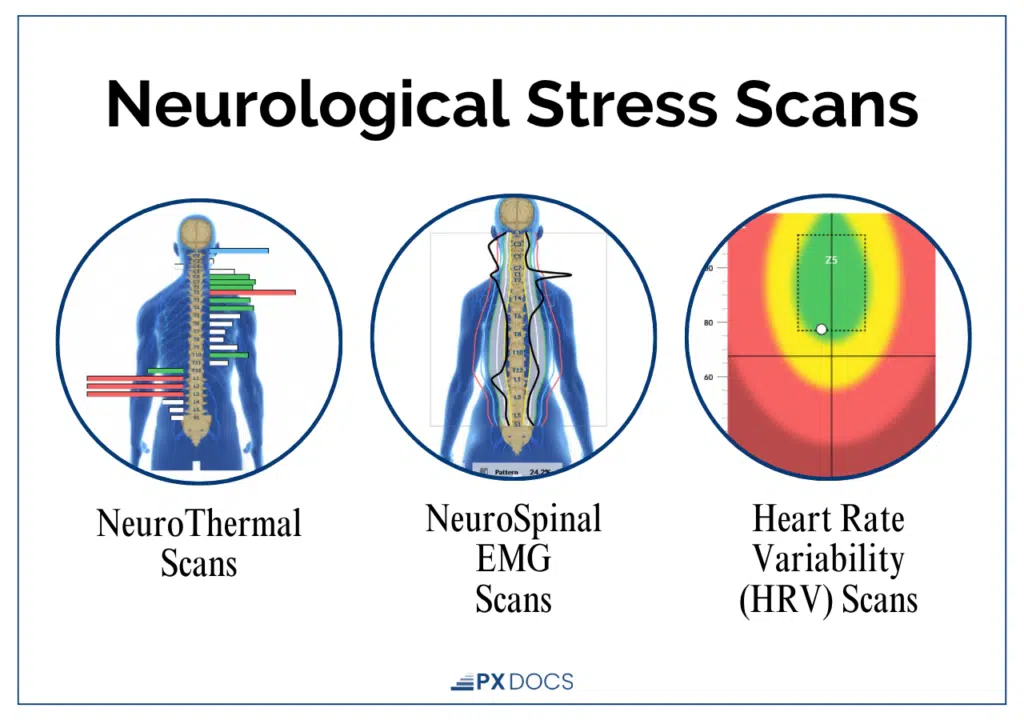
The first step is objective neurological assessment using INSiGHT Scans, a three-scan technology that measures autonomic function directly:
- Heart Rate Variability (HRV) measures the balance between sympathetic and parasympathetic activity, and serves as a direct window into vagus nerve function.
- Surface EMG (sEMG) maps tension patterns along the spine and shows where the nervous system is working too hard.
- Thermography detects Autonomic Nervous System asymmetry that reflects vagus nerve dysfunction and sympathetic overdrive.
These scans give a parent and practitioner an objective, measurable picture of why the child isn’t sleeping, not just a list of symptoms.
It’s important to note that this technology does not diagnose medical conditions, and Neurologically-Focused Chiropractic Care is certainly not a treatment or cure for ADHD, sleep conditions, or any other situations, not even back pain. Instead, these INSiGHT Scans help us track down the root cause of nervous system dysfunction and dysregulation, and build customized care plans and adjusting protocols to help shift the nervous system back into a state of balance, regulation, and resilience.
From there, a PX Doc delivers specific, gentle adjustments designed to:
- Reduce sympathetic nervous system overactivity
- Restore vagal tone and parasympathetic function
- Clear subluxation patterns interfering with brainstem-to-body communication
- Support the autonomic shift required for deep, restorative sleep
What parents report once care is underway is remarkably consistent: easier bedtimes, faster sleep onset, fewer night wakings, deeper sleep, and better mornings. And because sleep is foundational to every other system, the improvements rarely stop there. Focus, mood, digestion, and emotional regulation often improve alongside sleep.
Take Tristan, for example. After struggling with ADHD, anxiety, and balance issues, his mom shared that after two months of care, they started seeing his posture change, his balance and confidence in Karate improve, and his mood shift for the better. He’s since been sleeping better, moving faster in the mornings, and staying on task getting ready for school — proof of just how connected these systems really are.
Medications manage daytime symptoms at the cost of nighttime function; sleep hygiene advice helps around the edges but can’t fix a nervous system neurologically unable to downshift. Root-cause care works on the regulation itself.
Helping Your ADHD Child Sleep Starts with Regulating the Nervous System
ADHD and sleep problems in children aren’t two separate issues to manage with two separate strategies. They’re two expressions of the same underlying problem: a nervous system stuck in sympathetic dominance, unable to shift into rest. Stimulant medications and sleep hygiene advice care for the surface. Real change happens when you address the neurology underneath, and that’s where root-cause care that targets nervous system regulation can help, along with the anxiety, sensory issues, and emotional dysregulation that so often come with ADHD.
If your child is exhausted but wired every night, if bedtime takes two hours, if you’ve tried every sleep hygiene tip and nothing works, it’s worth getting an objective look at what’s happening in the nervous system. Talk to your pediatrician about any medication questions, and to find a PX Doc trained in Neurologically-Focused Chiropractic Care and INSiGHT Scanning near you, visit the PX Docs directory.