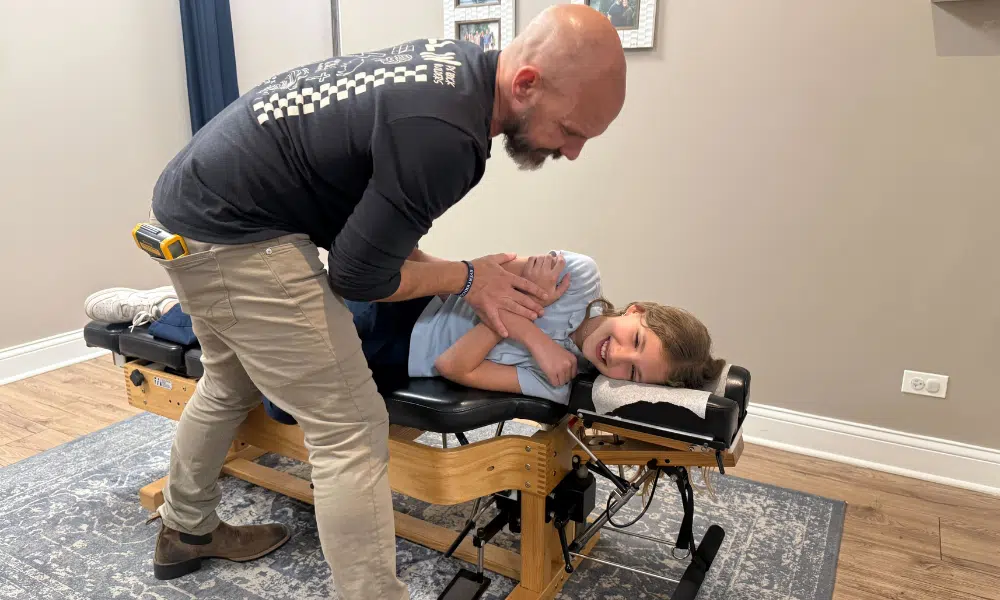

ADHD in children is a neurodevelopmental condition rooted in nervous system dysregulation, where the Autonomic Nervous System gets stuck in chronic sympathetic dominance (fight-or-flight) and struggles to shift into parasympathetic regulation. While genetics and brain chemistry play a role, the deeper causes involve a cumulative pattern of prenatal stress, birth trauma, and early childhood stressors that disrupt how the developing nervous system coordinates attention, impulse control, and emotional regulation.
If you’re asking what causes ADHD in children, you’ve probably already heard the standard answers. “It’s genetic.” “It’s a chemical imbalance.” “We don’t really know.” Those answers leave parents stuck, because they don’t point to anything you can actually do about it.
Here’s what most parents are never told. The same child getting diagnosed with ADHD at age 6 often has a developmental backstory that the medical system never asks about. Difficult pregnancy. Traumatic birth. Colic. Chronic ear infections. Delayed milestones. These aren’t random coincidences. They’re the breadcrumbs of a nervous system that’s been struggling for years, long before anyone wrote “ADHD” on a chart.
What Does Conventional Medicine Say Causes ADHD?
Mainstream medicine attributes ADHD to a combination of genetics, brain structure differences, and certain prenatal and early life risk factors, but cannot identify a specific cause in any individual child. Most major medical organizations list genetics and family history (roughly 70% heritability), brain structure differences, prenatal exposures like maternal smoking or alcohol, premature birth, lead exposure, and early brain injury.
What’s notably absent? Birth trauma. Subluxation. Vagus nerve dysfunction. The gut-brain axis. None of these appear on standard medical information sites, even though pediatric research increasingly supports their role.
The conventional model also leans on the “chemical imbalance” theory. But no blood test exists to confirm low dopamine or norepinephrine in any child diagnosed with ADHD. Diagnosis comes from behavioral questionnaires. Neurotransmitters absolutely are involved, but they transmit messages for the nervous system. If the nervous system is dysregulated, of course the chemistry looks off.
Fix the nervous system, and the chemistry tends to follow.
What Is “The Perfect Storm” Framework for ADHD?
“The Perfect Storm” is a clinical framework describing the cumulative sequence of prenatal stressors, birth trauma, and early childhood stressors that progressively dysregulate a child’s developing nervous system, setting the stage for neurodevelopmental diagnoses like ADHD. Rather than pointing to a single cause, this framework maps how multiple stressors stack during the most sensitive developmental windows.
- Prenatal stress. When a pregnant mom experiences prolonged stress, elevated cortisol crosses the placenta and influences how the baby’s brain develops, particularly the regions responsible for stress response and self-regulation. A brain that develops in a high-cortisol environment gets pre-programmed for hypervigilance.
- Birth trauma. Birth interventions (forceps, vacuum extraction, induction, stalled labor, emergency C-section) apply significant physical force to the baby’s upper neck and brainstem, the exact region where the vagus nerve exits the skull. When this region gets subluxated at birth, three things happen simultaneously: spinal misalignment, fixation of normal movement, and neurological interference that disrupts and distorts communication between brain and body. That’s the full definition of subluxation.
- Early childhood stressors. Between birth and age 5, the children who get diagnosed with ADHD often share a pattern. Look backward from the diagnosis, and you’ll typically find colic, chronic ear infections treated with repeated antibiotics, eczema and allergies, constipation, sleep problems from birth, sensory sensitivities, and delayed motor milestones (late rolling, skipped crawling, toe walking, W-sitting).
Each one adds to the accumulating stress load. Antibiotics disrupt the gut microbiome, which produces 90% of the body’s serotonin and influences dopamine production.
How Does Nervous System Dysregulation Contribute to ADHD Symptoms?
ADHD symptoms often emerge when the Autonomic Nervous System loses its ability to shift fluidly between the sympathetic “gas pedal” state needed for alertness and the parasympathetic “brake pedal” state needed for calm focus. Instead of a balanced, responsive system, the ADHD brain operates with a stuck gas pedal, broken brakes, or both.
In a healthy child, these two branches work in rhythm. When focus is needed, the gas pedal revs up appropriately. When it’s time for sleep, the brake pedal engages.
In a child with ADHD, that flexibility is gone.
- In the “Raging Bull” hyperactive pattern, the gas pedal is jammed down, and the brakes don’t work. The child runs hot all day, can’t sit still, and crashes at night, only to wake up revved again.
- In the “Drunken Bull” inattentive pattern, the gas pedal has been floored for so long that the engine is burned out. The child doesn’t have too much energy; they have too little. Information that should travel instantly gets disrupted, like a Zoom call when the WiFi keeps dropping.
Both patterns come from the same place: dysautonomia, dysfunction in how the Autonomic Nervous System regulates itself.
Why Is the Vagus Nerve Central to ADHD?
The vagus nerve is the longest cranial nerve in the body and serves as the primary pathway of the Parasympathetic Nervous System, controlling the “brake pedal” functions of digestion, heart rate variability, immune regulation, and emotional regulation. Because birth trauma and early stressors disproportionately affect the upper neck and brainstem, where the vagus nerve originates, vagal dysfunction is one of the most common and overlooked contributors to ADHD symptoms.
When vagal function is compromised, a child loses their most important regulatory tool. Heart rate variability drops. Digestion slows. Sleep fragments. Sustained attention, which requires the vagus to put the brakes on an overactive sympathetic system, becomes nearly impossible. The vagus nerve also directly regulates the gut-brain axis, which matters because the gut produces most of the body’s serotonin and significantly influences dopamine.
This is why you can’t really separate ADHD from the rest of the child’s health picture. The child with ADHD symptoms often also has chronic constipation, frequent illnesses, poor sleep, anxiety, and sensory issues. These aren’t coexisting conditions. They’re the same vagus nerve dysfunction showing up in different body systems.
How Does ADHD Connect to Autism and Sensory Processing Disorder?
ADHD, Autism, Sensory Processing Disorder, and childhood anxiety all share a common neurological root in Autonomic Nervous System dysfunction. A child’s diagnosis often depends less on the underlying neurology and more on which symptoms are most prominent when they walk into the pediatrician’s office.
Research suggests up to 50% of children with ADHD also meet criteria for an anxiety condition, and a significant percentage of children with Autism also show ADHD features. From a root-cause perspective, all of these conditions reflect a nervous system stuck in sympathetic dominance with poor parasympathetic regulation. The underlying nervous system dysregulation is the common thread.
How Do INSiGHT Scans Measure Nervous System Function?
INSiGHT Scans are a three-part neurological assessment that measures Autonomic Nervous System function through Heart Rate Variability (HRV) analysis, surface electromyography (sEMG), and thermal scanning, providing objective data on where a child’s nervous system is stuck.
- HRV assesses the balance between sympathetic and parasympathetic branches.
- sEMG measures electrical activity in the muscles along the neurospinal system, identifying chronic stress indicating subluxation.
- Thermal scanning uses infrared sensors to detect temperature differences, revealing autonomic dysfunction.
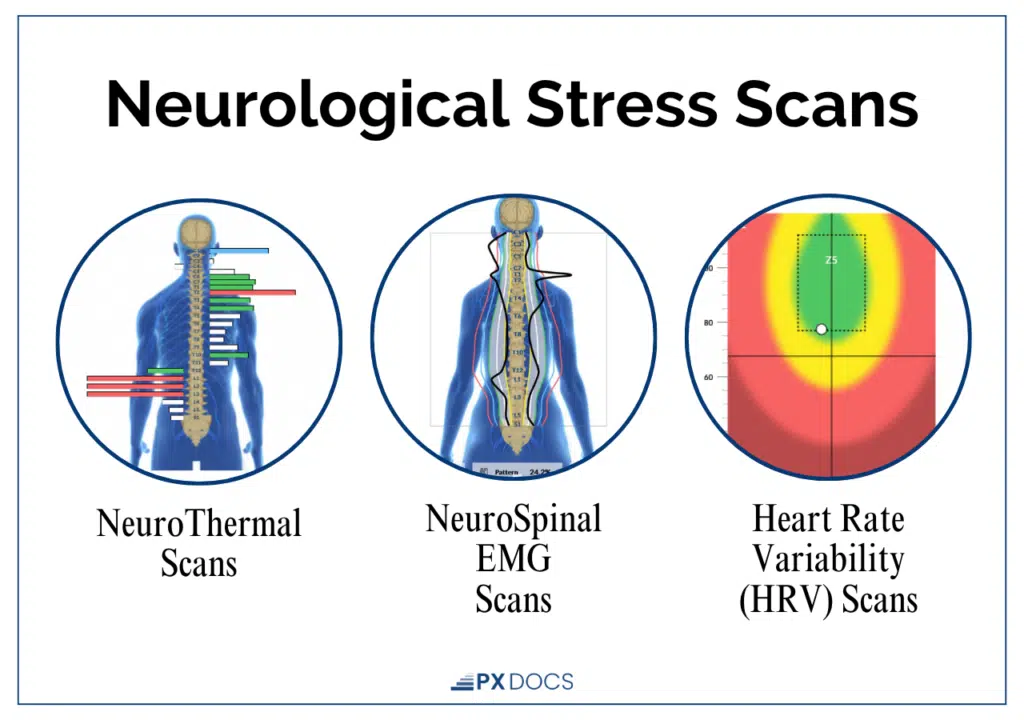
It’s important to note that this technology does not diagnose medical conditions, and Neurologically-Focused Chiropractic Care is certainly not a treatment or cure for ADHD or any other condition, not even back pain. Instead, these INSiGHT Scans help us track down the root cause of nervous system dysfunction and dysregulation, and build customized care plans to help shift the nervous system back into a state of balance, regulation, and resilience.
For many families who’ve spent years being told “we don’t know what’s causing this,” an objective assessment finally provides answers they can act on.
What Can Parents Do About the Root Causes?
Parents can address the root causes by focusing on nervous system regulation rather than symptom management alone. While medications can help manage traits short-term, the underlying dysregulation requires an approach that targets the neurological foundation: addressing subluxation and vagus nerve dysfunction through Neurologically-Focused Chiropractic Care, supporting gut health, ensuring adequate sleep, and reducing the ongoing stress load.
Progress usually shows up first on the INSiGHT scans, then in the “core four” functions of sleep, digestion, immune health, and emotional regulation, and finally in attention and behavior. Parents often notice their child is sleeping deeper, pooping regularly, getting sick less often, and having fewer meltdowns before teachers notice school-based changes.
Research on chiropractic and autonomic function has shown measurable changes in nervous system regulation following adjustments.
Take Tristan, for example. After his ADHD diagnosis, his parents tried multiple medication doses, changed his diet, and enrolled him in martial arts to build his confidence, but he was still struggling every step of the way, and feeling defeated only fueled his anxiety. When they turned to Neurologically-Focused Chiropractic, his scans finally gave them a logical explanation for why things had been so hard. After about two months of consistent care, his family started seeing real changes: better sleep, a brighter mood, and mornings that were suddenly easier because he moved faster and stayed on task getting ready for school.
The Bottom Line
What causes ADHD in children isn’t a single thing. It’s a Perfect Storm of factors that accumulate across the most sensitive developmental windows, disrupting how the nervous system regulates attention, impulse control, and emotional balance. Genetics set the stage. Prenatal stress, birth trauma, and early childhood stressors write the script. Subluxation and vagus nerve dysfunction keep the nervous system stuck in sympathetic dominance.
If standard explanations haven’t felt complete, trust that instinct. Your child’s nervous system has a story worth understanding. The behaviors you see aren’t who your child is; they’re what a dysregulated nervous system looks like from the outside.
To find a PX Docs-trained Neurologically-Focused Chiropractor who can assess your child’s nervous system with INSiGHT scans, visit the PX Docs directory and search by location. Your child’s brilliant, creative, intense brain doesn’t need fixing. It needs a nervous system that can actually keep up with it.