
As a parent, watching your child struggle with their health in any capacity is heartwrenching. Then add in multiple symptoms and not really knowing what’s going on or what’s causing them all, and it becomes even more distressing.
This is the real-life story of dysautonomia and POTS in children. When a child continues to struggle with symptoms like dizziness, fatigue, anxiety, or a racing heart – and those symptoms interfere with daily life – it’s often a sign of underlying nervous system dysautonomia. If these challenges become especially noticeable when standing up, your child may be experiencing a specific form of dysautonomia known as Postural Orthostatic Tachycardia Syndrome (POTS).
POTS is a form of dysautonomia, a disorder of the Autonomic Nervous System that affects blood flow, circulation, and so much more. When a child with POTS stands up, their heart rate may increase abnormally, causing a range of signs that can be both physically and emotionally challenging.
While POTS can feel overwhelming and isolating, it’s more common than most families realize. An estimated 1 in 100 teens experience POTS, making it the most common form of dysautonomia in adolescents.
The purpose of this article is to provide you with a guide to understanding and caring for POTS with a drug-free, root cause, neurologically focused approach. By arming yourself with knowledge and strategies, you can better support your child on their journey to finding effective care options that get to the root cause and help them achieve a better quality of life.
Understanding POTS in Children
Postural Orthostatic Tachycardia Syndrome (POTS) is a type of dysautonomia, a disorder that affects the Autonomic Nervous System (ANS). The ANS is responsible for controlling involuntary functions like heart rate, blood pressure, digestion, and temperature regulation. In POTS, the ANS fails to regulate blood flow properly, leading to a range of signs that can vary in severity from person to person.
Additionally, interference to the Central Nervous System (CNS) can play a role as subluxation and dysautonomia also alter something called proprioception, which is the body’s position sensing.
Several factors can contribute to the development of POTS, including:
- Viral infections, such as mononucleosis, Epstein-Barr virus, or Lyme disease
- Physical trauma, like concussions, car accidents, or surgery
- Early life “Perfect Storm” factors that then accumulate over time and lead to neurological dysfunction
When a child or adult struggles with POTS, they may experience the following signs:
- Rapid heart rate (tachycardia) upon standing, often increasing by 30-40 beats per minute or more
- Lightheadedness, dizziness, or fainting (syncope)
- Chronic fatigue and weakness
- Headaches and brain fog, affecting concentration and memory
- Digestive issues, such as nausea, chronic constipation, bloating, or abdominal pain
- Temperature regulation problems, like excessive sweating or feeling too cold
- Emotional dysregulation
These signs can significantly impact someone’s quality of life. The most common age of onset for POTS and dysautonomia is in the teenage and young adult years, which means there is a significant amount of activities spread throughout school, sports, social, and other aspects of life. Many children and young adults with POTS struggle to keep up with their peers in school and social activities due to fatigue, brain fog, and frequent absences. They may feel frustrated, anxious, or depressed because of their limitations and the lack of understanding from others.
Moreover, the unpredictable nature of POTS signs can make it challenging for children to plan and participate in activities they enjoy. This can lead to feelings of isolation and a decreased quality of life. Research has found that the quality of life in POTS patients is comparable to that of patients on dialysis for kidney failure.
As a parent or young adult patient yourself, it’s crucial to recognize the signs of POTS and seek proper care that does more than just manage the symptoms or look to avoid certain activities, but instead addresses the root cause of neurophysiological dysfunction. With the right support and care plan, children with POTS can learn to cope with their condition and lead fulfilling lives.
Dysautonomia vs. POTS
Dysautonomia is a broad term that describes disorders of the Autonomic Nervous System, while POTS is a specific type of dysautonomia. Understanding the differences between these two terms can provide clarity for families navigating a diagnosis.
Dysautonomia:
- Refers to any dysfunction of the ANS, which regulates involuntary bodily functions such as heart rate, blood pressure, digestion, and temperature control.
- This includes a wide range of conditions, such as vasovagal syncope, Multiple System Atrophy (MSA), and POTS.
- Signs vary widely depending on the specific condition and may include fainting, blood pressure irregularities, and difficulty with temperature regulation.
POTS:
- A subset of dysautonomia that is characterized by an abnormal increase in heart rate upon standing, often accompanied by dizziness, fatigue, and other systemic signs.
- POTS primarily affects blood flow regulation but can also lead to broader nervous system dysregulation.
- Disruptions to proprioceptive input and overall vestibular function are overlooked contributing factors not talked about in either conventional or integrative medicine.
While all POTS patients have dysautonomia, not all dysautonomia patients have POTS.
The distinction is important because, while POTS is well recognized and has specific diagnostic criteria, other forms of dysautonomia may require different approaches to diagnosis and care. Understanding these differences helps families work with healthcare providers to develop an appropriate care plan.
The Role of Subluxation and Proprioception in POTS
At its core, POTS is a nervous system regulation problem – specifically, a breakdown in how the brain receives and processes information about body position, blood pressure, and movement.
Proprioception is the nervous system’s internal GPS. It tells the brain where the body is in space, how upright it is, and how much support and muscle tone are needed to maintain posture and circulation. When proprioceptive input is clear and accurate, the brain can properly regulate heart rate, blood vessel tone, and blood flow – especially during position changes, such as standing.
Subluxation, in Neurologically-Focused Chiropractic Care, refers to dysfunction and stress within the neurospinal system that disrupts this incoming sensory information. When spinal joints – especially in the upper cervical, cervicothoracic junction, and thoracic spine – are not moving or signaling properly, the brain receives distorted or reduced proprioceptive input.
As a result:
- The brain misjudges upright posture
- Autonomic responses become exaggerated or delayed
- Heart rate spikes to compensate for poor blood flow regulation
- Blood pools in the lower body instead of being efficiently regulated
This is why children with POTS often feel dizzy, weak, anxious, or “off” when standing – the nervous system is reacting to bad information, not a weak heart or damaged blood vessels.
By restoring motion, tone, and proper sensory input through specific neurological adjustments, the goal is to improve proprioceptive signaling, calm the stress response, and help the autonomic nervous system regulate more efficiently – addressing one of the true root causes of POTS rather than just managing symptoms.
The “Perfect Storm” Behind Dysautonomia POTS
At PX Docs, we often use the metaphor of “The Perfect Storm” to describe how multiple factors, over time, can converge to cause a major disruption in nervous system function and health. This series of cumulative stressors can converge to disrupt the Autonomic Nervous System (ANS), leading to POTS and other forms of dysautonomia.
It’s important to understand that, even though these factors and known triggers of autonomic dysfunction appear very early in life, as early as fetal development, the onset of certain symptoms and conditions may not appear until years and years later.
The ANS has two critical branches:
- The Sympathetic Nervous System: Activates the “fight or flight” response.
- The Parasympathetic Nervous System: Often referred to as “rest, regulate, and digest,” which is heavily influenced by the vagus nerve.
When the balance between the SNS and PNS is disrupted, the nervous system loses its ability to maintain optimal nervous system balance and regulation. This imbalance – marked by sympathetic overactivity or parasympathetic underactivity – creates the foundation for dysautonomia and conditions like POTS.
Key Risk Factors in The “Perfect Storm”:
- Maternal Stress During Pregnancy: High cortisol levels have been found to alter fetal brain system development, increasing the child’s stress reactivity and susceptibility to ANS dysfunction.
- Birth Trauma or Interventions: Physical stressors during delivery, such as forceps use or prolonged labor, can impact the vagus nerve and brainstem, causing subluxation and setting the stage for dysautonomia.
- Early Life Stress or Trauma: Adverse Childhood Experiences (ACEs) contribute to chronic ANS activation, creating a state of “allostatic load” where the body struggles to recover from stress.
- Infections and Antibiotic Misuse/Overuse: Chronic inflammation from infections or microbiome disruptions caused by overuse of antibiotics can impair vagal tone and further exacerbate ANS dysfunction.
This combination of factors illustrates how cumulative stressors can overwhelm the nervous system. Dysautonomia POTS is often not the result of a single event but emerges from multiple challenges to the ANS, creating The “Perfect Storm” of dysfunction. Addressing both the immediate triggers and the deeper imbalances in autonomic regulation is key to recovery.
It’s also important to point out that hypermobility syndromes and conditions like Ehlers-Danlos Syndrome (EDS) can lead to structural instability in the neck and subluxation, a known contributor to both dysautonomia and POTS. In fact, up to 80% of EDS patients experience dysautonomia.
Diagnosis and Testing
Obtaining an accurate diagnosis is crucial for children with POTS, as it allows for a proper care plan and management of the condition. However, finding a healthcare provider who is knowledgeable about POTS dysautonomia can be challenging, especially if you want one who addresses the root cause and nervous system dysregulation.
A primary diagnostic tool for POTS is the orthostatic vitals test. The child’s heart rate and blood pressure are measured while lying down and then after standing for 2, 5, and 10 minutes. An increase of 30 bpm or more upon standing (40 bpm for adolescents) alongside worsened signs may indicate POTS.
If results are inconclusive, a tilt table test may be used, where the child is strapped to a table that moves from horizontal to vertical, allowing monitoring of heart rate, blood pressure, and signs without muscle compensation.
It’s important to note that other conditions can cause signs similar to POTS, such as:
- Chronic fatigue syndrome
- Fibromyalgia
- Dehydration
- Anemia
- Hyperthyroidism
- Anxiety
Doctors may perform additional tests to rule out these conditions and ensure an accurate diagnosis. These tests may include blood work, electrocardiograms, or other specialized evaluations. Obtaining a proper diagnosis can be a lengthy process, but it’s essential for developing an effective care plan.
An important point to note is that at PX Docs, we do not diagnose or treat any condition, including POTS. If the patient or parents feel there is value in receiving a formal medical diagnosis, then it’s important to take the above steps with your medical provider.
However, if you’re looking to primarily address the root cause dysfunctions and restore neurological function without the use of medications or traditional medical interventions, then oftentimes the diagnosis aspect becomes arbitrary.
Care Options
While there is no medical cure for POTS, various care options can help manage symptoms and improve a patient’s quality of life. The traditional medical treatment plan is listed below, but by the time most parents seek out our help at PX Docs and with Neurologically-Focused Chiropractic Care, they’ve exhausted not only this list but often have also sought care from a functional medicine or integrative provider, and worked through a large amount of dietary changes, supplementation, and so forth.
Generally, the best overall care option for children and patients struggling with POTS is to combine the best of each approach and take a multi-faceted, customized approach to root cause healing. No matter the overall plan, the best results come from addressing the foundation of nervous system dysregulation and dysautonomia head-on first and foremost.
Traditional medical recommendations for POTS include:
- Increasing fluid intake to maintain blood volume, aiming for 2-4 liters of water per day
- Adding salt to the diet or using salt supplements to help retain fluids, with a goal of 5-9 grams of salt per day
- Wearing compression garments, such as stockings or abdominal binders, to reduce blood pooling in the lower body
- Participating in physical therapy or cardiac rehabilitation programs to improve strength, endurance, and overall conditioning
- Modifying the diet by eating smaller, more frequent meals and increasing salt intake to help manage signs
- Engaging in regular exercise, starting with recumbent or seated activities and gradually progressing to upright exercises as tolerated. Studies have found that exercise training improves overall well-being and quality of life.
In addition to these approaches, medications may be prescribed to help regulate blood flow, heart rate, and blood pressure. Lifestyle adjustments are also frequently recommended for managing POTS signs. Children may need to pace their activities, take frequent breaks, and avoid triggers such as extreme heat or prolonged standing.
This is why it’s so important to talk with each parent and patient individually and determine whether their goal for care is simply to manage and avoid symptoms, or to address the root cause and seek out drug-free, foundational nervous system healing.
In our experience as PX Docs, nearly every parent and every patient has the latter as their primary driver and goal for starting Neurologically-Focused Chiropractic Care and other root cause approaches.
Coping and Support
Living with POTS can be emotionally challenging for both children and their families. Children may feel frustrated, anxious, or depressed due to the limitations imposed by their signs and the difficulty in keeping up with their peers. Parents may experience stress, worry, and helplessness as they navigate the complexities of their child’s condition and begin to implement the root-cause healing strategies discussed in detail throughout this article and within the PX Docs platform.
To help manage the emotional impact of POTS, consider the following strategies:
- Encourage open communication within the family, allowing everyone to express their feelings and concerns
- Practice stress-reduction techniques, such as deep breathing, mindfulness, or relaxation exercises
- Engage in enjoyable activities as a family, focusing on what the child can do rather than their limitations
- Seek professional support from a therapist or counselor who understands chronic illness and its impact on families
Having a strong support system is crucial for children with POTS and their families. This includes not only immediate family members but also extended family, friends, and school staff. Educating others about POTS and its effects can help foster understanding and empathy, leading to better support and accommodations.
Connecting with other families dealing with POTS can also provide valuable support and information. Many organizations, such as Dysautonomia International and Standing Up to POTS, offer resources, support groups, and online communities where families can share experiences, ask questions, and find encouragement.
A Neurologically-Focused Approach
For individuals with POTS, traditional care mainly focuses solely on symptom management, often offering limited relief. True healing requires addressing the root cause – dysfunction in the Autonomic Nervous System (ANS) – by restoring balance and function instead of just looking to avoid certain triggers and suppressing various symptoms.
Neurologically-Focused Chiropractic Care addresses POTS and dysautonomia by focusing on the true root cause – a stressed, dysregulated nervous system that is misfiring and overcompensating instead of regulating efficiently.
Through precise, gentle adjustments, this care reduces subluxation-related stress in the neurospinal system and restores healthy proprioceptive input to the brain, allowing the autonomic nervous system to better coordinate heart rate, blood vessel tone, and blood flow – especially during position changes like standing.
Rather than simply managing symptoms, the goal is to calm the stress response, improve communication between the brain and body, and help the nervous system regain stability, adaptability, and resilience over time.
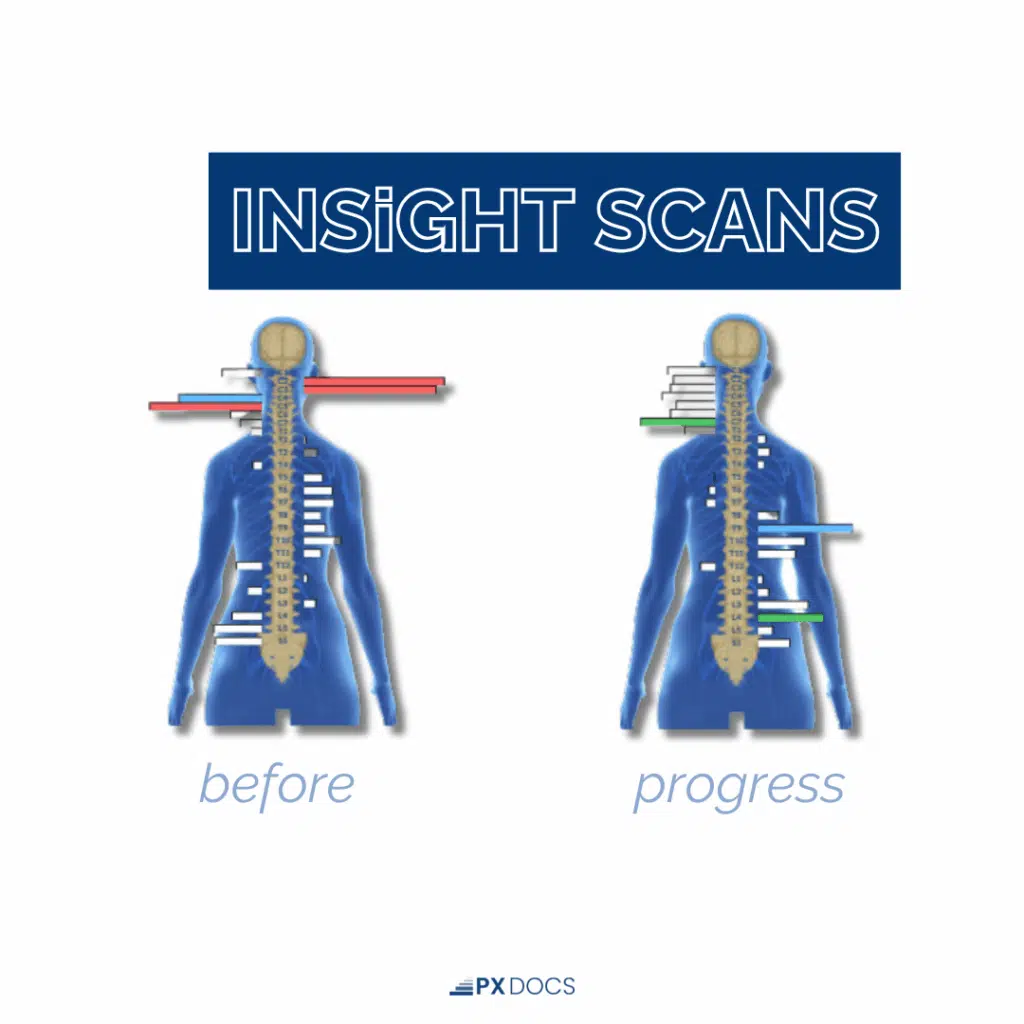
At the heart of this approach is the use of advanced neurological testing, known as INSiGHT scanning technology. These scans offer detailed insights into nervous system regulation, enabling our PX Docs to identify those areas of subluxation and dysautonomia that may be contributing to POTS. This focused assessment allows for a personalized plan to address underlying imbalances effectively.
When patients begin with the foundation of nervous system care and then layer in healthy lifestyle changes and integrative support, true transformation can occur, reflected in measurable improvements in regulation, resilience, and quality of life.
As a teenager, Tommi’s life was turned upside down after being diagnosed with POTS. Severe fatigue and lightheadedness left her unable to attend school or participate in daily life. After conventional approaches failed, Tommi and her family pursued Neurologically-Focused Chiropractic Care with a PX Doc. Over time, improvements in her nervous system regulation were reflected not only in how she felt but also in her ability to return to school, in the activities she loved, and in long-term goals like college.
That progress wasn’t just felt; it was measurable. Follow-up nervous system scans revealed clear improvements that mirrored her real-life healing and recovery.
Moving Forward with Hope and Resilience
We’ve explored the complexities of Postural Orthostatic Tachycardia Syndrome (POTS) and its impact on children and their families. We’ve discussed the causes, signs, diagnosis, care options, and strategies for treatment or care, coping and support, and so much more.
We’ve also been able to illustrate the difference between a conventional medical symptom-based approach and the chiropractic care approach that does not seek to treat or cure, but addresses the root cause and supports the body from within.
While the journey with POTS can be challenging, it’s crucial to remember that there is hope and that each patient truly has the potential to heal and thrive!
With knowledge, a strong support system, and a comprehensive care plan, patients can get off the roller coaster of frustration and quality of life challenges that come from living with POTS. Celebrate the small victories in the early phases of healing, lean on your doctors and others for support, and keep going with open communication and determination for a complete healing transformation!
If you have not yet sought care from a trained and ready PX Docs Provider, visit our directory here to get started right away. Once you see those INSiGHT Scans and review your customized care plan, you’ll have more hope, answers, and clarity on the path forward than ever before!