
Artificial food dyes, especially Red Dye No. 40, are synthetic chemicals added to thousands of kids’ foods and drinks that research has linked to hyperactivity, behavioral changes, and nervous system disruption in children. When you combine those chemical triggers with the sensory assault of a Fourth of July celebration—fireworks, crowds, sirens, flashing lights—you’ve got a recipe for a full-blown meltdown that goes way beyond “being overtired.”
If your child consistently crashes after cookouts, covers their ears during fireworks, or spirals into a meltdown every time the holiday rolls around, you’re not imagining things. And it’s not a parenting problem. What most parents don’t realize is that the red dye effects on kids and the sensory overwhelm from fireworks and parades are hitting the same target: your child’s nervous system.
This article will walk you through exactly how that happens, what the latest science says about food dyes and children’s behavior, and what you can actually do about it, including an approach most parents have never heard of.
What Does Red Dye Actually Do to Kids?
Red Dye No. 40 (also called Allura Red AC) is the most widely used artificial food coloring in the United States. It’s in popsicles, sports drinks, candy, ketchup, fruit snacks, flavored yogurt—basically everything you’ll find at a Fourth of July party. And the growing body of research on what it does to children’s nervous systems is genuinely alarming.
A landmark randomized controlled trial published in The Lancet found that artificial food colors significantly increased hyperactivity in children across all age groups—not just kids already diagnosed with ADHD. This study was so significant that the European Union now requires warning labels on foods containing synthetic dyes, stating they “may have an adverse effect on activity and attention in children.”
In 2025, the FDA’s own advisory panel reviewed the accumulated evidence and recommended additional action on synthetic food dyes, with Red 40 drawing the most scrutiny. California became the first U.S. state to ban Red Dye No. 3 from foods, with growing legislative pressure on Red 40 as well.
Here’s what parents need to understand: these dyes don’t just cause “hyper” behavior. Research shows that synthetic food colorings can trigger neuroinflammation, disrupt neurotransmitter function, and increase oxidative stress in developing brains. A 2021 review in the Office of Environmental Health Hazard Assessment found that artificial food colors can cross the blood-brain barrier and directly affect neural signaling—particularly in children whose nervous systems are still developing.
For a child whose nervous system is already stuck in a state of dysregulation, what we call sympathetic dominance or “gas pedal” overdrive, adding Red 40 and other synthetic dyes is like throwing gasoline on an already smoldering fire.
Why Do Fireworks and Parades Cause Meltdowns in Some Kids?
Now layer in the sensory environment of a typical Fourth of July celebration. Fireworks exploding overhead at 150+ decibels. Fire engine sirens screaming through parade routes. Crowds pressing in from every direction. Flashing lights, smoke, unfamiliar smells, heat, and disrupted sleep schedules.
For most adults, this is exciting. For a child with sensory processing challenges, it’s absolute neurological chaos.
The reason some kids can handle fireworks while others fall apart comes down to how well their Autonomic Nervous System can regulate incoming sensory information. Think of it like a traffic system. In a well-regulated nervous system, sensory input flows through smoothly—the brain filters what’s important, dampens what’s not, and the child can enjoy the show. But when a child’s nervous system is already dysregulated, stuck with the “gas pedal” (Sympathetic Nervous System) floored and the “brake pedal” (Parasympathetic Nervous System) barely working, that sensory input creates a massive neurological traffic jam.
This is why the meltdown at the fireworks show isn’t really about the fireworks. It’s about a nervous system that was already overwhelmed before you even left the house, and the fireworks were just the final straw.
Common signs your child is in sensory overload at Fourth of July events include:
- Covering ears or screaming during fireworks
- Refusing to eat at the cookout
- Becoming aggressive or clingy in crowds
- A complete emotional breakdown during or after the event
- Difficulty sleeping that night and sometimes for days afterward
- Increased behavioral challenges in the week following the holiday.
These signs often appear across multiple body systems simultaneously because sensory overload affects the nervous system, the master control system that coordinates all other functions.
How Do Red Dye and Sensory Overload Hit the Same Nervous System?
Here’s where it gets really important for parents to connect the dots. The chemical toxins from food dyes and the sensory bombardment from fireworks aren’t separate problems. They’re both attacks on the same system, your child’s Autonomic Nervous System.
The vagus nerve, the longest cranial nerve in the body, serves as the primary communication highway between the brain and virtually every major organ system. It’s responsible for the “rest, digest, and regulate” functions that allow your child to calm down, process food, fight inflammation, and recover from stress. When vagus nerve function is impaired, your child loses their ability to self-regulate.
Artificial food dyes attack from the chemical side. Research shows that synthetic dyes can increase intestinal permeability (commonly called “leaky gut”), disrupt the gut microbiome, and trigger inflammatory responses that travel directly to the brain via the gut-brain axis. Since roughly 80% of vagus nerve fibers carry information from the gut to the brain, anything that disrupts gut function also disrupts neurological regulation.
Sensory overload attacks from the neurological side. Loud sounds, bright lights, and chaotic environments flood the brainstem with input that an already-dysregulated nervous system can’t process. The sympathetic “fight or flight” response kicks into overdrive, and the child either melts down (fight), tries to escape (flight), or shuts down completely (freeze).
When both hit at the same time—Red 40-loaded popsicles at the cookout followed by the fireworks show—you get a double assault on a nervous system that may have already been struggling. This is why so many parents notice their child is “a completely different kid” for days after the Fourth of July.
What Is “The Perfect Storm” and Why Does It Matter on the 4th of July?
At PX Docs, we talk about something called “The Perfect Storm,” a combination of prenatal stress, birth trauma, and early childhood stressors that accumulate and disrupt a child’s neurological development from the very beginning of life.
Here’s how it connects to your Fourth of July experience. Each of these factors can place stress and overwhelm on a child’s developing nervous system, leading to subluxation.
Subluxation is far more than just a structural issue – it’s a neurological interference that disrupts the function, regulation, and adaptability of the nervous system. It occurs when stress, whether physical, chemical, or emotional, overwhelms the nervous system, leading to dysautonomia – a state of imbalance between the sympathetic (fight-or-flight) and parasympathetic (rest, digest, heal) nervous systems.
That subluxation creates a foundation of nervous system dysfunction that makes the child more susceptible to everything, including food dye reactions and sensory overload. Add in early antibiotic use (disrupting the gut microbiome), chronic ear infections, and a world full of environmental toxins, and you’ve got a child whose nervous system was never able to properly develop its ability to filter, process, and regulate.
So when that child walks into a Fourth of July party loaded with red-dyed foods, blasting noise, and sensory chaos, they don’t have the neurological reserves to handle it. Their “gas pedal” is already floored. Their “brake pedal,” driven largely by the vagus nerve and Parasympathetic Nervous System, barely works.
The meltdown isn’t a behavior problem. It’s a nervous system problem.
What Does the MAHA Report Say About Food Dyes and Children?
The growing national conversation around food dyes has gained significant momentum. The MAHA (Make America Healthy Again) movement and related federal health initiatives have put food additives, including artificial dyes, front and center in public health discussions.
Here’s what parents should know: this isn’t just a fringe concern anymore. Major health authorities around the world have been restricting the use of artificial food dyes for years. The European Union requires warning labels. Countries like Norway and Austria have enacted stricter bans. A comprehensive review of the scientific literature confirms that children are uniquely vulnerable to synthetic food colorings because their detoxification systems and blood-brain barriers are still developing.
The connection to ADHD is particularly well-documented. Multiple meta-analyses have confirmed that artificial food colors significantly increase hyperactive behavior in children, with effect sizes comparable to other recognized environmental risk factors. For children who already carry a diagnosis of ADHD, Autism, or Sensory Processing Disorder, the effects can be even more pronounced.
What most health discussions miss, though, is the why behind the susceptibility. Two kids can eat the same red popsicle—one is fine, the other spirals. The difference isn’t willpower or parenting. It’s whether that child’s nervous system has the capacity to process and detoxify normally. And for children with underlying subluxation, dysautonomia, and vagus nerve dysfunction, that capacity is significantly compromised.
How Can Parents Reduce Toxins and Sensory Triggers on the 4th of July?
You don’t have to skip the celebration entirely. But a few strategic moves can make a massive difference for your child’s nervous system.
- On the food dye front, read labels on everything—especially drinks, popsicles, candy, condiments, and even hot dog buns. Look for Red 40, Yellow 5, Yellow 6, and Blue 1, which are the most common synthetic dyes at summer gatherings. Better yet, bring your own dye-free alternatives. Natural food colorings made from beet juice, turmeric, and spirulina are widely available now. Homemade popsicles with real fruit take ten minutes and eliminate the chemical load entirely.
- On the sensory front, preparation is everything. Talk to your child beforehand about what they’ll experience—the sounds, the lights, the crowds. Bring noise-canceling headphones or ear protection. Have a designated “escape plan” for you and your child to step away from the action and decompress. Watch for early warning signs of sensory overload: glazed eyes, covering ears, getting unusually quiet or unusually wild, or becoming rigid about small things.
- On the schedule front, protect sleep at all costs. A child who’s already sleep-deprived walking into a sensory-heavy environment is a child heading for a crash. Try to maintain normal meal times, keep sugar and processed food intake as steady as possible, and plan for a quiet cooldown period before and after the main events.
These strategies help manage the incoming load. But here’s the honest truth: if your child’s nervous system is already stuck in a state of chronic dysregulation, management strategies can only go so far. You’re trying to bail water out of a boat with a hole in it.
Can Neurologically-Focused Chiropractic Care Help Kids Who React to Dyes and Sensory Overload?
This is where most conversations about food dyes and sensory overload stop, at avoidance strategies and coping techniques. But at PX Docs, we take it a critical step further by asking: why is this child’s nervous system so reactive in the first place?
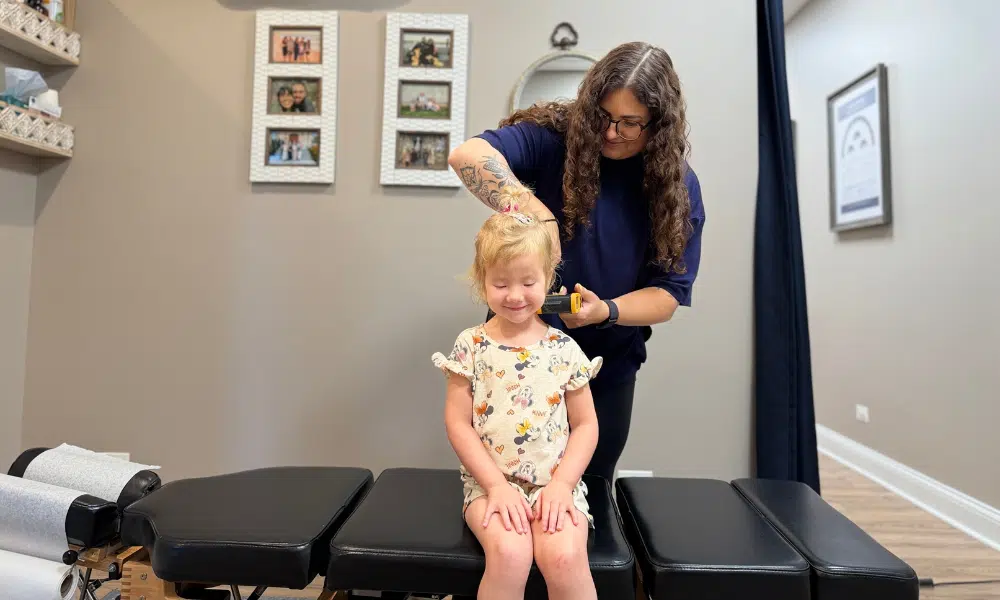
This is where INSiGHT scanning technology comes in. Using a combination of HRV (Heart Rate Variability), sEMG (surface electromyography), and thermal scans, Neurologically-Focused Chiropractors can get an objective look at exactly how your child’s nervous system is functioning—where it’s stuck in sympathetic overdrive, where the vagus nerve isn’t pulling its weight, and where subluxation patterns are creating interference.
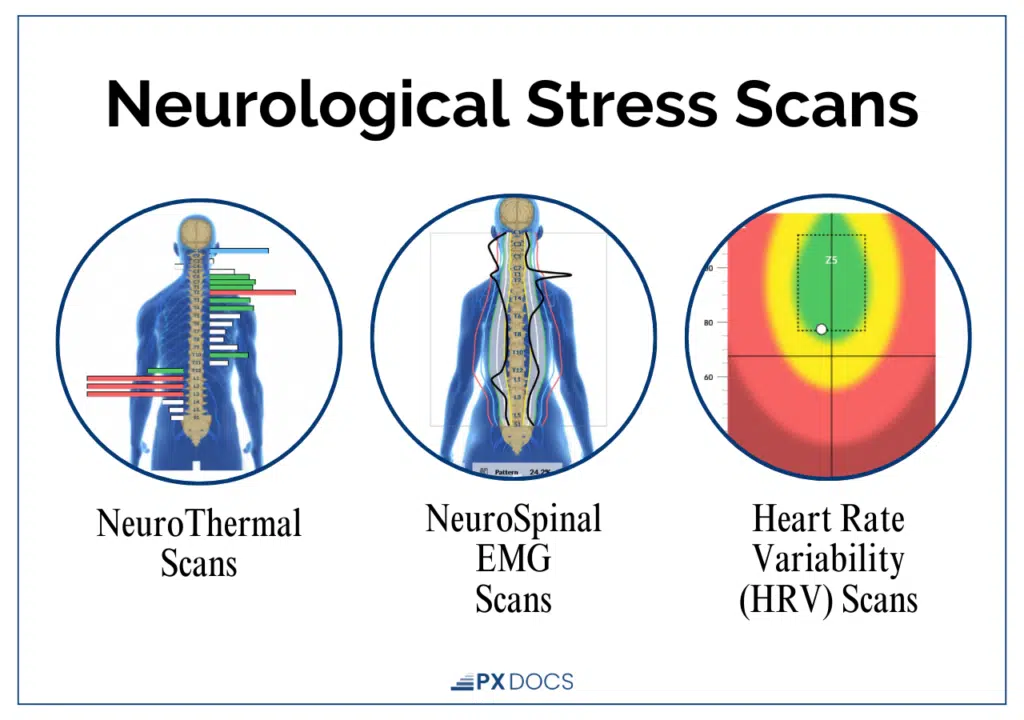
It’s important to note that this technology does not diagnose medical conditions, and Neurologically-Focused Chiropractic Care is certainly not a treatment or cure for ADHD, Sensory Processing Disorder, or any other condition, not even back pain. Instead, these INSiGHT Scans help us track down the root cause of nervous system dysfunction and dysregulation, and build customized care plans and adjusting protocols to help shift the nervous system back into a state of balance, regulation, and resilience.
When the nervous system starts functioning better, when the “brake pedal” begins working alongside the “gas pedal” rather than being overridden by it, parents often notice changes that go well beyond simply surviving the Fourth of July. Kids start sleeping better, digesting food more effectively, detoxing more efficiently, handling transitions more smoothly, and recovering from sensory-heavy environments faster.
Clinical observations consistently show that as nervous system regulation improves, the child’s ability to handle environmental stressors, including food dyes and sensory input, improves right alongside it.
That’s because we’re not just helping kids cope with a dysregulated nervous system. We’re actually working to regulate the nervous system itself.
What Practical Steps Can Parents Take Right Now?
If this article is connecting dots you’ve been trying to piece together for months or even years, here’s what you can do starting today.
First, start paying attention to the patterns. Does your child get more hyperactive, emotional, or aggressive after eating foods with artificial dyes? Do they consistently struggle at loud, crowded events? Do they crash hard, emotionally and physically, after days with heavy sensory and chemical exposure? Tracking these patterns in a simple notes app gives you powerful data.
Second, begin reducing the toxic load where you can. You don’t have to overhaul your entire pantry overnight. Start with the biggest offenders: brightly colored drinks, candy, and snack foods. Swap for versions colored with fruit and vegetable extracts. This one change alone can make a noticeable difference for many families.
Third, consider whether your child’s nervous system might need more support than avoidance strategies can provide. If your child has a history that includes a stressful pregnancy, birth interventions, early antibiotic use, colic, reflux, chronic ear infections, or any pattern of emotional dysregulation—those are signs that the nervous system itself may need attention.
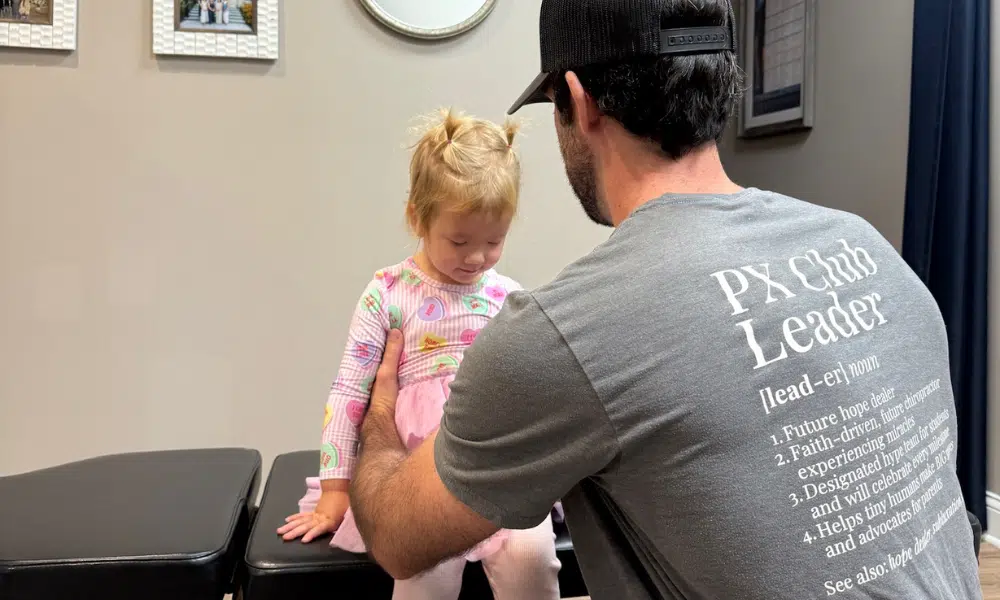
You can find a trained Neurologically-Focused Chiropractor through the PX Docs directory who can run INSiGHT scans and give you an objective picture of what’s happening in your child’s nervous system. For many families, this is the missing piece that finally explains why their child reacts the way they do—and more importantly, opens the door to real, lasting change.
Your child isn’t “too sensitive.” Their nervous system is telling you exactly what it needs. This Fourth of July, listen to it.
And here’s the encouraging part—when that nervous system becomes calmer, regulated, and supported, everything else can start to shift. We often see families gain more flexibility over time… less reactivity, fewer restrictions, and the ability to actually enjoy things like parties, holidays, and time together again.
Frequently Asked Questions
What does red dye do to kids’ behavior?
Red Dye No. 40 has been shown in multiple clinical studies to increase hyperactivity, impulsivity, and inattention in children—including kids without a prior ADHD diagnosis. Research indicates that synthetic food dyes can trigger neuroinflammation, disrupt neurotransmitter signaling, and increase oxidative stress in developing brains. Children whose nervous systems are already dysregulated tend to show more pronounced behavioral reactions to artificial food colorings.
Why does my child always melt down at fireworks?
Fireworks produce sudden, unpredictable sounds at 150+ decibels, combined with bright flashing lights, smoke, and crowds. For children with underlying nervous system dysregulation or sensory processing challenges, this level of sensory input overwhelms the brainstem’s ability to filter and organize information. The resulting meltdown is a neurological response, the child’s fight-or-flight system activating because the nervous system can’t process the incoming stimuli.
Are food dyes banned in other countries?
Several synthetic food dyes are restricted or require warning labels in many countries. The European Union requires a warning statement on foods containing six specific artificial colors, including Red 40. Norway and Austria have enacted stricter limitations. The United States has been slower to act, though the FDA banned Red Dye No. 3, and there’s growing legislative and scientific pressure around Red 40 and other synthetic colorings.
Can a child’s reaction to food dyes and sensory overload be connected?
Yes. Both artificial food dyes and sensory overload affect the autonomic nervous system. Food dyes can disrupt gut function, increase inflammation, and trigger neurological responses through the gut-brain axis and vagus nerve. Sensory overload floods the brainstem with unfiltered input. When both occur simultaneously, as at a Fourth of July party, the combined effect on an already dysregulated nervous system can be significant.
How does Neurologically-Focused Chiropractic Care help with sensory issues?
Neurologically-Focused Chiropractic Care addresses subluxation—the pattern of misalignment, fixation, and neurological interference in the neurospinal system that disrupts brain-body communication. By restoring proper nervous system function, particularly improving vagus nerve tone and reducing sympathetic dominance, this approach helps the nervous system better regulate sensory input, gut function, immune response, and emotional processing. It doesn’t treat sensory issues directly, but works to improve the underlying nervous system regulation that affects how children process their environment.
What should I bring to help my sensory-sensitive child at 4th of July events?
Noise-canceling headphones or ear protection are essential. Also bring familiar comfort items, snacks without artificial dyes, sunglasses for light sensitivity, and a plan for a quiet retreat space away from the main celebration. Prepare your child in advance by describing what they’ll experience, set realistic time limits for the event, and watch for early warning signs of overload—including glazed eyes, covering ears, unusual quietness, or increased rigidity.