
Brain inflammation symptoms are the behavioral, cognitive, emotional, and physical signs that appear when immune cells in the brain, called microglia, become overactive and release pro-inflammatory cytokines, disrupting normal neurological function. In children, these signs commonly include brain fog, mood swings, sensory sensitivity, sleep disturbances, developmental regression, and chronic digestive issues.
If your child is struggling with unexplained behavioral changes, emotional meltdowns, or sensory challenges, you’re not alone. As a pediatric-focused chiropractic community, we’ve worked with thousands of families who were told their child’s symptoms were “just behavioral.” The truth is, neuroinflammation in children is often the hidden driver behind conditions like Autism, ADHD, anxiety, Sensory Processing Disorder, and PANS/PANDAS.
What Are Brain Inflammation Symptoms in Children?
Brain inflammation, or neuroinflammation, occurs when the brain’s immune cells—called microglia—become overactivated and release pro-inflammatory cytokines such as interleukin-1β (IL-1β), tumor necrosis factor-α (TNF-α), and interleukin-6 (IL-6). Under normal circumstances, this inflammatory response protects your child’s brain from infection or injury. But when it doesn’t shut off, it becomes chronic, and that’s where the real problems begin.
A 2023 study from the University of Maryland School of Medicine confirmed that severe inflammation in early childhood alters the development of specific brain cells, particularly Purkinje and Golgi neurons in the cerebellum, critical for cognition and emotional control.
Common brain inflammation symptoms in children include:
- Cognitive changes: Difficulty concentrating, memory problems, brain fog, and declining school performance
- Emotional and behavioral shifts: Increased irritability, anxiety, mood swings, emotional meltdowns, and aggression
- Sensory processing challenges: Heightened sensitivity to light, sound, textures, or foods
- Sleep disturbances: Difficulty falling asleep, frequent night waking, or excessive daytime fatigue
- Motor changes: Altered coordination, new onset of tics, or regression in motor skills
- Digestive issues: Chronic constipation, diarrhea, and appetite changes, because the gut-brain connection runs directly through the vagus nerve
- Immune dysfunction: Frequent infections, chronic ear infections, and prolonged recovery times
These symptoms overlap heavily with Autism, ADHD, anxiety, and Sensory Processing Disorder, which is why so many children receive a behavioral label without anyone investigating the neuroinflammation underneath.
What Causes Brain Inflammation in Children?
Neuroinflammation in children stems from multiple converging factors. Viral and bacterial infections can trigger it directly (as in encephalitis) or indirectly through the immune system’s overreaction, the mechanism behind PANS and PANDAS, where streptococcal infections trigger autoimmune attacks on the brain.
Research has established that maternal immune activation (MIA) during pregnancy can release pro-inflammatory cytokines that cross the placenta and activate fetal microglia, setting up neuroinflammation patterns that persist into childhood. MIA is consistently associated with increased risk of Autism, ADHD, and Tourette’s syndrome.
The gut-brain axis is another major pathway. Research has shown that gut dysbiosis can trigger systemic inflammation that crosses the blood-brain barrier. In children with Autism, reduced beneficial gut bacteria and increased intestinal permeability are associated with elevated brain inflammation markers. Short-chain fatty acids from healthy gut bacteria normally help regulate microglia. When those populations are depleted by antibiotics, poor diet, or toxins, the brain loses critical anti-inflammatory protection.
How Does Brain Inflammation Connect to Autism, ADHD, and Other Conditions?
Brain inflammation is increasingly recognized as a shared underlying mechanism connecting many childhood neurodevelopmental conditions. Post-mortem brain studies show elevated markers of neuroinflammation, including activated microglia, in individuals with Autism. Pro-inflammatory cytokines like IL-1β and IL-6 impair synaptic plasticity and disrupt neurotransmitter regulation during critical developmental windows.
Children with brain inflammation frequently also experience ADHD, anxiety, and Sensory Processing Disorder. This co-occurrence isn’t coincidental; these conditions share a common root in dysautonomia (an overactivation of the sympathetic “fight or flight” response and an underactivation of the parasympathetic “rest, digest, and regulate” response) and disrupted brain-body communication driven by neuroinflammation.
What Role Does the Vagus Nerve Play in Brain Inflammation?
The vagus nerve is the longest cranial nerve in the body, extending from the brainstem through the neck, chest, and abdomen. It serves as the primary driver of the Parasympathetic Nervous System, regulating heart rate, digestion, immune function, inflammation, and emotional regulation. In the context of brain inflammation, the vagus nerve functions as the body’s built-in anti-inflammatory pathway.
Think of the Sympathetic Nervous System as a gas pedal; it accelerates your child’s stress response and inflammatory activity. The Parasympathetic Nervous System, driven by the vagus nerve, is the brake pedal; it calms things down, supports immune regulation, and reduces inflammation. In many children with brain inflammation symptoms, we see sympathetic dominance, the gas pedal is stuck on, and the brake pedal isn’t working.
This creates a vicious cycle: stress drives inflammation, and inflammation drives more stress. Vagal tone, a neuroscience metric measuring vagus nerve function, directly correlates with a child’s ability to regulate inflammation, manage stress, and maintain emotional stability.
What Is the Perfect Storm Behind Childhood Brain Inflammation?
The “Perfect Storm” is a concept developed by Dr. Tony Ebel describing the cumulative sequence of neurological stressors, prenatal stress, birth trauma, and early childhood toxic load — that can overwhelm a child’s developing nervous system, leading to subluxation, dysautonomia, and chronic neuroinflammation.
It unfolds in three stages.
- First, prenatal and birth interventions (C-sections, forceps, vacuum extraction, induction) create early neurological stress during a critical developmental window. Studies have shown that prenatal exposure to maternal cortisol and maternal stress affects the developing fetus.
- Second, environmental toxins, frequent antibiotics, and early childhood health struggles (colic, reflux, chronic ear infections) compound the toxic load on the neuro-immune system.
- Third, this cumulative stress leads to subluxation, a pattern of neurological dysfunction in the spine characterized by three components:
- Misalignment within the neurospinal system.
- Fixation or restricted joint motion.
- Neurological interference that disrupts nervous system regulation
This subluxation can interfere with vagus nerve function and lock the nervous system into chronic nervous system dysregulation and pediatric dysautonomia that perpetuates brain inflammation.
While inflammation often ends up affecting the brain—and can significantly impact a child’s behavior, emotions, focus, sensory processing, and overall neurodevelopment—it rarely starts there.
More often, inflammation is the downstream result of a chronically dysregulated nervous system stuck in stress and survival mode. When the autonomic nervous system is imbalanced, communication between the brain and body is disrupted, stress responses are amplified, and the body’s ability to regulate inflammation, immunity, digestion, and healing breaks down.
This is why it’s so important to look beyond the brain alone. True healing requires addressing the entire nervous system and restoring proper brain-body communication. One of the most overlooked contributors to this dysregulation is subluxation, which can interfere with nervous system function and make it harder for the body to adapt, regulate, and heal.
Rather than focusing solely on the symptoms that show up in the brain, a root-cause approach seeks to restore balance throughout the entire nervous system—because that’s where the healing process truly begins.
How Can Neurologically-Focused Chiropractic Care Help with Brain Inflammation?
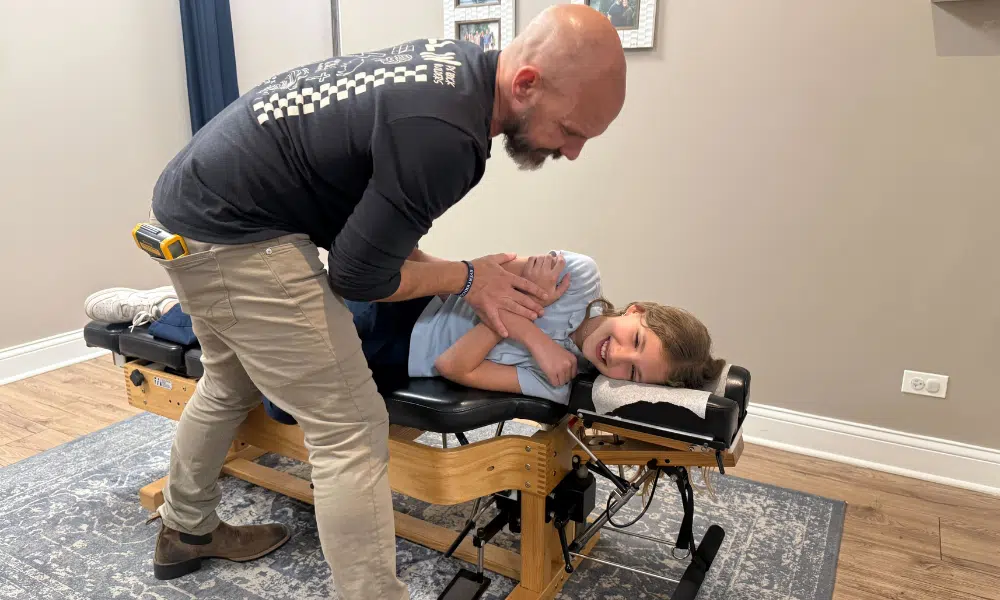
Neurologically-Focused Chiropractic Care addresses nervous system dysfunction that often underlies chronic brain inflammation in children.
It’s important to note that INSiGHT scanning technology does not diagnose medical conditions, and Neurologically-Focused Chiropractic Care is certainly not a treatment or cure for brain inflammation or any other condition, not even back pain. Instead, these INSiGHT Scans help us track down the root cause of nervous system dysfunction and dysregulation, and build customized care plans and adjusting protocols to help shift the nervous system back into a state of balance, regulation, and resilience.
INSiGHT Scans are a set of three neurological assessment technologies:
- NeuroThermal scans (infrared thermography)
- NeuroCore sEMG scans (surface electromyography)
- Heart Rate Variability (HRV) testing.
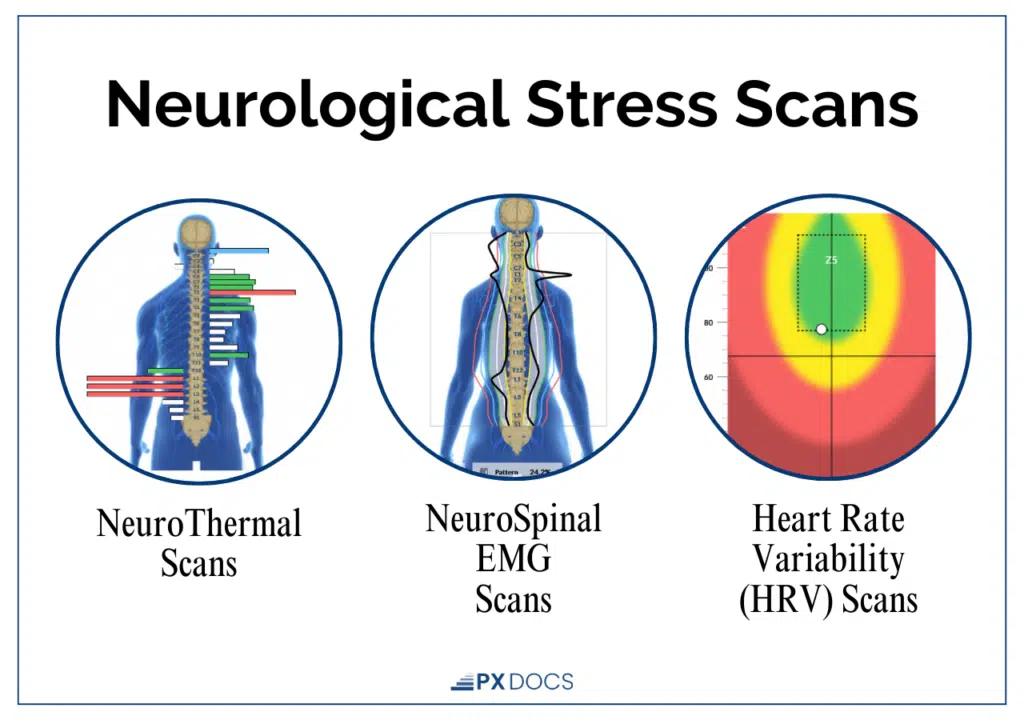
Together, they objectively measure nervous system function, subluxation patterns, and autonomic balance, detecting subtle changes long before trait improvements appear. When subluxation is identified and addressed through gentle, specific adjustments, the goal is to support vagus nerve function and guide the Autonomic Nervous System toward healthier balance, which can, in turn, support the body’s ability to manage inflammation naturally.
If you recognize brain inflammation symptoms in your child, we encourage you to reach out to a Neurologically-Focused Chiropractor through our PX Docs Directory, who uses INSiGHT scanning technology to assess Autonomic Nervous System function. As always, work closely with your child’s healthcare team to build a comprehensive plan that supports their total well-being.
What Next?
Brain inflammation in children is real, it’s measurable, and it’s not something your child simply needs to “grow out of.” The behavioral labels, the sensory meltdowns, and the sleep struggles are not character flaws or bad parenting. They are signs that a nervous system under chronic stress is doing its best to cope.
What the research keeps pointing back to is this: when the Autonomic Nervous System is stuck in sympathetic overdrive, the brake pedal isn’t working, and the body can’t regulate inflammation the way it’s designed to. That’s the root. Everything else, the gut issues, the mood dysregulation, the developmental challenges, flows downstream from there.
The good news is that the nervous system is not a fixed system. It’s built to adapt. With the right support, addressing subluxation, restoring vagal tone, and reducing the toxic load that kicked off the “Perfect Storm,” children can move toward real, measurable regulation. Not symptom management. Actual change.
You’ve already taken the first step by understanding what’s happening beneath the surface. The next step is visiting our directory to find a Neurologically-Focused Chiropractor who can assess your child’s nervous system function directly and build a care plan around what the INSiGHT Scans actually show.
Frequently Asked Questions About Brain Inflammation Symptoms
Can brain inflammation cause Autism or ADHD symptoms?
Research has established a strong connection between neuroinflammation and conditions like Autism and ADHD. Activated microglia and elevated pro-inflammatory cytokines are found in the brains of individuals with Autism, and maternal immune activation during pregnancy increases the risk of neurodevelopmental conditions. While neuroinflammation isn’t the sole cause, it’s increasingly recognized as a significant contributing factor through its effects on brain development, synaptic function, and nervous system regulation.
What is the connection between gut health and brain inflammation?
The gut and brain communicate bidirectionally through the gut-brain axis, primarily via the vagus nerve, immune signaling, and microbial metabolites. When gut bacteria become imbalanced (dysbiosis), it can trigger systemic inflammation that crosses the blood-brain barrier and directly affects brain function. Children with neurodevelopmental conditions frequently show altered gut microbiota, increased intestinal permeability, and elevated inflammatory markers, highlighting the gut as a critical starting point for addressing brain inflammation.
Can a child recover from brain inflammation?
Many children experience significant improvement when the underlying causes are addressed. Recovery depends on how long the inflammation has been present and how comprehensively the root causes are addressed. Supporting nervous system regulation, improving gut health, reducing toxic burden, and addressing subluxation patterns through Neurologically-Focused Chiropractic Care can all support the body’s natural healing processes. Neuroplasticity means the nervous system has a remarkable capacity to adapt and restore balance.
What is the difference between encephalitis and chronic neuroinflammation?
Encephalitis is an acute, often severe inflammation of brain tissue, typically caused by viral infection or an autoimmune attack, and requires urgent medical care. Chronic neuroinflammation refers to a persistent, low-grade inflammatory state driven by overactive microglia and ongoing cytokine production. While encephalitis presents with obvious symptoms like fever, seizures, and altered consciousness, chronic neuroinflammation is more subtle, manifesting as behavioral, cognitive, emotional, and sensory challenges that develop gradually.