

Gut health and depression are connected through the gut-brain axis, a two-way communication network linking the digestive system, gut microbiome, vagus nerve, and central nervous system. When this axis breaks down, the gut generates more inflammation and sends distress signals to the brain that drive low mood, anxiety, and chronic depression. That much is true, and it’s what most articles cover.
What most miss is the upstream driver: nervous system dysregulation. The vagus nerve controls gut motility, microbiome balance, and the signals the gut sends to the brain. When the vagus nerve isn’t functioning well, whether from birth trauma, chronic stress, or the early stressors that make up The “Perfect Storm,” the entire gut-brain axis runs poorly. Probiotics and elimination diets don’t fix that.
If you’ve tried gut-focused interventions for yourself or your child without lasting results, this is why. This article covers the science of the gut-brain connection, then goes further into what most conventional sources skip: how the Autonomic Nervous System sets the gut up to fail in the first place.
What Is the Connection Between Gut Health and Depression?
The connection between gut health and depression is a real, measurable, two-way conversation between your digestive tract and your brain. Researchers call this the gut-brain axis, and it runs through three main highways:
- The vagus nerve
- The immune system
- The chemical messengers (neurotransmitters and hormones) produced in the gut.
When the gut is healthy, this axis hums along quietly. When it’s not, when the microbiome is imbalanced, the gut lining is inflamed, or motility is off, the brain gets flooded with inflammatory signals and starved of the neurotransmitters it needs to regulate mood. People with chronic gut issues are far more likely to struggle with depression, anxiety, and mental fatigue.
Recent meta-analyses of microbiome research consistently show that people with major depressive conditions have measurably different gut bacteria—fewer “good” species like Faecalibacterium and Coprococcus, and more inflammatory species. The pattern is so consistent that scientists have started calling certain bacterial profiles “depressogenic.” But the gut doesn’t go offline by itself. Something has to disrupt the nervous system that runs it.
How Does the Gut-Brain Axis Actually Work?
The gut-brain axis is the communication network between your gastrointestinal tract and your central nervous system. According to research on the microbiota-gut-brain axis, it works through four main pathways operating simultaneously:
- The vagus nerve, the cranial nerve running from the brainstem to the gut. Roughly 80–90% of its fibers carry information from the gut to the brain. Your gut talks more than it listens.
- The enteric nervous system, over 100 million neurons embedded in the walls of your digestive tract. Scientists nicknamed it the “second brain.”
- The immune system, about 70–80% of your immune cells live in the gut. Inflammation produced there travels via cytokines, crosses the blood-brain barrier, and changes how the brain feels and functions.
- Neurotransmitters and metabolites, gut bacteria help produce serotonin, dopamine, GABA, and short-chain fatty acids that influence mood, sleep, and cognition.
Think of the vagus nerve as a fiber-optic cable. When the cable is clean, the brain gets accurate signals. When it’s frayed, which is exactly what nervous system dysregulation looks like, the brain gets garbled, alarming, inflammatory signals, and mood pays the price.
Does Gut Serotonin Actually Affect Your Brain?
Around 90% of the body’s serotonin is produced in the gut, by specialized enterochromaffin cells lining the intestinal wall. This stat is true—but it’s also widely misunderstood. Gut serotonin mostly stays in the gut, where it regulates motility, secretion, and immune response; it doesn’t cross the blood-brain barrier directly.
What does matter for the brain is this: a healthy gut produces the precursors, anti-inflammatory signals, and short-chain fatty acids that allow the brain to make and use its own serotonin properly. The gut also signals serotonin status up the vagus nerve, influencing how the brain regulates mood, sleep, and stress.
Producing serotonin in the gut isn’t enough. As Dr. Tony Ebel often says, you need a working vagus nerve to stimulate production, enable absorption, direct distribution, and support proper utilization. If the nervous system that runs the gut is dysregulated, you can have all the raw materials in the world and still feel awful. That’s why people use SSRIs and probiotics and don’t always get better. The plumbing is one thing, the wiring is another.
What Role Does the Vagus Nerve Play in Mood and Depression?
The vagus nerve is the master regulator of the gut-brain axis and one of the most important nerves in the human body for mental health. As the longest cranial nerve, it forms the primary Parasympathetic Nervous System (“rest, digest, and regulate”) highway between the brain and the gut.
When vagal tone is strong, you experience a calm mood, easy digestion, lower inflammation, better sleep, and stronger emotional regulation. When vagus nerve dysfunction sets in, the picture flips: persistent low mood or anxiety, constipation and reflux, smoldering chronic inflammation, insomnia, and a stress response stuck in overdrive.
Researchers have known for years that vagus nerve stimulation can reduce treatment-resistant depression. The FDA approved an implanted vagus nerve stimulator for depression back in 2005. That’s a giant signpost that depression isn’t just a brain chemistry problem. It’s a nervous system regulation problem, and the vagus nerve sits in the middle of it.
This is the gas pedal/brake pedal picture of the Autonomic Nervous System. The Sympathetic Nervous System is the gas pedal—fight, flight, alertness. The parasympathetic system, led by the vagus nerve, is the brake pedal—calm, digest, repair, connect. A healthy mood requires the brake to actually work. In most people with depression linked to gut issues, the brake is shot.
How Does an Imbalanced Gut Microbiome Cause Depression?
An imbalanced gut microbiome, a state called dysbiosis, drives depression through three primary mechanisms: inflammation, neurotransmitter disruption, and HPA axis activation.
- Inflammation: Certain gut bacteria, especially when overgrown after antibiotics or a poor diet, damage the gut lining and create what’s commonly called “leaky gut.” Bacterial fragments leak into the bloodstream, triggering systemic inflammation. Cytokines like IL-6 and TNF-alpha cross into the brain and disrupt mood circuits, a mechanism increasingly recognized in depression research as one of the strongest biological links between gut and mood.
- Neurotransmitter disruption: Healthy gut bacteria help synthesize and regulate GABA, dopamine, and serotonin precursors. Research published in Cell showed that specific gut bacteria directly regulate host serotonin biosynthesis. Dysbiosis throws this off; less GABA means less calm, less dopamine means less motivation, and less tryptophan availability means less raw material for the brain to make serotonin.
- HPA axis hyperactivation: Gut inflammation chronically activates the body’s stress response system, flooding it with cortisol. Sustained high cortisol changes brain structure, worsens sleep, and is one of the most consistent biological signatures of depression.
A healthy microbiome quiets all three systems. A dysregulated one inflames all three. The Autonomic Nervous System, particularly the vagus nerve, is the conductor on top, deciding which way the orchestra plays.
Why Are Kids and Teens Now Showing So Much Gut-Driven Depression?
Kids and teens are showing more gut-driven depression because their nervous systems have been dysregulated since infancy, and the gut-brain axis has had a decade or more to break down before mood symptoms ever surface. Teen girl depression has risen by an estimated 145% since 2010, with a 161% surge in boys, while pediatric gut issues have skyrocketed. These trends are the same story showing up in different rooms of the body.
At PX Docs, we describe this as the Grow-Into Cascade: babies don’t grow out of their early health challenges; they grow into the next layer of them:
- Infancy: colic, reflux, sleep issues
- Toddlerhood: chronic ear infections, constipation, feeding challenges
- Early childhood: sensory processing delays, speech delays, picky eating
- School age: ADHD, anxiety, behavioral struggles, gut complaints
- Teen years: depression, anxiety, autoimmune conditions, IBS
Every stage wears a different diagnostic label, but the root cause is the same—a stressed-out, dysregulated nervous system running too hot for too long. By the teen years, the gut has been compromised for over a decade. Mood issues become inevitable.
This is also where conditions like Autism, ADHD, and Sensory Processing Disorder overlap heavily with depression. They share the same upstream mechanism: Autonomic Nervous System dysfunction, vagus nerve suppression, and gut-brain axis disruption, which is why depression in kids with these diagnoses often responds poorly to standard mental health interventions alone.
Why Don’t Probiotics, Diet Changes, and Antidepressants Always Work?
Probiotics, diet changes, and antidepressants often don’t work for depression because they target the gut and brain individually without first addressing the nervous system that controls both. They’re powerful tools, but they’re working on the right system in the wrong order, caring for the branches of the tree while leaving the roots untouched.
We call this principle The Healing Hierarchy or the Batting Order. Right interventions in the wrong sequence produce minimal results. Right interventions in the right sequence produce a multiplier effect, where each one works exponentially better.
The correct order:
- Nervous system first: Address subluxation, dysautonomia, and vagus nerve dysfunction
- Motor system second: Tone, posture, reflexes, coordination
- Gut and immune health third: Microbiome, diet, supplements
- Brain-based therapies fourth: CBT, counseling, medication if appropriate
No general contractor would remodel a home sitting on a cracked foundation. Mental health and gut interventions stack beautifully on a regulated nervous system. They struggle on a dysregulated one.
What Causes the Nervous System Dysregulation Behind Gut and Mood Problems?
Nervous system dysregulation behind gut and mood problems is caused by a stacking sequence of early stressors—prenatal stress, birth trauma & intervention, early childhood illness, and modern lifestyle pressures—that overwhelm a developing nervous system and leave it stuck in chronic sympathetic dominance.
At PX Docs, we call this sequence the “Perfect Storm,” and it’s the central teaching of Dr. Tony Ebel’s clinical work. Nervous system dysregulation rarely starts in adolescence or adulthood. It usually starts long before, often before birth.
The “Perfect Storm” describes how a sequence of early stressors stacks up to overwhelm a developing nervous system:
- Prenatal stress and fertility challenges. Maternal stress hormones, especially cortisol, cross the placenta and shape the developing fetal nervous system. Babies whose mothers experienced significant prenatal stress are more likely to be born with sympathetic dominance already locked in.
- Birth trauma and interventions. C-sections, forceps, vacuum extraction, induction, and prolonged labor create physical strain on a baby’s upper neck and brainstem, exactly where the vagus nerve originates. This is one of the most overlooked sources of subluxation and vagal dysfunction in children.
- Early childhood stressors. Colic, reflux, ear infections, antibiotic exposure, and chronic illness compound the nervous system load and disrupt the developing gut microbiome at the same time.
- Modern teen stressors. Academic pressure, sleep deprivation, social media, ultra-processed food, and physical inactivity finish the job. The nervous system, already running hot, finally tips into exhaustion.
Subluxation is the neurological interference that builds up across this storm. Every subluxation involves three components: spinal misalignment, fixation or restricted movement, and neurological interference between the brain and body. When subluxation sits in the upper neck and brainstem region, it directly compromises vagus nerve function, and when the vagus nerve is compromised, the gut-brain axis can’t operate normally. Mood follows.
This is also the root of nervous system dysregulation and dysautonomia, the imbalance between the sympathetic (“fight-or-flight”) and parasympathetic (“rest, digest, and regulate”) branches of the Autonomic Nervous System. Pediatric dysautonomia keeps a child stuck in chronic sympathetic dominance, driving both gut symptoms and mood symptoms simultaneously.
How Do INSiGHT Scans Reveal the Root Cause of Gut-Brain Dysfunction?
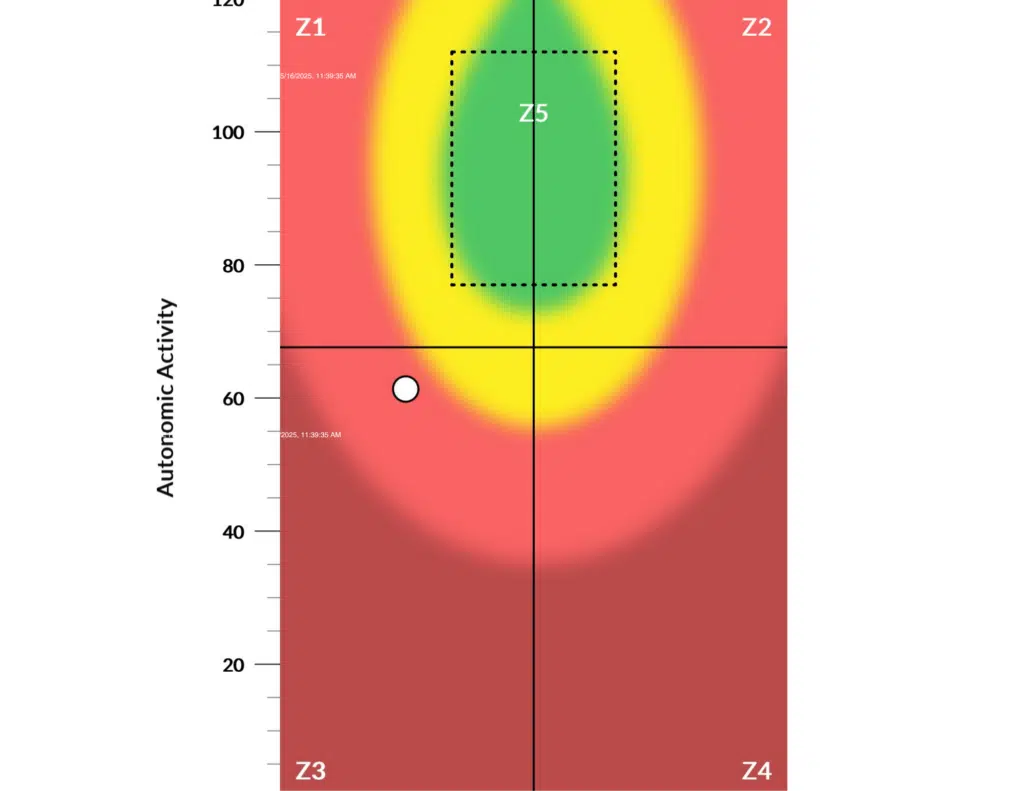
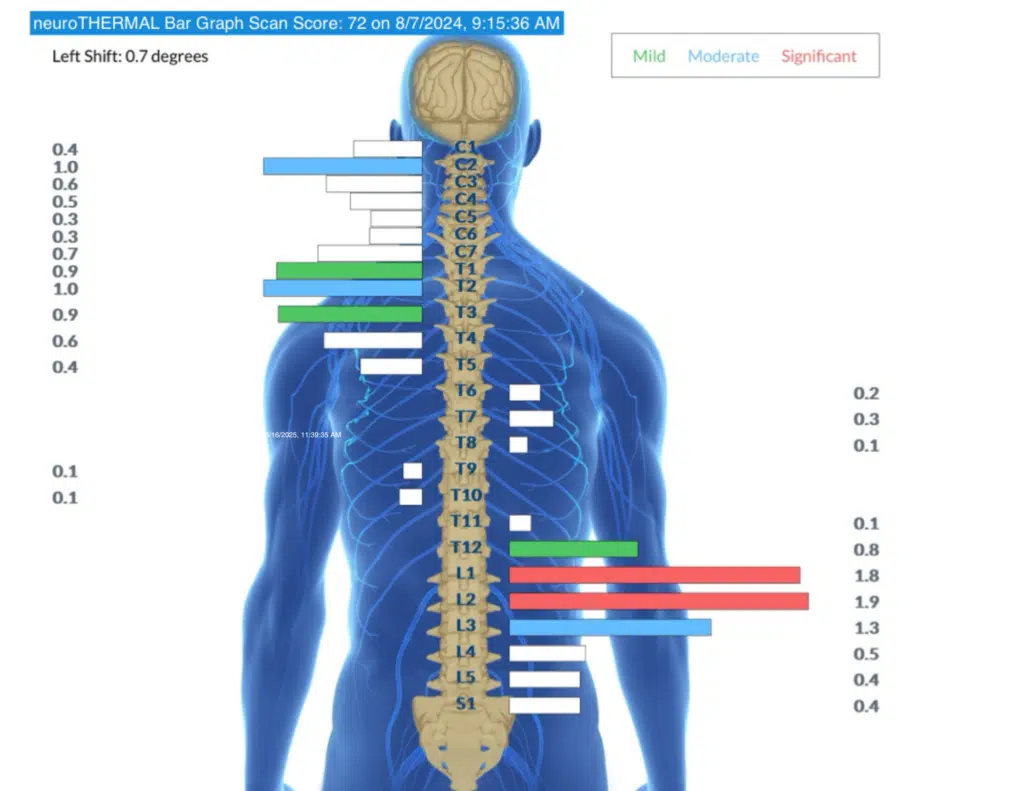
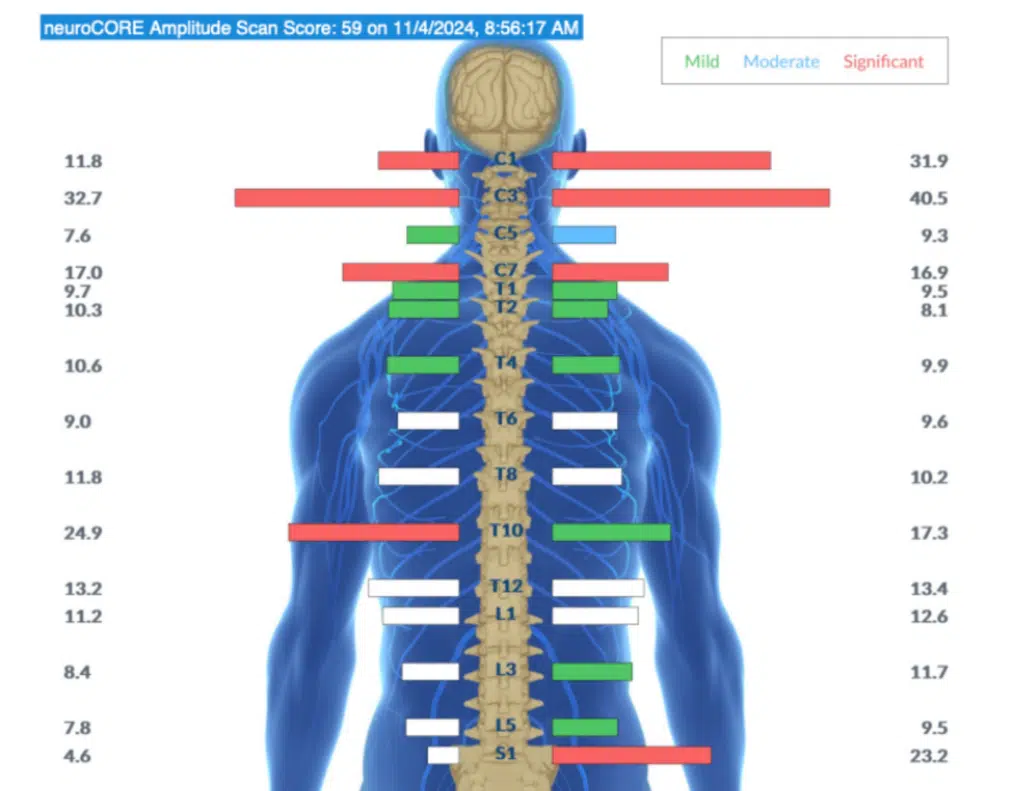
INSiGHT Scans reveal the root cause of gut-brain dysfunction by objectively measuring Autonomic Nervous System function, the sympathetic and parasympathetic balance, neuromuscular tension along the spine, and thermal patterns indicating dysautonomia. Bloodwork, imaging, and behavioral checklists tell you a lot about disease and symptoms, but very little about how the Autonomic Nervous System is actually performing day to day. That’s the gap INSiGHT Scans fill.
The INSiGHT Scan technology has three components:
- Heart Rate Variability (HRV) analysis measures the balance between the sympathetic (“fight-or-flight”) and parasympathetic (“rest, regulate, and digest”) branches of the Autonomic Nervous System. Low HRV is one of the most consistent biomarkers found in both depression and gut dysfunction.
- Surface Electromyography (sEMG) measures the electrical activity of muscles along the spine, identifying areas of tension and altered neuromuscular function.
- Thermal scanning uses infrared sensors to detect temperature differences along the spine, which can indicate dysautonomia and autonomic imbalance.
It’s important to note that this technology does not diagnose medical conditions, and Neurologically-Focused Chiropractic Care is certainly not a treatment or cure for depression or any other condition, not even back pain. Instead, these INSiGHT Scans help us track down the root cause of nervous system dysfunction and dysregulation, and build customized care plans and adjusting protocols to help shift the nervous system back into a state of balance, regulation, and resilience.
In practice, the scans of someone with a chronically inflamed gut and persistent low mood often show the same pattern: significant sympathetic dominance, suppressed vagal tone, thermal asymmetry indicating dysautonomia, and elevated tension along the upper cervical and lumbar spine. As care progresses, those scans begin to clear, calm, regulate, and reorganize, the foundational elements of Neurologically-Focused Chiropractic Care.
[insert scans] HRV (left one), THERMAL, EMG
What Does Neurologically-Focused Chiropractic Care Address?
Neurologically-Focused Chiropractic Care is a specialized approach centered on detecting and correcting subluxation, restoring vagal tone, and helping the Autonomic Nervous System shift out of chronic sympathetic dominance. It’s not the rough, neck-cracking adjustment most people picture when they hear “chiropractor.”
PX Docs–trained practitioners use gentle, precise, age-appropriate adjustments—especially in the upper cervical and brainstem region where the vagus nerve originates, and in the lower thoracic and lumbar regions where gut and elimination function are heavily innervated. The goal isn’t to “treat” depression or gut disease—it’s to remove neurological interference and let the nervous system do what it was designed to do.
When that happens, families consistently report better sleep within weeks, improvement in chronic constipation or reflux, calmer moods, reduced anxiety, more energy, and better response to other interventions like therapy, supplements, or dietary changes. This is the multiplier effect at work. Once the nervous system comes online, Neurologically-Focused Chiropractic Care creates the foundation that lets the gut heal, lets neurotransmitters work properly, and lets every other tool—diet, therapy, even medication when needed—actually do its job.
The Bottom Line on Gut Health and Depression
Gut health and depression are deeply connected—that part the science is clear on. The microbiome shapes mood. The vagus nerve carries the signals. Inflammation drives the symptoms. But the upstream story most parents and patients never hear is that all of this runs on top of an Autonomic Nervous System that has to be regulated for any of it to work.
That’s why probiotics alone, antidepressants alone, or diet changes alone so often disappoint. They’re powerful tools working downstream of the actual root cause. The “Perfect Storm,” prenatal stress, birth trauma, early childhood stressors, and modern teen pressures, sets up nervous system dysregulation that compromises the vagus nerve, the gut, and ultimately mood, often years before depression is ever diagnosed.
The good news: the nervous system can heal, regulate, and recover when the right care comes in the right order. The Healing Hierarchy gives gut and mood interventions a foundation strong enough to actually work.
If you suspect nervous system dysregulation is the missing piece in your or your child’s depression and gut health story, the next step is finding a practitioner who can assess and address it directly. Find a PX Docs–trained Neurologically-Focused Chiropractor in your area to schedule a consultation and INSiGHT Scan, and start building care from the foundation up.
Frequently Asked Questions About Gut Health and Depression
Can fixing my gut really cure my depression?
Improving gut health can meaningfully improve mood, but it rarely “cures” depression on its own when nervous system dysregulation is the upstream driver. The most reliable results come from a layered approach: address nervous system function first (subluxation, vagal tone, autonomic balance), then optimize the gut microbiome through diet and probiotics, and add mental health support as needed.
What are the early signs that my child’s gut is affecting their mood?
Watch for the pattern, not just one symptom. Kids whose gut is driving mood issues typically show a cluster: chronic constipation or stomachaches, picky eating, frequent illness, poor sleep, anxiety, and difficulty handling transitions. If your child has had colic, reflux, multiple antibiotic courses, or chronic ear infections in earlier years, those are major upstream clues.
Are probiotics enough to fix the gut-brain connection?
Probiotics can help, especially specific strains studied for mood (“psychobiotics”), but they’re rarely enough on their own. The microbiome lives inside a digestive tract that’s controlled by the vagus nerve. If the vagus nerve isn’t firing properly, probiotics struggle to colonize and signal correctly. They work best when paired with nervous system regulation.
How is the vagus nerve different from “just” the gut?
The vagus nerve is the wiring; the gut is the building. The vagus nerve controls gut motility, immune signaling, and the constant flow of information from gut to brain. You can have a clean diet and a high-quality probiotic, but if the vagus nerve is suppressed—often from birth trauma or upper cervical subluxation—the gut still won’t function correctly.
Can chiropractic care help with depression?
Neurologically-Focused Chiropractic Care is not a treatment or cure for depression. What it addresses is nervous system function, autonomic regulation, vagal tone, and subluxation patterns that often sit underneath both gut dysfunction and mood symptoms. When that foundation improves, many people experience meaningful changes in mood, sleep, digestion, and stress resilience as a downstream effect.
What’s the connection between birth trauma and depression years later?
Birth interventions like C-sections, forceps, vacuum extraction, and prolonged labor can cause physical strain to a baby’s upper neck and brainstem, exactly where the vagus nerve originates. That early subluxation can quietly compromise vagal tone, gut-brain axis function, and autonomic balance for years. By the time depression shows up in childhood or adolescence, it’s often been building since day one.