
Chronic cough is a persistent cough lasting eight weeks or longer in adults, or four weeks or longer in children. It’s one of the most common reasons parents visit healthcare providers, severely impacting quality of life through sleep disruption and exhaustion.
In an all too common story, Bryce’s mom shared, “Her immune system felt very weak from very early on. She seemed to pick up any and every cold/virus out there and experienced chronic ear infections. With every cold, she would develop a cough that lasted 2-3 weeks. It felt like we were only getting one “healthy” week per month.”
Like so many children, Bryce struggled with chronic cough, ear infections, and sleep problems. Mom says she can “count on one hand” how many times Bryce actually slept through the night those first few years. The sleep disruption affected the entire family, exhausted parents watching their child suffer with no answers from conventional medicine.
Chronic coughing seriously impacts quality of life and can be especially disruptive for children. But because a chronic cough may not be attached to obvious signs, it can be difficult to know how to provide the right care. Here, we explore chronic-cough symptoms, causes, and care options, including the neurological root cause most pediatricians miss.
What Is a Chronic Cough?
Medical professionals define chronic cough based on duration:
- Acute cough (under 3 weeks)
- Subacute cough (3-8 weeks)
- Chronic cough (eight weeks or longer in adults, four weeks or longer in children).
A chronic cough is traditionally defined as a persistent cough lasting four weeks or longer in children and eight weeks or longer in adults. Although coughing is a natural defense mechanism controlled by the cough reflex that allows the body to expel microbes, mucus, and foreign particles from the respiratory tract, a chronic cough becomes problematic, interrupting sleep, impairing concentration, and contributing to poor mental health.
A normal cough reflex is controlled by the vagus nerve and brainstem, which sense irritation and trigger coordinated muscle responses. But when coughing becomes chronic, it signals that your child’s nervous system isn’t regulating respiratory function, mucus production, and inflammatory responses properly.
One important thing to recognize: a chronic cough isn’t a disease itself; it’s symptomatic of other conditions. Trying to suppress it with over-the-counter medications rarely addresses the underlying dysfunction.
While conventional medicine focuses on identifying which condition is causing the cough, a chronic cough often signals deeper nervous system dysfunction that began earlier, sometimes even before birth.
What Are the Symptoms of a Chronic Cough?
A chronic cough almost always indicates another health issue. Being aware of associated symptoms helps you and your care providers identify the primary problem.
Common signs and symptoms include:
Respiratory Symptoms:
- Shortness of breath or difficulty catching breath
- Wheezing
- Coughing up mucus or phlegm
- Chest pain
- Coughing up blood (requires immediate medical attention)
Throat and Nasal Symptoms:
- Sore throat or frequent throat clearing
- Hoarseness
- Postnasal drip
- Runny nose or stuffy nose
Systemic Symptoms:
- Heartburn or sour taste
- Appetite loss
- Fatigue and exhaustion
- Dizziness
- Headaches
- Sleep disruption
- Temperature higher than 101°F
- Unexplained weight loss
When Should You See a Doctor Immediately?
Seek immediate care if your child experiences:
- Coughing up blood, even small amounts
- Severe difficulty breathing
- High fever over 101°F combined with a chronic cough
- Persistent wheezing in a young child
- Unexplained weight loss with cough
- Night sweats
- Cough lasting more than four weeks with no improvement
These symptoms help rule out serious conditions such as pneumonia, tuberculosis, or foreign-body aspiration. Once ruled out, investigate the neurological root cause.
What Can Cause a Chronic Cough?
Many influences contribute to chronic cough. In most cases, causes are traced to other conditions or environmental factors, or a combination.
Understanding conventional causes is important, but what pediatricians miss is WHY some children develop these conditions while others don’t.
Primary Medical Causes
- Respiratory Tract Infections: Chronic cough may persist long after the initial infection clears. Pneumonia, bronchitis, and colds can leave airways irritated for weeks. Pertussis (whooping cough) is often overlooked but can cause persistent coughing.
- Medication-Induced Cough: ACE inhibitors (a class of blood pressure medications) are well known for causing chronic cough by interfering with bradykinin breakdown.
- External Factors: Mold, smoke, dust, pollutants, and allergens all contribute to chronic cough. Secondhand smoke is a major risk factor.
COVID-19: A chronic cough may be a lasting sign after COVID-19 infection. Many researchers believe this ties to Vagus Nerve dysfunction. - Asthma + Allergies: A chronic cough is one of asthma’s most common signs. Cough-variant asthma often worsens at night or with cold air. Asthma sufferers experience tightening around their airways with increased mucus production. The body coughs to force air through restricted areas. Chronic allergies leave the system in a sustained state of inflammation, triggering coughing to loosen persistent congestion.
- Postnasal Drip (Upper Airway Cough Syndrome): Postnasal drip, also called upper airway cough syndrome (UACS), is a leading cause of chronic cough. Allergies and sinus inflammation cause excess mucus that drips down the throat, irritating the respiratory tract and triggering the cough reflex.
- The Autonomic Nervous System controls mucus production. When stuck in a state of sympathetic dominance, it can’t properly regulate mucus, leading toexcess that triggers postnasal drip.
- Gastroesophageal Reflux Disease (GERD) and Acid Reflux: GERD occurs when stomach acid flows back into the esophagus, irritating the throat. Some children have “silent reflux” where acid reaches the throat without typical heartburn symptoms. This creates a ‘tickle’ in the throat, causing near-constant coughing. The vagus nerve controls stomach acid and the lower esophageal sphincter. When subluxation affects vagus function, it disrupts this control system. Since most care plans never address the root cause of infantile reflux, it may persist as a chronic cough later.
The Neurological Root Cause
Neuromuscular Dysfunction + Interference Imbalances in the neurospinal system lead to conditions in children. Chronic cough may indicate significant tension and neurological interference, including subluxation, dysautonomia, and vagus nerve dysfunction. This may be part of the “Perfect Storm” of chronic challenges.
Chronic subluxation leaves the body in a prolonged state of sympathetic tone, causing muscles (including airways) to remain tight. When the nervous system is stuck in a sympathetic state, it creates a pro-inflammatory environment that contributes to all these challenges.
WHY do some children develop asthma, allergies, GERD, or postnasal drip while others don’t? When all tests are “normal,” but your child still coughs, investigate the neurological foundation.
The “Perfect Storm”: The Real Root Cause
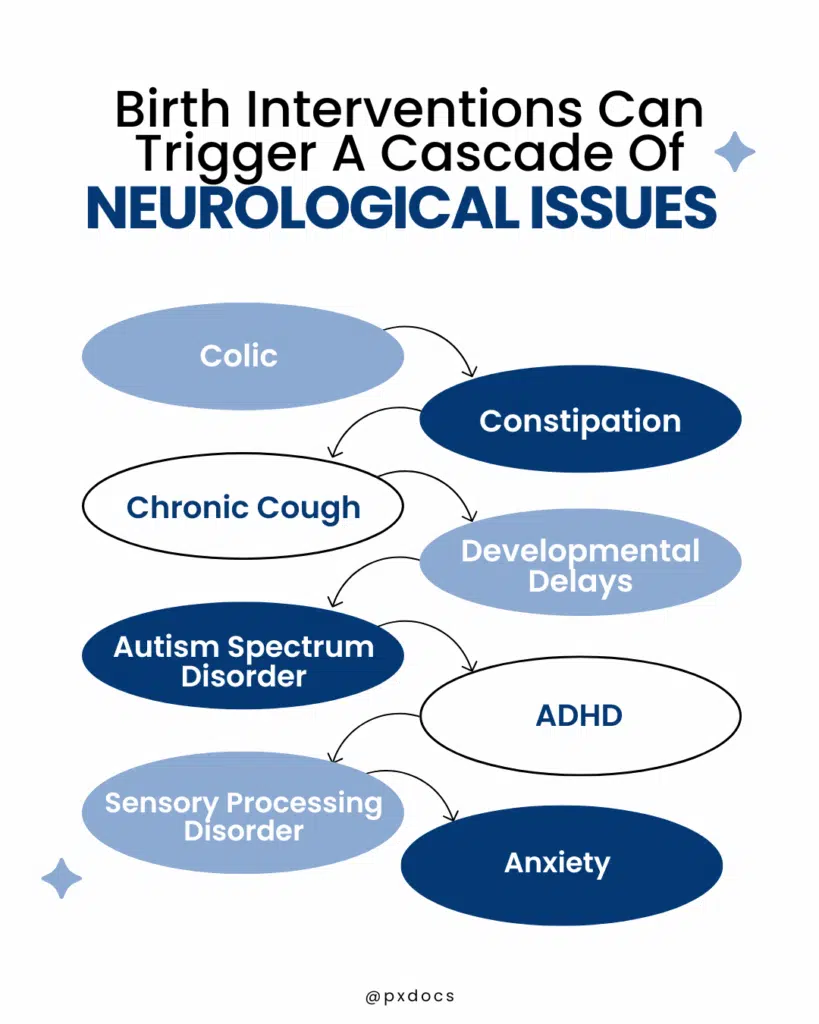
Chronic cough doesn’t start when you first notice it. It’s often the final symptom in “The Perfect Storm,” a neurological cascade beginning long before, sometimes even before birth.
The “Perfect Storm” explains why some children develop chronic cough while others don’t. It’s not one cause; it’s the accumulation of neurological stress overwhelming your child’s system.
Stage 1: Prenatal Stress
The story often begins in the womb. When mothers experience chronic stress during pregnancy, elevated cortisol crosses the placenta and affects the developing nervous system.
Research shows prenatal stress can:
- Alter nervous system development
- Create predisposition to dysregulation
- Affect immune programming
- Set the stage for sympathetic dominance from birth
Stage 2: Birth Trauma
Even “normal” births apply significant force to a baby’s head and neck. When interventions are needed, C-sections, forceps, and vacuum extraction, forces increase dramatically.
The upper cervical spine is incredibly vulnerable during birth. This is where the brainstem connects to the spinal cord, where the vagus nerve exits, and where structures that control breathing, heart rate, and digestion are located.
Birth trauma can cause upper cervical subluxation. When subluxation occurs at birth, it affects:
- Vagus nerve function: Controls the respiratory tract, cough reflex, mucus production, and airway tone
- Phrenic nerve function: Controls the diaphragm
- Brainstem communication: Coordinates all autonomic functions
At PX Docs, we see this clinically: children with difficult births are far more likely to develop colic, reflux, ear infections, and eventually chronic cough and asthma.
Stage 3: Early Life Stressors
Even with nervous system dysfunction at birth, the body may compensate temporarily. That’s why some children seem “fine” initially.
Early stressors that accumulate:
- Antibiotic overuse: Disrupts gut microbiome, affecting the immune system and gut-brain axis
- Environmental toxins: Mold, smoke, and pollution create chronic inflammation
- Poor sleep: Prevents proper nervous system repair
- Repeated infections: Signs the immune system can’t regulate properly
- Nutritional deficiencies: The nervous system lacks needed building blocks
It’s the accumulation that matters. Prenatal stress + birth trauma + antibiotics + poor sleep + environmental irritants pile together until the nervous system reaches a tipping point.
The Tipping Point
This is when the signs appear, when adaptive capacity runs out.
For Bryce: Birth → Colic and sleep disruption → Chronic ear infections + antibiotics → Weak immune system → Chronic cough that wouldn’t resolve.
Your child doesn’t “grow out of” colic or reflux; they grow INTO chronic cough, asthma, and allergies. The underlying nervous system dysfunction simply manifests differently as they develop.
The Neurological Connection: Why the Neck Matters
Most parents are confused when we say their child’s chronic cough relates to their neck. “But the problem is in the lungs!” Here’s why the upper cervical spine is critical.
The Vagus Nerve: Master Control System
The vagus nerve is the longest cranial nerve, the main control cable for your Parasympathetic Nervous System (the “brake pedal”).
In relation to chronic cough, the vagus nerve controls:
- The cough reflex itself
- Mucus production and consistency
- Airway tone (relaxed or constricted)
- Inflammatory response in respiratory tract
- Stomach acid and lower esophageal sphincter
When subluxation compresses the vagus nerve at upper cervical levels, it triggers a hypersensitive cough reflex, excessive mucus production, poor inflammation control, and weakened immune coordination.
The Sympathetic Storm: Stuck on the Gas Pedal
The PX Docs network uses this analogy:
Your child’s Autonomic Nervous System is like a car with gas and brake pedals.
- Sympathetic = gas pedal (fight or flight)
- Parasympathetic = brake pedal (rest and digest)
When subluxation causes dysautonomia, it’s like the gas pedal is stuck down while the brake won’t work. They’re stuck in sympathetic dominance, chronic “fight or flight” mode.
Sympathetic dominance creates respiratory dysfunction through:
- Airway constriction: Smooth muscles tighten, reducing airflow
- Inflammatory overreaction: Pro-inflammatory environment in airways
- Excessive mucus: Thick, difficult to clear, creating postnasal drip
- Suppressed immune function: More susceptible to respiratory infections
- Poor sleep and healing: Can’t repair properly
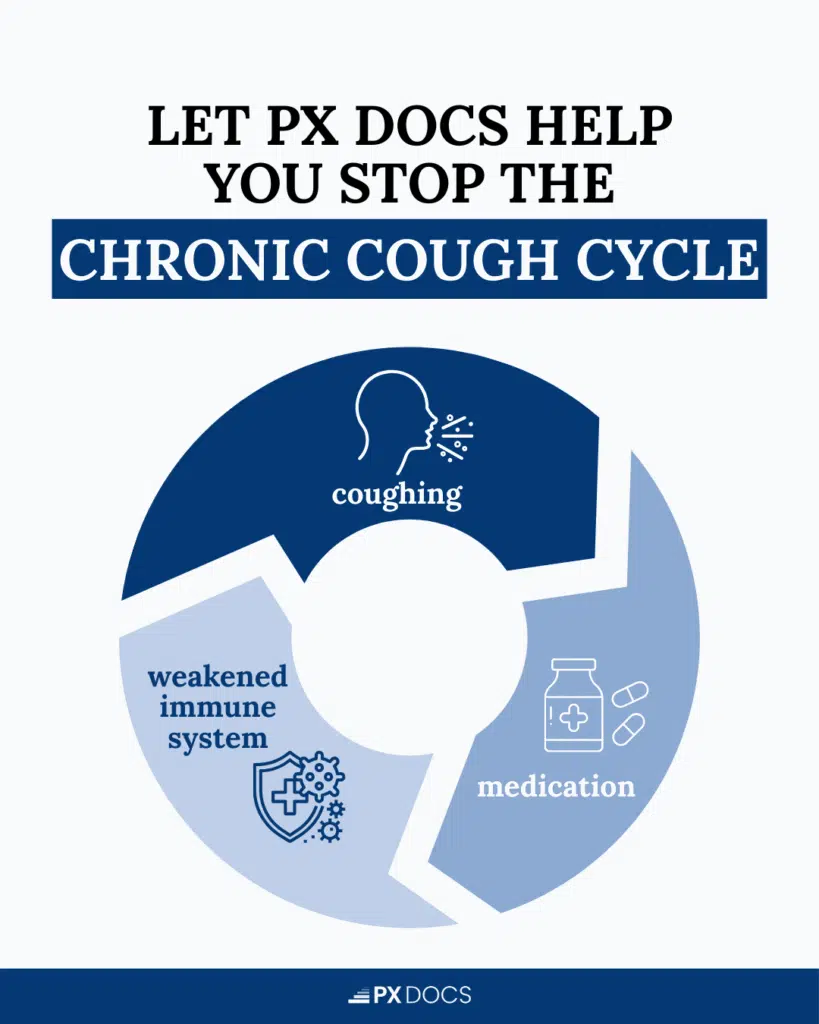
The only way to break this cycle: remove subluxation, restore vagus nerve function, shift from sympathetic dominance to balanced regulation.
What Are Care Options for Chronic Cough?
Most parents are familiar with standard medical options for chronic cough, acid blockers, antibiotics, antihistamines, decongestants, and cough suppressants. While these can be life-saving for acute situations, they often prolong chronic conditions because they don’t address root causes.
It’s important to note that INSiGHT scanning technology does not diagnose medical conditions, and Neurologically-Focused Chiropractic Care is certainly not a treatment or cure for chronic cough or any other condition, not even back pain. Instead, INSiGHT scans help us track down the root cause of nervous system dysfunction and dysregulation. Our approach works to restore proper neurological function so the body can heal itself from the inside out.
That’s why so many parents turn to drug-free Pediatric Chiropractic Care, which addresses the root cause. First, a consultation and neurological examination detect subluxation and neuromuscular tension.
This examination includes INSiGHT scans, measuring nervous system function in ways X-rays and blood tests cannot:
- EMG: Measures muscle tension along the spine
- Thermography: Detects temperature differences, revealing autonomic dysfunction
- Heart Rate Variability: Assesses sympathetic/parasympathetic balance
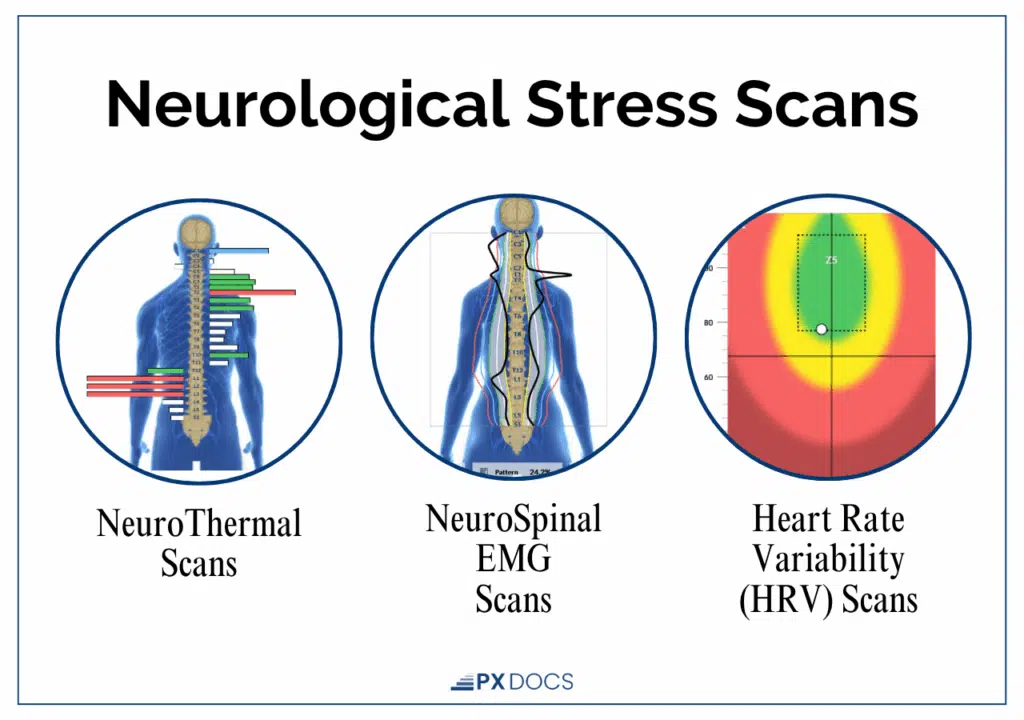
Scans are non-invasive, painless, take minutes, and even young children tolerate them easily. The objective data shows exactly where dysfunction exists and tracks progress.
Final Thoughts
If you’re the parent of a child suffering from a chronic cough lasting eight weeks or longer, it can be hard to know how to help. Understanding causes and care options is important, but finding effective solutions takes more than research.
Your instincts that something deeper is wrong have been right all along. When conventional care plans provide only temporary relief or pediatricians say “it’s just allergies” or “they’ll grow out of it,” trust what you’re seeing. Chronic cough persisting for four weeks or longer signals underlying nervous system dysfunction that conventional diagnostics often miss. The sooner you address the root cause, the faster your child can heal. Don’t let quality of life continue to suffer when a solution exists. Visit our directory to set up an appointment with a PX Docs pediatric chiropractor today, and kick coughing to the curb!