
Approximately 35% of children in the United States aren’t getting enough sleep, and if you’re reading this at 2 AM while your exhausted child still can’t settle down, you already know your family is part of that statistic.
Maybe you’ve tried everything. Earlier bedtimes. Blackout curtains. Melatonin. Your child is clearly exhausted, but no matter how tired they are, their body won’t let them rest. They take 2+ hours to fall asleep, wake up multiple times, or pop awake at 4:30 AM when they clearly need more sleep.
Sleep problems in children aren’t just about behavior or habits. What sleep does for a child’s body, the memory consolidation, growth hormone release, immune strengthening, and brain development, all depend on a nervous system that can actually shift into restorative mode. When that system is stuck, no amount of sleep hygiene will fix it.
What Sleep Actually Does for a Child’s Body
While your child sleeps, their nervous system orchestrates restorative processes that literally build their developing body and brain. During sleep, the brain sorts and consolidates learning, strengthening important neural connections. This is why kids who don’t sleep well struggle in school; their brains can’t file away and access information properly.
Studies show that there is an increase in growth hormone released during deep sleep; your child literally grows while they sleep. Sleep-deprived children often show delayed growth patterns because the body needs deep, restorative sleep to trigger the hormone cascade that builds muscle, bone, and tissue.
The immune system produces infection-fighting cells during deep sleep, which is why kids who don’t sleep well get sick constantly. The brain also processes emotions during REM cycles, which is why sleep-deprived kids can’t regulate emotional responses; explosive meltdowns aren’t behavior problems, they’re a nervous system running on empty.
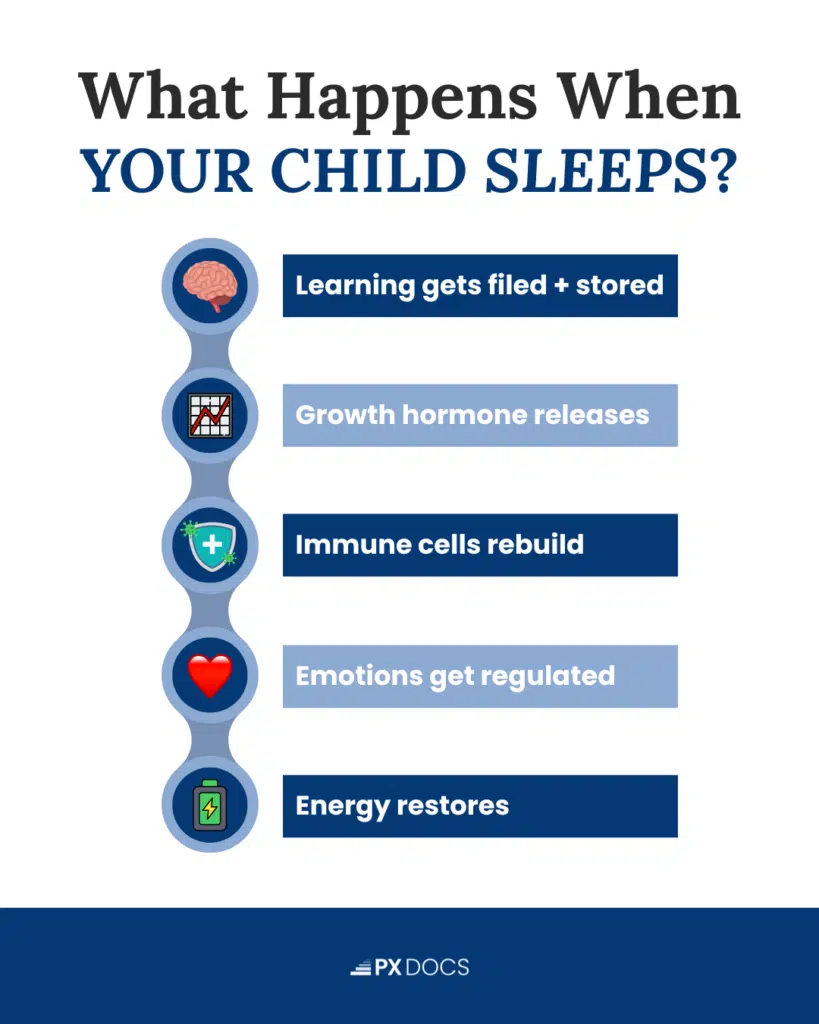
Every essential function for healthy childhood development happens during sleep. But all of these processes are controlled by the nervous system. If that system can’t shift into the right mode, none of this critical work gets done.
Why So Many Kids Can’t Get Restorative Sleep
If you’re exhausted from battling bedtime every night, watching your child lie awake for hours despite being clearly tired, you’re dealing with a nervous system problem, not a behavioral one.
The Exhausted-But-Wired Pattern
This is the hallmark of sleep dysfunction in children. Your child is clearly exhausted, but when it’s time for bed, their body won’t cooperate. They can’t settle. They can’t turn off their brain. Some kids take 2-3 hours to finally fall asleep, and even then, it’s light, restless sleep that doesn’t refresh them.
Parents often describe their child as “tired and wired,” and that’s exactly what’s happening neurologically. The Sympathetic Nervous System (the gas pedal) is stuck “on” while the Parasympathetic Nervous System (the brake pedal) isn’t strong enough to override it and initiate sleep. It’s like trying to fall asleep after drinking three energy drinks: the body is exhausted, but the nervous system won’t let it rest.
When it takes your child more than 30-45 minutes to fall asleep, when they wake up multiple times throughout the night, or when they never seem rested despite 10 hours in bed—these aren’t separate problems.
These are all signs of the same root cause: a nervous system that cannot properly regulate the sleep-wake cycle. No bedtime routine or sleep hygiene trick can override a nervous system that’s physiologically stuck.
The Nervous System’s Role in Sleep Regulation
Sleep happens when the Autonomic Nervous System, the automatic control system, initiates and maintains it. Think of this system as having two modes: a gas pedal (sympathetic) and a brake pedal (parasympathetic). The vagus nerve is the main highway of the parasympathetic system, connecting the brain to nearly every major organ.
The vagus nerve doesn’t just influence sleep—it’s the gateway to it. This nerve controls the physiological shift from wakefulness to sleep. It slows heart rate, lowers blood pressure, relaxes muscle tension, and signals to every system in the body that it’s safe to rest. Without proper vagus nerve function, the body can’t initiate the changes necessary for sleep.
When there’s nervous system dysfunctionand subluxation creates interference in the signals between the brain and thebody, kids might get stuck in light sleep, unable to drop into deep restoration. From the outside, it looks like a sleep problem. From the inside, it’s a problem with nervous system regulation.
Dysautonomia, dysfunction of the Autonomic Nervous System, often presents first as sleep problems before progressing to other signs such as digestive issues, immune dysfunction, and behavioral challenges. Sleep is like the canary in the coal mine, signaling that the nervous system is struggling.
How the “Perfect Storm” Disrupts Sleep from Day One
Most sleep problems don’t start suddenly. When you look back at your child’s history, there’s usually a pattern, a series of stressors that accumulated over time, creating what we call “The Perfect Storm.”
- Maternal stress during pregnancy crosses the placenta and affects the developing baby, potentially altering the baby’s stress response system. These babies often struggle with colic, sleep resistance, and difficulty calming—all signs of an overactive stress response system.
- Birth trauma from modern obstetric interventions. Inductions, forceps, vacuum extraction, c-section, or manual pulling on the baby’s head and neck can create subluxation in the baby’s neurospinal system that interferes with vagus nerve and nervous system function. The upper neck is where the vagus nerve exits the skull, and trauma to this area is incredibly common and often missed. Many colicky babies are showing signs of this birth-related nervous system trauma. The same can happen with a breech birth as well, creating more stress on baby’s full body.
- Early childhood stressors like antibiotics disrupting the gut microbiome, chronic constipation or reflux signaling vagus nerve problems, frequent illnesses showing immune struggles, all compound the nervous system dysfunction. Each stressor adds to the burden on an already challenged system.
The Hidden Cost of Poor Sleep in Childhood
When your child doesn’t sleep well, chronic sleep deprivation creates problems that affect every area of development, and many get misdiagnosed as separate conditions.
Sleep-deprived children don’t look sleepy; they look hyperactive, impulsive, and emotionally dysregulated. To an observer (including many pediatricians), this looks like ADHD. But research shows that children with insufficient sleep can present with signs similar to ADHD. The hyperactivity, poor attention span, and impulsivity are the brain’s response to exhaustion.
Kids who don’t sleep well get sick constantly because the immune system can’t keep up, and the body has never been able to access rest, regulate, and heal. This creates a vicious cycle: Child gets sick, takes antibiotics, antibiotics disrupt gut health, gut disruption affects vagus nerve function, vagus nerve problems worsen sleep, poor sleep further weakens immune function.
Without proper sleep, the brain can’t consolidate memories or learning. Chronic sleep deprivation is strongly linked to depression because the nervous system doesn’t have the resources to handle normal emotional challenges.
Restoring Sleep at the Source with Neurologically-Focused Chiropractic Care
At PX Docs, we don’t care for sleep as a standalone problem. We address the nervous system dysfunction that’s preventing sleep, specifically, the subluxation that creates interference in the communication between brain and body.
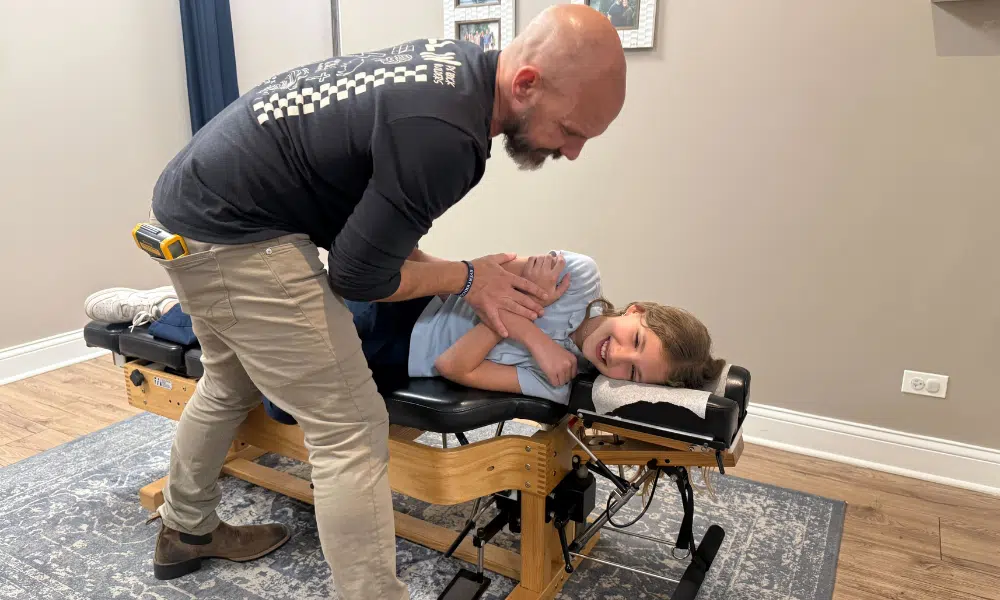
Neurologically-Focused Chiropractic Care uses precise, gentle adjustments to remove subluxation and stress within the body. For infants and children, these adjustments are incredibly gentle, often the same amount of pressure you’d use to test the ripeness of a tomato or avocado.
These adjustments remove the physical interference blocking nerve signals. When subluxation is corrected, the nervous system can finally shift between sympathetic and parasympathetic modes the way it should. The vagus nerve can activate properly. The body can initiate and maintain the sleep cycles it desperately needs.
The INSiGHT Difference
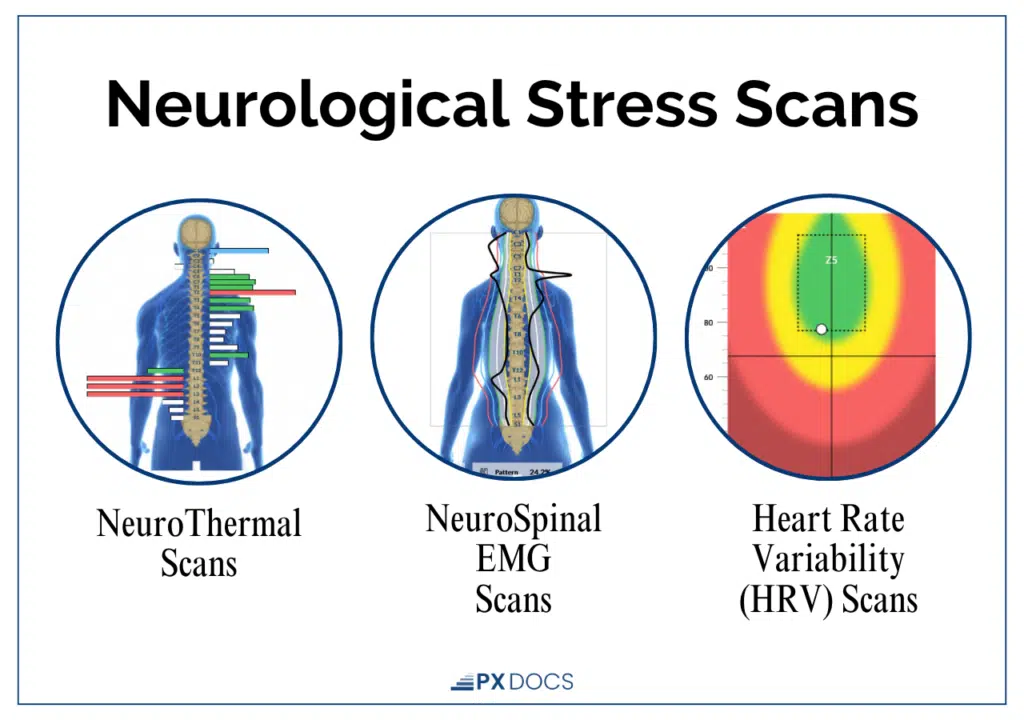
At PX Docs, we don’t guess about your child’s nervous system function; we measure it using INSiGHT scanning technology. These scans show us exactly where subluxation is creating interference, how severe the nervous system dysregulation is, and which systems are most affected. For sleep problems, we’re specifically looking at patterns that indicate sympathetic dominance, vagus nerve dysfunction, and poor nervous system variability.
These scans give us objective data to track improvements as subluxation is corrected. Parents often tell us they can feel the difference in their child’s sleep, and the scans confirm what’s happening neurologically to create that change.
Beyond Sleep
When sleep improves, everything else follows suit. Parents often tell us that after sleep stabilizes, they notice improvements in digestion, fewer illnesses, better behavior, improved mood, and better focus. This is because the nervous system, now properly regulated, can coordinate all those functions the way it should.
Sleep is the foundation. When you restore the nervous system’s ability to regulate sleep, you restore its ability to regulate everything else.
Your Child’s Nervous System Is Ready to Rest
What sleep does for a child’s body, the memory consolidation, the growth hormone release, the immune strengthening, the emotional processing, and the brain development, is absolutely essential. But none of it can happen if the nervous system can’t shift into restorative mode.
Your child’s exhaustion is real. Their struggle to sleep isn’t behavioral or something they’ll grow out of. It’s a nervous system that’s stuck, unable to activate the parasympathetic “brake pedal” that initiates and maintains sleep.
You’ve tried the conventional approaches. You’ve done the bedtime routines, managed screen time, and created the perfect sleep environment. Those things matter, but they can’t fix neurological interference. They can’t remove subluxation. They can’t restore vagus nerve function.
Next Steps
We encourage you to find a PX Docs provider in your area using the directory. These are chiropractors specifically trained in Neurologically-Focused Chiropractic Care for infants, children, and families. They understand the connection between nervous system dysfunction and sleep problems. They use INSiGHT scanning technology to identify exactly where your child’s nervous system needs support. And they have experience helping thousands of families restore sleep when nothing else has worked.
Your child’s nervous system is ready to heal. It’s been trying to heal all along. It just needs the interference removed so it can do what it’s designed to do. We’re here to help make that happen.