
Can asthma go away? Asthma rarely disappears completely once it develops, but symptoms can fade for months or years, a state called remission, and this happens most often in children with mild asthma. The underlying airway sensitivity usually remains, so signs can return when triggers show up. Remission is real and worth pursuing; a permanent cure is rare.
If you’re a parent listening to your child wheeze at night, that’s the honest answer you came for. Now let’s go past it, because the question most families are really asking is why asthma sticks around for some kids and fades for others, and whether there’s anything you can do to tip the odds toward your child breathing freely. That’s where the conversation gets a lot more hopeful, and a lot more interesting, than “manage it with an inhaler for life.”
Does Asthma Ever Go Away Completely?
For most people, no, asthma doesn’t vanish permanently. It’s a chronic condition involving inflammation and hypersensitivity in the airways, and even when symptoms quiet down, that underlying reactivity tends to linger in the background. Studies that follow children into adulthood keep finding the same thing: airways can look and feel normal for years, then flare again when the right trigger comes along.
But “doesn’t go away completely” is not the same as “never gets better.” There’s a wide middle ground between a child who’s symptomatic every week and a child who hasn’t touched a rescue inhaler in three years. That middle ground is called remission, and for kids especially, it’s a realistic goal.
The distinction that trips parents up is remission versus cure:
- Remission means symptoms become so mild or infrequent that they no longer interfere with daily life. A child in remission can run, sleep, and play without breathing problems, often without daily medication. The capacity for asthma is still there, but it’s quiet.
- Cure would mean the underlying condition is permanently and completely gone, with zero chance of return. True cures for asthma are extremely rare, which is why most doctors talk about remission instead.
So when someone says a child “outgrew” their asthma, what they usually mean is the child reached remission, not that the condition was erased.
Can Children Outgrow Asthma?
Children have the best odds of any age group of seeing asthma symptoms fade. Many kids with mild asthma improve significantly or stop having noticeable symptoms during their teenage years. A few things explain why childhood is the window where this happens most:
- Airways are still growing. A child’s airways are smaller and more easily narrowed and inflamed. As the airways grow larger through the late teens, the same amount of inflammation causes less obstruction, so symptoms can ease.
- The immune system is maturing. Allergic responses that drive asthma in early childhood can settle down as a child grows, especially when allergy triggers are well managed.
- Milder asthma improves more often. The lighter the asthma to begin with, the more likely it is to enter remission.
It’s worth being clear-eyed, though: “outgrowing” asthma is not guaranteed, and it’s not as common as the phrase makes it sound. Plenty of kids carry asthma into adulthood, and a decrease in symptoms doesn’t always mean the condition is truly gone. That’s the difference between symptoms fading and the root cause being addressed—a difference we’ll come back to, because it’s the whole reason this article exists.
Can Asthma Come Back After It Goes Away?
Yes. This is the part conventional asthma education often glosses over, and it catches families off guard. Childhood asthma that quiets down in the teen years can return later, sometimes in the twenties, sometimes not until middle age. Estimates suggest a meaningful share of children whose asthma resolves will see symptoms return by their twenties.
Relapse usually happens when a trigger or a change in health reactivates the underlying airway sensitivity that never fully went away. Common culprits include:
- Allergens (pollen, dust mites, pet dander, mold)
- Respiratory infections
- Smoke, vaping, and air pollution
- Cold air and exercise
- Significant physical or emotional stress
This is exactly why the “they’ll grow out of it” reassurance can leave parents unprepared. If asthma is cared for as something a child passively waits to outgrow, no one’s addressing why the airways became reactive in the first place, and that reactivity is what comes back.
What Makes Asthma More Likely To Go Into Remission?
Researchers who study long-term asthma outcomes have identified patterns in who reaches remission and who doesn’t. Factors associated with a better chance of remission include:
- Mild rather than severe asthma
- Better baseline lung function
- Good day-to-day asthma control (fewer flares, less reliance on medication)
- Younger age and early-onset asthma rather than asthma that begins in adulthood
- Fewer co-existing allergic conditions like eczema and allergic rhinitis
- Never smoking, and avoiding secondhand smoke and vaping
Notice what runs underneath that list. Many of these aren’t really separate factors; they’re downstream of one bigger question: how well-regulated is the child’s system overall? A child whose body can calm inflammation, tolerate triggers without overreacting, and recover from infections is a child whose asthma is far more likely to settle. That capacity to regulate and recover doesn’t come from the lungs alone. It comes from the nervous system.
Why Does Asthma Develop In The First Place? A Look At The Root Cause
Here’s where the PX Docs perspective parts ways with the standard explanation. Conventional asthma care does a good job naming the inflammation and managing the symptoms, but it tends to stop at the airways, as if the lungs simply malfunction on their own. We think that misses the conductor of the whole orchestra.
Asthma is, at its core, a problem of an airway that overreacts and an inflammatory response that won’t shut off. So the real question is: what’s supposed to keep airway tone calm and switch off inflammation when the threat is gone? The answer is the Autonomic Nervous System, and specifically the vagus nerve.
The vagus nerve is the longest cranial nerve in the body and the main driver of the Parasympathetic Nervous System, the “rest, regulate, and digest,” side of the nervous system. It runs from the brainstem down into the lungs, heart, and gut, and one of its jobs is to help regulate breathing depth and respiratory rate, and to help the body complete and resolve inflammatory responses rather than leave them stuck on.
As Dr. Tony Ebel puts it, when a child’s nervous system can’t complete the inflammatory cycle, “the fire alarm is going off, but the fire department can’t respond.” The airways stay inflamed and twitchy even when diet, environment, and medication are all dialed in.
When the Autonomic Nervous System tips into chronic sympathetic dominance, stuck in “fight or flight,” with the vagus nerve underactive, a cascade follows that maps almost perfectly onto asthma:
- Airway tone and reactivity aren’t well regulated
- Inflammation flares more easily and resolves more slowly
- Immune responses become exaggerated and allergic-leaning (and roughly 70–80% of the immune system lives in the gut, which the vagus nerve also coordinates)
- The whole system stays primed to overreact to ordinary triggers
That’s not a lung that’s broken. That’s a nervous system stuck in a stress pattern, and the lungs are simply where it shows up in this particular child.
The “Perfect Storm”: How A Child’s Nervous System Gets Stuck
So how does a child’s nervous system end up stuck on the gas pedal in the first place? Dr. Tony Ebel calls the sequence behind it the “Perfect Storm,” a stack of early-life stressors that accumulate and disrupt how a child’s nervous system develops and regulates.
It typically unfolds in a specific order:
- Prenatal stress. A high-stress pregnancy floods the developing baby’s system with stress signals through the umbilical connection, which carries not just nutrients but a direct line to the baby’s forming nervous system. The spinal cord and brainstem, the autonomic control center, are the first things to develop, and they can get wired for stress before birth.
- Birth intervention and trauma. Forceps, vacuum extraction, and C-section deliveries place significant physical stress on a newborn’s upper neck and brainstem, exactly where the vagus nerve and autonomic nervous system live.
- Early childhood stressors. Repeated antibiotics, environmental toxins, and ongoing stress keep the system tilted toward sympathetic dominance.
That cascade creates what we call subluxation, a combination of three things together: misalignment of the spinal vertebrae, fixation (loss of normal movement), and the neurological interference that results. Subluxation in the upper neck and thoracic spine disrupts the autonomic signaling that’s supposed to keep airways calm and inflammation in check. When that signal is interfered with, the airways lose a regulator they badly need.
This is also why asthma so rarely travels alone. The same nervous system dysregulation that shows up as asthma in one child shows up as eczema, allergies, chronic ear infections, anxiety, or sensory and attention challenges in another—or several at once in the same child. Conditions like Sensory Processing Disorder, ADHD, and pediatric dysautonomia share that same autonomic root. When parents tell us their asthmatic child also has a sensitive stomach, struggles to wind down at night, and reacts to everything, they’re not describing three unrelated problems. They’re describing one dysregulated nervous system.
How A Neurological Approach Addresses Asthma Differently
If the root issue is a nervous system stuck in sympathetic dominance with poor vagal regulation, then the goal isn’t to chase each wheeze with another dose of medication; it’s to help the nervous system get back online so the body can regulate airway tone and inflammation the way it’s designed to.
It’s important to note that this technology does not diagnose medical conditions, and Neurologically-Focused Chiropractic Care is certainly not a treatment or cure for asthma or any other condition, not even back pain. Instead, our INSiGHT Scans help us track down the root cause of nervous system dysfunction and dysregulation, and build customized care plans and adjusting protocols to help shift the nervous system back into a state of balance, regulation, and resilience.
Those scans use three measures together:
- Heart Rate Variability (HRV) assesses the balance between the sympathetic (“fight or flight”) and parasympathetic (“rest, regulate, and digest”) branches of the Autonomic Nervous System.
- Surface Electromyography (sEMG) measures the electrical activity of muscles along the spine to identify areas of tension and altered neuromuscular function.
- Thermal scanning uses infrared sensors to detect temperature differences along the spine that can indicate areas of dysautonomia.
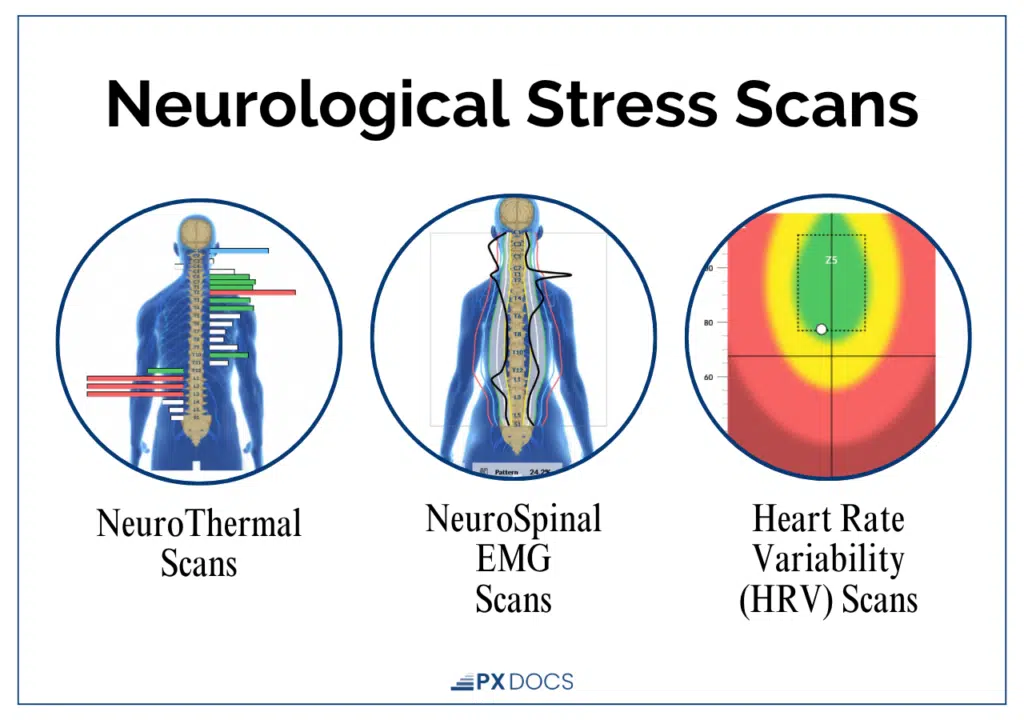
What makes this valuable for families is that these scans can detect shifts in neurological function before those shifts show up as symptom changes, like a weather radar picking up clear skies forming while the storm is still overhead.
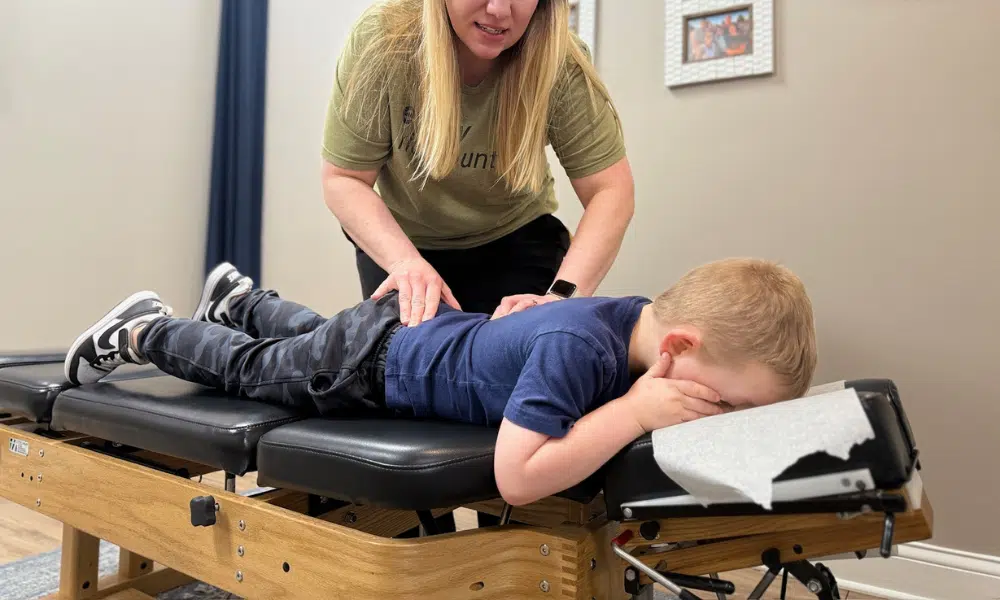
From there, Neurologically-Focused Chiropractic adjustments work to release the stuck stress pattern of subluxation and restore better autonomic balance, shifting a child off the sympathetic gas pedal and giving the vagus nerve’s “brake pedal” a chance to do its job. We can’t erase the prenatal stress or the birth trauma that contributed to a child’s asthma. What we can do is help the nervous system that controls airway tone, inflammation, and immune regulation work more like it’s supposed to, so the body has a fighting chance to calm and resolve the airway reactivity on its own.
What Parents Can Do To Support A Child’s Airways Naturally
A neurological approach works best alongside the everyday choices that lower the total stress load on a child’s system. None of these “cure” asthma, but each one removes a stressor that keeps the nervous system on edge:
- Reduce trigger exposure. Hypoallergenic bedding, good air quality, and keeping the home free of smoke and vaping aerosol all lighten the load.
- Support gut and immune health. Because the vagus nerve coordinates the gut-immune connection, supporting the microbiome supports the system that regulates inflammation.
- Manage stress and sleep. Emotional stress and poor sleep keep a child stuck in sympathetic mode; calm routines and good rest help the brake pedal engage.
- Keep them moving. Regular, appropriately-managed physical activity supports overall regulation and resilience.
The thread tying all of these together is the same one running through this entire article: the more you help a child’s nervous system get out of chronic stress mode, the better the odds that their airways calm down and stay that way.
The Bottom Line For Parents
Can asthma go away? Honestly, completely, forever—usually not. But it can quiet down to the point that it stops running your child’s life, and children have the best chance of anyone of getting there. The families who see the most durable improvement tend to be the ones who stop waiting for their child to passively “grow out of it” and start asking the deeper question: why is my child’s system reacting this way, and what’s underneath it?
That underneath, the nervous system, the vagus nerve, the stress pattern set in motion by the “Perfect Storm,” is the part conventional asthma care leaves out. Address it, and remission stops being a matter of luck and starts being something you can actually work toward.
If you want to understand what’s happening in your own child’s nervous system, find a PX Doc near you who can assess it directly.
Frequently Asked Questions
Can asthma go away on its own? Asthma symptoms can fade on their own, particularly during childhood as a child’s airways grow and the immune system matures. This is more common with mild asthma. However, the underlying airway sensitivity usually remains even when symptoms disappear, which is why asthma can return later in life. Fading symptoms aren’t the same as the condition being gone.
At what age does childhood asthma usually improve? For many children, asthma symptoms ease during the teenage years, as the airways grow larger and allergic responses settle. There’s no guaranteed age, and improvement depends heavily on how mild the asthma is and how well the child’s overall system is regulated. Some children improve earlier, some carry asthma into adulthood, and some see it return after a symptom-free stretch.
Is asthma remission the same as being cured? No. Remission means symptoms are so mild or infrequent that they don’t interfere with daily life, often without daily medication, but the capacity for asthma is still present. A cure would mean the underlying condition is permanently gone. True asthma cures are extremely rare, so most clinicians describe a good outcome as remission rather than cure.
Can asthma come back after years without symptoms? Yes. Asthma can return after months or years of remission, often triggered by allergens, respiratory infections, smoke or pollution, or significant stress. Because the underlying airway sensitivity tends to persist, relapse is always possible, which is why it helps to keep a quick-relief plan available even during long symptom-free periods.
What is the root cause of asthma? Conventional medicine identifies airway inflammation and hypersensitivity as the mechanism, but from a neurological perspective, the deeper driver is Autonomic Nervous System dysregulation, chronic sympathetic dominance with an underactive vagus nerve. The vagus nerve helps regulate airway tone and switch off inflammation, so when it’s not functioning well, airways stay reactive, and inflammation lingers.
Can chiropractic care help with childhood asthma? Neurologically-Focused Chiropractic Care does not treat or cure asthma. It addresses nervous system dysfunction and dysregulation, specifically subluxation and sympathetic dominance that interfere with the autonomic signals regulating the airways and inflammation. By helping restore nervous system balance, the goal is to support the body’s own ability to regulate airway function, not to manage symptoms directly.
Does stress make childhood asthma worse? Yes. Stress keeps a child’s nervous system in sympathetic “fight or flight” mode, which is linked to more airway reactivity and harder-to-control inflammation. Supporting sleep, calm routines, and overall nervous system regulation is part of why a whole-system approach tends to help more than focusing on the lungs alone.