
One day, your teen is full of energy — balancing school, sports, and time with friends — and the next, they can barely sit up without their heart racing or their head spinning. They’re constantly exhausted, dizzy, and not themselves. You’re told it’s “just stress” or “part of growing up,” but every instinct tells you something deeper is wrong.
This is the frightening reality for the 1 to 3 million Americans affected by Postural Orthostatic Tachycardia Syndrome, or POTS, each year. POTS is a disorder of the Autonomic Nervous System that causes your heart to race upon standing, along with other signs that can leave you sidelined from daily life.
While researchers are still working to unravel all the complexities of what causes POTS, one thing is clear: there is no singular cause, but rather factors that converge to impair Autonomic Nervous System function over time. Even more concerning, the neurological basis of POTS is often overlooked in favor of caring for surface symptoms.
In this article, we’ll dive into the most common risk factors and triggers that underlie POTS, including the critical yet often missed role of nervous system dysregulation. Our goal is to leave you with a deeper understanding of how POTS develops so you can advocate for the right testing and care to get to the root of your child’s challenges.
So, let’s explore the multilayered “why” behind POTS and uncover a path forward.
What is POTS?
Postural Orthostatic Tachycardia Syndrome (POTS) is a disorder of the Autonomic Nervous System that primarily affects women during puberty and of childbearing age. It is characterized by an abnormal increase in heart rate upon standing, typically exceeding 30 beats per minute or reaching over 120 BPM within 10 minutes of being upright. This exaggerated response, often seen in hyperadrenergic POTS, is accompanied by a constellation of signs that significantly worsen when standing but improve when lying down.
The most common signs of POTS include:
- Dizziness and lightheadedness
- Fainting or near-fainting
- Heart palpitations or racing heartbeat
- Fatigue and weakness
- Headaches
- Nausea and abdominal pain
- Brain fog and difficulty concentrating
- Tremors or shaking
- Excessive sweating
- Chest pain and shortness of breath
For some, these signs are relatively mild and manageable. But for others, POTS can be so debilitating that even basic daily tasks like bathing, eating, or sitting upright become a struggle. Many compare the severity of impairment to that of congestive heart failure or COPD. In fact, research has found that the quality of life in POTS patients is comparable to that of patients on dialysis for kidney failure.
Despite its profound impact, POTS is frequently misdiagnosed or dismissed as a psychological issue due to its complex and variable presentation. It’s not uncommon for POTS patients to go years without proper diagnosis, bouncing from specialist to specialist in search of answers. The similarities between POTS and conditions like anxiety or deconditioning can lead to a lengthy and frustrating diagnostic journey.
POTS is a distinct physiological condition that can worsen mental health challenges. It’s crucial for patients and providers to identify its signs and conduct thorough autonomic testing for accurate diagnosis and care. Increased awareness and education can help more people receive the validation, support, and healing they need.
Conventional Perspective on POTS Causes
POTS is often linked to blood volume issues, cardiovascular deconditioning, and sometimes autoimmune or genetic factors. Doctors typically attribute it to reduced blood flow to the heart when standing, leading to a compensatory increase in heart rate. Recommended interventions include increased salt and fluid intake, wearing compression garments, or medications to constrict blood vessels.
In cases where a patient develops POTS after a period of illness or inactivity, providers often point to deconditioning as the culprit. Prolonged bed rest or physical inactivity leads to a loss of plasma volume and decreased musculoskeletal tone, which then impairs the body’s ability to regulate blood flow and heart rate when upright. Gradual exercise and physical therapy are often the first-line care plans here.
More recently, there’s been increasing recognition of the role of autoimmunity in POTS, particularly in cases that arise after viral illnesses. Studies have found elevated levels of A1 adrenergic autoantibodies in subsets of POTS patients, suggesting an immune-mediated attack on components of the Autonomic Nervous System. However, the exact mechanisms are still poorly understood, and further research is needed to delineate the relationship between POTS and autoimmune conditions.
There’s also growing evidence of a genetic component to POTS, with familial clustering and certain gene variants being more common among POTS patients. For those wondering, “Is POTS genetic?” the answer lies in the likely interplay between hereditary factors and environmental triggers. However, like most complex conditions, POTS is thought to involve a multifaceted interplay between genetic susceptibility and environmental factors.
Most conventional approaches to POTS never look at the nervous system at all. Parents often leave those appointments thinking, “That’s it? Just more salt?” — knowing deep down there’s something deeper going on.
The truth is, some kids’ and teens’ nervous systems become more vulnerable to triggers like illness, injury, or stress over time. To really understand why, we need a closer look at how the nervous system is functioning — drug-free and from a whole-body perspective. When we do, we often uncover the deeper, root causes that help guide more effective and lasting solutions.
The “Perfect Storm” Behind POTS
At PX Docs, we often use the metaphor of The “Perfect Storm” to describe how multiple factors, over time, can converge to cause a major disruption in health. In the case of POTS, we see a similar pattern in which various stressors and challenges chip away at the resilience of the Autonomic Nervous System until a tipping point is reached and symptoms emerge.
To understand this process, it’s helpful to first define some key terminology. The Autonomic Nervous System (ANS) is the branch of the nervous system responsible for controlling involuntary functions such as heart rate, blood pressure, digestion, and temperature regulation.
It is further divided into the Sympathetic Nervous System (SNS), which activates the “fight or flight” stress response, and the Parasympathetic Nervous System (PNS), which promotes “rest, regulate, and digest” functions. The vagus nerve, the longest cranial nerve in the body, is the main conduit of the PNS and plays a critical role in regulating cardiovascular, respiratory, and digestive functions.
In a healthy individual, the SNS and PNS work together in a carefully choreographed balance to maintain homeostasis. But when this balance is disrupted, either by an overactivation of the SNS or an underactivation of the PNS (or both), dysautonomia can result. This is where the concept of The “Perfect Storm” comes in—we see certain key risk factors that, when combined, make an individual more susceptible to developing ANS dysfunction and POTS.
Some of the most common risk factors include:
- Maternal stress from preconception through pregnancy: Chronic stress in utero has been shown to increase the stress reactivity of infants. This is thought to be mediated by the hormonal and epigenetic effects of maternal cortisol on fetal brain development.
- Birth trauma or intervention: Physical stressors during delivery, like forceps assistance, vacuum extraction, or prolonged labor, can cause structural shifts in the upper cervical spine and cranium that impinge on the vagus nerve and brainstem. This sets the stage for future ANS dysfunction.
- Early life stress or trauma: Adverse childhood experiences like abuse, neglect, or household dysfunction can have a profound impact on brain development and regulation. These stressors can lead to a phenomenon known as “allostatic load,” in which the body’s stress response becomes chronically activated and difficult to shut off.
- Infections and antibiotic use: Viral and bacterial illnesses, particularly those requiring multiple rounds of antibiotics, can alter the gut microbiome and contribute to a state of chronic inflammation. This inflammation can then spill over to affect the nervous system, particularly the vagus nerve, which interfaces with the gut.
- Hypermobility conditions: Conditions of connective tissue, like Ehlers-Danlos syndrome (EDS), can lead to cervical instability and craniocervical junction dysfunction, which can then impact autonomic regulation. The link between EDS and POTS is well-established, with up to 80% of EDS patients experiencing dysautonomia.
When considering the cumulative burden of various risk factors, it’s evident how they can create a “Perfect Storm” for ANS dysfunction. No single factor may trigger POTS alone, but multiple hits to the nervous system can lead to sympathetic dominance and vagal withdrawal, increasing POTS symptoms. Therefore, a comprehensive approach that tackles both immediate triggers and underlying dysfunction is essential for lasting healing.
The Neurological Basis of POTS
As we’ve seen, the Autonomic Nervous System plays a central role in the development of POTS. But to truly understand how and why this system becomes imbalanced, we need to zoom in on the specific neurological structures and pathways involved. At the heart of this dysfunction are two key concepts: subluxation and vagus nerve dysfunction.
In chiropractic terminology, subluxation is stuck stress and tension in the neurospinal system that directly affects neurological function. When this occurs in the upper cervical region, it can affect the brainstem and the vagus nerve, thereby impacting autonomic functions. This irritation may lead to dysautonomia, where the sympathetic and parasympathetic branches of the Autonomic Nervous System no longer function in harmony.
Think of the vagus nerve as a major highway connecting the brain to the heart, lungs, and digestive system, delivering crucial messages to regulate these organs. If there’s a traffic jam at the start of the highway due to neck misalignment, these messages can’t flow properly, disrupting communication and regulation. This is what occurs with vagus nerve impairment in POTS.
Subluxation and misalignment affect not only the vagus nerve but also the cerebellum, located at the base of the skull. The cerebellum processes proprioceptive input, helping regulate blood pressure and heart rate. Structural and neurological shifts in the upper cervical spine can disrupt proprioceptive signals to the cerebellum, contributing to dysautonomia.
Research is beginning to support this neurological understanding of POTS. One study found that chiropractic adjustments to correct upper cervical subluxation resulted in significant improvements in heart rate variability (a key marker of autonomic function), while more research is certainly the goal, this finding suggests that addressing the underlying neurological dysfunction may be key to managing POTS effectively.
The clinical results, however, speak for themselves. We have witnessed thousands of kids and teens experience life-changing improvements in their energy, focus, and ability to do the things they love again. Most parents we meet care more about seeing real change happen for their child than about reading research papers, and that is exactly what we see every day in practice.
It is important to understand that we are not treating or curing POTS or any medical condition. What we are doing is identifying and addressing the neurological interference and subluxation patterns that keep the body stuck in a state of dysregulation.
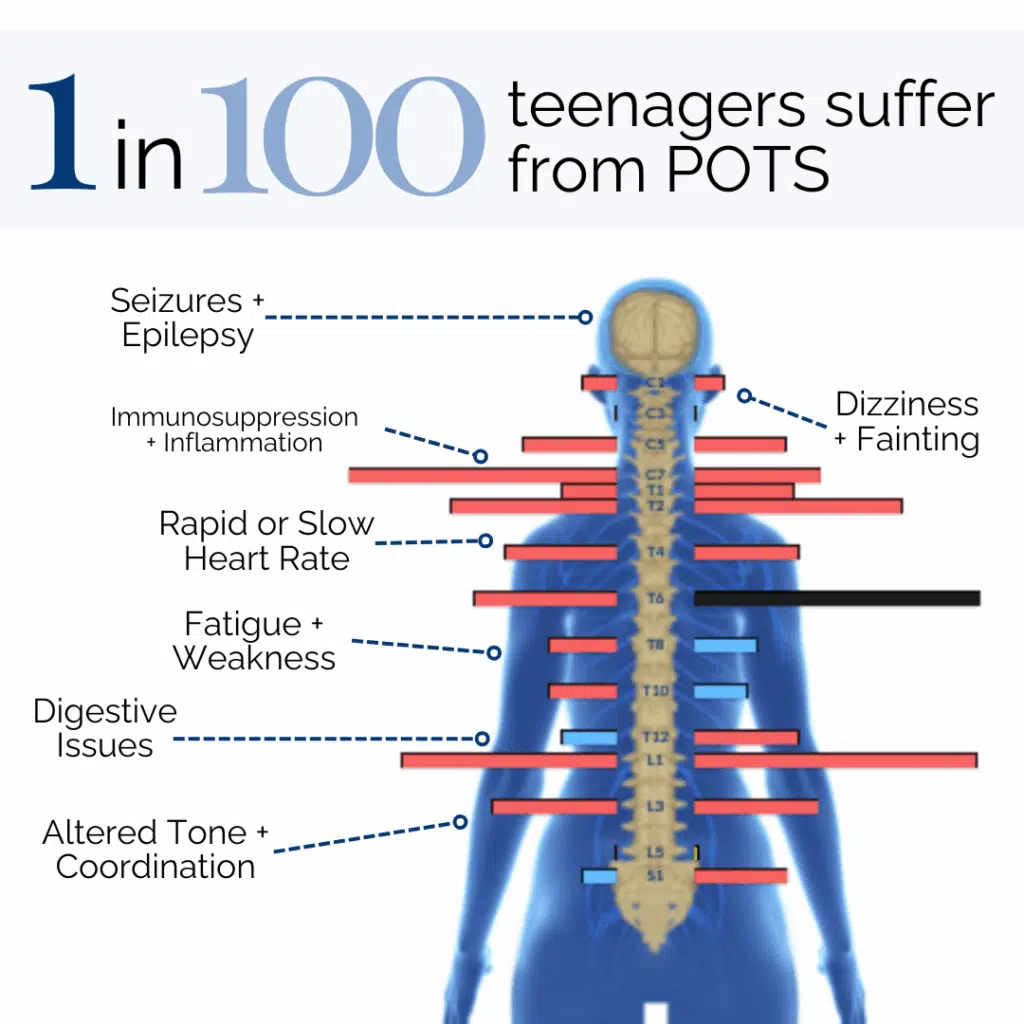
And it is not just about the upper cervical region. Certain patterns and pairings of tension and subluxation throughout the body, especially in the brainstem, neck, and thoracic regions, can disrupt communication within the autonomic nervous system. When those neurological patterns are restored through precise, gentle adjustments, the body can begin to regulate heart rate, blood pressure, and energy the way it was designed to.
Connecting the Dots: From Subluxation to POTS Symptoms
So, how does this neurological dysfunction ultimately lead to the hallmark symptoms of POTS? Let’s break it down:
- Digestive Dysfunction: The vagus nerve is sometimes referred to as the “rest, regulate, and digest” nerve because of its critical role in controlling digestive function. When this nerve is impaired by subluxation, it can lead to a wide range of gastrointestinal signs like nausea, bloating, chronic constipation, and abdominal pain. Many POTS patients struggle with these digestive issues alongside their cardiovascular symptoms.
- Brain Fog and Fatigue: That reduced blood flow isn’t just limited to the lower body—it can also affect the amount of oxygen-rich blood reaching the brain. When the brain is deprived of adequate blood flow, it can lead to symptoms such as brain fog, difficulty concentrating, and extreme fatigue. This is why many POTS patients report feeling like they’re in a constant state of mental exhaustion.
- Exercise Intolerance: POTS patients often find that even mild physical activity can trigger a flare-up of symptoms. This exercise intolerance can be traced back to the autonomic imbalance at the root of POTS. When the Sympathetic Nervous System is stuck in fight or flight, it can make it very difficult for the body to adapt to the increased demand for blood flow and oxygenation that comes with exercise. As a result, even simple tasks like walking or climbing stairs can feel overwhelming.
- Dysautonomia and Blood Pooling: When the Autonomic Nervous System is impaired due to subluxation and vagus nerve issues, it can cause venous pooling. This occurs when blood vessels in the lower body fail to constrict when standing, leading to blood collecting in the legs and feet. As a result, blood flow to the heart decreases, causing a drop in blood pressure and an increase in heart rate.
As you can see, the wide-reaching effects of dysautonomia touch nearly every system in the body. It’s no wonder that POTS patients often feel like their entire lives have been upended by this condition.
Postural Orthostatic Tachycardia Syndrome Self-Care
Managing POTS often involves lifestyle adjustments to improve symptoms and enhance quality of life. Here are some key self-care strategies:
- Hydration and Electrolytes: Drink plenty of fluids daily (2-3 liters) and increase salt intake to support blood volume and circulation.
- Exercise and Movement: Incorporate low-impact exercises, such as cycling or swimming, to improve cardiovascular fitness and autonomic regulation. Start gradually to avoid symptom flare-ups.
- Dietary Adjustments: Eat small, frequent meals to prevent blood pressure drops after eating (postprandial hypotension). Avoid excessive sugar and caffeine, which can worsen symptoms.
- Compression Garments: Use compression socks or abdominal binders to support blood flow and minimize pooling in the lower body.
- Stress Management: Practice relaxation techniques like yoga, meditation, or deep breathing to regulate the Autonomic Nervous System and reduce symptom triggers.
- Sleep Hygiene: Prioritize quality sleep with consistent routines and a comfortable sleep environment to support overall autonomic function.
- Symptom Monitoring: Keep a symptom diary to identify patterns and triggers, which can help guide adjustments in self-care and medical treatment.
By understanding the neurological basis and self-care routines of POTS, we can begin to chart a path toward true healing.
Why Healing Means Restoring Nervous System Balance
If you’ve dealt with POTS, you likely tried various conventional care plans for relief, but they often don’t address the underlying cause—dysfunction of the Autonomic Nervous System. True healing requires focusing on restoring balance and function to the ANS, rather than just managing symptoms
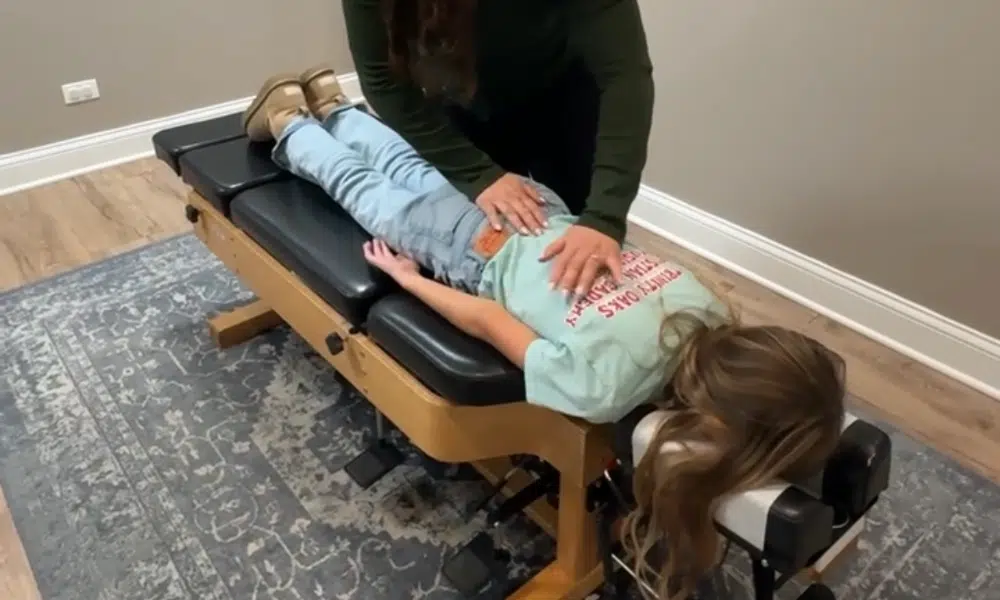
This is where Neurologically-Focused Chiropractic Care comes in. By identifying and correcting subluxation in the nervous system, particularly in the cervical and thoracic regions, chiropractors can help the nervous system return to autonomic balance and address underlying root causes.
At the heart of this approach is the use of advanced diagnostic tools, including INSiGHT scanning technology. These scans offer a detailed assessment of a child’s nervous system regulation, enabling chiropractors to identify areas of subluxation and dysautonomia that could be contributing to POTS.

Chiropractic isn’t a magic bullet, and each POTS patient’s journey is unique. By targeting the neurological root of dysfunction, rather than just the symptoms, we can create new pathways for healing. When paired with mindful movement, stress management, and nutrition, Neurologically-Focused Chiropractic Care can be a valuable part of POTS recovery.
Empowering Your POTS Recovery Journey
If you’re reading this as someone who has been struggling with POTS, know that you are not alone. The journey to diagnosis and an effective care plan can be a long and frustrating one, filled with dead ends and disappointments. But as we’ve seen, there is hope for healing when we shift our focus to the nervous system and the root causes of dysfunction.
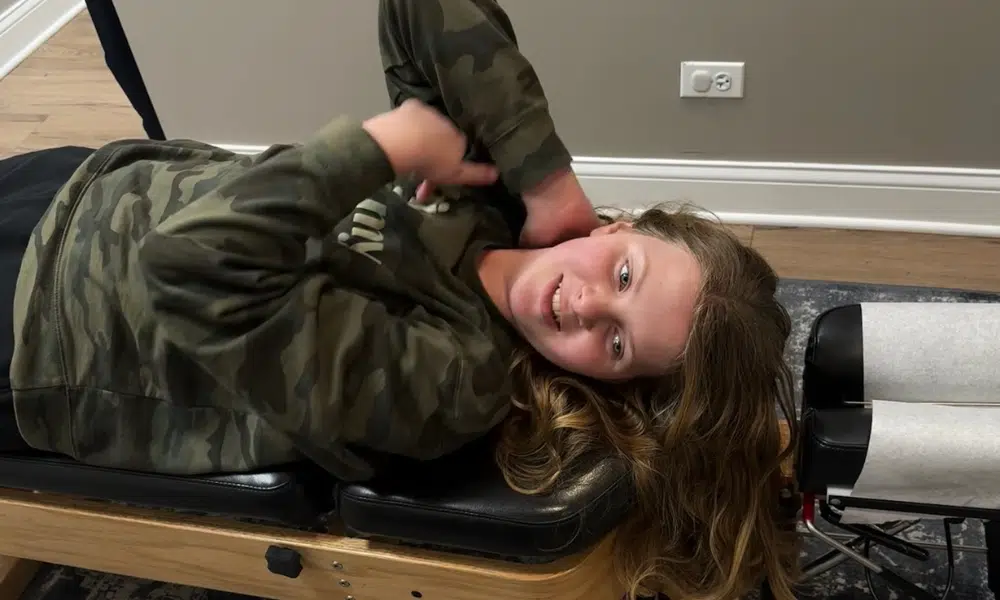
We’ve seen so many teens, like Tommi, regain their lives. When Tommi first came to us, even standing up was a challenge. Her heart would race, her head would spin, and her world felt smaller every day. Traditional recommendations only brought temporary relief, and her family was desperate for real answers. Through neurologically-focused chiropractic care, her nervous system was able to regulate itself again. Over time, her energy returned, her dizziness faded, and she started living like a teenager again, doing what she loved most.
Stories like Tommi’s remind us every day that the body was made to heal when we remove the interference and restore connection within the nervous system.
POTS stems from Autonomic Nervous System dysfunction, with symptoms like tachycardia and brain fog linked to vagus nerve imbalance, highlighting the need for a proactive approach to nervous system health. While conventional care often focuses on symptom management, Neurologically-Focused Chiropractic Care offers a promising path to restore balance and promote true recovery. With many success stories, hope for lasting wellness is always within reach.
If you’re ready to take a root-cause approach to your POTS care, we encourage you to visit the PX Docs directory and find a provider in your area. With the right support and a commitment to neurological wellness, you can begin to write your own success story and reclaim your health, one adjustment at a time.
Remember, healing is not a linear process, and it’s not always easy. But armed with the knowledge of your body’s innate capacity for recovery and the tools to support that process, you can face each challenge with resilience and grace. Trust in the design of your nervous system, and never lose sight of the vibrant, thriving life that awaits you on the other side of POTS.