
Living with Postural Orthostatic Tachycardia Syndrome (POTS) can be an overwhelming and isolating experience. The constant fatigue, dizziness, and racing heart that accompany everyday activities like standing up or walking can make even the simplest tasks feel impossible. For many individuals with POTS, the search for answers and effective care often leads to a frustrating cycle of misdiagnosis and symptom management that fails to address the underlying cause of their condition.
If you or a loved one has been struggling with the debilitating signs of POTS, you’re not alone. Despite affecting an estimated 1 to 3 million Americans, POTS remains a widely misunderstood and often misdiagnosed condition. The good news is that recent advances in understanding the neurological roots of POTS are paving the way for more targeted, effective care.
In this article, we’ll explore the causes, signs, and limitations of conventional medical care for POTS. More importantly, we’ll introduce you to a promising new approach to addressing POTS: Neurologically-Focused Chiropractic Care. By addressing the underlying nervous system dysfunction that often lies at the heart of POTS, this care method is offering hope and relief to countless individuals who have been searching for answers.
So, if you’re ready to take control of your POTS journey and discover a path towards healing, keep reading. The insights and information in this article just might be the key to your best health and quality of life.
Understanding POTS
Postural Orthostatic Tachycardia Syndrome (POTS) is a complex condition of the Autonomic Nervous System (ANS), which controls involuntary functions like digestion, heart rate, and blood pressure. In individuals with POTS, the Autonomic Nervous System fails to regulate these functions properly, leading to a wide range of signs that can vary in severity from person to person.
The hallmark of POTS is a rapid increase in heart rate upon standing, often accompanied by dizziness, lightheadedness, and fainting. Other common signs include:
- Fatigue and weakness
- Brain fog and difficulty concentrating
- Headaches
- Nausea and abdominal pain
- Tremors and shakiness
- Chest pain and palpitations
- Shortness of breath
- Sweating abnormalities
- Anxiety and depression
These symptoms can be debilitating and greatly impact an individual’s ability to perform daily activities, work, or attend school. Many people with POTS find themselves unable to stand for long periods, exercise, or even participate in social events due to their condition.
There are three main types of POTS, each with its own set of characteristics and underlying causes:
- Neuropathic POTS: Caused by damage to the peripheral nerves that regulate blood vessel constriction, leading to poor blood flow and pooling in the legs and abdomen.
- Hyperadrenergic POTS: Characterized by an overactive Sympathetic Nervous System, resulting in elevated levels of stress hormones like norepinephrine and epinephrine.
- Hypovolemic POTS: Associated with low blood volume, which can be caused by dehydration, anemia, or other underlying conditions.
While the exact causes of POTS are not fully understood, researchers have identified several factors that may contribute to its development, including:
- Autoimmune conditions, such as Sjogren’s syndrome, lupus, and celiac disease
- Viral infections, like mononucleosis and Lyme disease
- Genetic predisposition
- Traumatic events, such as car accidents or surgery
- Prolonged bed rest or deconditioning
- Chronic stress and anxiety
Additionally, POTS is more common in women than men, with more than 85% of cases being women, and signs often first appear during adolescence or young adulthood.
Living with Postural Orthostatic Tachycardia Syndrome can be a daily struggle, affecting every aspect of an individual’s life. The unpredictable nature of side effects can lead to feelings of frustration, isolation, and despair. Many individuals with POTS find themselves unable to maintain employment, pursue higher education, or engage in the activities they once enjoyed. The impact on mental health can be significant, with many people experiencing anxiety, depression, and a decreased sense of self-worth.
Conventional Medical Approaches to POTS
When individuals with POTS seek medical help, they often find themselves navigating a complex and sometimes frustrating landscape of conventional care plans. The most common approach to managing POTS signs involves a combination of medication and lifestyle changes.
Medications prescribed for POTS may include:
- Beta-blockers to reduce heart rate and palpitations
- Fludrocortisone to increase blood volume and reduce dizziness
- Midodrine to constrict blood vessels and improve blood flow
- SSRIs or SNRIs to manage anxiety and depression
While these medications can provide some relief for patients, they often come with a range of side effects, such as fatigue, headaches, digestive issues, and mood changes. More importantly, medication-based care plans primarily focus on managing symptoms rather than addressing the underlying cause of POTS. This means that patients may need to continue taking these medications indefinitely, often with diminishing returns over time.
In addition to medication, POTS specialists may recommend lifestyle changes to help manage symptoms. These can include:
- Increasing salt and fluid intake to improve blood volume
- Wearing compression garments to reduce blood pooling in the legs
- Engaging in recumbent exercise to improve cardiovascular function
- Adjusting sleep habits and daily routines to conserve energy
While these lifestyle modifications can be beneficial, they often require significant changes to a patient’s daily life and leave most parents seeking more answers that lead to deeper, lasting change for their child.
Conventional medical approaches to POTS often leave patients feeling frustrated and hopeless. Many adhere to care plans yet continue to face debilitating symptoms that affect their quality of life. Patients may cycle through various medications and POTS specialists, seeking solutions that remain elusive. Additionally, the long-term effects of relying solely on medication are unclear, with risks of dependence, tolerance, or worsening signs. This focus on symptom management rather than addressing root causes means patients often feel they are not truly healing.
It’s important to acknowledge that conventional medical care plans can play a valuable role in managing POTS symptoms, and many patients do find some relief with these approaches. However, the limitations of symptom-focused care highlight the need for a more comprehensive understanding of the underlying mechanisms of POTS and the development of targeted therapies that address the root cause of the condition.
A New Perspective on a Complex Condition
To truly understand POTS and develop effective care strategies, it’s essential to explore the complex neurological factors that contribute to its development. At the heart of this discussion lies the Autonomic Nervous System (ANS), which plays a crucial role in regulating vital functions like heart rate, blood pressure, digestion, and temperature control.
In individuals with POTS, the ANS fails to properly regulate these functions, leading to a wide range of signs associated with the condition. This dysfunction, known as dysautonomia, can manifest in various ways, such as an overactive Sympathetic Nervous System (responsible for the “fight or flight” response) or an underactive Parasympathetic Nervous System (responsible for “rest, regulate, and digest” functions).
One key factor contributing to ANS dysfunction is subluxation, a term describing tension and stress in the neurospinal system. When subluxation occurs, it can interfere with proper nervous system regulation, leading to a wide range of neurological and physiological issues. In the context of POTS, subluxation may disrupt the delicate balance of the ANS, contributing to the development of dysautonomia and its associated signs.
The “Perfect Storm” of Factors Contributing to POTS
Another important concept in understanding the neurological roots of POTS is the idea of the “Perfect Storm.” This refers to the combination of various factors, such as genetic predisposition, viral infections, physical trauma, and chronic stress, that can converge to create a state of nervous system dysfunction. When these factors accumulate over time, they can overwhelm the body’s natural ability to maintain homeostasis, leading to the development of conditions like POTS.
The “Perfect Storm” concept is particularly relevant in the context of POTS, as many patients report a history of various stressors or triggering events prior to the onset of their signs. For example, a patient may have experienced a severe viral illness, followed by a period of prolonged stress, and then developed POTS traits after a physical trauma like a car accident. Understanding how these factors intersect and contribute to nervous system dysregulation is crucial in developing targeted care strategies.
Addressing the underlying neurological imbalances that contribute to POTS is essential for achieving lasting trait relief and improving overall quality of life. By focusing on the root causes of ANS dysfunction, rather than simply managing traits, healthcare providers can help patients build a stronger foundation for healing and recovery.
The PX Docs Approach: Neurologically-Focused Chiropractic Care
As our understanding of the neurological roots of POTS continues to grow, so does the need for foundational care approaches that target the condition’s underlying causes. This is where Neurologically-Focused Chiropractic Care, as practiced by PX Docs, has helped thousands of families transform their lives and experience improvements in major symptoms through nervous system support.
It’s important to know that we do not treat or cure POTS. Instead, we focus on addressing nervous system dysregulation—helping it function more optimally. When the nervous system begins to operate properly, the body can better regulate heart rate, blood pressure, and other functions affected by POTS. Many families notice improvements in energy, tolerance for activity, and overall quality of life.
One of the key features of the PX Docs approach is the use of advanced diagnostic tools, such as INSiGHT scans, to pinpoint specific areas of nervous system dysfunction. These scans provide detailed information about the function of the Autonomic Nervous System, enabling chiropractors to identify areas of subluxation and dysautonomia with precision. This targeted approach allows practitioners to create personalized care plans that address each patient’s unique needs and challenges.
INSiGHT scans typically include three main components:
- Heart Rate Variability (HRV) testing, which measures the balance between the sympathetic and parasympathetic branches of the Autonomic Nervous System
- Thermal scanning, which identifies areas of inflammation and dysregulation in the nervous system
- Surface Electromyography (sEMG), which assesses muscle tension and identifies areas of subluxation
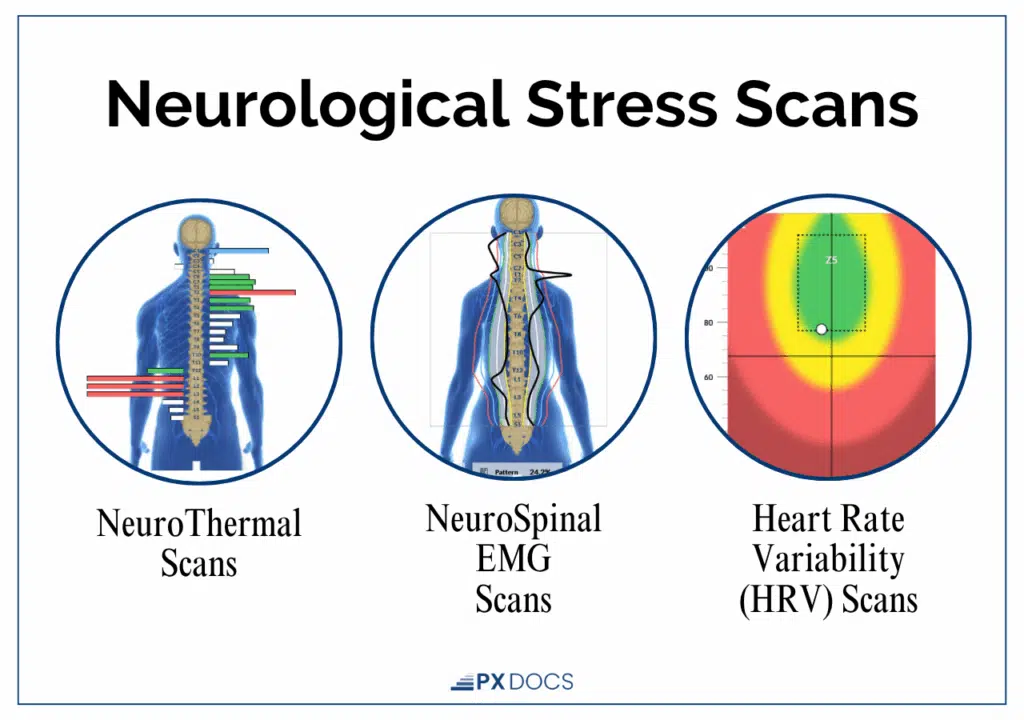
By combining the information gathered from these scans with a thorough patient history and physical examination, PX Docs chiropractors can develop a comprehensive understanding of each patient’s neurological health and create a targeted care plan to address any imbalances or dysfunction.
Neurologically-Focused Chiropractic Care aims to promote long-term healing and resilience in the nervous system rather than just alleviating symptoms. By targeting the underlying causes of POTS, PX Docs can provide lasting relief and enhance overall quality of life. This approach supports the body’s ability to maintain homeostasis and is part of a multidisciplinary care strategy that collaborates with other healthcare providers, such as POTS cardiologists and neurologists, to deliver comprehensive care.
Addressing POTS Through Lifestyle Changes
While Neurologically-Focused Chiropractic Care is a central component of the PX Docs approach to caring for POTS, it is not the only piece of the puzzle. To achieve optimal results and long-term success, it is crucial to address POTS through a comprehensive approach that includes lifestyle modifications and collaboration with other healthcare professionals.
Lifestyle changes can play a significant role in managing POTS signs and supporting the healing process. Some of the most effective modifications include:
- Increasing salt and fluid intake to improve blood volume and circulation
- Practicing stress-reduction techniques, such as deep breathing, meditation, or yoga
- Maintaining a consistent sleep schedule and prioritizing good sleep hygiene
- Eating a balanced, nutrient-rich diet that supports overall health and well-being
- Engaging in regular, low-impact exercise has been proven to be effective in improving patients with POTS and building cardiovascular strength and endurance
Implementing these lifestyle changes can be challenging, especially for individuals who are already struggling with the debilitating traits of POTS. By working closely with patients to develop personalized lifestyle plans and providing ongoing encouragement and accountability, PX Docs can help individuals with POTS make sustainable changes that promote healing and resilience.
Hope and Healing for Individuals with POTS
Living with POTS can be a challenging and isolating experience, but it is important to remember that you are not alone. As our understanding of the neurological roots of this condition continues to grow, so too does the range of care options available to those who suffer from its debilitating traits.
Neurologically-Focused Chiropractic Care represents a new path forward for individuals with POTS—one that addresses the condition’s underlying causes and promotes long-term healing and resilience. By combining advanced diagnostic tools, personalized care plans, and a drug-free approach to care, PX Docs are helping patients reclaim their health and their lives.
If you or a loved one is struggling with POTS, we encourage you to visit the PX Docs directory to find a qualified practitioner near you and take the first step towards embracing a new path forward.
Remember, healing is possible, and you deserve to live a life free from the limitations and challenges of POTS. With the right support, guidance, and care, you can reach your body’s innate potential for healing and rediscover the joy and vitality that POTS has taken from you.