
The brain-gut connection is the bidirectional communication pathway between the central nervous system and the digestive tract, primarily routed through the vagus nerve. While most discussions frame this as the “gut-brain axis,” the truth is that the brain and Autonomic Nervous System control the gut far more than the gut influences the brain. In children, when this connection is disrupted by birth trauma, sympathetic dominance, or vagus nerve dysfunction, the downstream result is colic, constipation, food sensitivities, eczema, anxiety, behavioral challenges, and chronic inflammation.
If you’ve already cleaned up your child’s diet, removed gluten and dairy, added probiotics, run food sensitivity panels, and tried every supplement protocol, but your child still struggles with gut issues, mood swings, sensory challenges, or sleep, you’re not failing. You’re working downstream of the actual problem.
This article goes deeper than the typical “gut-brain axis” article. Most content focuses on what to feed the microbiome. We’re going to focus on the nervous system that controls it. Once you understand how the brain commands the gut through the vagus nerve, and why nervous system dysregulation has to be addressed first, you’ll finally have an answer to the question, “Why isn’t all this gut healing actually working?”
What Is the Brain-Gut Connection?
The brain-gut connection is the neurological communication highway between the central nervous system and the gastrointestinal tract, operating bidirectionally through the vagus nerve, hormones, and neurotransmitters. The brain sends signals down to control digestion, motility, absorption, and immune response in the gut. The gut sends signals back up that influence mood, behavior, and inflammation. About 80% of the vagus nerve’s fibers are sensory, carrying information from the gut to the brain.
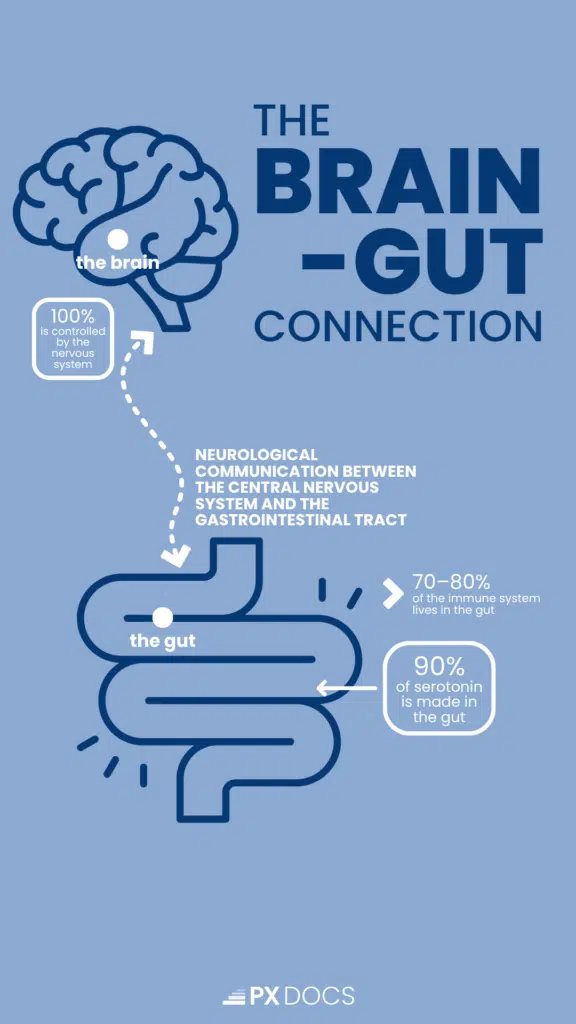
The order of those two sentences matters. The brain doesn’t just receive messages from the gut; it actively governs gut function from the top down. Most parents have learned the gut-brain story backward: “Heal the gut and the brain will follow.” But research on the Autonomic Nervous System shows the digestive system can’t operate independently. Motility, absorption, and assimilation all require coordinated nervous system signaling.
This is why we use the term brain-gut connection deliberately. If a child’s nervous system is stuck in sympathetic dominance, the fight-or-flight state, the gut goes offline first. No amount of dietary intervention can compensate for a nervous system that can’t direct what to do with the food in the first place.
How Does the Vagus Nerve Control the Brain-Gut Connection?
The vagus nerve is the longest cranial nerve in the body, traveling from the brainstem through the neck and thorax into the abdomen, carrying parasympathetic “rest and digest” signals between the brain and major organs, including the heart, lungs, and digestive system. Vagal tone, a measurable indicator of vagus nerve function tracked through heart rate variability (HRV), is closely tied to emotional resilience and health.
The vagus nerve controls four critical functions of the brain-gut connection:
- Motility: The wave-like contractions (peristalsis) that move food through the digestive tract. When the vagus nerve is offline, the gut literally can’t move things along, leading to constipation, slow transit, and toxin buildup.
- Absorption: Recognizing nutrients at the cellular level and opening cellular gates so they can enter the bloodstream. Without proper neurological signaling, supplements pass through unused.
- Assimilation: Directing absorbed nutrients to the right destination—iron to bone marrow, B12 to nerves, calcium to bones. This is air traffic control for nutrients, entirely controlled by nervous system signaling.
- Elimination: Coordinating the release of waste through bowel movements, urinary elimination, and lymphatic drainage.
This is also where neurotransmitters come in. Around 90% of the body’s serotonin is produced in the gut, but the vagus nerve must stimulate that production, enable absorption, and direct its distribution. You can give a child every serotonin-supporting nutrient on the planet, but if the neurological pathway isn’t online, the chemistry doesn’t follow through.
What Are the Signs of a Disrupted Brain-Gut Connection in Children?
Signs of a disrupted brain-gut connection in children include chronic constipation, reflux, eczema, colic, frequent ear infections, food sensitivities, picky eating, bloating, abdominal pain, and irregular bowel movements. Beyond gut symptoms, the same children often present with anxiety, behavioral meltdowns, sensory sensitivities, sleep struggles, and emotional dysregulation, because the brain-gut connection governs both.
In babies and toddlers, common signs include:
- Colic, reflux, or excessive spitting up
- Chronic constipation or infrequent stools
- Eczema and skin rashes
- Recurrent ear infections
- Difficulty latching or feeding
- Sleep disruptions
In older children, the disruption often presents differently:
- Food sensitivities and intolerances
- Stomach aches and “nervous stomach”
- Picky eating or sensory food aversions
- Mood swings tied to meals
- Anxiety, irritability, and meltdowns
- Difficulty focusing
Children with brain-gut connection dysfunction frequently also experience autism, ADHD, Sensory Processing Disorder, and PANS/PANDAS. This co-occurrence isn’t coincidental; all of these conditions share a common root in Autonomic Nervous System dysfunction, vagus nerve suppression, and sympathetic dominance that disrupts the gut-brain axis from earliest infancy.
How Does the Brain-Gut Connection Affect Immunity and Inflammation?
The brain-gut connection directly governs immune function because 70–80% of the body’s immune system resides in the gut, and the vagus nerve acts as the master regulator of inflammation through what’s called the cholinergic anti-inflammatory pathway. When the vagus nerve fires properly, it releases acetylcholine, which suppresses pro-inflammatory cytokines like TNF-alpha, IL-1, and IL-6.
Here’s the practical translation: the vagus nerve is the off switch to inflammation. When that switch is stuck, kids remain in a state of chronic inflammation no matter how clean their diet is.
When a child’s Autonomic Nervous System is locked in sympathetic dominance, the “gas pedal” of fight-or-flight, several things happen simultaneously:
- Gut motility shuts down (energy conservation mode)
- Mucus production decreases, damaging the gut lining
- Inflammation runs unchecked
- The immune system swings between under-reaction and over-reaction
- Serotonin, dopamine, and GABA production drop
- Cortisol and adrenaline stay elevated
This is the clinical picture of pediatric dysautonomia—dysfunction of the Autonomic Nervous System that drives a wide range of conditions, including digestive issues, immune dysregulation, sleep problems, and behavioral challenges. It’s what we measure when we talk about Autonomic Nervous System dysfunction in children.
Why Doesn’t Healing the Gut Through Diet Alone Work for My Child?
Healing the gut through diet alone often fails because food, supplements, and probiotics enter a digestive system that can’t properly process them when the underlying nervous system is dysregulated. You can put the cleanest, most nutrient-dense food into a child’s body, but if the vagus nerve isn’t signaling motility, absorption, and assimilation correctly, that food gets poorly digested, poorly absorbed, and poorly distributed.
This is the answer to the question so many functional medicine parents are quietly carrying: “Why isn’t this working? I’ve done everything.”
You’ve done everything downstream. The nutrition piece matters—toxins, processed foods, antibiotics, and inflammatory ingredients absolutely damage the gut and the microbiome. But all of that nutritional work is being asked to compensate for a broken communication system.
Think of it this way: the gut is the kitchen. The microbiome is the staff. Diet is the groceries. The vagus nerve is the head chef giving orders. If the head chef is unconscious, it doesn’t matter how organic the groceries are or how many staff members you hire. Nothing gets prepared correctly. The kitchen is in chaos.
Functional medicine, integrative nutrition, gut-healing protocols, probiotics, and elimination diets—these tools all work better when the nervous system is regulated first. They don’t work instead of nervous system care. That’s why so many families plateau after months or years of restrictive diets and expensive supplements. They’ve optimized the wrong tier of the hierarchy.
What Causes the Brain-Gut Connection to Break Down in Children?
The brain-gut connection breaks down in children through a sequential combination of stressors known as “The Perfect Storm”: prenatal stress affects vagus nerve development in utero, birth trauma physically damages the vagus nerve at the neck and brainstem, and early childhood stressors like antibiotics, environmental toxins, and inflammatory foods compound the dysfunction. By the time symptoms appear, the brain-gut connection has been disrupted for months or years.
Prenatal stress affects how the baby’s Autonomic Nervous System wires in utero. Sustained maternal cortisol exposure has been shown to alter fetal neurological development, including vagus nerve maturation. Babies can be born already in a sympathetic-dominant state.
Birth trauma is the second and often most direct hit to the brain-gut connection. The vagus nerve exits the skull through the jugular foramen, right at the upper cervical spine, and travels through the neck. Birth interventions like forceps, vacuum extraction, induction, C-section, and breech presentation create physical strain at exactly the location where the vagus nerve is most vulnerable. Even uneventful vaginal deliveries can compress the upper cervical area enough to disrupt vagal signaling. One clinical study of 120 colicky babies found measurable vestibular and autonomic dysregulation that improved significantly after gentle chiropractic care, supporting the link between upper cervical mechanics and infant nervous system function.
This is where subluxation enters the picture—neurospinal stresses that include three components:
- Physical misalignment
- Joint fixation (loss of normal motion)
- Neurological interference (disrupted nerve signaling between brain and body).
All three pieces matter. Subluxation in the upper cervical and brainstem region is the mechanism by which birth trauma translates into long-term brain-gut dysfunction.
Early childhood stressors keep adding load: antibiotics destroy microbiome diversity, environmental toxins create inflammatory cascades, processed foods damage the gut lining, and chronic stress reinforces sympathetic dominance. By age three or four, what started as a stressful birth has become a chronically dysregulated child with gut issues, immune challenges, and developmental delays that no diet alone can fix.
The PX Docs Approach Using INSiGHT Scans
INSiGHT scans are a three-part neurological assessment used in Neurologically-Focused Chiropractic Care:
- Heart rate variability (HRV) measures autonomic balance and adaptability
- Surface electromyography (sEMG) measures neuromuscular tension patterns
- Thermal scanning measures Autonomic Nervous System function.
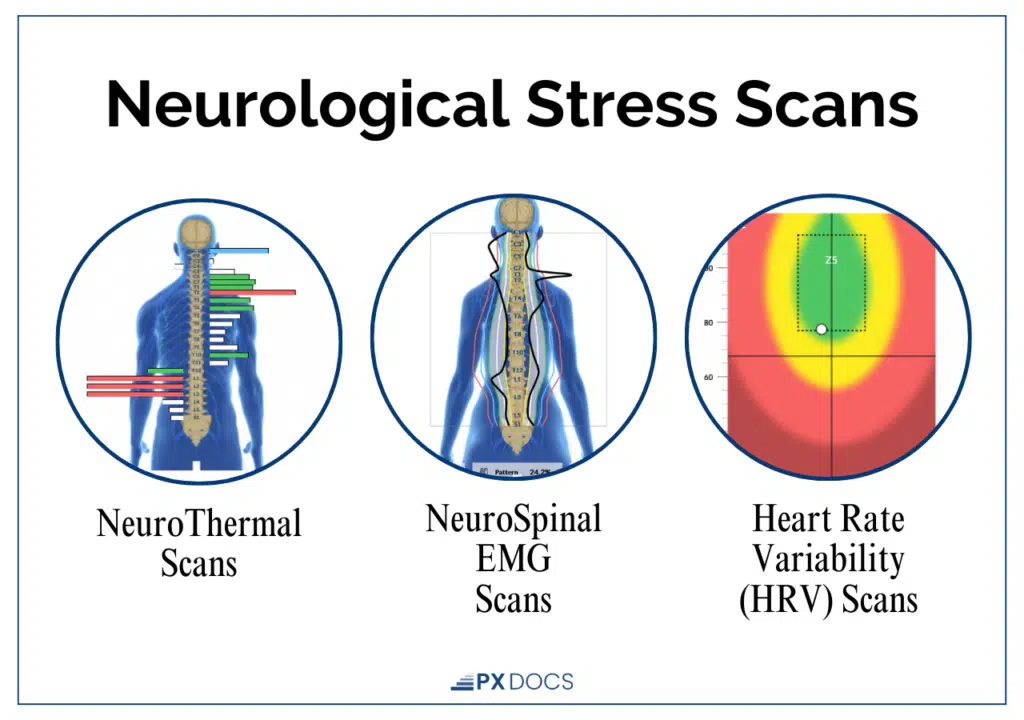
Together, they provide an objective picture of where and to what degree a child’s nervous system is dysregulated. INSiGHT scans are not a treatment or diagnostic tool for any condition—not even back pain.
What makes these scans so valuable for evaluating the brain-gut connection is their ability to pinpoint dysfunction. The nervous system works like a fuse box; different regions correspond to different organ systems. The vagus nerve regulates much of the gut, but plexuses of nerves branching to and from the digestive tract, adrenals, and immune organs originate at specific levels of the neurospinal system.
When a Neurologically-Focused Chiropractor reads an INSiGHT scan, they can identify patterns that correlate with specific symptom clusters: which children have low vagal tone, which are stuck in adrenal overdrive, which have suppressed parasympathetic function, and which have the mixed patterns typical of chronic dysregulation. This is what allows care to be precise rather than generic.
How Does Neurologically-Focused Chiropractic Care Restore the Brain-Gut Connection?
Neurologically-Focused Chiropractic Care is a specialized form of pediatric chiropractic care that identifies and corrects subluxation patterns affecting the Autonomic Nervous System, restoring proper communication between the brain and the body. Unlike general chiropractic, Neurologically-Focused Chiropractic uses neurological assessment tools (INSiGHT scans) and gentle, child-specific adjustments to stimulate the vagus nerve, reduce sympathetic dominance, and bring the brake pedal of the nervous system back online.
The adjustments themselves are ridiculously gentle—closer to a fingertip pressure than the cracking and twisting most adults imagine. The goal isn’t structural force. It’s neurological input. By contacting the neurospinal system at precise locations, the adjustment sends a signal up through the brainstem that helps the nervous system shift out of sympathetic dominance and into parasympathetic regulation.
The healing sequence we typically see follows a predictable pattern:
- Sleep regulation, kids start sleeping more deeply, longer, and falling asleep faster
- Digestive improvement, bowel movements become more regular, reflux quiets, food tolerance widens
- Immune response normalization, fewer infections, reduced eczema, calmer inflammation markers
- Behavioral and emotional regulation, meltdowns decrease, focus improves, anxiety eases
- Developmental progression, speech, advanced motor skills, social engagement advance
This sequence isn’t accidental. The nervous system often restores foundational functions before higher-order ones. The brain-gut connection is foundational, which is why it improves early in care, and why other interventions (nutrition, therapy, supplementation) suddenly start working better once nervous system regulation is established.
In our clinical experience, when families have already done significant gut-healing work and add Neurologically-Focused Chiropractic Care, results compound. Supplements absorb. Diets work. Therapies break through. This is the multiplier effect of getting the nervous system regulation right.
The Bottom Line on Healing Your Child’s Brain-Gut Connection
If you’ve worked hard on nutrition, supplements, and gut protocols, and your child still isn’t where you’d hoped, the missing piece probably isn’t more food sensitivity testing or another probiotic. It’s the conductor that orchestrates the whole system. Restoring the brain-gut connection starts with restoring the nervous system that runs it.
To find a Neurologically-Focused Chiropractor trained to assess and address brain-gut dysfunction in children, visit the PX Docs Directory and schedule a consultation that includes INSiGHT scans. The answers you’ve been searching for may be one assessment away.
Frequently Asked Questions About the Brain-Gut Connection
Can the brain-gut connection cause anxiety in children?
Yes. A dysregulated brain-gut connection contributes directly to childhood anxiety through multiple pathways. The vagus nerve regulates the parasympathetic “rest and digest” state needed for emotional calm, and the gut produces around 90% of the body’s serotonin under nervous system direction. When the vagus nerve is suppressed and the gut is in chronic inflammation, neurotransmitter balance suffers, and the body remains stuck in stress-response mode.
How long does it take to heal the brain-gut connection in a child?
Most children show measurable improvements in sleep and digestion within the first 4–8 weeks of consistent Neurologically-Focused Chiropractic Care. Deeper changes—behavioral regulation, immune resilience, and developmental gains—typically unfold over 3–6 months. Children with more complex histories (multiple birth interventions, chronic antibiotic use, neurological diagnoses) often need longer-term care.
Is chiropractic care safe for babies with gut issues like colic or reflux?
Pediatric chiropractic adjustments for infants are extremely gentle—comparable to the pressure used to check the ripeness of a tomato. Neurologically-Focused techniques for babies don’t involve cracking, twisting, or forceful manipulation. The Hoeve (2021) study, published in Frontiers in Pediatrics, found significant improvement in colicky babies following gentle chiropractic intervention, with no adverse effects reported.
Can the brain-gut connection cause Autism or ADHD?
The brain-gut connection doesn’t directly cause Autism or ADHD, but the same Autonomic Nervous System dysfunction that disrupts the brain-gut connection is a shared root in both conditions. Research has documented altered gut microbiome composition and disruption of the gut-brain axis in children with neurodevelopmental conditions. Addressing nervous system regulation supports gut function and broader developmental outcomes simultaneously.
What’s the difference between the brain-gut connection and the gut-brain axis?
The terms are often used interchangeably, but the order signals priority. “Gut-brain axis” suggests the gut drives the brain. “Brain-gut connection” emphasizes that the Central and Autonomic Nervous System control the gut from the top down. Both directions exist; communication is bidirectional through the vagus nerve, but the brain governs the relationship. This distinction shapes whether care starts with the gut or with the nervous system.
Can probiotics fix the brain-gut connection?
Probiotics can help rebuild microbiome diversity, but they cannot restore the underlying neurological communication between the brain and gut. If the vagus nerve is suppressed and sympathetic dominance keeps the gut in shutdown mode, probiotics enter a system that can’t fully utilize them. Many families see better probiotic response after nervous system regulation has been addressed through Neurologically-Focused Chiropractic Care.
At what age can children start care for brain-gut issues?
Children can start Neurologically-Focused Chiropractic Care at any age, including newborns. In fact, the earlier intervention happens, the easier it is to restore proper brain-gut function. Infants with colic, reflux, constipation, and feeding issues often respond quickly because their nervous systems haven’t yet built years of compensation patterns.