For parents of children with epilepsy, witnessing their child experience seizures can be a heart-wrenching and terrifying experience. The feelings of helplessness and uncertainty that come with each episode can be overwhelming, leaving families desperate for answers and effective solutions.
I understand this fear not just as a doctor, but as a parent. My own son suffered a traumatic brain injury at birth and began having seizures within his first days and weeks of life. I witnessed one of those seizures firsthand, and even for a brief moment, it was overwhelming. No amount of training prepares you for watching your own child seize and wondering what comes next.
By the grace of God, and through the strategic combination of modern medical care and Neurologically-Focused Chiropractic Care, Oliver is now seizure-free and thriving!
That personal experience, combined with years of clinical training and practice, has shaped the work I do today – helping families understand what’s truly happening within their child’s nervous system and guiding them toward root-cause, neurologically grounded healing options.
Supporting parents with clarity, confidence, and hope is not just something we put on our website – it’s what we work hard to do in real life each and every day.
While conventional medical care plans, such as medications and surgery, can help manage symptoms, they often fail to address the underlying causes of the condition, leaving many children and their families struggling to find lasting relief.
We understand the challenges faced by families affected by pediatric epilepsy, and we believe that there is hope for a brighter future. Our unique approach does not look to treat or cure seizures, but instead focuses on identifying and addressing the root causes of nervous system dysfunction, empowering children and patients to overcome their challenges and thrive.
In this article, we’ll explore the complex nature of pediatric epilepsy, the limitations of conventional treatment options, and how Neurologically-Focused Chiropractic Care offers a safe, effective, and drug-free path to neurological healing.
By understanding the underlying factors that contribute to this condition, families can make informed decisions about their child’s care and take steps toward a healthier, happier future.
Understanding Pediatric Epilepsy
Epilepsy is a neurological disorder that affects approximately 470,000 children and is the most common childhood brain disorder in the United States alone.
Pediatric epilepsy is a neurological condition characterized by recurrent, unprovoked seizures in children. A seizure occurs when there is a sudden, uncontrolled electrical disturbance in the brain, leading to physical signs such as convulsions, loss of consciousness, or altered sensory experiences.
There are several types of seizures in children, including:
- Generalized epilepsy: Seizures that involve both sides of the brain from the onset, often resulting in loss of consciousness and full-body convulsions.
- Focal epilepsy: Seizures that originate in a specific area of the brain, causing signs that vary depending on the affected region, such as localized muscle twitching or sensory disturbances.
- Infantile spasms: A rare type of epilepsy that typically begins in infancy. Infantile spasms are characterized by clusters of brief, sudden spasms that often occur upon waking or falling asleep.
- Lennox-Gastaut syndrome: A severe form of epilepsy that usually develops in early childhood, characterized by multiple seizure types, cognitive impairment, and developmental delays.
Common signs of pediatric epilepsy may include:
- Staring spells or periods of unresponsiveness
- Rhythmic jerking or twitching of the arms, legs, or face
- Stiffening of the body
- Loss of consciousness or awareness
- Confusion or memory lapses
- Unusual sensations, such as tingling, numbness, or feelings of déjà vu
From a conventional medical perspective, the exact causes of pediatric epilepsy are not always clear, with over 50% of cases having an unknown cause. However, several factors are believed to contribute to the development of the condition, including:
- Genetic predisposition
- Structural brain abnormalities, such as tumors or malformations
- Brain injuries, such as those caused by trauma or stroke
- Infections of the central nervous system, such as meningitis or encephalitis
- Metabolic conditions or imbalances
The “Perfect Storm” Concept of Neurological Dysfunction
At PX Docs, we recognize that the development of pediatric epilepsy is often the result of a complex interplay of factors that can disrupt a child’s nervous system development and overall function. We refer to this phenomenon as the “Perfect Storm,” a convergence of factors that can set the stage for the onset of epilepsy and other neurological conditions.
It’s important to understand that even though these factors and known triggers of nervous system dysfunction show up very early in life, as far back as fetal development, which has been proven via research to be disrupted by all sorts of factors, and then play a role in the development of neurological disorders later in life.
Put simply, many times the onset of certain symptoms and conditions may not appear until years and years later, after the “Perfect Storm” has been brewing for some time.
Prenatal stress and maternal health play a significant role in the “Perfect Storm.” Research has shown that when a mother experiences chronic stress during pregnancy, it can impact the fetus’s neurodevelopment. Exposure to elevated levels of stress hormones, such as cortisol, can alter the way the brain and nervous system form, potentially increasing the child’s vulnerability to neurological conditions later in life.
Birth trauma and interventions are another critical component of the “Perfect Storm.” Complications during labor and delivery, such as prolonged labor, fetal distress, or the use of forceps or vacuum extraction, can cause physical trauma to the infant’s delicate nervous system. Additionally, while so often life-saving for both mother and child, c-section deliveries can have lasting effects on the child’s nervous system and overall health.
This physical trauma to the neck and brainstem from birth interventions and trauma can lead to subluxation, which can then disrupt proper vagus nerve function and communication between the brain and body.
From there, early childhood stressors and environmental factors can further exacerbate the effects of prenatal stress and birth trauma. Exposure to toxins, infections, or emotional stress during critical periods of brain development can affect how the nervous system functions and regulates itself.
These cumulative and sequential stressors can contribute to the development of dysautonomia, a condition characterized by an imbalance in the Autonomic Nervous System, which controls involuntary functions such as heart rate, digestion, immune function, mood regulation, and so much more.
The combination of subluxation, dysautonomia, and nervous system dysfunction creates a “Perfect Storm” that can manifest as pediatric epilepsy and other neurological conditions. When the nervous system is not functioning optimally, it can lead to abnormal electrical activity in the brain, resulting in seizures and other signs associated with epilepsy.
Sympathetic Dominance, Vagus Nerve Dysfunction, and Seizures
At the center of pediatric epilepsy is often a nervous system stuck in survival mode. Many children experiencing seizures show signs of sympathetic dominance – a state where the “fight or flight” response is constantly activated, even at rest. When the nervous system remains in this heightened stress state, the brain becomes less adaptable, less regulated, and more prone to neurological instability.
The vagus nerve plays a critical role in calming, regulating, and integrating the nervous system. It acts as the primary communication pathway between the brain and the body’s organs, influencing heart rate, digestion, inflammation, and emotional regulation. When vagal tone is reduced – often due to early life stress, birth trauma, or chronic neurological strain – the nervous system loses its ability to downshift, recover, and self-regulate effectively.
In children with epilepsy, this combination of sympathetic overdrive and reduced vagal regulation can lower neurological resilience and increase vulnerability to seizures. Rather than viewing seizures as isolated electrical events, this perspective highlights the importance of restoring balance within the autonomic nervous system – helping the brain move out of constant threat mode and back into a state where regulation, adaptability, and healing are possible.
Limitations of Conventional Treatment Plans
When a child is diagnosed with epilepsy, conventional medical care plans often focus on managing symptoms through the use of anti-epileptic drugs (AEDs) and, in some cases, surgical interventions.
While these approaches can help reduce the frequency and severity of your child’s seizures, they often fail to address the underlying causes of the condition, leaving many children and their families struggling with ongoing challenges. Studies have found that 35% of children presenting with epilepsy in the first 3 years of life develop drug-resistant seizures.
Anti-epileptic drugs work by altering the electrical activity in the brain, aiming to reduce the likelihood of seizures. However, these medications do not address the root causes of the dysfunction, such as nervous system dysregulation or the factors that may have contributed to the development of epilepsy. As a result, many children require long-term or even lifelong use of AEDs to manage their symptoms.
Moreover, anti-epileptic drugs can come with a host of potential side effects, including:
- Drowsiness and fatigue
- Cognitive impairments, such as difficulty with memory or concentration
- Behavioral changes, such as irritability or aggression
- Digestive issues, such as nausea or vomiting
- Metabolic disturbances, such as weight gain or loss
- Hormonal imbalances
These side effects can significantly impact a child’s quality of life, affecting their ability to learn, socialize, and engage in daily activities.
In cases where medications fail to adequately control seizures, surgical interventions may be considered. These procedures aim to remove or disconnect the area of the brain responsible for the seizures. While epilepsy surgery can be effective in reducing or eliminating seizures for some children, it is an invasive procedure that carries risks, such as infection, bleeding, or damage to surrounding brain tissue.
The limitations of conventional treatment plans highlight the need for a more comprehensive, Neurologically-Focused approach to managing pediatric epilepsy. By identifying and addressing the root causes of nervous system dysfunction, such as subluxation and dysautonomia, healthcare providers can work towards promoting optimal brain function and reducing the likelihood of seizures.
We recognize the importance of a drug-free approach to pediatric epilepsy care, one that goes beyond symptom management and focuses on supporting the body’s natural ability to heal and regulate itself. In the next section, we will explore how PX Docs’ Neurologically-Focused Chiropractic Care offers a safe, drug-free approach to addressing the underlying causes of pediatric epilepsy.
The PX Docs Approach to Pediatric Epilepsy
While working with a board-certified epileptologist is a critical and often life-saving part of pediatric epilepsy care, many parents quickly realize that medication and surgery alone don’t always answer the deeper question of why seizures are happening in the first place. For thousands of families, the goal isn’t to reject medicine – but to expand the care team and the conversation.
Just as we did with Oliver, the ideal approach is integrative and sequential: utilizing modern medicine for crisis management and life-saving interventions, while also addressing the underlying neurological stressors that may be keeping the nervous system stuck in a sympathetic dominant, dysregulated state.
These two approaches are not in competition – they serve different roles.
Neurologically-Focused Chiropractic Care does not diagnose, treat, or cure epilepsy. Instead, our role is to identify and reduce nervous system interference that may contribute to ongoing neurological instability. By improving communication, regulation, and adaptability within the brain-body connection, we aim to support healthier neurological function and give the body the best possible environment for healing and self-regulation.
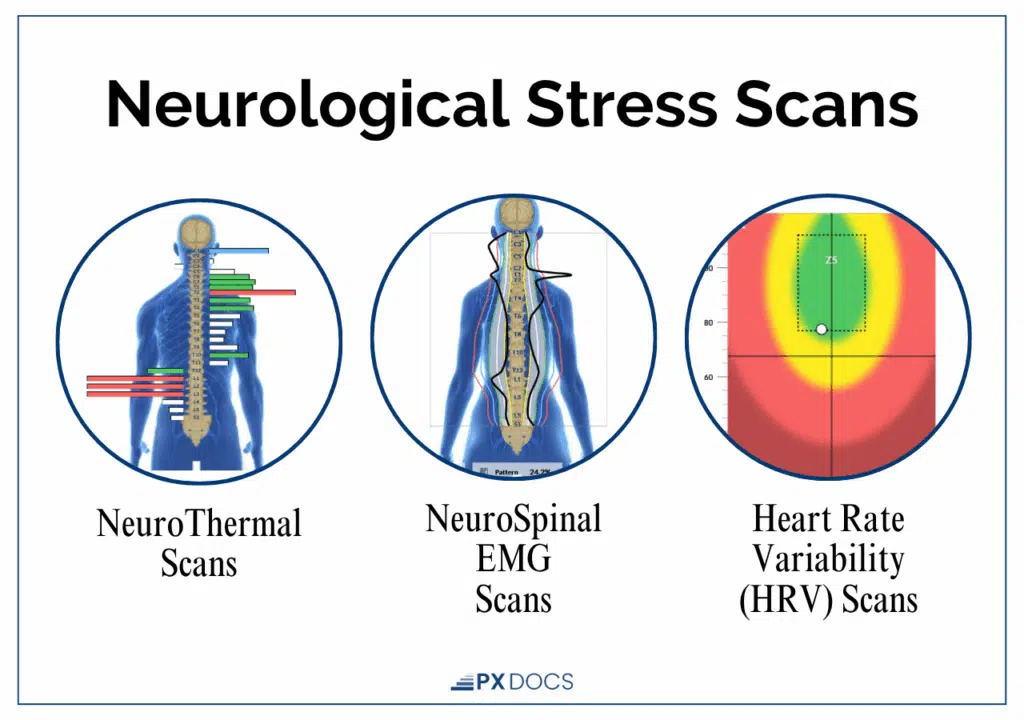
Central to our approach is the use of cutting-edge diagnostic tools, such as INSiGHT scans, which enable us to assess a child’s nervous system function and pinpoint areas of subluxation and dysfunction. INSiGHT scans utilize a combination of surface electromyography (sEMG), thermal imaging, and heart rate variability (HRV) to provide a comprehensive picture of the child’s neurological health.
Think of it being very similar to the most common form of diagnostic technology used in epilepsy, the electroencephalogram or EEG, but these scans aren’t limited only to the brain like EEGs – they measure and analyze neurological function throughout the entire neurospinal system, from the brainstem and spinal cord, all the way down to the sacrum.
Neurologically-Focused Chiropractic Care goes beyond simply managing symptoms; it seeks to promote optimal nervous system function, allowing the body to self-regulate and heal more effectively.
Rather than targeting seizures directly, chiropractic care focuses on helping the nervous system function, regulate, and adapt more effectively. When neurological stress tied to the “Perfect Storm” is reduced and the nervous system becomes better regulated, families often report noticeable improvements in their child’s quality of life, including better sleep, regulation, and day-to-day stability.
Across thousands of families we’ve worked with, parents frequently report positive changes they can see and feel – such as fewer or shorter seizure episodes, reduced severity, improved recovery time, and in some cases a decreased reliance on medications – all as their child’s nervous system becomes more stable, regulated, and adaptable over time.
Empowering Families to Embrace Hope and Healing
For families navigating the challenges of pediatric epilepsy, it is crucial to remember that there is hope for a brighter future. By seeking out Neurologically-Focused Care and addressing the root causes of nervous system dysfunction, children with epilepsy can experience significant improvements in their quality of life and overall well-being.
Early intervention is key to optimizing outcomes for children with epilepsy. Parents are encouraged to trust their instincts and advocate for their child’s health by exploring natural, drug-free care options. By addressing the underlying nervous system dysfunction early on, families can help their children build a strong foundation for healthy development and resilience in the face of challenges.
It is important to remember that each child’s journey is unique, and progress may look different for every family, but we are committed to providing families with the resources, guidance, and compassionate care they need to navigate this journey with confidence and hope.
PX Docs’ Neurologically-Focused Chiropractic Care offers a safe, natural, and nervous system focused approach to addressing the root causes of pediatric epilepsy. By identifying and correcting areas of subluxation and nervous system dysfunction, we aim to restore optimal brain function and support the body’s innate capacity for healing and resilience.
While more research is needed to fully understand the mechanisms by which chiropractic care may benefit children with epilepsy, these preliminary findings suggest that addressing nervous system dysfunction through Neurologically-Focused Care may hold promise as a complementary approach to managing pediatric epilepsy.
While the journey may not always be easy, families can find strength in the knowledge that they are not alone. PX Docs is committed to providing compassionate, evidence-informed care and empowering families with the tools and resources they need to help their children thrive.
If you are a parent or caregiver of a child with epilepsy, we encourage you to explore the benefits of Neurologically-Focused Chiropractic Care. By visiting the PX Docs directory, you can find a qualified practitioner in your area who can help you navigate this challenging journey with skill, compassion, and unwavering support.
Remember, there is always hope for a brighter tomorrow! With the right care and support, your child can overcome the challenges of pediatric epilepsy and embark on a path to healing, resilience, and limitless potential!