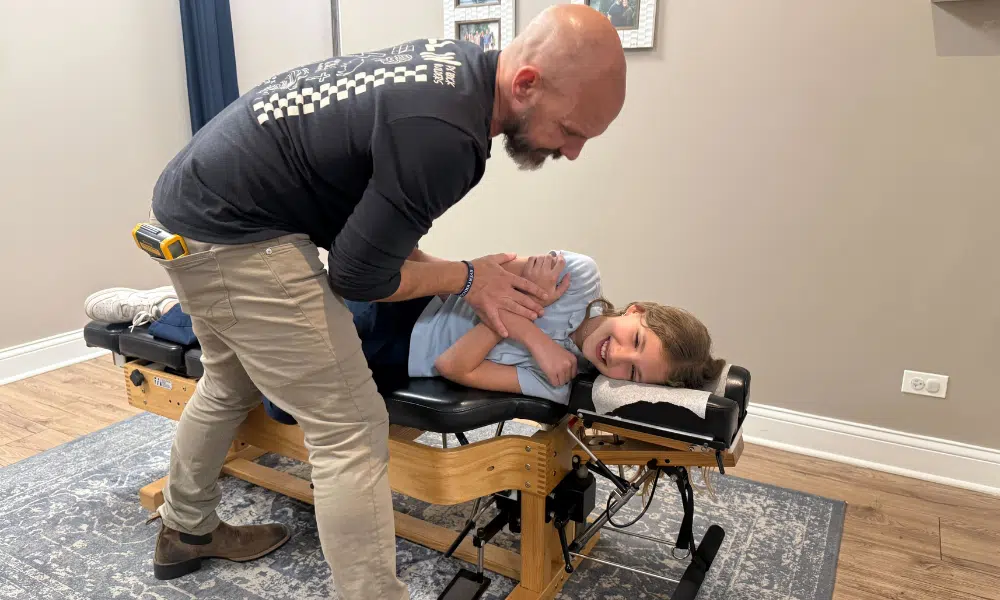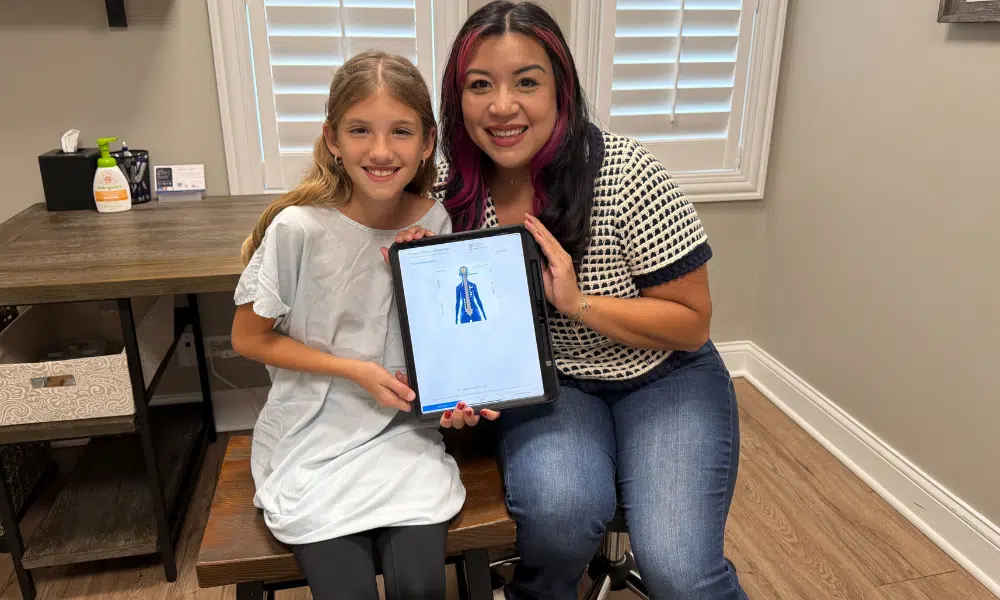

Measuring nervous system function is the practice of objectively assessing how well a child’s Autonomic Nervous System regulates, adapts to, and balances stress, rather than guessing from symptoms or relying on a structural picture like an X-ray. In Neurologically-Focused Chiropractic Care, this measurement is done with INSiGHT scans, which capture heart rate variability, neuromuscular tension patterns, and thermal data to make invisible nervous system stress visible.
Here’s the honest truth most parents never hear: by the time a symptom shows up, the nervous system has usually been struggling for a while. Symptoms are the last thing to appear when health breaks down, and often the last thing to resolve when it improves. So if you’re only watching for symptoms, you’re always a few steps behind what’s actually happening inside your child.
That’s the entire reason we scan. Not to diagnose. Not to sell. To measure the one system that controls and coordinates every other system in your child’s body—and to know, with real data, whether it’s regulating or stuck.
This article isn’t a tour of what each scan does. It’s the why underneath all of it: why measuring nervous system function changes everything about how we understand your child’s health, why it’s different from every other test you’ve run, and why it’s the foundation of root-cause care.
Why Should You Measure Your Child’s Nervous System at All?
You measure your child’s nervous system because it runs everything: heart rate, digestion, immune response, sleep, focus, emotional regulation, yet none of those functions show up on standard medical tests until something has already gone wrong. The nervous system is the body’s command center, and when it’s dysregulated, the effects ripple out across multiple systems long before a single symptom becomes obvious.
Think about how most kids get evaluated. Blood work checks for disease markers. An X-ray shows the shape of the spine. A developmental screen measures milestones. All useful, but none of them answer the question that actually matters for a struggling child: Is the nervous system regulating well, or is it stuck?
Research has established that the Autonomic Nervous System governs involuntary functions like cardiovascular control, digestion, and stress response, and that disrupted autonomic regulation is measurable through markers like heart rate variability. You can’t find that on a blood panel. You can’t see it on a structural image. But you can measure it directly.
This is why measurement matters more than observation. A parent can see meltdowns, constipation, poor sleep, and frequent illness. What they can’t see is the common thread beneath it all: nervous system function.
What’s the Difference Between Measuring the Spine and Measuring the Nervous System?
Measuring the spine tells you about structure—alignment, curves, joint position. Measuring the nervous system tells you about function, how well the brain and body are communicating. A child can have a reasonably normal-looking spine and still have significant nervous system dysregulation, because the problem isn’t only where the bones sit. It’s how the nerves are firing.
This is one of the biggest gaps in how kids get assessed. Most evaluations stop at structure. An X-ray is a black-and-white snapshot of the spine, frozen in time. It can’t show whether your child is stuck in fight-or-flight, whether their gut-controlling nerves are exhausted, or whether their system can adapt to stress.
Here’s a way to picture it. Imagine giving someone directions and just saying, “Go down the road and take your first right.” They might get there. Now imagine giving them turn-by-turn directions with landmarks. The accuracy goes way up. An X-ray is the vague version. Measuring nervous system function is the turn-by-turn version—it connects the structure (A) to the nervous system (B) to your child’s actual life and goals (C).
That’s the leap. We’re not asking, “What does the spine look like?” We’re asking, “How is the nervous system working?” Those are completely different questions, and only one of them gets at the root of why a child is struggling.
What Does It Actually Mean to Measure Nervous System Function?
Measuring nervous system function means capturing objective data on the Autonomic Nervous System, the part that runs automatically and controls heart rate, digestion, immunity, and the stress response. In Neurologically-Focused Chiropractic Care, this is done through three measurements that together reveal whether a child’s system is balanced, over-revved, or worn down.
The simplest framework is the gas pedal and the brake pedal. The Sympathetic Nervous System is the gas pedal, fight or flight, activation, “go.” The Parasympathetic Nervous System is the brake pedal, rest, digest, heal, regulate. A healthy nervous system flows smoothly between the two. A child stuck in sympathetic dominance has a stuck gas pedal: they can’t downshift into sleep, digestion, or calm.
One of the clearest descriptions comes from clinicians who compare Heart Rate Variability (HRV) to the range of motion of the nervous system. Just like a healthy joint moves freely through its full range, a healthy nervous system should move freely from “go” to “rest” and back. When that range collapses, the system gets stuck.
Heart rate variability, the variation in time between heartbeats, is one of the most well-validated measures of autonomic balance in the scientific literature. It reflects the nervous system’s adaptability and resilience. High variability signals a flexible, well-regulated system. Low variability signals a stuck, depleted one.
Can You Measure Stress Before Symptoms Appear?
Yes. Measuring nervous system function can detect stress and dysregulation before a child develops obvious symptoms. Because the nervous system controls every other system, dysfunction shows up in autonomic patterns first and in symptoms last. This is what makes measurement so valuable: it catches the storm forming on the horizon instead of waiting for it to hit.
Think of nervous system measurement like weather radar. The radar picks up the system building long before the rain reaches your house. Symptoms are the rain. By the time they arrive, the pattern has been developing for a while.
This early-detection ability is also why kids on the path toward chronic challenges can be identified sooner. Children with signs of autonomic dysregulation often show measurable nervous system patterns that precede or accompany conditions like Autism, ADHD, Sensory Processing Disorder, anxiety, and chronic digestive or immune issues. This co-occurrence isn’t coincidental; these conditions frequently share a common root in Autonomic Nervous System dysfunction, where the system is stuck in sympathetic dominance and can’t regulate. Measuring that dysfunction directly is how we connect dots that otherwise look like separate problems.
And it starts before birth. Because a mother’s nervous system shapes her baby’s developing nervous system, measuring HRV during preconception and pregnancy provides a window into both. When mom’s system is stuck on the gas pedal, she passes stress hormones like cortisol to her baby through the umbilical cord, and maternal stress hormones that cross the placenta can influence the development of the baby’s stress-regulation systems, laying down a nervous system blueprint built around fight-or-flight before the child takes a first breath.
How Do You Measure Nervous System Function in Children?
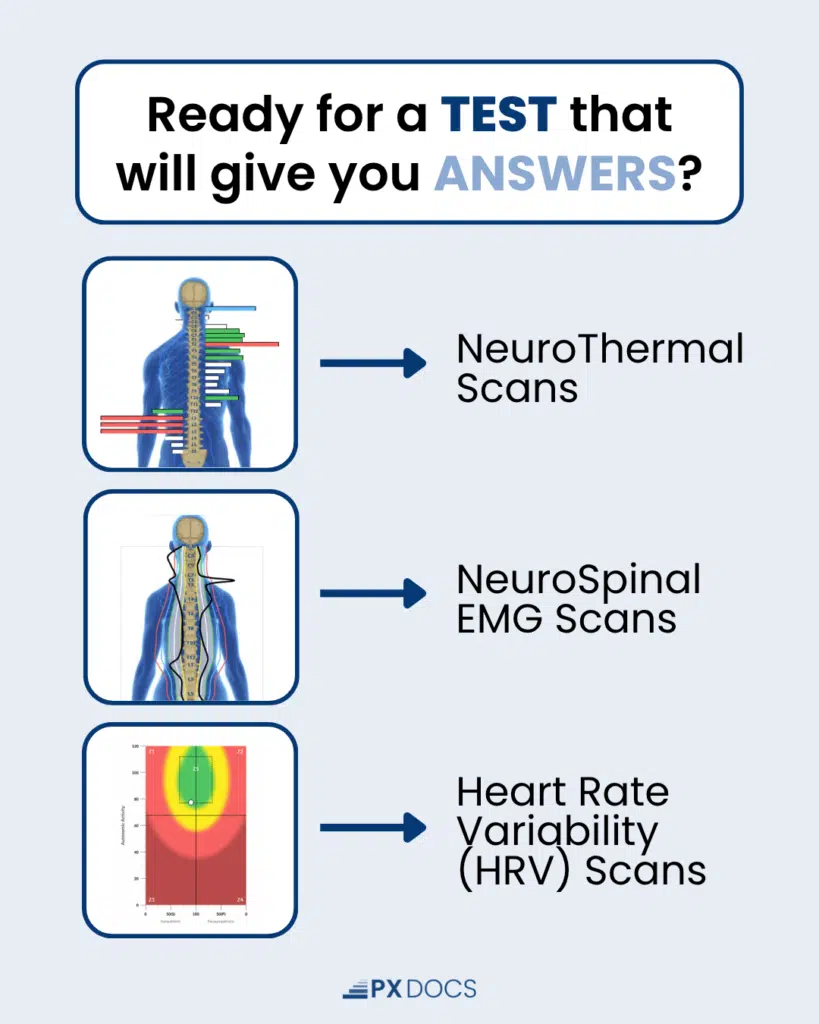
Nervous system function in children is measured with INSiGHT scans, a three-part neurological assessment used in Neurologically-Focused Chiropractic Care: Heart rate variability (HRV) measuring autonomic balance, Surface electromyography (sEMG) measuring muscle tension patterns, and Thermal scanning measuring Autonomic Nervous System function along the neurospinal system. Together, they show whether a child’s system is regulating, over-activated, or exhausted.
Each one answers a different question:
- Thermal scanning: Uses infrared sensors to detect temperature differences along the neurospinal system that indicate regional dysautonomia. Because the autonomic system controls blood flow to organs, thermal patterns hint at where digestive, immune, or other visceral stress is sitting. It’s especially useful for colicky babies and chronically sick kids.
- Surface EMG (sEMG): Reads the electrical activity of the muscles along the neurospinal system, showing how much energy a child is burning just to hold themselves upright. Some kids are spending most of their reserves simply to exist. This one shines for neuro-sensory and motor concerns.
- Heart rate variability (HRV): Measures the balance between the sympathetic and parasympathetic branches, giving an overall read on how adaptable and resilient the system is. HRV works for everyone, from a baby to a pregnant mom.
The scans are simple, safe, and non-invasive. A child sits still or wears a small ear clip for HRV. There’s no radiation, no needles, nothing painful.
INSiGHT scans are not a treatment or a cure for any condition, not even back pain. They’re a measurement tool. They don’t fix anything on their own, and they don’t diagnose medical conditions. What they do is objectively reveal nervous system function, so care can be targeted to the root cause instead of chasing symptoms.
Why Does PX Docs Scan Instead of Just Adjusting?
PX Docs scans because objective measurement is what separates root-cause neurological care from guesswork. Without scans, a chiropractor is left with words, analogies, posture checks, and palpation—all of which a parent experiences as physical, not neurological. Scans turn an invisible system into visible data, transforming both the care plan and parents’ understanding.
This connects to the “Perfect Storm.” Dr. Tony Ebel’s framework explaining how nervous system dysregulation develops in children: prenatal stress, then birth trauma (especially C-section, forceps, vacuum extraction, or prolonged labor), then early childhood stressors (antibiotics, formula, ear infections, falls), all stacking into cumulative nervous system dysregulation. Scanning is how we see the “Perfect Storm’s” fingerprints on a specific child instead of just describing the concept.
It also shapes what we do with our hands. Scans help determine where to adjust and, just as importantly, where not to adjust. They don’t replace the hands-on neurological checks, palpation, and exam—those still happen. But they guide the care plan using data rather than intuition alone. As the saying goes inside PX Docs practices: scans dictate plans.
The findings often tie back to subluxation, a spinal misalignment that includes three components:
- Physical misalignment
- Joint fixation (loss of normal motion)
- Neurological interference (disrupted nerve signaling between brain and body).
The thermal and EMG patterns help locate where that interference is concentrated, and HRV reveals how deeply it’s affecting the whole system. This is also where the gut-brain axis comes in, because the Autonomic Nervous System controls digestion, and regional patterns on the scans often line up with the gut and immune struggles parents have been fighting for years.
What Happens When You Re-Scan Over Time?
Re-scanning over time shows whether care is actually working, at the level of function, not just symptoms. As a child’s nervous system regulates, HRV tends to climb, EMG tension calms and reorganizes, and thermal patterns balance out. These shifts usually appear before symptoms fully resolve, which is exactly why progress scanning matters.
This is the part that holds everyone accountable, including the doctor. When you measure function at the start and re-measure it along the way, the data tells the truth about whether things are improving. If the scans aren’t moving, that’s information—it means the approach needs to change. A lot of resistance to scanning in the broader profession comes down to this: nobody loves objective data that can call their results into question. But that accountability is exactly what good care should welcome.
The other thing re-scanning reveals is co-regulation. When a child plateaus, it’s often because the people they live with are dysregulated too. Measuring a parent’s nervous system alongside the child’s—especially mom’s, since she’s so often the one regulating a baby—shows how the whole household’s nervous systems are influencing each other. Healing rarely happens in isolation.
Improvements show up on the inside first. Vagal tone may improve on HRV before digestion fully settles. Spinal muscle tension may normalize on EMG before sensory processing visibly changes. The nervous system reorganizes, and the body needs time to express that regulation in everyday life. Seeing the scan move before the symptom moves isn’t a sign care is failing—it’s the natural, inside-out order of real healing.
The Bottom Line on Why We Scan
Measuring nervous system function is the foundation of root-cause care for children. It answers the question that symptoms alone never can: Is this child’s nervous system regulating, or is it stuck? By making the invisible visible, scanning lets care focus on the actual source of a child’s struggles rather than chasing one symptom after another.
The big takeaways: symptoms are the last thing to show up and the last to resolve, so measurement keeps you ahead of them. Structure and function are different questions, and only function gets at the root. And objective data holds the whole process accountable, including the doctor.
If your child has been through round after round of evaluations that never quite explained what’s going on, measuring nervous system function may be the missing piece. It’s not a replacement for your pediatrician or other providers, and results vary from child to child, so talk with a qualified provider about what’s right for your family.
To find a trained Neurologically-Focused Chiropractor who uses INSiGHT scans, visit the PX Docs Directory and connect with a doctor near you.
Frequently Asked Questions
Why do chiropractors scan the nervous system instead of just taking X-rays?
Chiropractors who focus on the nervous system scan because X-rays only show structure, the shape and alignment of the spine, while nervous system scans show function, meaning how well the brain and body are communicating. A child can have a fairly normal-looking spine and still have significant nervous system dysregulation. Measuring function gets at the root of why a child is struggling in a way a structural image can’t.
Are nervous system scans for kids safe?
Yes. INSiGHT scans are simple, safe, and non-invasive. There’s no radiation, no needles, and nothing painful involved. A child either sits still for a few minutes or wears a small clip on the ear for the heart rate variability portion. The scans only measure nervous system function; they don’t introduce anything into the body or cure anything on their own.
Can you measure nervous system stress before symptoms show up?
Yes. Because the nervous system controls every other system in the body, dysregulation shows up in autonomic patterns, like low heart rate variability or thermal imbalances, before it produces obvious symptoms. Symptoms are usually the last thing to appear when health declines. Measuring function directly helps catch nervous system stress earlier, often before a child develops noticeable challenges.
What do INSiGHT scans actually measure?
INSiGHT scans measure three things. Heart rate variability (HRV) measures the balance and adaptability of the Autonomic Nervous System. Surface electromyography (sEMG) measures the electrical tension in the muscles along the neurospinal system. Thermal scanning measures temperature differences along the spine that point to autonomic dysfunction. Together, they show whether a child’s nervous system is balanced, over-activated, or worn down.
Do INSiGHT scans diagnose conditions like Autism or ADHD?
No. INSiGHT scans are not a treatment or a cure for any condition, not even back pain, and they don’t diagnose medical conditions. They measure nervous system function objectively. While children with conditions like Autism, ADHD, and Sensory Processing Disorder often show distinct patterns of autonomic dysregulation on these scans, the scans assess how the nervous system is working, not whether a child meets diagnostic criteria for a specific condition.
How often should a child be re-scanned?
Re-scanning is typically done periodically as part of a care plan to track whether nervous system function is improving—not just whether symptoms have changed. Progress scans let parents and doctors see objectively whether HRV is climbing, muscle tension is calming, and thermal patterns are balancing. Because function improves before symptoms fully resolve, re-scanning shows whether real, inside-out healing is underway.
Why does measuring mom’s nervous system matter during pregnancy?
A mother’s nervous system shapes her baby’s developing one. When mom is stuck in sympathetic dominance, she passes stress hormones to her baby through the umbilical cord, laying down a fight-or-flight blueprint before birth. Measuring mom’s heart rate variability during pregnancy gives a window into both nervous systems and helps support a more regulated start for the baby.