
The Cell Danger Response (CDR) is the body’s evolutionarily ancient cellular defense reaction, run by the mitochondria, that switches a cell from “growth and repair” mode into “protect and defend” mode when it senses a chemical, physical, or biological threat. It’s supposed to turn on during danger and turn back off once healing is complete. When it gets stuck in the “on” position, cells stay locked in defense, healing stalls, and chronic symptoms set in.
If your child has been cycling through ear infections, gut issues, sensory struggles, anxiety, or a diagnosis like Autism or ADHD—and nothing seems to fully resolve, no matter how many supplements, diets, or therapies you try—the Cell Danger Response may be the missing piece you haven’t been told about. It explains why a body can stay “sick” long after the original trigger is gone.
Here’s the part most articles skip: the CDR doesn’t run in isolation. It’s wired directly into the nervous system. The same brainstem and autonomic circuits that determine whether your child feels safe or threatened also help determine whether their cells remain in defense mode or shift back into healing. That connection is the difference between managing your child’s symptoms forever and actually addressing the root. This article breaks down what the CDR is, why it gets stuck, how it links to the conditions you’re already worried about, and what a nervous-system-first approach can do about it.
What Is the Cell Danger Response?
The Cell Danger Response is a coordinated, whole-body metabolic shift, started by the mitochondria, that protects a cell when a threat exceeds its ability to maintain normal function. Instead of spending energy on growth, repair, and communication, the cell redirects resources toward defense—stiffening its membranes, ramping up inflammation, and signaling neighboring cells that danger is present.
The concept was defined by Dr. Robert Naviaux, a physician-scientist at the University of California, San Diego, in a 2014 paper in the journal Mitochondrion. His central insight reframed how we think about mitochondria. Most people learn that mitochondria are simply the “powerhouse of the cell,” cranking out energy in the form of ATP. But Naviaux’s research showed they’re also the cell’s threat sensors—monitoring the chemical, physical, and microbial conditions inside and around the cell, and deciding moment to moment whether it’s safe to build or time to defend.
When the CDR activates, the first wave of danger signals includes the release of ATP outside the cell, where it shifts from fuel to alarm. This extracellular ATP binds to what are called purinergic receptors on nearby cells, spreading the “danger” message and sustaining the defensive state. It’s an elegant survival system. The problem isn’t that it turns on—it’s supposed to. The problem is when it won’t turn off.
Why Does the Cell Danger Response Get Stuck “On”?
The Cell Danger Response gets stuck when threats keep arriving faster than the body can clear them, or when the nervous system fails to deliver the “all clear” signal that allows cells to stand down. In a healthy healing cycle, the CDR completes its job and resolves. When stressors stack up, or when the system that’s supposed to shut it off is itself dysregulated, the response becomes chronic instead of protective.
Think of it like a smoke alarm. A working alarm blares when there’s a fire, then goes quiet once the smoke clears. A stuck Cell Danger Response is an alarm that keeps screaming long after the fire is out, because nobody ever reset it. The cells stay in lockdown, energy keeps getting diverted to defense, and the tissue can’t return to normal growth and repair. According to Naviaux’s work, when the CDR persists abnormally, whole-body metabolism and the gut microbiome get disturbed, multiple organ systems underperform, behavior changes, and chronic disease results.
This is where the nervous system enters the story, and where conventional explanations of the CDR stop short. Your child’s Autonomic Nervous System is the body’s master “safe versus threat” detector. When it’s locked in a state of sympathetic dominance, chronic fight-or-flight, it keeps broadcasting “danger” to the entire body, including down at the cellular level. The cells take their cue from the nervous system. If the brain and body never feel safe, the off switch for the Cell Danger Response is never truly pressed.
How Are the Mitochondria and the Nervous System Connected?
The mitochondria and the nervous system are connected through a continuous loop: the brainstem and Autonomic Nervous System set the body’s overall “threat versus safety” tone, and the mitochondria translate that tone into cellular behavior. When the nervous system signals safety, mitochondria invest in energy, growth, and repair. When it signals a threat, they shift into the Cell Danger Response.
Naviaux himself describes the systemic, whole-body form of the CDR as being under the direct control of ancient pathways in the brain, coordinated by centers in the brainstem. That’s a remarkable point of overlap with Neurologically-Focused Chiropractic Care, which centers on that exact region. The brainstem is where the body’s autonomic command center lives, and it’s also one of the areas most vulnerable to early-life stress and physical strain.
This is the gas pedal and brake pedal of the body.
The Sympathetic Nervous System is the gas pedal—activation, alertness, defense. The Parasympathetic Nervous System, driven largely by the vagus nerve, is the brake pedal—rest, digest, repair, and regulate. The vagus nerve is the longest cranial nerve in the body, carrying parasympathetic signals between the brainstem and the heart, lungs, and digestive system, and its tone is closely tied to immune regulation and inflammation control. When the brake pedal works, the body can downshift out of defense and let the Cell Danger Response resolve. When the vagus nerve is suppressed and the gas pedal is stuck down, the body has no way to call off the cellular alarm.
Is the Cell Danger Response Connected to Autism, ADHD, and Sensory Issues?
Children with a chronically activated Cell Danger Response frequently also experience Autism, ADHD, Sensory Processing Disorder, anxiety, and recurring digestive or immune problems. This co-occurrence isn’t a coincidence—these conditions share a common thread: a nervous system stuck in threat mode and cells stuck in defense mode, which is why they so often co-occur in the same child.
Naviaux’s research connects the dots directly. He proposed that an unresolved CDR helps explain a broad range of chronic, developmental, and autoimmune disorders, including: Autism, ADHD, asthma, and food and chemical sensitivities.
A separate 2024 meta-analysis in Neurobiology of Disease found that biomarkers of mitochondrial dysfunction show up in roughly 30% of children with Autism, lending weight to the idea that cellular energy and danger signaling are part of the picture.
A 2024 metabolomic study in Communications Biology found that children with Autism showed a pattern of chronic, ATP-related danger signaling that did not reverse during typical development the way it did in other children. In late 2025, Naviaux extended this into a “three-hit” model proposing that Autism develops when genetic susceptibility, prenatal stress, and an early-life trigger converge on the Cell Danger Response.
From the PX Docs perspective, the link is even more practical. Pediatric dysautonomia—dysfunction of the Autonomic Nervous System in children—is the through-line. A child whose Autonomic Nervous System is dysregulated lives in a body that keeps signaling danger. That dysregulation doesn’t just produce behavioral and sensory symptoms upstairs in the brain; it keeps the cellular danger response humming downstairs in the mitochondria. Address the same conditions through different labels, and you keep chasing branches. Address the dysregulated nervous system beneath the surface, and you’re working on the root the labels share.
What Causes a Stuck Cell Danger Response in Children?
The most common path to a chronically activated Cell Danger Response in children is what Dr. Tony Ebel calls the “Perfect Storm”: an accumulation of neurological stressors, starting before birth, that overwhelm a developing nervous system and leave it stuck in defense mode. No single event causes it. It’s the stacking that does the damage.
The “Perfect Storm” unfolds in a sequence:
- Prenatal stress: Maternal stress hormones cross the placenta and shape how the baby’s stress-response system gets wired. Research published in Frontiers in Neuroscience confirms that the vagus nerve and the Autonomic Nervous System are programmed in utero, with critical windows during which they’re most vulnerable to maternal stress and environmental disturbances.
- Birth trauma: Interventions like C-section, forceps, vacuum extraction, and prolonged or stalled labor place physical strain on the upper neck and brainstem, right where the vagus nerve exits the skull. This is how subluxation, a combination of physical misalignment, joint fixation, and neurological interference disrupting signaling between brain and body, takes hold early.
- Early childhood stressors: Repeated ear infections, rounds of antibiotics, formula and gut-microbiome disruption, environmental toxins, and physical falls each add to the load. For a system already running hot, each new stressor is another threat the cells must defend against.
The result is a nervous system primed for danger from the start and a Cell Danger Response that struggles to ever fully reset. The original threats may be long gone, but the body never got the message that it’s safe to stand down. This is the self-perpetuating cycle parents live with daily: a child who is wound up and worn out at the same time—over-activated and under-resourced, with cells too busy defending to do the work of growing and healing.
How Does a Stuck Cell Danger Response Affect Energy and the Gut?
A stuck Cell Danger Response forces the body to ration energy, and it does so in a predictable order. Because defending against perceived threat is the nervous system’s top priority, it pulls energy and resources from systems it deems non-essential to immediate survival—starting with digestion, then movement and development, then long-term immune balance.
The gut is usually the first to suffer because digestion is metabolically expensive. A body in defense mode can’t afford it, so motility slows, the microbiome destabilizes, and constipation, reflux, or chronic tummy trouble set in. This is also where the gut-brain axis runs in both directions: a dysregulated nervous system disrupts the gut, and a disrupted gut feeds more danger signals back to the brain. Naviaux noted that when the CDR becomes chronic, the gut microbiome is disturbed right alongside whole-body metabolism.
Next, motor development and the immune system feel the squeeze. Milestones can stall, muscle tone and coordination suffer, and the immune system—which depends on the vagus nerve’s anti-inflammatory “off switch”—loses its ability to dial inflammation back down. With the brake pedal offline, inflammation keeps building with no signal to stop. It’s the same root, expressed as a different symptom in a different system. Parents are told these are separate problems to be managed separately. From a nervous system lens, they’re branches of one tree.
How Can You Tell If a Child’s Nervous System Is Stuck in Defense Mode?
Signs that a child’s nervous system is stuck in defense mode, and likely sustaining a chronically activated Cell Danger Response, usually show up as a cluster of regulation problems across multiple body systems rather than one isolated issue. When several of these appear together, they point to underlying autonomic dysregulation.
Common signs of a nervous system stuck in defense mode include:
- Difficulty falling or staying asleep, or never seeming to fully “power down”
- Chronic digestive issues like constipation, reflux, or a hard, distended belly
- Frequent illness, recurring ear infections, or slow recovery
- Heightened sensory sensitivity or frequent meltdowns
- Anxiety, big emotions, and difficulty calming down after being upset
- Always seeming “on” (restless, wired, hard to settle)
- Stalled or delayed developmental milestones
This is where objective measurement matters, because these patterns are easy to dismiss one at a time. INSiGHT scans are a three-part neurological assessment used in Neurologically Focused Chiropractic Care to make autonomic dysregulation visible: heart rate variability (HRV) measures the balance between the gas pedal and brake pedal, surface electromyography (sEMG) measures muscle tension patterns along the spine, and thermal scanning measures Autonomic Nervous System function. Together, they indicate whether a child is stuck in sympathetic dominance and provide parents with a baseline to track over time.
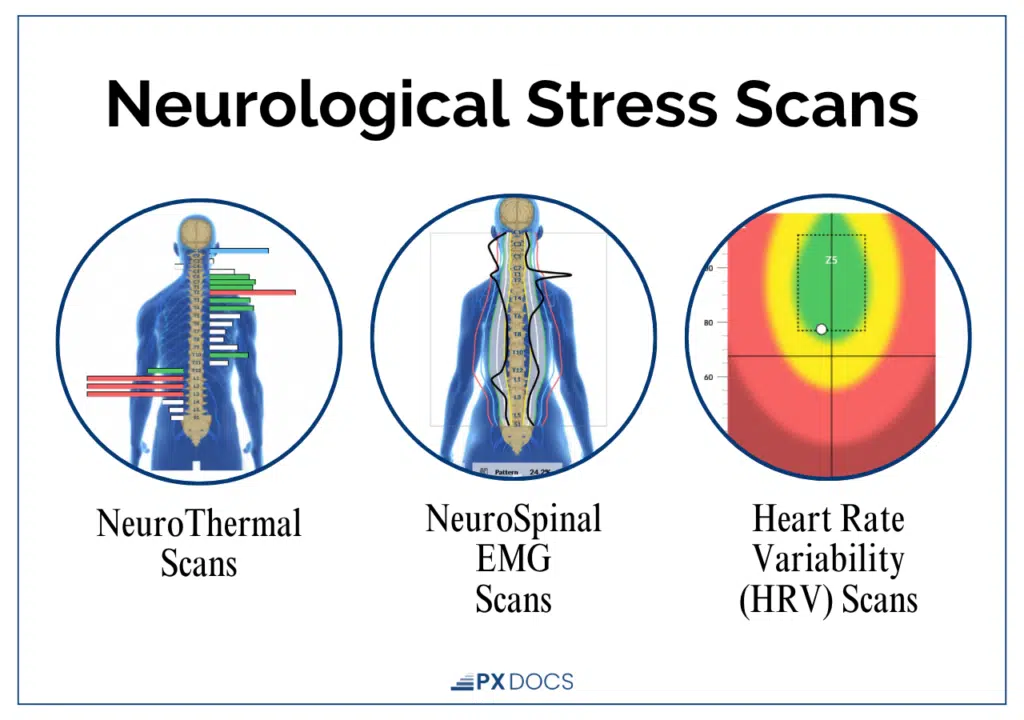
INSiGHT scans are not a treatment or a cure for any condition, not even back pain. They’re an assessment tool that helps locate where the nervous system is dysregulated.
How Does Neurologically-Focused Chiropractic Care Address the Cell Danger Response?
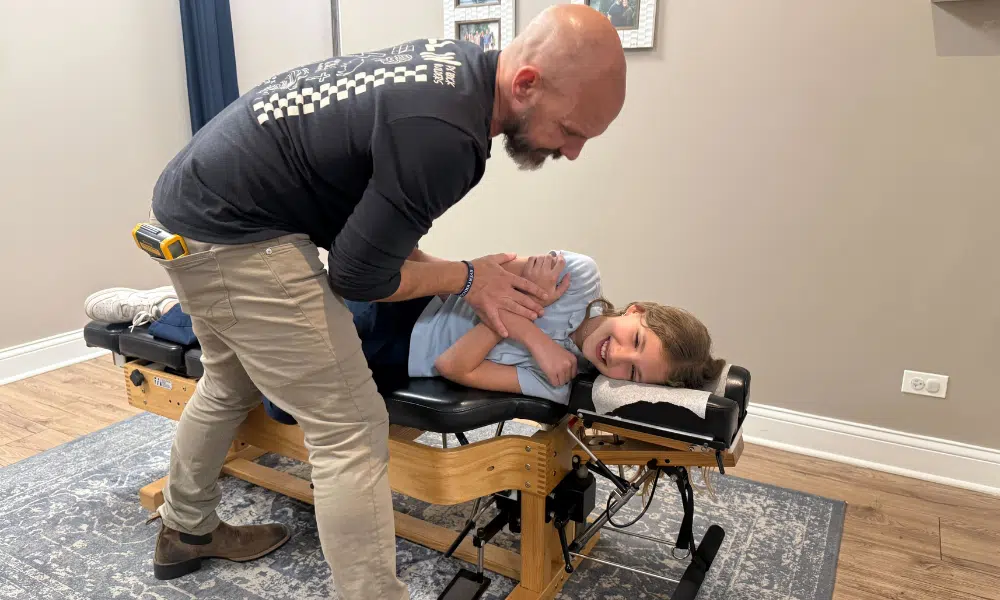
Neurologically-Focused Chiropractic Care addresses the Cell Danger Response indirectly but powerfully by working on the nervous system that controls whether the body feels safe or threatened. The goal isn’t to “treat” the CDR at the cellular level. It’s to restore the nervous system regulation that lets the body deliver its own “all clear” signal, so cells can finally shift out of defense and back into repair.
It starts with locating and addressing subluxation—the misalignment, fixation, and neurological interference that early-life stress and birth trauma leave behind, especially in the upper neck and brainstem. By gently correcting that interference, the goal is to reduce the constant “danger” signal broadcast by a stuck Sympathetic Nervous System and to restore tone to the vagus nerve, the body’s primary brake pedal. When the brake works again, the Parasympathetic System can finally do its job: calm inflammation, restart digestion, deepen sleep, and let the healing cycle complete.
This is also why order matters so much. Many families arrive having already tried everything—clean diets, dozens of supplements, detox protocols, therapy after therapy—and still feel stuck. Often, it’s because those interventions are being layered onto a nervous system that’s still locked in defense. A body in survival mode treats even beneficial inputs as more to manage. Regulate the nervous system first, and everything else you’re doing has a chance to finally work. Foundation before function.
A reasonable healing timeline is gradual, not overnight. As the nervous system regulates, parents often report improvements in sleep first, then in digestion and mood, and finally in resilience and development over weeks and months of consistent care. The Cell Danger Response didn’t get stuck in a day, and it doesn’t reset in one either.
The Bottom Line for Parents
The Cell Danger Response explains something parents feel in their gut long before anyone gives it a name: that their child’s body seems stuck in a state of defense, unable to fully heal, no matter what they try. It’s a real, well-documented cellular mechanism, and it doesn’t operate alone. It’s wired into the nervous system that decides, all day long, whether your child’s body feels safe or under threat.
That’s the hopeful part. You can’t reach into a cell and flip its switch, but you can support the nervous system that controls the switch. When the gas pedal eases off and the vagus nerve brake comes back online, the body can finally signal “all clear,” and the cells can get back to the business of growing and healing.
If your child’s symptoms keep circling back, no matter how much you do, it’s worth looking at the underlying nervous system. As always, work with your child’s healthcare providers on any diagnosis or medical concern. To find a trained Neurologically-Focused Chiropractor and learn what an assessment looks like, visit the PX Docs directory to find a provider near you.
Frequently Asked Questions
What is the Cell Danger Response in simple terms?
The Cell Danger Response is the body’s cellular defense mode. When a cell senses a threat, an infection, toxin, injury, or stress, its mitochondria stop normal growth and repair and shift into protection, pumping out alarm signals and inflammation. It’s meant to switch off once healing is done. When it stays on, the body stays in a low-grade state of defense, and chronic symptoms develop.
Who discovered the Cell Danger Response?
The Cell Danger Response was defined by Dr. Robert Naviaux, a physician and researcher at the University of California, San Diego, in a 2014 paper in the journal Mitochondrion. His work reframed mitochondria as cellular threat sensors, not just energy producers, and proposed that an unresolved CDR sits at the root of many chronic illnesses, including several childhood neurodevelopmental conditions.
Can the Cell Danger Response be reversed?
Research suggests a chronically activated Cell Danger Response can resolve once the underlying threats are cleared and the body receives a genuine “safe” signal. The challenge is that the nervous system often keeps broadcasting danger even after the original triggers are gone. That’s why restoring Autonomic Nervous System regulation, helping the body actually feel safe again, is central to allowing the response to reset.
Is the Cell Danger Response the cause of Autism?
Dr. Robert Naviaux has proposed that a persistent Cell Danger Response is a major contributing mechanism in Autism, and his 2025 “three-hit” model suggests Autism develops when genetic susceptibility, prenatal stress, and an early-life trigger converge on the CDR. It’s a leading research framework, not a settled or sole cause. Autism is complex, and no single mechanism explains every child.
How is the Cell Danger Response related to the nervous system?
The nervous system sets the body’s overall “threat versus safety” tone, and the mitochondria respond to it. When the Autonomic Nervous System is stuck in sympathetic dominance, chronic fight-or-flight, it keeps signaling danger to the cells, sustaining the Cell Danger Response. Restoring the parasympathetic “brake,” driven by the vagus nerve, helps the body signal safety so the cellular defense state can stand down.
Can chiropractic care help a child stuck in the Cell Danger Response?
Neurologically-Focused Chiropractic Care doesn’t treat the Cell Danger Response directly. It works on the nervous system that governs it, reducing interference from subluxation and restoring vagus nerve tone, allowing the body to shift out of chronic defense. Many parents report better sleep, digestion, mood, and resilience as regulation improves, though timelines vary by child.