
A transition is any moment when a child has to stop one activity and start another, such as leaving the house for school, turning off a screen for dinner, or moving from recess back to the classroom. For many kids, these everyday shifts trigger whining, stalling, tears, or full meltdowns. Smoother transitions come from helping a child’s nervous system feel safe enough to let go of one thing and move to the next, not from forcing compliance.
If getting your child out the door feels like negotiating a hostage release every single morning, you’re not imagining it. Transitions are one of the most common flashpoints for kids, especially those with ADHD, anxiety, or Sensory Processing Disorder. The grocery store, the bedtime routine, the switch from weekend to school week: each one can set off a reaction that feels wildly out of proportion to what’s actually happening.
Here’s what most advice misses. Smoother transitions aren’t really a behavior problem to be managed with the right reward chart. They’re a nervous system issue. When you understand what’s happening beneath the surface in your child’s brain and body, the strategies that work start to make much more sense.
Why Are Transitions So Hard for Kids?
Transitions are hard because they ask the brain to do something genuinely demanding: disengage from one activity, hold the next one in mind, and shift gears, all at once. This depends on executive function skills like cognitive flexibility and working memory, which are still developing through childhood and develop differently in kids with ADHD, anxiety, or sensory challenges.
Researchers call this skill “set shifting,” the ability to move attention and effort from one task to another. It’s run largely by the prefrontal cortex and the brain’s attention networks, which don’t fully mature until the mid-twenties. The capacity to flexibly switch between tasks develops gradually across childhood, tied to the slow maturation of the prefrontal cortex, which is why young kids and kids whose nervous systems are under strain find it so taxing.
For a child who’s already running on a stressed, overstimulated nervous system, that switching cost goes way up. The brain treats the demand to change as one more threat to manage. That’s why a small request, ”time to put your shoes on,” can land like a much bigger one.
What Does Trouble With Transitions Look Like?
Trouble with transitions shows up as resistance and dysregulation around moments of change, not as general defiance. A child who transitions well at home may fall apart at school, or vice versa, depending on how taxed their nervous system already is. The signs are usually physical and emotional before they’re behavioral.
Common signs of transition struggles in children include:
- Meltdowns, tantrums, or tears when asked to stop an activity
- Stalling, ignoring, or “not hearing” requests to move on
- Physical complaints like stomachaches or headaches before a known change (such as leaving for school)
- Rigidity, needing things to happen in an exact order or way
- Difficulty refocusing after switching to a new task
- Anxiety or clinginess that ramps up before the transition, not during
- Big reactions to small changes in routine or plans
If several of these sound familiar, it’s worth looking beyond the moment itself. Kids who struggle with transitions across many settings are often showing signs of an underlying nervous system dysregulation, a system that’s stuck in a stress state and has very little margin left for change.
How Does the Nervous System Affect Transitions?
The nervous system affects transitions because moving between activities requires the brain to downshift out of one state and into another, and a dysregulated nervous system can’t downshift on command. When a child is stuck in a chronic stress response, the calming, flexible part of the brain that handles smooth change is essentially offline.
Think of the Autonomic Nervous System like a car. The sympathetic “fight or flight” branch is the gas pedal—activation, alertness, go. The parasympathetic “rest and digest” branch is the brake pedal—calm, regulation, the ability to settle and adapt. A well-regulated child can move smoothly between the two, easing off the gas to slow down for a transition.
But many kids today live with a stuck gas pedal. Their sympathetic system runs hot while the parasympathetic brake, largely driven by the vagus nerve, remains underactive. This imbalance is called dysautonomia: dysfunction of the Autonomic Nervous System, the system that controls involuntary functions like heart rate, digestion, immune response, and sleep. In children, pediatric dysautonomia keeps the body in a low-grade state of alarm, so even ordinary changes register as threats. With weak vagal tone, the child simply can’t apply the brakes fast enough to handle the shift calmly.
Children who struggle with transitions frequently also experience challenges with anxiety, focus, sleep, and sensory overload. This co-occurrence isn’t a coincidence; these conditions share a common root in Autonomic Nervous System dysfunction. The overlap is well documented: a 2022 national survey found that anxiety was among the most common co-occurring conditions in children with ADHD, affecting roughly 4 in 10. When the sympathetic and parasympathetic branches are out of balance, it affects emotional regulation, attention, digestion, and a child’s ability to adapt to change all at the same time. That’s why a transition problem rarely travels alone.
Why Do Kids With ADHD, Anxiety, and SPD Struggle More With Change?
Kids with ADHD, anxiety, and Sensory Processing Disorder struggle more with change because all three conditions involve the same underlying issue: a nervous system stuck in sympathetic dominance, with reduced capacity for the flexible, regulated brain states that smooth transitions require. The diagnosis on the chart may differ, but the underlying neurological pattern is often strikingly similar. These conditions are also common and frequently overlap; an estimated 11.4% of US children aged 3–17 have ever been diagnosed with ADHD alone, and many carry more than one label.
A child with ADHD may hyperfocus on a preferred activity and find it almost physically painful to break away. A child with anxiety anticipates the next moment and floods with worry before the change even arrives. A child with SPD is already working overtime to process sound, light, and touch, so an added demand to switch gears tips them over the edge. In each case, the brain’s stress response is doing too much, and the calming systems are doing too little.
This is why behavior charts and consequences so often fall flat. You can’t discipline a child into having a more regulated nervous system. The behavior is the smoke; the dysregulation is the fire.
What Causes Nervous System Dysregulation in Children?
Nervous system dysregulation in children develops from an accumulation of early stressors that overwhelm a developing nervous system before it has had a chance to mature. At PX Docs, we call this sequence the “Perfect Storm,” a framework developed by Dr. Tony Ebel: prenatal stress, then birth trauma, then early childhood stressors that stack up until the nervous system gets stuck in a chronic state of high alert.
It often starts before birth. When a mother experiences chronic stress during pregnancy, her body releases stress hormones like cortisol that cross the placenta and can prime the developing nervous system for hypersensitivity. Then come birth interventions like C-section, forceps, vacuum extraction, induction, or a long, stalled labor, which can place physical strain on an infant’s delicate upper neck and brainstem, the control center for the Autonomic Nervous System.
From there, the early years pile on. Rounds of antibiotics, ear infections, falls and tumbles, screen overload, and a fast, overstimulating world all add to a system that’s already working hard. Each stressor on its own might be no big deal. Stacked together, in sequence, during the most sensitive window of brain development, they can leave a child locked in sympathetic dominance, exactly the state that makes transitions feel impossible.
The result of these stressors is called subluxation: neurological interference that causes dysregulation. When subluxation develops in the upper neck, especially, it can interfere with the brain-body communication that regulates the stress response, keeping a child stuck on the gas pedal.
How Can You Help a Child With Transitions at Home?
You can help a child with transitions at home by lowering the nervous system’s stress load before the transition and making the change as predictable as possible. The goal isn’t to eliminate transitions; it’s to give the brain enough warning, support, and calm that it doesn’t have to treat each one as an emergency. These strategies work best when paired with addressing the root cause underneath.
- Give previews and countdowns. Tell your child what’s coming and when. “In ten minutes, we’ll clean up. Then five. Then it’s time.” This gives the brain a chance to prepare emotionally rather than get blindsided. Visual timers help younger kids see time passing.
- Build predictable routines. The same sequence every morning and every night turns transitions into habits the brain can run on autopilot. Predictability is calming because it removes the unknown. A simple morning checklist or a picture chart of the bedtime steps does a lot of heavy lifting here.
- Use transition objects and movement. A favorite small toy carried from one place to the next can bridge the gap. So can movement, hopping to the car, a quick stretch, or a few jumping jacks. Physical activity helps discharge stress energy and shift the nervous system into a calmer state.
- Prioritize sleep and morning movement. Quality sleep is when the brain consolidates learning and recharges its regulatory capacity. Movement helps, too: a 2023 meta-analysis in Frontiers in Physiology found that physical activity positively affects attention in school-age children with ADHD. Starting the day with movement primes the brain for the transitions ahead.
- Stay regulated yourself. Children co-regulate with the adults around them. When you stay calm during a hard transition, your nervous system literally helps settle theirs. When you escalate, theirs escalates too.
These tools genuinely help. But if your child is melting down over transitions day after day despite your best efforts, that’s a sign the nervous system needs deeper support than home strategies alone can provide.
How Does Neurologically-Focused Chiropractic Care Help With Transitions?
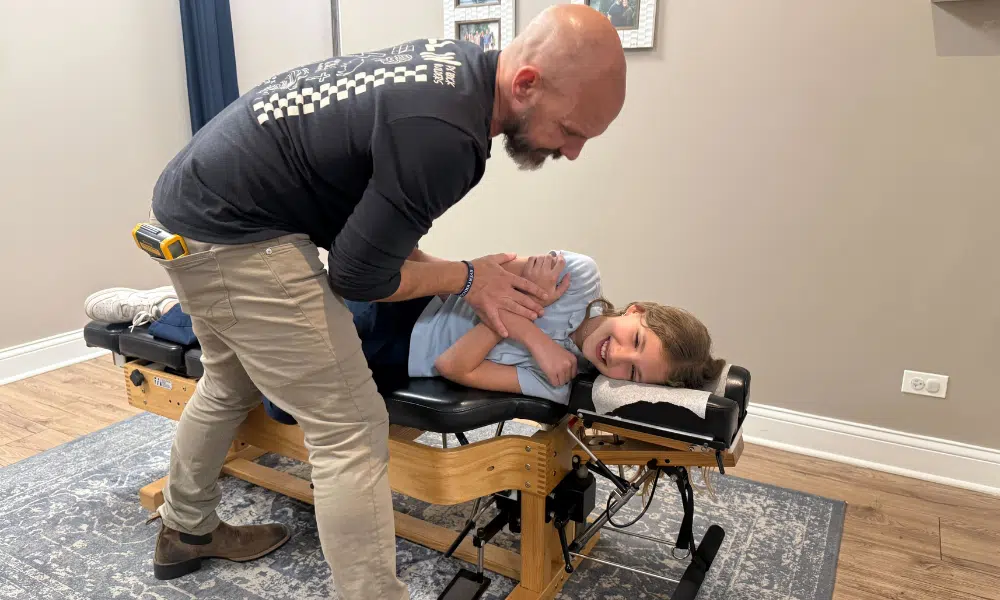
Neurologically-Focused Chiropractic Care helps with transitions by addressing the root nervous system dysregulation that makes change so hard, rather than managing the behavior on the surface. It’s a specialized form of pediatric chiropractic that focuses on identifying and correcting subluxation patterns affecting the Autonomic Nervous System, using neurological assessment tools and gentle, child-specific adjustments to restore regulation.
The aim is to take the foot off the stuck gas pedal. Through gentle, specific adjustments, the goal is to reduce tension in the overactive sympathetic system while supporting the calming parasympathetic system, including the all-important vagus nerve. When the brake pedal works again, kids gain back the capacity to downshift, settle, and move through change without their whole system going into alarm.
Parents often report that as their child’s nervous system regulates, the daily flashpoints start to soften: easier mornings, fewer meltdowns at pickup, smoother bedtimes, better sleep, and more flexibility when plans change. These are the kinds of shifts that happen when a child finally has the neurological capacity to handle transitions, instead of white-knuckling through every one.
How INSiGHT Scans Measure Nervous System Function
Before any care begins, PX Docs providers use INSiGHT scans to see what’s actually happening in a child’s nervous system. This is a three-part neurological assessment:
- Heart rate variability (HRV) measures autonomic balance and reserve capacity.
- Surface electromyography (sEMG) measures neuromuscular tension patterns
- Thermal scanning measures Autonomic Nervous System function.
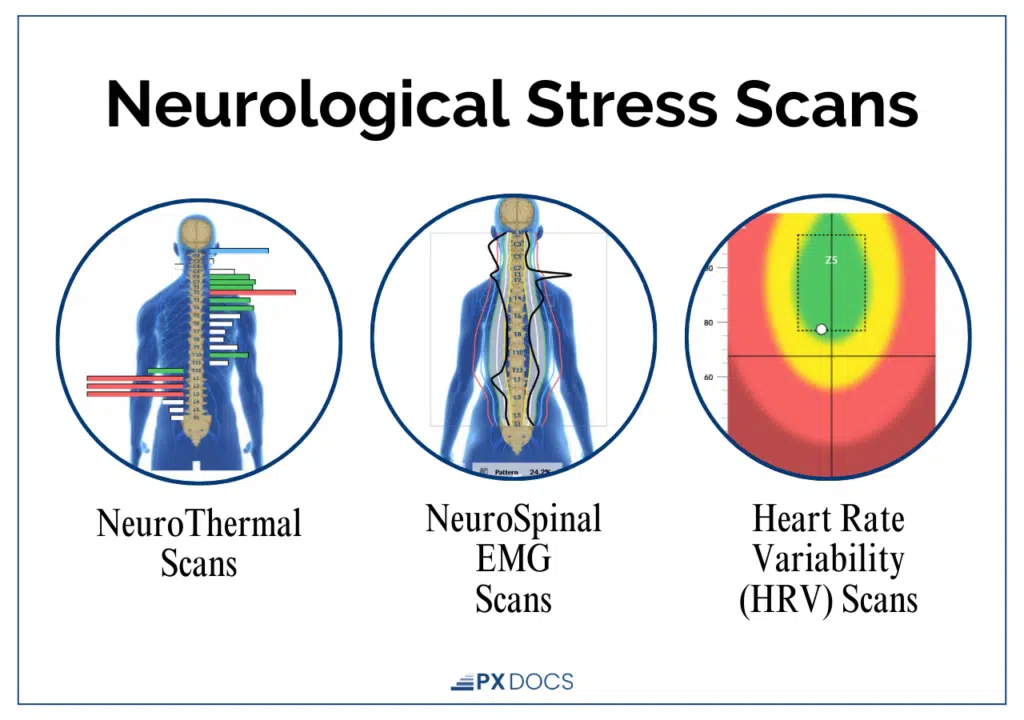
Together, they reveal whether a child is stuck in sympathetic dominance and where subluxation is interfering with regulation.
These scans matter because they make the invisible visible. Instead of guessing, a provider can show parents the neurological pattern driving their child’s struggles, then track real change over time as care progresses. It’s important to be clear, though: INSiGHT scans are not a treatment or a cure for any condition, not even back pain. They are an assessment tool that measures function, helping providers build a care plan around what each child’s nervous system actually needs.
When Should You Seek Professional Help for Transition Struggles?
You should seek professional help when transition struggles are intense, frequent, and interfering with daily life at home or school—and especially when they show up alongside other signs of nervous system dysregulation like poor sleep, anxiety, digestive issues, or sensory overload. Occasional resistance to change is normal childhood stuff. A pattern that disrupts your family’s daily functioning is worth investigating.
Watch for transition difficulties that come with frequent physical complaints, escalating anxiety, regression, or meltdowns that don’t improve, no matter how consistent you are at home. These are signals that the nervous system is dysregulated and needs more support. Consider an evaluation from a provider who assesses nervous system function directly, because addressing the root cause often does more than managing the symptom ever will.
A Calmer Path Through Change
Smoother transitions don’t come from a better sticker chart or a firmer hand. They come from a calmer, more regulated nervous system—one that can ease off the gas and apply the brakes when life asks a child to change gears. When you understand that transition meltdowns are a nervous-system issue rather than a behavioral issue, the path forward becomes much clearer.
Start with the home strategies: predictable routines, previews and countdowns, movement, good sleep, and your own steady presence. These genuinely help. And if your child keeps struggling despite everything you try, that’s not a parenting failure; it’s a sign the nervous system needs deeper support.
To understand what’s driving your child’s struggles with transitions, consider having their nervous system function evaluated. You can find a PX Docs provider near you to learn whether nervous system dysregulation is part of the picture. With the right support, your child can move through change with more ease, more confidence, and a lot less stress — for them and for you.
Frequently Asked Questions
Why does my child melt down during transitions?
Children melt down during transitions because shifting from one activity to another demands executive function skills, cognitive flexibility, working memory, and impulse control, which are still developing and develop differently in kids with ADHD, anxiety, or sensory challenges. When a child’s nervous system is already stuck in a stress state, the added demand to change registers as a threat, triggering a fight-or-flight reaction that looks like a meltdown.
Are transition difficulties a sign of a bigger problem?
Transition difficulties can be a normal part of childhood, but frequent, intense struggles across many settings can signal underlying nervous system dysregulation. When trouble with transitions shows up alongside poor sleep, anxiety, digestive issues, or sensory overload, it often points to an Autonomic Nervous System stuck in sympathetic dominance—the same root involved in ADHD, anxiety, and Sensory Processing Disorder.
How can I make morning transitions easier for my child?
Make mornings easier by building a predictable, repeatable routine, previewing each step with countdowns, and adding movement to help the nervous system regulate. A visual checklist lets your child see what comes next, which removes the stress of the unknown. Starting the day with physical activity and protecting quality sleep the night before both improve a child’s capacity to handle change.
Can chiropractic care help kids who struggle with transitions?
Neurologically-Focused Chiropractic Care addresses the root nervous system dysregulation that makes transitions hard, rather than managing behavior. Through gentle adjustments aimed at reducing subluxation and sympathetic dominance, the goal is to restore the body’s ability to downshift into a calm, regulated state. Many parents report easier transitions, fewer meltdowns, and better sleep as their child’s nervous system regulates.
Is chiropractic care safe for children?
Pediatric chiropractic care uses gentle, low-force techniques specifically adapted for a child’s size and developing body, nothing like the forceful adjustments people often picture for adults. Neurologically-Focused Chiropractic Care for children focuses on reducing nervous system interference. As with any care decision, talk with your provider about your child’s specific health history and needs.
What’s the difference between a behavior problem and a nervous system problem?
A behavior problem implies that a child is choosing to act out and can be corrected with consequences. A nervous system problem means the child’s body is stuck in a stress response that overrides their ability to regulate, so the behavior is a symptom, not a choice. Transition meltdowns are usually the second kind — which is why rewards and punishments often fail while nervous system support helps.