
There’s a strange thing that happens to almost every parent of a chronically struggling child.
The single most encouraging thing you can do is talk to another parent or provider who’s gotten real results with a kid like yours. And the single most frustrating thing you can do is talk to another parent or provider who’s gotten real results with a kid like yours.
How can both be true at once?
Because every child is wildly, uniquely different — and just as importantly, every child is at a different stage of healing. So the thing that created a breakthrough for one family may do nothing for yours right now. And yet that very same thing, six months from now, might be exactly what your child needs.
That’s maddening when no one explains it to you. It feels like the rules keep changing. Like you’re always one step behind. Like everyone else got their hands on a playbook you never received.
So let me give you the playbook.
Most families have been told what to try. Almost no one has handed them the proper sequence — the order and timing that actually determine whether any of it works. That missing piece is the reason so many kids stay stuck despite parents doing everything “right.”
What follows is the 4-Phase Neurological Healing Model. Once you see how it’s built, you’ll know roughly where your child is on their journey — or at the very least, how to find out. And when you know where a child is, something powerful happens: you finally get clarity on what to do next, and just as importantly, what not to do yet. Maybe ever.
First, Why Order Matters So Much
Imagine trying to build the second floor of a house before the foundation has been set. You can have the best materials, the best builders, the best blueprint — and it still won’t hold. Not because anyone did anything wrong, but because the timing was off.
That’s what happens to so many kids. The therapy was good. The supplement was good. The intervention was good. The lineup was wrong. Right players, wrong batting order — and no runs scored.
A child’s nervous system runs the whole show: how they sleep, digest, focus, regulate emotions, fight off illness, and adapt to stress. When that system is stuck in survival mode, it doesn’t have the bandwidth to absorb the very things meant to help it. Push too hard, too soon, and progress doesn’t just stop — sometimes you even get a setback.
This is why we don’t guess. We go in order. So here are the four phases.
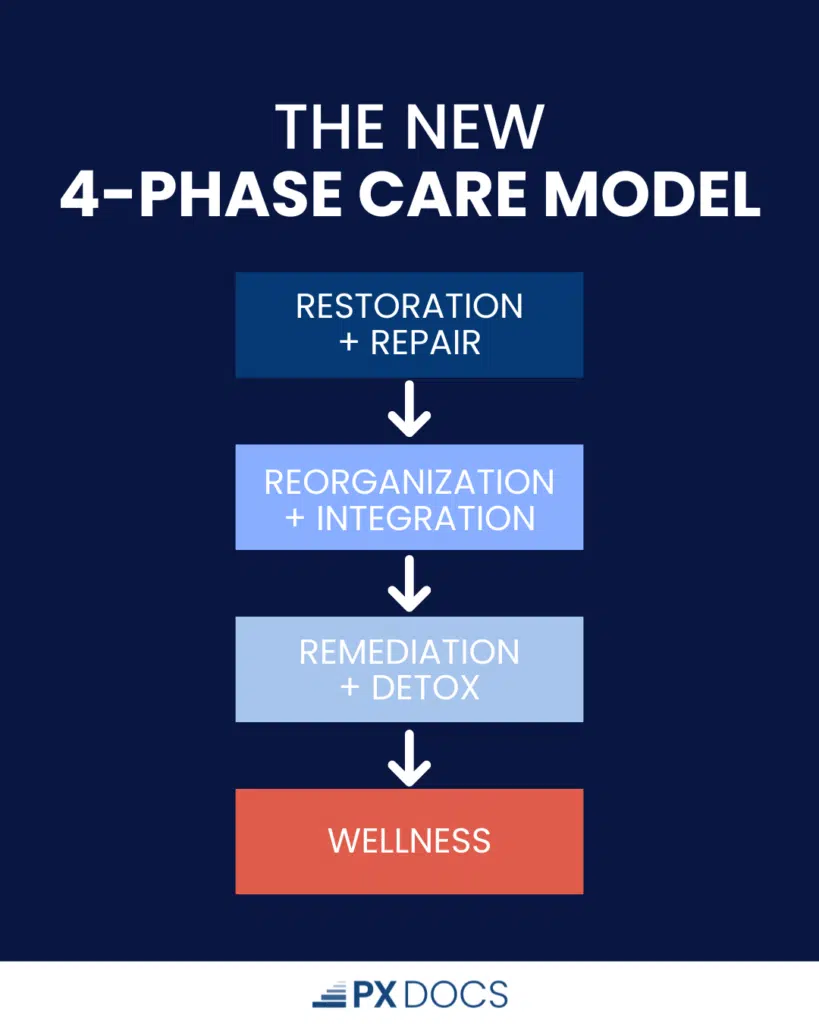
Phase 1 — Restoration & Repair
Restore regulation. Repair and rebuild the foundation.
This is the essential starting point for nearly every child, and there are no shortcuts around it.
The focus here is repairing the foundational neurological dysfunction — what we call subluxation — that keeps the nervous system locked in an exhausted, dysfunctional survival mode. When a child has been stuck in “go mode” for months or years, their body is essentially running a sprint while you’re asking it to calm down. It can’t. Not yet. The brake pedal isn’t online.
Through Neurologically-Focused Chiropractic Care, the goal of Phase 1 is to shift the nervous system out of survival physiology and into a more regulated, stable state. We’re providing what we call Neuro-Tonal adjustments, which help guide the nervous system back into “rest, digest, heal, grow, and regulate” mode.
Here’s what’s beautiful about this phase: the first signs it’s working show up in the body before the brain. The early wins tend to be quiet and foundational — better sleep, better digestion, calmer breathing, stronger immune function. Those are the “soft signs,” and they tell us the foundation is starting to hold.
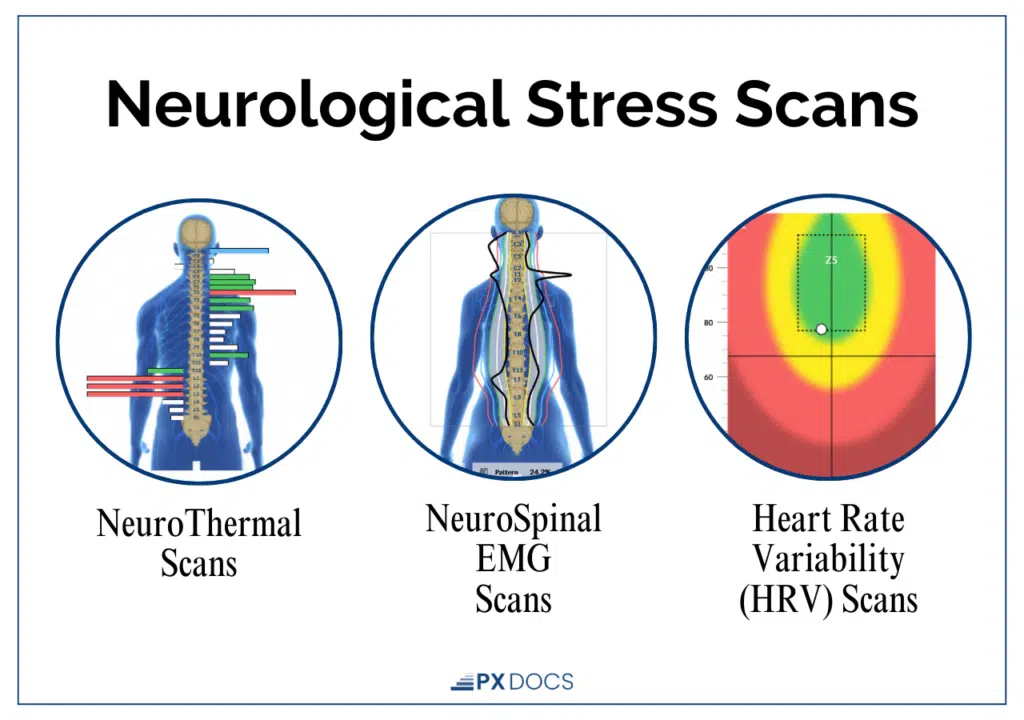
We don’t just go on symptoms or soft signs, either. We measure progress objectively through Neurological INSiGHT Scans, watching especially for improvements in:
- HRV (Heart Rate Variability) — a global window into how regulated (or dysregulated) the nervous system is. We want to see it climb back toward the “green” zone.
- Thermal DTG — a look at how the autonomic system is functioning.
- EMG Scores — a measure of how organized and efficient the nervous system’s tone has become.
This phase often takes 30 to 90 days, and that timeline isn’t a delay — it’s the work. Rushing past it is exactly what causes results not to stick later on.
For more complex “intensive” patients, this first phase can take more than 90 days and may take many months to chip away at those deep layers of neurological exhaustion, dysregulation, and tension.
Phase 2 — Reorganization & Integration
Teach the child to use that new reserve capacity.
Once the foundation is stable, the work shifts. Now we’re reorganizing and reintegrating proper neuro-sensory-motor patterns — and gently unwinding the compensations and “workarounds” the brain and body built just to survive in a dysfunctional state.
Think about that for a second. A child who’s been dysregulated for years didn’t just struggle — they adapted. They built clever, exhausting workarounds to get through the day. Those patterns kept them going, but they’re not the patterns we want them living in long-term.
Phase 2 is where we help the nervous system let go of the old survival wiring and build something better in its place.
This is also where movement-based therapies finally take root. PT, OT, speech, and sensory-motor work become dramatically more effective now than they ever could have been before. And this matters enormously: so many families pour time, money, and hope into these therapies during a phase when the nervous system simply wasn’t ready to receive them. The therapy wasn’t wrong. The foundation just wasn’t there yet.
Foundation restoration before reorganization — always.
Phase 3 — Remediation & Detox
Clean up what the storm left behind.
This phase addresses the downstream burden — toxins, heavy metals, mold, gut, and immune stress — that years of dysregulation can leave in their wake.
And here, the order matters more than almost anywhere else in the entire model.
Attempting remediation before Phases 1 and 2 often produces little benefit and can genuinely set a child back. Here’s why: the nervous system is the boss of detoxification and immune function. When it’s regulated and stable, the body often handles a remarkable amount of this cleanup on its own, naturally, without an aggressive protocol.
But when you push detox onto a system that’s still stuck in survival mode, you can overwhelm it — and an already overwhelmed nervous system doesn’t just stay stuck in that case. It often slides even deeper into the storm.
While it’s not the most enjoyable thing to talk about, every week we talk with parents who poured hope, energy, time, and money into intensive protocols that start with things like photobiomodulation (laser therapy), detoxification, or primitive reflex integration work — only to watch their child regress instead of progress. It’s a classic case of going in the wrong order and skipping the foundational first step altogether.
Flip that around, though. Do the hard work of Phase 1 (restoration) and Phase 2 (reorganization) first, get the nervous system into that more stable “ready state,” and the rule becomes the same one as before: slow, gentle, and less-is-more. One careful step at a time, never flooding a system that’s only recently found its footing.
Phase 4 — Wellness
Support and promote resilience for life.
This is the long game — and the whole reason for everything that came before.
Phase 4 is a child living a thriving life: a nervous system functioning optimally, and a trajectory pointed toward lasting health, adaptability, and real reserve capacity. It’s not just “symptoms gone.” It’s a body with the bandwidth to handle whatever life throws at it next — the resilience to bend without breaking.
That’s the goal. Not a child who’s merely getting by, but a child built to thrive.
A few things every parent should keep in mind
Knowing the four phases is powerful. But a map is only useful if you know how to read it honestly. So here’s the fine print that actually matters:
Every child is unique. Common patterns exist — that’s why this model works — but the phases aren’t a rigid checklist to march through. Personalized decision-making matters at every single step, and that decision-making is best done in collaboration between you, your PX Doc, and the other key professionals on your child’s team.
The “Messy Middle” is real. Phases 2 and 3 tend to be the longest and most challenging stretch of the whole journey. That’s not failure — that’s the work. Expect ups and downs. Expect a rollercoaster. The families who do best are the ones who brace for the dips instead of being blindsided by them.
Growth itself adds load. Kids are constantly growing and developing, and that growth places its own demands on the nervous system. Younger children, especially, are going through growth spurts and developmental surges at a rapid pace, which makes stability harder to achieve and maintain than for an older child, teen, or adult. If progress feels slower or bumpier with a little one, this is often why.
Community helps — in the right dose. Connecting with other parents and experienced practitioners is genuinely empowering. But guard against information overload. Remember the paradox we started with: what worked beautifully for another child may do nothing for yours — not because your child is behind, but because that child may simply be in a different phase. Their win isn’t your failure. It’s just a different page of the same map.
Where is your child right now?
Here’s what I hope you take from all of this.
If you’ve felt like you’ve tried everything and nothing’s working, it may not be that the things were wrong. It may be that the order was wrong — and no one ever showed you the sequence. That’s not a knock on you. You’ve been loving your child fiercely and fighting for them with the information you had. This is just better information.
When we know where a child is in this healing model, we get clarity and confidence about what to do next — and the wisdom to wait on what isn’t time for yet.
So if you’re wondering where your child actually falls on this map, the answer isn’t to guess. We don’t guess — we test. The starting point is finding a Neurologically-Focused Chiropractor, getting a set of INSiGHT Scans, and letting the data show you exactly where your child’s nervous system is — and what the right next step is for them.
And the testing doesn’t stop at that first scan. The baseline tells us where to begin, but it’s just the beginning. As care unfolds, we run progress INSiGHT Scans at regular intervals to confirm the nervous system is actually responding as we’d expect — that HRV is climbing, that the patterns are organizing, and that the foundation is genuinely holding.
This is how we know whether a child is truly ready to move from one phase to the next, rather than guessing or assuming. If the data shows we’re on track, we keep building. If it shows something needs to shift, we adjust the plan accordingly.
The scans keep us honest, and they keep your child’s care anchored to what’s really happening inside their nervous system — not just to how things appear on the surface.
Your Next Step
You don’t have to figure out your child’s phase alone — and you definitely don’t have to figure it out by drowning in other parents’ stories of what worked for their kid.
◆ First, find your PX Doc. If your child isn’t yet under Neurologically-Focused Chiropractic Care, that’s the real starting line. A PX Doc can run the INSiGHT Scans and tell you — objectively, not by guesswork — exactly which phase your child is in and what comes next. Everything in this article depends on knowing where you actually stand, and that’s something we measure.
◆ Then, take the self-assessment. Already under care, or want to walk in with a head start? Take our 4-Phase self-assessment quiz. It’ll help you locate your child on the map and deliver our free 4-Phase Healing Model guide — so you can read your child’s progress like a pro and have a sharper, more confident conversation at your next visit.
Your child isn’t broken. They’ve been overwhelmed, and quite possibly working through these phases in an order that was never built to work. Now you have the map.
Every patient counts. Expect miracles.
P.S. — Parents often ask me about supplements, especially around Phase 3. My honest answer for years was “be careful,” because most products add more noise to a system that’s already overwhelmed. The one company I’ve come to trust is Kingdom Health Sciences — chosen for its purity and simplicity, its nervous-system-first design, and the fact that it’s practitioner-guided rather than marketed to the public. But the timing matters as much as the product. Step zero, always: your own PX Doc confirms your child’s nervous system is in that stable, regulated, ready state first. Supplements don’t fix anything — at their best, they simply support a body that’s already healing, in the right order. If and when you’re ready, your PX Doc is the place to start that conversation.