

I’ve sat across from thousands of parents desperate for answers, and time after time, they’ve written out long lists of supplements, detox drops, binders, and herbs on their new patient paperwork—all trying to do what the medications couldn’t. But their child still isn’t sleeping, still isn’t speaking, still isn’t regulated.
Why?
If you’re reading this, you may know the exhaustion of managing 20+ supplements daily. The morning negotiations. The spreadsheets tracking doses and timing. The kitchen counter that looks like a specialty pharmacy, except instead of prescription bottles, it’s lined with promises of natural healing—probiotics, digestive enzymes, methylated vitamins, trace minerals, homeopathic remedies, and specialized detox protocols.
You made the leap from conventional medicine because those medications weren’t working. The side effects were creating new problems. Someone finally talked about root causes, gut health, and natural solutions. It felt like hope. But months later, thousands of dollars lighter, your child still melts down at transitions. Still can’t fall asleep. Still struggles with digestion. Still isn’t thriving.
At PX Docs, we’ve seen this pattern with many families in our practice, and we call it The Supplement Trap. Here’s what we’ve observed: addressing nervous system regulation is often essential before supplements can work effectively. When your child’s nervous system is stuck in survival mode, their body may struggle to utilize even the best supplements.
What Is The Supplement Trap?
The Supplement Trap happens when parents swap one external, sign-based solution (medications) for another (supplements) without actually changing the internal state of the nervous system. It’s the well-intentioned but misguided belief that natural automatically means effective, that more supplements equal more healing.
Here’s what many families don’t always realize: sometimes, they’ve simply shifted from one system to another. Instead of prescriptions, they’re now relying on supplements. The products have changed, but the overall approach often stays the same:
- Sign identification
- Laboratory testing
- Protocol development
- Pile of supplements prescribed
- Retest and add more supplements
And in other cases, even with the very best supplements, protocols, and practitioners, the body still struggles to heal—because those tools are being put into an overstressed nervous system that isn’t yet able to fully receive, process, and integrate them.
That’s why we start with the nervous system—the conductor of the entire orchestra. When it’s calm, connected, and functioning as it was designed to, every other part of the healing process can work as it’s meant to.
The problem isn’t necessarily the supplements themselves (though some have a lot higher quality than others)—it’s the sequence. Without first addressing nervous system dysregulation, even the best supplements may not work optimally.
Consider this: why would a 4-year-old with autism and a 40-year-old CEO with gut issues be on the same 20-step detox protocol? They wouldn’t—unless practitioners are missing the individualized neurological patterns that make each person unique. Cookie-cutter protocols equal one-size-fits-none solutions.
National surveys show Americans spend about 60 billion annually on supplements. But the emotional toll cuts deeper. Parents describe feeling like failures when supplements don’t work, wondering what they’re doing wrong, questioning if they should try a different brand, increase the dose, or add something new. It can become an exhausting cycle of hope and disappointment.
The Science: Why Nervous System Health Matters
The autonomic nervous system (ANS) is your child’s foundation for all healing. When it’s balanced, amazing things happen. The body works as it was designed to! It can start to heal and regulate with ease! When it’s not, other systems in the body will also start to struggle.
When your child is stuck in sympathetic dominance—that chronic fight-or-flight state—their body may experience:
- Reduced digestive enzyme production
- Altered gut motility
- Impaired detoxification capacity
- Dysregulated immune responses
- Compromised nutrient absorption
- Reduced tissue repair
- And more!
This happens through a complex process involving the nervous system’s influence on the rest of the systems in the body. When the brain isn’t getting clear input from the nervous system, it also can’t send clear output—impacting how the whole body works together. Research also shows that chronic stress can significantly impact gut function and overall health.
The vagus nerve—documented as crucial for parasympathetic “rest, digest, and heal” responses—plays a vital role. Studies indicate that reduced vagal tone can affect digestive function, immune responses, and overall regulation. Without proper vagal tone, the body may struggle with various functions, including nutrient utilization.
Here’s where sensitive kids may suffer most.
When a child’s nervous system is already overwhelmed and dysregulated, adding supplements—even gentle herbs or homeopathics—may sometimes cause adverse reactions or detoxes. Parents report their children sometimes experiencing worsening signs when starting new supplements. While this doesn’t happen to everyone, it’s worth considering whether the nervous system needs support before adding multiple interventions.
Less Is More: The Inside-Out Neurological Approach
The approach we’ve found helpful is this: start with regulation, not supplementation. Supporting nervous system function is essential to healing!
Neurologically-Focused Chiropractic Care aims to address nervous system function. Through specific neuro-tonal adjustments, practitioners work to support proper nervous system regulation and communication. Research even shows that these adjustments can produce neurophysiological responses.
Think of it this way: if the nervous system has interference—like static on a phone line—the body’s internal communication may be disrupted. By addressing this interference, the body may become more receptive to what’s going into it, including nutritional support.
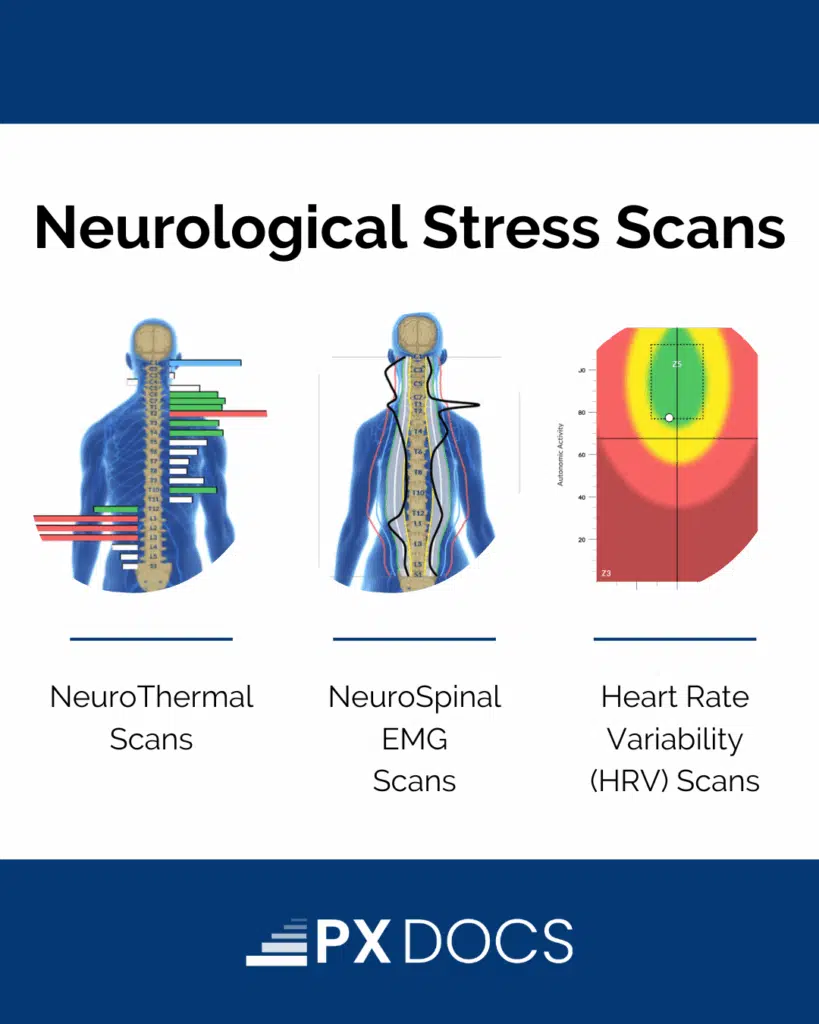
Objective measurement tools can help track nervous system function:
- Heart Rate Variability (HRV) – validated research shows HRV indicates stress adaptability
- Surface EMG – measures muscle tension patterns
- Thermal Scanning – assesses temperature regulation
INSiGHT scans use these assessments to evaluate nervous system function. These scans may show changes in nervous system function over time, and guide the individualized care plans you will receive from a PX Doc.
Practical & Empowering Takeaways
Consider asking: “How regulated is my child’s nervous system?” before “What supplements should I give?” This perspective shift may be helpful.
If you choose to use supplements, consider this sequence based on clinical observation:
A Thoughtful Approach to Supplementation
Phase 1: Foundational – Whole Food Nutrition First
- Quality proteins (grass-fed, wild-caught, organic when possible)
- Healthy fats (avocados, olive oil, coconut oil, omega-3s from food)
- Complex carbohydrates from whole food sources
- Nutrient-dense foods over isolated supplements • Focus on what you’re adding, not just removing
Phase 2: Targeted Support (Consider after establishing good nutrition)
- Work with a qualified practitioner
- Start with one supplement at a time
- Use low doses initially
- Monitor for reactions
- Common considerations: probiotics, magnesium, zinc, vitamin D
Phase 3: Advanced Protocols (Only with professional guidance)
- Work with experienced practitioners
- Start extremely slowly
- Monitor carefully for any reactions
- Many children may not need this phase
- Individual responses vary greatly
Always work with qualified healthcare providers when making decisions about your child’s health.
The Missing Link: Your Child’s Nervous System
If you’ve tried medications without success, then tried supplements without the results you hoped for, it may be time to consider a different approach that addresses nervous system function.
The challenge is that nervous system assessment isn’t typically part of a standard medical evaluation. Traditional diagnostics don’t usually include functional nervous system testing, let alone the advanced INSiGHT scanning technology. This is why many families feel stuck in cycles of trying different interventions without addressing underlying regulation.
The path forward might involve addressing nervous system regulation as a foundation for other interventions. This doesn’t mean abandoning all other approaches, but rather considering the sequence and timing of interventions. And your local PX Docs team is ready to help and guide you through that.
Thousands of families report that when nervous system function improves, their children respond better to various interventions—whether supplements, therapies, or dietary changes. Visit the PX Docs Directory to find a practitioner who can assess your child’s nervous system function. Consider multiple perspectives and work with professionals you trust. Your child’s nervous system has a remarkable capacity for adaptation and regulation when properly supported. While outcomes vary, many families find that addressing nervous system function provides a helpful foundation for their child’s overall health journey.