
You’ve been told it’s “just a phase.” That your child will “grow out of it.” That anxiety, digestive issues, and sensory struggles are “normal” for kids these days. But deep down, you know something’s not right.
Over the past few decades, life-changing diagnoses like Autism, ADHD, anxiety, asthma, and allergies have rapidly increased in children. According to the CDC, 1 in 31 children is now diagnosed with Autism Spectrum Disorder, and approximately 1 million more kids were diagnosed with ADHD between 2016 and 2022.
While genetics and lifestyle factors play a role, clinical evidence increasingly points to nervous system dysregulation and vagus nerve dysfunction as a root cause being massively overlooked by the conventional medical system.
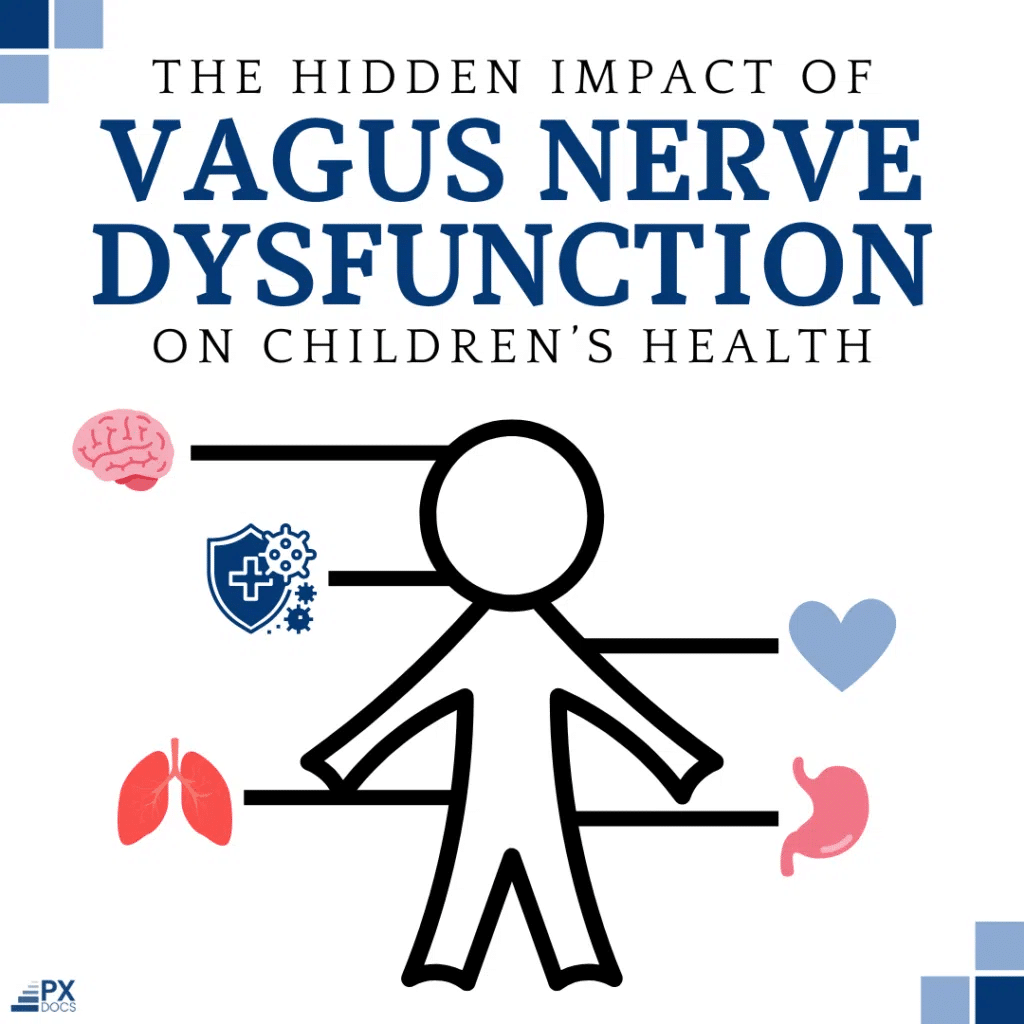
At the heart of this issue is the vagus nerve, the longest cranial nerve, which connects the brain to vital organs and regulates heart rate, digestion, inflammation, and behavior. When this nerve is disrupted by factors like high-risk pregnancy or birth trauma, it can contribute to chronic health challenges that affect a child’s quality of life.
In this article, we’ll explore the hidden world of vagus nerve disorders and how Neurologically-Focused Chiropractic Care can help stimulate and activate the vagus nerve, setting the stage for lasting, drug-free healing.
What is the Vagus Nerve?
The vagus nerve, also known as cranial nerve X, is the longest and most complex of the 12 cranial nerves. Its name, derived from the Latin word for “wandering,” reflects its extensive path from the medulla oblongata at the base of the brainstem down through the neck, chest, and abdomen.
What makes the vagus nerve unique is its bidirectional communication system. About 80% of vagal nerve fibers are afferent (sensory), carrying information TO the brain about what’s happening in your organs. The remaining 20% are efferent (motor) fibers that carry commands FROM the brain to regulate organ function. This two-way highway is why your gut can tell your brain you’re anxious, and your brain can tell your gut to calm down.
The vagus nerve is a key component of the Parasympathetic Nervous System, responsible for the body’s “rest and digest” functions. It regulates digestion, heart rate, respiratory rate, inflammation, immune response, and even social engagement behaviors. Thanks to Dr. Stephen Porges’ work on polyvagal theory, we also know the vagus nerve is highly involved in regulating our children’s emotions and behavior, which is why it’s such an important aspect of helping children with autism, ADHD, and anxiety.
The vagus nerve controls critical functions, including vocal cord movement (which is why some babies with vagus nerve compression have higher-pitched cries), swallowing coordination, mucus and saliva production, heart rate regulation, breathing patterns, digestive enzyme release, immune system modulation, and emotional regulation through connections to the limbic system.
Measuring Vagus Nerve Function: Heart Rate Variability
One of the most reliable ways to assess vagal tone, the measure of how well your vagus nerve is functioning, is through heart rate variability (HRV) measurement.
HRV measures the variation in time between heartbeats. You might think a healthy heartbeat is perfectly steady like a metronome, but that’s actually not the case. A healthy nervous system creates natural variation; your heart rate speeds up slightly when you breathe in and slows down when you breathe out. This is called respiratory sinus arrhythmia, and it’s a sign of good vagal tone and strong parasympathetic tone.
Low HRV indicates sympathetic dominance and poor vagal regulation. When the vagus nerve isn’t functioning well, your heart loses this healthy variability and beats in a more rigid, mechanical pattern. Children with low HRV often struggle with emotional regulation, immune challenges, and difficulty recovering from stress.
This is why our INSiGHT Scans include an HRV assessment: it provides objective data on vagus nerve function and allows us to track improvements as we address subluxation. We can observe a child’s HRV improve from the red or yellow zones (indicating sympathetic dominance) to the green zone (indicating improved vagal regulation), even before parents notice behavioral changes at home.
The Vagus Nerve and Brain Function
The vagus nerve plays a crucial role in regulating emotions and behavior in children by influencing the Autonomic Nervous System. Think of it like your child’s nervous system has two pedals: a gas pedal (sympathetic) and a brake pedal (parasympathetic/vagus nerve).
When the vagus nerve isn’t working right due to upper cervical subluxation, it’s like the brake pedal stops responding. Your child’s gas pedal stays pressed down 24/7, stuck in fight or flight mode, which is why they can’t sleep, can’t digest, can’t calm down–their body thinks they’re being chased by a bear all day long.
Dr. Stephen Porges’ polyvagal theory helps explain why vagus nerve dysfunction affects behavior so profoundly. The theory describes three neural circuits:
- The Ventral Vagal Complex (Social Engagement System): Responsible for social connection, facial expression, and the ability to feel safe and calm. When this system is active, children can learn, play, and connect with others. This is the state in which healing, growth, and development occur.
- The Sympathetic Nervous System (Mobilization): Your child’s “gas pedal” – the fight-or-flight response that revs them up to deal with threats. When children are stuck here, they’re hyperactive, impulsive, aggressive, or anxious.
- The Dorsal Vagal Complex (Shutdown): The freeze or shutdown response. When overwhelmed, children may become withdrawn, disconnected, or appear “checked out.” This is often misdiagnosed as depression or lack of motivation.
Children with vagus nerve dysfunction often get stuck in fight-or-flight or freeze states due to subluxation, preventing proper vagal signaling. They’re not choosing these behaviors; their nervous system is stuck in survival mode.
The accumulation of prenatal stress, birth trauma, and childhood stressors, which we call the “Perfect Storm,” disrupts this system, preventing children from accessing their social engagement system and keeping them trapped in survival states.
The Vagus Nerve and Immune System Dysfunction
Vagus nerve dysfunction can significantly impact the immune system through the cholinergic anti-inflammatory pathway. When the vagus nerve functions properly, it releases acetylcholine–a neurotransmitter that signals immune cells to reduce inflammatory responses. If the vagus nerve’s function is compromised, cytokine regulation breaks down, leading to unchecked inflammation and chronic inflammatory responses.
This explains why children with poor vagal tone often struggle with allergies, asthma, eczema, and frequent infections: their immune systems lack proper vagal regulation to keep inflammatory responses in check. When the brake pedal doesn’t work on inflammation, the body can’t turn off the immune response even after the threat is gone.
Birth trauma causing cervical spine instability at C1-C2 can compress the nodose ganglion–the nerve bundle where vagus nerve cell bodies cluster at the atlas level–disrupting this anti-inflammatory signaling from day one.
This is why we often see babies who are chronically congested, constantly getting ear infections, or developing early food sensitivities. The “Perfect Storm” starts before they’re even born, and birth trauma adds the final injury that pushes their system over the edge.
Symptoms of Vagus Nerve Dysfunction in Children
Vagus nerve dysfunction occurs when the vagus nerve is not functioning properly, leading to various signs and health issues. Reduced vagal tone shows up in multiple ways throughout the body. Parents often notice these signs, but pediatricians dismiss them as “normal” or “something they’ll grow out of.” The reality is that these are red flags that the nervous system needs support.
We see symptoms of vagus nerve dysfunction show up differently depending on the child’s age and which vagal pathways are most affected.
Physical Symptoms
- Difficulty swallowing or frequent gagging
- Weak cry or hoarse voice (especially in infants)
- Chronic fatigue despite adequate sleep
- Frequent illness and slow recovery from infections
- Temperature regulation problems (always too hot or too cold)
Digestive Symptoms
- Chronic constipation or diarrhea
- Bloating and gas
- Acid reflux or GERD
- Poor appetite or extreme pickiness
- Gastroparesis, a condition in which the vagus nerve can’t properly signal the stomach muscles to move food along
Neurological and Behavioral Symptoms
- Anxiety and panic attacks
- Depression or emotional flatness
- Difficulty regulating emotions and behavior
- Sensory Processing Disorder
- Focus and concentration challenges
- Headaches and migraines
- Sleep disturbances (difficulty falling asleep, staying asleep, or both)
Cardiovascular Symptoms
- Rapid or abnormally slow heart rate
- Dizziness or lightheadedness
- Vasovagal syncope, when the vagus nerve overreacts to triggers, causing sudden drops in heart rate and blood pressure that can lead to fainting
- POTS (Postural Orthostatic Tachycardia Syndrome)
These symptoms can significantly impact a child’s quality of life, affecting their physical, emotional, and social well-being. When the vagus nerve isn’t functioning properly, it creates a cascading effect throughout every system in the body.
How Do You Know If Your Child Has Vagus Nerve Dysfunction?
If you’re reading this article, you’re probably already seeing red flags. Trust your parental instincts—you know your child better than anyone.
Here’s when to seek evaluation from a Neurologically-Focused Pediatric Chiropractor:
- Multiple symptoms across different body systems: If your child has digestive issues AND anxiety AND sleep problems AND sensory challenges, that’s not a coincidence. That’s a nervous system problem.
- Treatment-resistant conditions: You’ve tried multiple specialists, therapies, and interventions, but nothing seems to create lasting change. When individual symptoms are cared for in isolation without addressing the nervous system, results are temporary at best.
- History of birth trauma: Forceps delivery, vacuum extraction, emergency C-section, prolonged labor, cord around the neck, or any intervention that put physical stress on the baby’s head and neck during birth.
- Worsening over time despite interventions: Your child’s challenges are getting worse, not better, despite your best efforts and following conventional recommendations.
The conventional medical system lacks effective tools to diagnose vagus nerve dysfunction in children. Most pediatricians aren’t trained to identify it, and standard medical imaging (such as MRIs) can miss the functional problems that INSiGHT scans reveal. This is why so many parents are told “everything looks normal” on tests while their child is clearly struggling.
At PX Docs, we use objective neurological scanning to measure vagus nerve function and identify exactly where subluxation is creating interference.
Vagus Nerve Dysfunction Explained
The vagus nerve can sometimes struggle to regulate important bodily functions, leading to vagus nerve dysfunction, also known as dysautonomia—a dysfunction or imbalance of the Autonomic Nervous System.
This dysfunction often occurs following physical trauma such as birth trauma, serious infections, surgical complications, and other conditions. Psychological stress, prolonged exposure to toxins, and chronic inflammation can also compromise the vagus nerve.
The mechanism behind most pediatric vagus nerve dysfunction is vagus nerve compression at the upper cervical spine. During difficult births, the pulling, twisting, and torque applied to a baby’s head and neck can create subluxation at C1-C2 (the atlas and axis vertebrae). This misalignment, fixation, and neurological interference compress the vagus nerve at its exit from the skull and as it travels down the neck.
Recent evidence suggests that neurological dysfunction in the upper neck and brainstem, known as subluxation, can disrupt communication between the brain, the vagus nerve, and end organs. This dysfunction alters sensory input and communication with the brain, disrupting signaling between the brain and the end organs.
Think of it like a garden hose with a kink in it. The water (nerve signals) is trying to flow from the brain to the organs, but the kink (subluxation) at C1-C2 reduces that flow to a trickle. No matter what you do downstream, change the diet, add supplements, try behavioral therapy, if you don’t remove the kink, you’re fighting an uphill battle.
“The Perfect Storm” of Factors Behind Vagus Nerve Problems
At PX Docs, we refer to the combination of factors leading to vagus nerve dysfunction as “The Perfect Storm.” This concept suggests that a series of events and stressors, often beginning in utero and continuing through early childhood, can accumulate and overwhelm the developing nervous system.
The Perfect Storm unfolds in three stages:
Stage 1: Prenatal Stress and Toxic Load
Even before birth, a baby’s nervous system can be impacted by maternal stress, environmental toxins, infections, and nutritional deficiencies during pregnancy. High levels of maternal cortisol cross the placenta and affect fetal nervous system development, particularly the vagus nerve’s regulatory capacity.
Stage 2: Birth Trauma and Intervention
This is where the biggest injury to the vagus nerve often occurs. Key factors include:
- Physical trauma and injury: Birth trauma, such as prolonged labor, forceps delivery, or vacuum extraction, can damage delicate tissues and create subluxation at C1-C2 that compresses the vagus nerve. Even “normal” births can be traumatic to a baby’s delicate nervous system.
- Interventions and positioning: Induction, epidurals, and positioning during labor can all increase the likelihood of difficult delivery and subsequent trauma.
Stage 3: Early Childhood Stressors
After birth, ongoing stressors continue to overwhelm an already compromised system:
- Chronic stress and emotional trauma: Exposure to chronic stress or emotional trauma during childhood can lead to changes in the brain and nervous system, which in turn can affect vagus nerve function, resulting in an overactive “fight or flight” response and reduced vagal tone.
- Infections and inflammatory conditions: Viral and bacterial infections, as well as chronic inflammatory conditions like autoimmune conditions, can “hijack” and disrupt vagus nerve function. Frequent ear infections, strep throat, or respiratory illnesses can further inflame and irritate an already compromised vagus nerve.
- Toxic exposures: Environmental toxins, heavy metals, and chemical exposures from food, water, and air continue to stress the nervous system.
When these factors combine, they create a vicious cycle of nervous system dysregulation, inflammation, and vagus nerve dysfunction. Birth trauma is often the tipping point, the final stressor that pushes the system from “coping” into “crisis.” This physical injury can have lasting effects if not properly addressed by a trained Neurologically-Focused Pediatric Chiropractor.
Can Vagus Nerve Dysfunction Be Reversed?
Here’s the good news: vagus nerve dysfunction can absolutely improve, and in many cases, completely reverse.
The key is addressing the root cause, the subluxation creating interference, rather than just managing symptoms. When we remove the physical compression and neurological interference at C1-C2 through specific, gentle Neuro-Tonal adjustments, the vagus nerve can begin to heal and function properly again.
Your child’s nervous system has incredible neuroplasticity, especially in the early years. We see this on INSiGHT scans all the time: HRV improves, thermal patterns normalize, and muscle tension releases as the nervous system shifts from sympathetic dominance back into parasympathetic regulation.
Natural Support vs. Medical Intervention
When parents are told their child needs help with vagus nerve dysfunction, the conventional medical system typically offers two options:
- Medical Vagus Nerve Stimulation (VNS): Medical vagus nerve stimulation involves implanting a device in the chest that sends electrical impulses to artificially stimulate the left vagus nerve. The FDA has approved VNS for treatment-resistant epilepsy and depression. While effective for some patients, this approach addresses symptoms by forcing nerve activation rather than addressing why the nerve isn’t functioning properly in the first place.
- Vagal Maneuvers and Self-Care Techniques: Some families find temporary relief through vagal maneuvers, techniques that manually stimulate the vagus nerve, like deep diaphragmatic breathing, cold water face immersion, gargling, humming, or singing. While these can provide momentary relief, they’re like turning the brake pedal by hand instead of fixing the mechanism that’s preventing it from working automatically. They don’t address the structural compression causing the dysfunction.
The reason these interventions often provide only temporary relief is that they don’t address the “Perfect Storm,” the accumulation of stressors beginning in utero that created the dysfunction. When we remove interference through Neurologically-Focused Chiropractic Care, the body’s innate healing capacity can naturally restore proper function.
The PX Docs Approach to Vagus Nerve Dysfunction
At PX Docs, we focus on the root cause: nervous system dysregulation and subluxation. Our Neurologically-Focused Chiropractic Care protocols identify and correct these underlying imbalances, helping to restore proper vagus nerve function and support overall health.
It’s important to note that INSiGHT scanning technology does not diagnose medical conditions, and Neurologically-Focused Chiropractic Care is not a cure for vagus nerve dysfunction or any other condition. Instead, these INSiGHT Scans help us identify the root cause of nervous system dysfunction and develop customized care plans to help shift the nervous system back into balance, regulation, and resilience.
We use INSiGHT Scans, which employ surface electromyography (sEMG), thermal scanning, and heart rate variability (HRV), to provide a detailed picture of your child’s neurological health.

The sEMG scan detects muscle tension patterns that indicate subluxation. We often see extremely high readings at C1-C2 in children with vagus nerve dysfunction. The thermal scan measures autonomic nervous system balance along the spine, showing us exactly where sympathetic dominance is highest. The HRV assessment provides objective data on vagal tone.
One of the most objective measures we track is HRV, which indicates how well your child’s vagus nerve regulates their Autonomic Nervous System. Low HRV indicates sympathetic dominance and poor vagal tone; the brake pedal isn’t working, and your child is stuck with their gas pedal pressed down. We can monitor HRV on scans even before you see signs of change, helping families understand that neurological healing is occurring at the foundational level.
By addressing these root causes rather than simply masking symptoms with medication, we aim to promote long-term healing and optimal function of the vagus nerve and other key systems in the body.
Neuro-Tonal Adjustments for Vagus Nerve Stimulation
Once we have identified areas of subluxation and nervous system dysregulation, we use precise Neuro-Tonal adjustments to help restore vagal nerve balance and promote optimal function. Unlike medical Vagus Nerve Stimulation (VNS) devices that use electrical impulses to artificially activate the nerve, our adjustments remove structural interference, allowing the vagus nerve to function naturally.
We’re not forcing the nerve to fire; we’re removing what’s blocking it from doing its job.
These adjustments are designed to:
- Reduce subluxation and stimulate proprioception
- Restore natural vagal signaling and promote parasympathetic tone
- Improve communication between the brain and the body
- Reduce inflammation and support gut health
- Strengthen the immune response and endocrine system
- Enhance overall nervous system regulation and resilience
By addressing the root cause of vagus nerve dysfunction, Neuro-Tonal adjustments can help to alleviate the symptoms and support your child’s overall health and development.
The adjustments are incredibly gentle, especially for infants and young children. We use only 1-2 ounces of pressure (about the pressure you’d use to test a tomato for ripeness) to release the subluxation at C1-C2. Parents are often surprised at how gentle it is, but that’s all it takes to remove the interference and allow the nervous system to reset.
Prevention: Supporting Vagus Nerve Health During Pregnancy
The best time to address vagus nerve dysfunction is before it starts. If you’re pregnant or planning to get pregnant, here’s what you can do to support your baby’s nervous system development:
- Reduce prenatal stress: Chronic stress during pregnancy affects fetal vagus nerve development. Practices like prenatal chiropractic care, meditation, gentle exercise, and adequate sleep all support healthy nervous system development.
- Plan for a gentle birth: While we can’t control everything that happens during delivery, you can work with birth providers who prioritize gentle, minimal-intervention births when possible. Avoid unnecessary inductions and discuss your preferences for avoiding forceps or vacuum extraction unless absolutely medically necessary.
- Get your newborn checked: Even after “normal” births, having your baby’s nervous system evaluated by a Neurologically-Focused Pediatric Chiropractor within the first few weeks of life can identify and correct subluxation before it creates bigger problems. Many of the challenges we see in older children could have been prevented with early intervention.
Unlocking Your Child’s Potential Through Neurologically-Focused Care
At PX Docs, we believe that every child deserves the opportunity to thrive and reach their full potential. Our Neurologically-Focused Chiropractic Care approach identifies the root causes of vagus nerve dysfunction, promoting optimal health and function for your child.
If you suspect that your child has vagus nerve dysfunction, if they’re dealing with multiple health challenges that haven’t responded to conventional care, we encourage you to take action and seek out the care they need. The PX Docs Directory can help you find a qualified practitioner near you who can assess your child’s unique needs and develop a personalized care plan.
Don’t let vagus nerve dysfunction prevent your child from experiencing optimal health and happiness. With Neurologically-Focused Chiropractic Care, you can help your child build a strong foundation for lifelong wellness and success.
The vagus nerve dysfunction your child is experiencing didn’t happen overnight, and it won’t resolve overnight. But with the right support, focused on addressing the root cause rather than chasing symptoms, your child’s nervous system can heal. We see it happen every single day in PX Docs offices around the world.
Start today and schedule a consultation with a PX Docs practitioner. Together, we can help your child thrive and reach their full potential!