

If you or your child has struggled with inadequate sleep, you’ve probably tried everything. The blackout curtains, white noise machine, melatonin supplements, and expensive mattress. You’ve read all the sleep hygiene articles and set consistent bedtimes. Yet night after night, you’re still tossing and turning.
What if the problem isn’t what you’re doing wrong, but what you’re missing entirely? Most sleep advice focuses on external adjustments—changing your environment, tweaking your schedule, managing your habits. These lifestyle adjustments absolutely matter. But there’s a foundational adjustment that conventional sleep experts almost never address: the state of your nervous system itself.
Your body has an Autonomic Nervous System designed to regulate sleep, naturally. When it’s functioning properly, you fall asleep easily, stay asleep through the night, and wake feeling refreshed. When it’s not, when neurological interference keeps you stuck in fight-or-flight mode, no amount of lifestyle adjustments will create lasting change. This article will show you both the lifestyle adjustments that support better sleep AND the neurological foundation that makes those adjustments actually work.
What Do “Adjustments” Mean for Sleep?
When people search for how adjustments help sleep, they’re usually thinking about two completely different things:
Lifestyle adjustments include changes to your daily routine, sleep environment, and habits. These are the schedule modifications, light exposure management, and bedtime rituals that sleep experts typically recommend. These adjustments work with your body’s natural circadian rhythm to support healthy sleep patterns.
Chiropractic adjustments address interference in your nervous system, specifically subluxation—which is neurological interference, or fixation—that disrupts the neurological control of sleep-wake cycles. These precise adjustments remove stress and restore proper nervous system and vagus nerve function, allowing your Autonomic Nervous System to regulate sleep as it was designed to.
Here’s what most people don’t realize: lifestyle adjustments only work consistently when your nervous system can properly respond to them. If neurological interference keeps you stuck in sympathetic dominance, your body physically cannot shift into the parasympathetic state required for deep sleep. You can create the perfect sleep environment, but your body won’t access it.
Why Lifestyle “Adjustments” Don’t Work for Everyone
You’ve implemented sleep schedules and different pillows. You’ve optimized everything. Yet you’re still struggling.
All of these lifestyle adjustments depend on a nervous system that can actually respond to them. Your Autonomic Nervous System governs your sleep-wake cycle. It regulates melatonin production, core temperature changes, heart rate variability, muscle relaxation, and the shift from alert to sleep states.
This system has two branches:
- The Sympathetic Nervous System (your “gas pedal”)
- The Parasympathetic Nervous System (your “brake pedal”).
During the day, sympathetic activation keeps you alert. As evening approaches, parasympathetic activation should gradually increase, initiating the cascade that prepares your body for sleep.
But what happens when your nervous system is stuck with the gas pedal pressed down?
Sympathetic dominance means your body remains in a heightened state of alert even when there’s no threat. Your heart rate stays elevated. Your muscles maintain tension. Cortisol levels remain high. Your brain stays hypervigilant. No amount of blackout curtains or consistent wake times can override this neurological state.
The technical term for this imbalance is dysautonomia—dysfunction of the Autonomic Nervous System. When dysautonomia involves chronic sympathetic dominance, it disrupts every aspect of sleep regulation. Your brain continues producing cortisol when it should be producing melatonin. Your core temperature doesn’t drop adequately. Your muscles can’t release tension.
This isn’t a willpower problem. You can’t meditate your way out of neurological dysfunction. The question isn’t “What sleep habits should I adopt?” It’s “Why isn’t my nervous system responding normally to these healthy habits?”
The Nervous System’s Role in Sleep Regulation
Ready to really dive into some science? Your circadian rhythm is generated by the suprachiasmatic nucleus (SCN), a tiny cluster of about 20,000 neurons in your hypothalamus. The SCN acts as your master biological clock, coordinating rhythms throughout your body. It receives light information directly from specialized cells in your retinas and uses this data to synchronize your internal 24-hour cycle.
When the SCN receives light signals, it suppresses melatonin production in your pineal gland. When darkness falls, the SCN permits melatonin synthesis to begin. Melatonin levels start rising 2-3 hours before your natural bedtime, peak around 2-4 AM, and then decline toward morning.
But here’s the critical piece: this entire system depends on proper nervous system function. The SCN connects directly to your Autonomic Nervous System through the brainstem. The signals that regulate melatonin production travel through the Sympathetic Nervous System to reach the pineal gland. If there’s interference in this pathway, particularly in the upper neurospinal system where the brainstem meets the spinal cord, the whole system can malfunction.
The vagus nerve, the longest cranial nerve and the primary pathway of the parasympathetic nervous system, plays an enormous role in initiating sleep. This nerve originates in the brainstem and travels down through the neck. Vagus nerve activity naturally increases at night, slowing your heart rate, deepening your breathing, and promoting the physiological shift into sleep.
When vagus nerve function is compromised, often due to tension and subluxation, parasympathetic activation becomes difficult or impossible. Your body literally cannot shift out of sympathetic dominance into the relaxed state required for sleep.
Research demonstrates that vagal tone correlates directly with sleep quality. Higher vagal tone associates with better sleep onset, longer time in deep sleep, and better overall sleep quality. Lower vagal tone is associated with insomnia, frequent night wakings, and unrefreshing sleep.
Chiropractic Adjustments: The Foundation for Sleep
Neurologically-Focused Chiropractic Care addresses subluxation at its source. Through precise, gentle adjustments specifically designed for the nervous system, chiropractors trained in this approach remove mechanical interference that disrupts nerve function.
Specific adjustments restore movement and vagus nerve function, removing the physical stress on the brainstem and allowing the nervous system to function without interference.
When subluxation is corrected, the effects on sleep can be profound:
The nervous system can shift into parasympathetic mode. For many people, this is the first time in years, or ever, that their body can actually relax. Parents often report that after starting care, their child fell asleep more easily, stayed asleep longer, and woke more refreshed.
Melatonin regulation improves. With proper brainstem function and improved vagal tone, the SCN can properly regulate melatonin production and timing. Sleep onset becomes natural rather than forced.
Sleep quality improves. People spend more time in deep sleep and REM sleep, the restorative stages of sleep. When the nervous system functions properly, these stages occur naturally. And the body can finally heal properly.
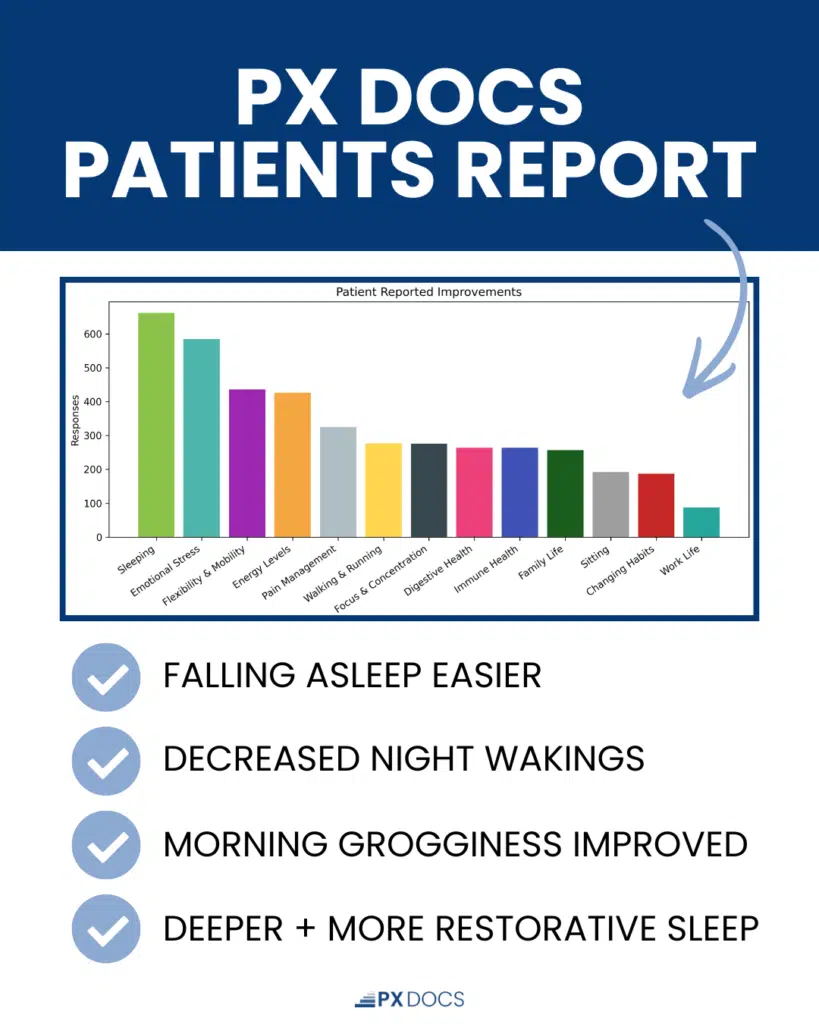
This doesn’t happen overnight. The nervous system has likely been compensating for years. It takes time for new patterns to establish. Sleep often improves in this sequence:
- Falling asleep becomes easier
- Night wakings decrease
- Morning grogginess improves
- Sleep becomes deeper and more restorative
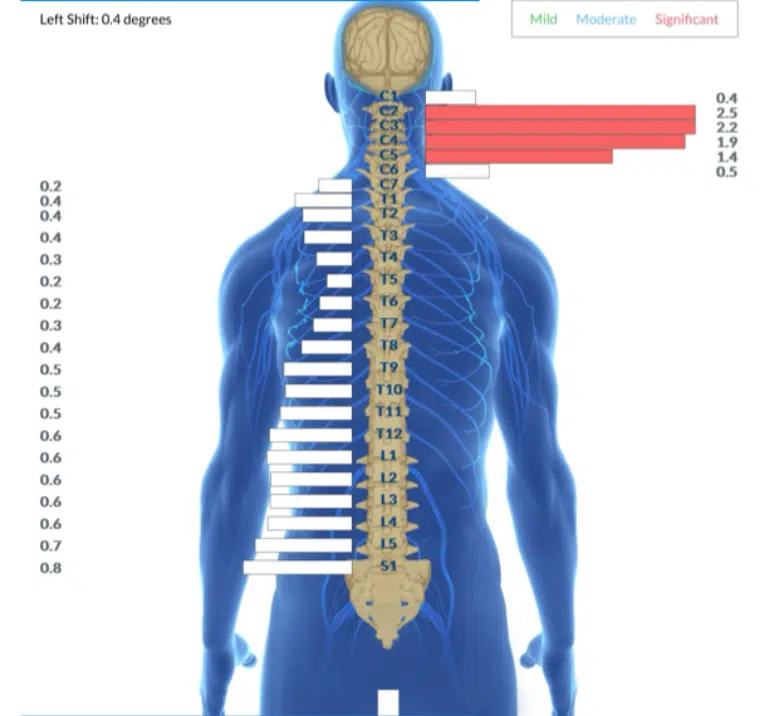
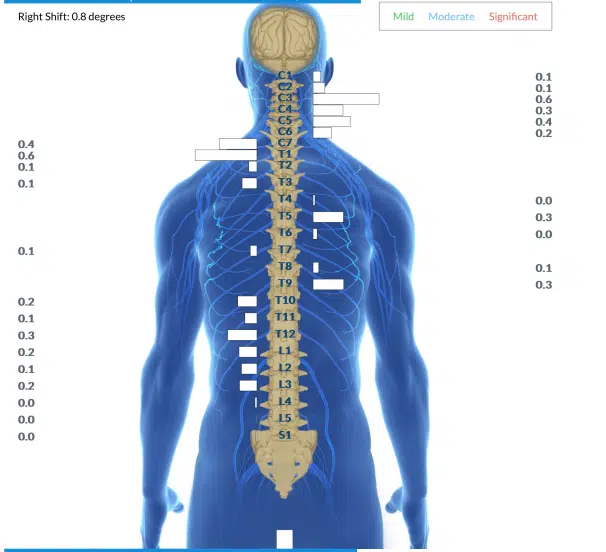
At PX Docs, we use INSiGHT scanning technology to measure objective changes in nervous system function. These scans show precisely where subluxation is creating stress and how it’s changing over time. Parents can see their child’s nervous system literally calming down, often before sleep improvements become noticeable.
Combining Both Approaches
Chiropractic adjustments and lifestyle adjustments aren’t competing approaches. They’re complementary.
Once subluxation is addressed and your nervous system can actually respond, those lifestyle adjustments you’ve been trying suddenly work. The consistent wake time actually helps regulate your circadian rhythm because your SCN can now respond to timing cues. The evening wind-down routine actually helps you relax because it can shift your nervous system into parasympathetic mode. The blackout curtains actually support melatonin production because the signal pathways are functioning.
Start with the foundation, neurological assessment, and care. If you’ve tried everything and sleep remains elusive, have your nervous system assessed by a Neurologically-Focused Chiropractor. INSiGHT scans can identify if subluxation is creating the interference, preventing everything else from working.
Implement lifestyle adjustments alongside chiropractic care. As your nervous system begins functioning better, support that progress with smart habits: consistent wake times, strategic light exposure, proper sleep environment, and pre-sleep routine.
Give it time. Nervous system healing doesn’t follow a linear path.
Conclusion
The conventional approach to sleep problems cares for sleep as a behavioral issue: fix your habits, optimize your environment, and sleep should improve. For some people with mild, recent sleep disruptions, this works fine.
Your body has an exquisitely designed system for regulating sleep. When subluxation creates interference in this system, particularly in the upper cervical spine where the brainstem meets the spinal cord, no amount of lifestyle adjustment can compensate.
The most effective approach addresses both: remove the neurological interference through Neurologically-Focused Chiropractic Care, allowing your nervous system to regulate sleep as it was designed to. Then support that restored function with intelligent lifestyle adjustments.
If you’ve tried everything and sleep remains a challenge, the missing piece might not be another habit to add or another supplement to try. It might be that your nervous system needs the interference removed so it can finally do what it was designed to do.If you’re ready to address the foundation of your sleep problems, we encourage you to find a PX Docs provider near you who can assess your nervous system function and create a care plan tailored to your specific needs.