
As a parent, watching your child lose focus in school, fidget through every meal, or struggle to keep up with friends is heart-wrenching. You may wonder whether it’s just a phase or something more, and somewhere along the way, you’ve probably heard two different labels thrown around: ADD and ADHD. According to the CDC, roughly 7 million U.S. children have been diagnosed with ADHD, so if you’re asking which term applies to your child, you’re in very good company.
So let’s clear up the confusion first, then talk about the part almost no one explains: why your child’s brain and body work the way they do.
What’s the Difference Between ADD and ADHD?
ADD and ADHD aren’t two different conditions. ADD (Attention Deficit Disorder) is an older, retired term. Since 2013, the official diagnosis has been ADHD (Attention-Deficit/Hyperactivity Disorder). What people still call “ADD” is now known as ADHD, predominantly inattentive presentation—the same set of challenges, just an updated name.
In other words, the difference is one of language, not biology. A child who would have been called “ADD” thirty years ago is diagnosed today with ADHD. It’s the same condition it’s always been, described with updated criteria and terminology.
Here’s how the two terms line up side by side:
| ADD (the old term) | ADHD (the current diagnosis) | |
| Status | Retired in 2013 with the DSM-5 | Current, medically accurate term |
| What it described | Attention and focus problems without obvious hyperactivity | Inattention, hyperactivity, and impulsivity in any combination |
| Today’s equivalent | ADHD, predominantly inattentive presentation | An umbrella diagnosis with three presentations |
| Who still uses it | Parents, teachers, everyday conversation | Doctors, the DSM-5, school and insurance paperwork |
Why Did “ADD” Become “ADHD”?
The names changed as the science did. In 1980, the DSM-III first named “Attention Deficit Disorder,” with or without hyperactivity. By 1987, that was revised to “Attention-Deficit/Hyperactivity Disorder.” Then, in 1994, the DSM-IV established three distinct presentations that doctors still use today.
The biggest shift came in 2013. The DSM-5 eliminated ADD as a standalone diagnosis and folded it entirely into ADHD. Researchers had become convinced that inattention and hyperactivity aren’t two separate problems—they’re different expressions of the same underlying neurodevelopmental condition. The DSM-5 even swapped the word “subtypes” for “presentations,” a small change with a big meaning: a child’s signs can shift over time rather than locking them into one fixed category. The current edition, the DSM-5-TR (2022), keeps this same framework and still does not list ADD.
Is ADD the Same as ADHD?
For everyday purposes, yes. When someone says their child “has ADD,” they almost always mean ADHD without the obvious hyperactivity—the inattentive type. Clinically, though, doctors diagnose ADHD, not ADD. A clinician evaluates whether your child meets ADHD criteria, then notes which presentation best fits the current pattern.
So you’re not wrong to use the word “ADD.” It’s just no longer the word the medical and school systems use, which matters when you’re filling out paperwork or requesting accommodations.
What Are the Three Presentations of ADHD?
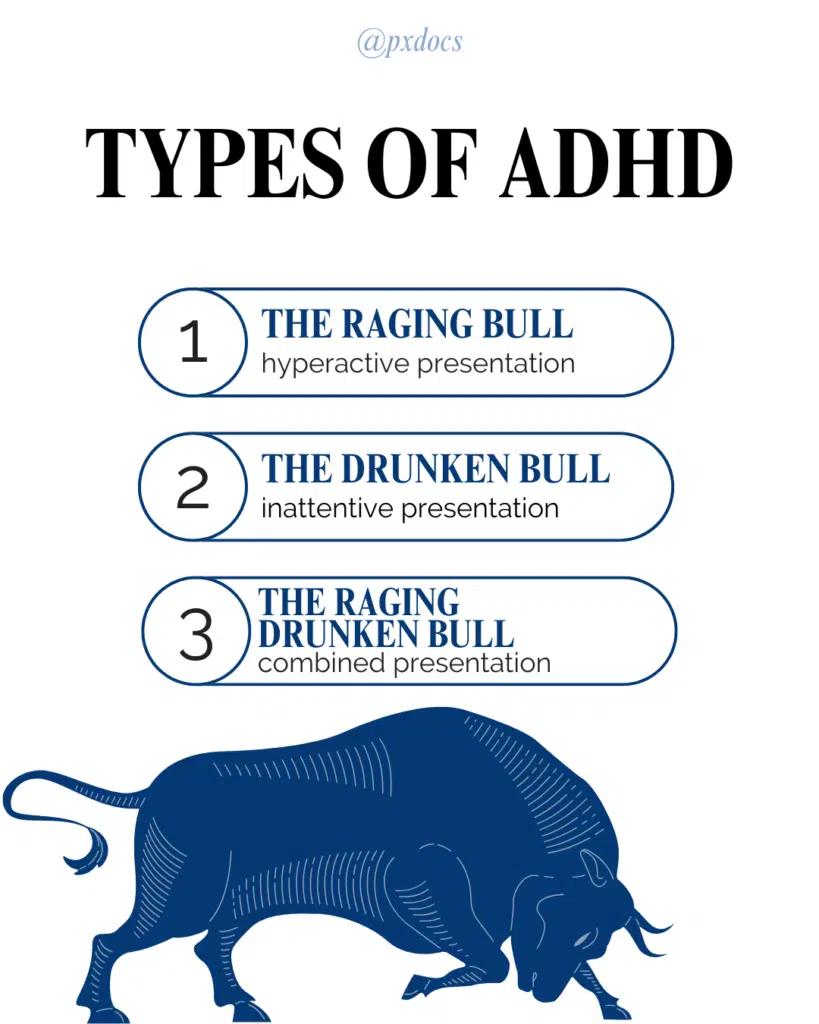
Instead of “ADD versus ADHD,” the more useful question is which presentation fits your child. ADHD shows up in three ways:
| Presentation | Core pattern | What you might notice |
| Predominantly inattentive (what people call “ADD”) | Trouble focusing, not visibly hyperactive | Daydreaming, missing details, losing things, forgetfulness, slow to start tasks |
| Predominantly hyperactive-impulsive | High energy, acts before thinking | Can’t sit still, interrupts, fidgets, blurts out answers, always “on the go” |
| Combined | Features of both | The most commonly diagnosed presentation |
The inattentive presentation, the old “ADD”, is the one most likely to fly under the radar. Because these kids aren’t bouncing off the walls, their struggles get mistaken for laziness or daydreaming. Girls, especially, tend to be diagnosed later for this reason.
What Does Inattentive ADHD (Old “ADD”) Look Like in a Child?
If your child fits the inattentive pattern, you might recognize some of these:
- Loses focus partway through homework, chores, or conversations
- Misses details and makes careless mistakes on schoolwork
- Forgets and loses things—jackets, water bottles, assignments
- Struggles to get started on tasks that take mental effort
- Seems to “tune out” even when you’re talking directly to them
- Has trouble staying organized with time, materials, and steps
The hyperactive-impulsive pattern looks different: constant motion, difficulty waiting, interrupting, climbing, or running when it isn’t appropriate. Many children show a mix of both, which is why “combined” is the most common diagnosis.
How Is ADHD Diagnosed?
There’s no single blood test or scan that confirms ADHD. Diagnosis comes from a structured evaluation against the DSM-5 criteria. For children up to age 16, a clinician looks for at least six symptoms of inattention, hyperactivity-impulsivity, or both; for teens 17 and older and adults, the threshold is five. The symptoms have to show up in more than one setting—home and school, not just one—and they have to interfere with daily life. The DSM-5 also raised the age-of-onset threshold from 7 to 12, recognizing that signs often become clear only once school demands increase.
A thorough evaluation rules out other explanations too, since sleep problems, anxiety, sensory challenges, and nervous system dysregulation can all look like attention problems on the surface.
What Causes ADD and ADHD?
Here’s where the conversation usually stops short. Most explanations end at “it’s genetic” or “it’s a chemical imbalance,” then move straight to medication. That answers what to call it, but not why your child’s attention system is struggling in the first place.
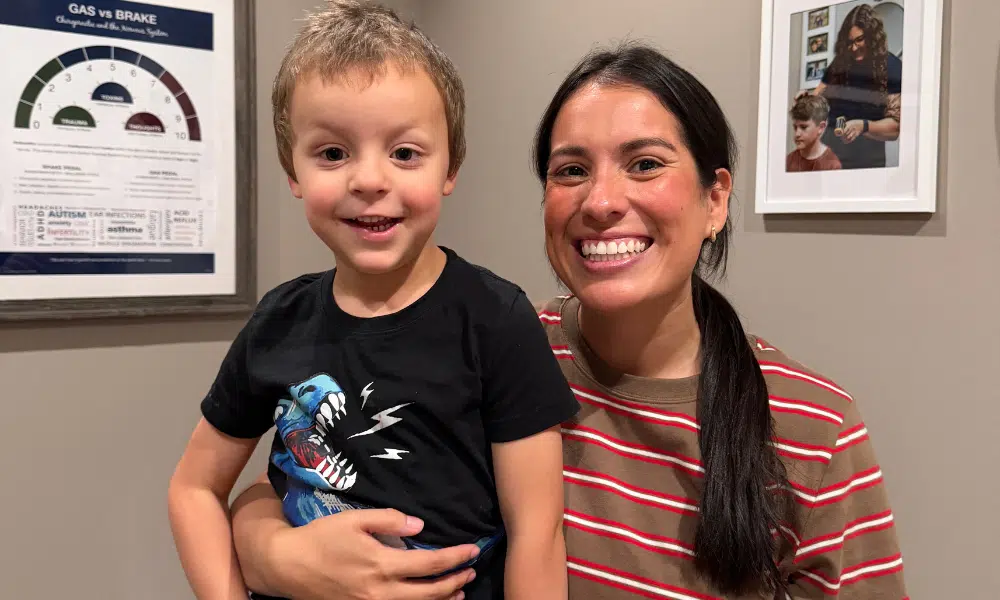
At PX Docs, we look one layer deeper—at the nervous system itself. Attention, focus, and impulse control all depend on a balanced Autonomic Nervous System (ANS), the automatic control center that runs your child’s stress response and recovery. Think of it like a car: the sympathetic “gas pedal” revs the body up for action, and the parasympathetic “brake pedal” calms it back down. In a regulated child, the two work in rhythm.
When a child is stuck in sympathetic dominance—gas pedal jammed down, brake pedal not engaging—the brain stays in a revved-up, distractible, reactive state. That’s a hallmark of dysautonomia, an imbalanced Autonomic Nervous System, and it’s a pattern we see again and again in kids carrying an ADHD label. The inattentive child often runs the opposite way, a nervous system that’s checked out and under-engaged. Either way, the common thread is an ANS that isn’t shifting gears the way it should.
The “Perfect Storm” Behind Attention Challenges
So how does a child’s nervous system end up dysregulated? In our clinical experience, it usually traces back to what we call The “Perfect Storm.” a build-up of stress across three stages:
- Prenatal stress. High maternal stress during pregnancy can affect how a baby’s developing nervous system learns to self-regulate.
- Birth trauma. Interventions like forceps, vacuum extraction, or C-section can place physical strain on a newborn’s delicate upper neck and brainstem, exactly the area that helps coordinate the autonomic nervous system.
- Early childhood stressors. Repeated rounds of antibiotics, chronic illness, screen overload, and ongoing stress can keep an already-taxed nervous system stuck in high gear.
This stress can settle into the body as a subluxation, a combination of three things: misalignment of the spinal bones, fixation or restricted movement, and the resulting neurological interference that disrupts clear communication between brain and body. When that interference sits in the upper neck, it can keep the vagus nerve and the rest of the autonomic system from doing their calming, focusing work.
None of this replaces a diagnosis. It reframes the question. Instead of only asking “is it ADD or ADHD,” we also ask, “is this child’s nervous system stuck in stress mode, and why?”
Why the Label Matters Less Than the Root Cause
A diagnosis can open doors. Accommodations at school, support services, a shared language with teachers. Those are real and useful. But a label is a description of what’s happening, not an explanation of why it’s happening. Conventional care often focuses on managing symptoms day to day, which can help in the short term but doesn’t address the underlying nervous system dysregulation driving them.
That’s the gap Neurologically-Focused Chiropractic Care is built to fill. To be clear about scope: we don’t treat or cure ADD or ADHD. What we focus on is restoring balance and clear communication within the nervous system, so your child’s body has a better shot at regulating itself.
How We Look at Your Child’s Nervous System
Before anything else, we measure. Our offices use INSiGHT Scans, a set of non-invasive technologies that assess how a child’s nervous system is functioning—including heart rate variability (a window into autonomic balance), muscle activity along the spine, and thermal readings tied to nerve function. These scans give us an objective starting point and let us track change over time.
Importantly, INSiGHT Scans do not diagnose or treat any condition, not even back pain. They’re a measurement tool that shows us where the nervous system may be stuck in stress.
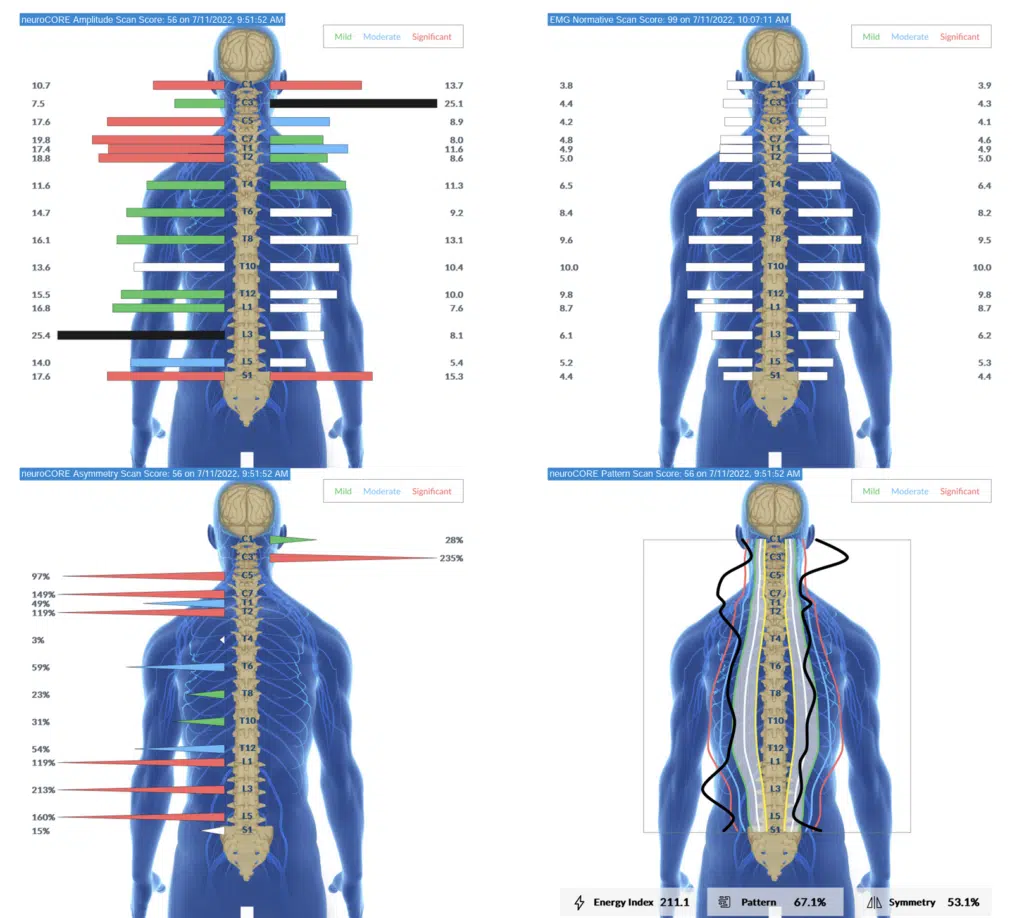
From there, gentle, specific adjustments work to reduce neurological interference and help the nervous system shift out of constant “gas pedal” mode. The goal isn’t to chase focus directly; it’s to help your child’s body get back to a state where focus, calm, and self-regulation can develop more naturally. This is what we mean by addressing the root cause rather than the surface.
Finding Answers for Your Child
Whether the word that fits your child is “ADD,” “ADHD,” or no label at all yet, the most important thing you can do is keep asking why. You know your child better than anyone, and trusting that instinct is what leads to real answers.
If you want to understand how your child’s nervous system is functioning, and whether dysregulation is part of their attention and focus struggles, you can find a trained Neurologically-Focused Pediatric Chiropractor near you through the PX Docs directory. It’s a starting point for exploring whether this approach could help your child thrive.
This article is for educational purposes and is not medical advice. Always consult your child’s healthcare providers about diagnosis and care decisions.