
An ear infection home remedy is a drug-free way to ease your child’s ear pain and support their body’s own healing while an infection runs its course. The most effective options include a warm compress, rest and hydration, vitamin D, gentle movement, and care that restores the ear’s natural drainage. Most ear infections are viral and resolve on their own, so comfort and drainage matter more than rushing to antibiotics.
“We have been on antibiotic after antibiotic for multiple ear infections and now have been referred to the ENT for tubes and also for tonsil and adenoid removal, which makes us uncomfortable as parents. I know there has to be something else to try before we go the surgery route.”
Bryce’s mom, Samantha, shared that with me the first time we met. She was on a mission, like so many parents who want the natural, less invasive route but get handed a prescription or a surgery referral first. She wanted real relief for her son and an answer to the question underneath it all: why does this keep happening?
Here’s the good news we gave Samantha, and that I want to give you: natural remedies for ear infections do exist, they’ve been around a long time, and they work on two fronts. They ease the pain and inflammation of an acute infection, and over time, they help break the cycle so the next one doesn’t come. But to use them well, you’ve got to understand what’s actually driving your child’s ear infections in the first place.
What Is the Best Home Remedy for an Ear Infection?
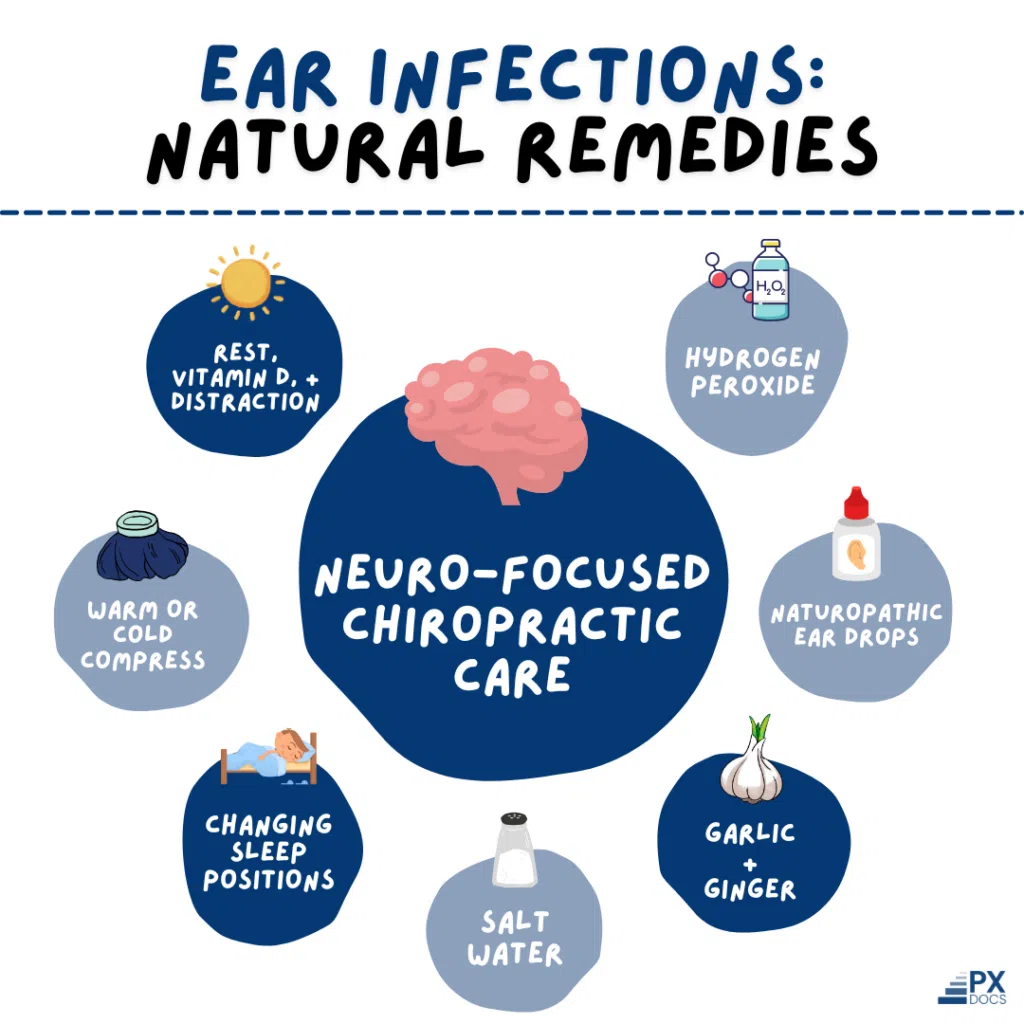
There’s no single best remedy, because relief and prevention are two different jobs. The fastest comfort usually comes from a warm compress and rest; the deepest prevention comes from restoring drainage and calming the nervous system. Below are the options we walk parents through, starting with the one that addresses the root cause and moving through the at-home comfort measures you can use tonight.
Neurologically-Focused Chiropractic Care
Every parent wants to know one thing when their child is hurting: what’s the root cause? That’s the entire focus of a Pediatric Chiropractor in the PX Docs Network, and it’s what sets this approach apart from symptom-focused care.
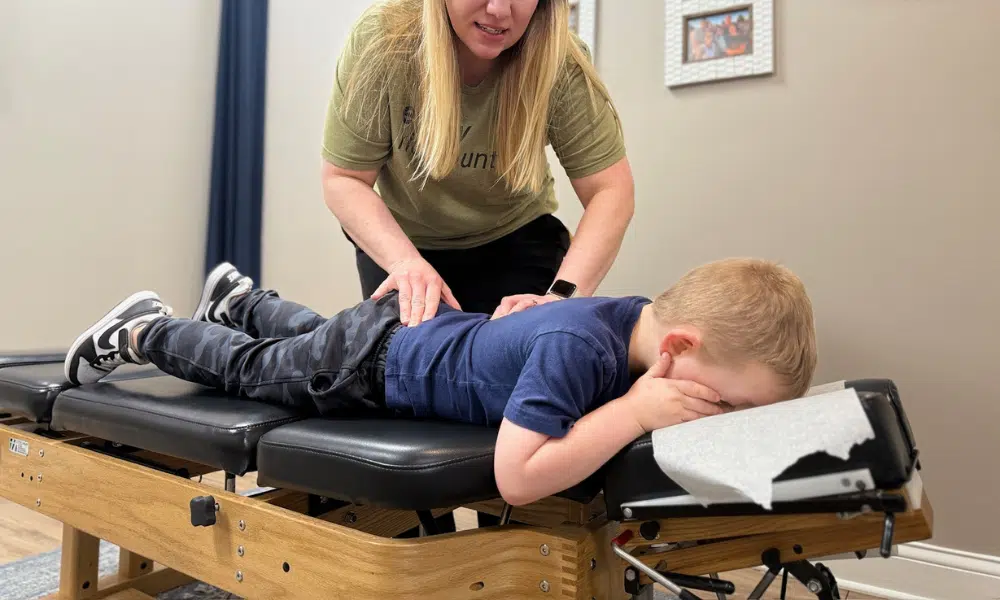
If the root cause of recurring ear infections is neurological, interference from subluxation (misalignment, joint fixation, and neurological interference) keeps the drainage muscles tight and the immune system inflamed, then the most direct help is also neurological. A gentle, specific chiropractic adjustment, safe even for newborns, does two things that diet and supplements simply can’t reach.
It restores movement, helping the ears, sinuses, and lymphatics drain. And it helps shift the nervous system off the gas pedal and onto the “brake pedal,” the parasympathetic, rest-and-regulate side that calms inflammation and supports immune function. One of the most common things parents report after the first few adjustments is that their child finally starts draining: clearer ears, looser congestion, better sleep.
To see where that interference is and how significant it is, PX Docs offices use INSiGHT Scans, three non-invasive measurements (thermal, sEMG, and heart rate variability) that locate and grade nervous system stress. These scans do not diagnose or treat any disease or condition, not even back pain; they measure how the nervous system is functioning so care can be tailored to your child.

Older research supports the connection too. A retrospective study of children with ear infections found that 93% of episodes improved while under chiropractic care, with most resolving in 10 days or fewer. And a cohort study in BMC Pediatrics found that severe restriction of the temporal bone, the bone the eustachian tube depends on, is a measurable risk factor for acute ear infections in young children, reinforcing how much the mechanics of the head and neck matter.
Warm or Cold Compress
Ear pain has a way of spiking late at night and on weekends, exactly when you can’t get in to see anyone. A compress is the simplest first move. We recommend starting with warmth: heat relaxes the muscles around the ear and encourages drainage, and if there’s wax in the mix, it helps that move too.
Run a clean towel under warm-to-hot water (warm enough to soothe, never hot enough to burn), wring it out, and lay it over your child’s ear while they rest on their side. After 10–15 minutes, have them roll over so the sore ear is facing down with the reheated compress beneath it, letting gravity and warmth assist drainage for another 10–15 minutes. If warmth doesn’t seem to help, a cool compress can numb the pain instead; some kids simply prefer one over the other.
Rest, Vitamin D, and Movement
Rest is when healing happens, so protect sleep fiercely during an infection. If your child is fighting sleep because of the pain, see our guide to natural sleep remedies for kids. Vitamin D supports healthy immune function and is one of the simplest daily habits for fewer infections overall, especially in the darker winter months.
And don’t forget movement, the most underrated piece. Even a sick kid benefits from gentle activity: a slow walk, light play, a warm bath, and some gentle massage along the neck and below the ear in a downward direction toward the collarbone. The goal is literally, mechanically moving fluid through the body. A child parked on the couch all day drains less than one who’s up and moving a little.
Hydration
Fluids keep mucus thin and moving instead of thick and stuck. Offer water often, and warm fluids like broth or caffeine-free herbal tea can be especially soothing. For babies, continue regular nursing or feeding. Staying well hydrated supports every part of the drainage pathway you’re trying to keep open.
Salt Water
If your child is old enough to gargle safely, a warm salt-water rinse (about a teaspoon of salt in a cup of warm water) can ease a sore, swollen throat that’s traveling alongside an ear infection. Because the throat and ears share the same drainage system, calming throat inflammation can take some pressure off the ears. Never put salt water directly into the ear.
Hydrogen Peroxide
A few drops of hydrogen peroxide in the outer ear canal is a long-used folk remedy thought to help loosen debris and wax that block drainage. Use it sparingly and only for an outer-ear issue. Skip it entirely and call your provider if there’s any drainage or discharge, if you suspect a ruptured eardrum, or if ear tubes are in place.
Ginger
Ginger has natural anti-inflammatory properties. A little warmed ginger juice applied around the outer ear (never inside the canal) may help soothe pain, and ginger in warm tea or food supports the body more broadly during illness. As with any oil or liquid near the ear, keep it out of the ear canal itself.
Naturopathic Ear Drops
Garlic-mullein and other herbal ear drops are popular for soothing ear discomfort, and many families find them comforting. Two cautions worth taking seriously: only use them when the eardrum is intact (never with discharge, a suspected rupture, or ear tubes), and don’t push anything solid into the ear; garlic cloves and similar “remedies” cause real harm and land kids in the ER. Warm the drops to body temperature and use only a few drops with your child lying on their side.
Changing Sleep Positions
Lying flat lets fluid pool in the middle ear, which is why ear pain so often worsens at bedtime. Slightly elevating your child’s head, with an extra pillow under the head for older kids, or a small wedge under the mattress (never pillows loose in a crib or under a baby), can ease pressure and help fluid move. Encouraging them to sleep with the sore ear facing down on a warm compress, as described above, can help too.
What Causes Ear Infections in Children?
Ear infections happen when fluid builds up in the middle ear and can’t drain out. The conventional explanation is that young kids have more horizontal eustachian tubes, so fluid pools and bacteria or viruses move in. That gets the drainage piece partly right, but it misses the mechanism, and the mechanism is the whole story.
Eustachian tube drainage isn’t mainly about gravity. It’s about movement. A tiny muscle called the tensor veli palatini attaches to the eustachian tube and, with each swallow and yawn, opens and pumps fluid out of the middle ear, down through the lymphatics and throat, into the gut where the immune system handles it. Think of it like the way your gut moves food along: not by gravity, but by a wave of coordinated muscle movement. When that movement stalls, fluid sits, and a warm, wet, stagnant middle ear is exactly where infections take hold.
This is also why kids get more ear infections in winter. It’s not simply “cold and flu season.” It’s that kids move less, they’re inside, they’re on the couch and the iPad, and a body that moves less drains less.
So any real ear infection home remedy has to do one of two things: ease the pain and inflammation right now, or get the fluid moving and keep it moving. The best ones do both.
Why Do Some Kids Keep Getting Ear Infection After Ear Infection?
If your child gets one ear infection with a bad cold, that’s fairly normal. If they’re getting them over and over, something deeper is going on, and it usually traces back to how that little drainage muscle is being controlled.
Muscles only do what their nerves tell them to do. The tensor veli palatini and the surrounding muscles of the ear, throat, and neck are run by nerves that originate in the brainstem and upper neck. When those nerves are working well, drainage works well. When they’re not, the muscle loses its tone and coordination, and the plumbing backs up.
What interferes with those nerves? In the kids we see with chronic ear infections, the same pattern shows up in the case history again and again:
- Birth interventions and birth trauma, such as forceps, vacuum extraction, induction, and C-section delivery
- Early infant struggles like colic, reflux, and constipation
- Early and repeated rounds of antibiotics and steroid-based medications
- A diet high in sugar, processed foods, and inflammatory ingredients
Those early physical stressors, especially to the upper neck during birth, can create what’s called a subluxation: a misalignment and fixation of the spine that produces neurological interference, disrupting the normal communication between the brain and body. That interference shifts a child’s nervous system into a sustained “gas pedal” state, what we call sympathetic dominance, the fight-or-flight side stuck on.
Sympathetic dominance does two damaging things at once. First, it ratchets up tension in the muscles of the upper neck and throat, including the tensor veli palatini, so drainage stalls. Second, it leaves the immune system in a pro-inflammatory state that produces more mucus. That’s the one-two punch behind recurring ear infections: impaired drainage and extra fluid to drain. Poor plumbing and an overloaded system at the same time.
How Are Ear Infections Connected to Other Childhood Conditions?
This matters beyond the ears. The same nerve that helps regulate inflammation and immune response, the vagus nerve, runs from the brainstem through the upper neck and down into the heart, lungs, and gut. The vagus nerve is essentially the immune system’s off switch: it detects inflammation and sends the calming signals that tell the body to resolve it. When upper-neck subluxation and sympathetic dominance compromise that nerve, the off switch gets sticky.
That’s why a baby who had a colicky, arching, hard-to-latch start so often grows into a toddler with recurring ear infections, and sometimes into a child with constipation, sensory processing challenges, anxiety, asthma, or allergies. These aren’t separate problems with separate causes. They’re the same underlying nervous system dysregulation showing up at different ages. Kids don’t “grow out of” these things as often as they grow into the next version of them. Addressing the root early is how you change that trajectory.
When Should You See a Doctor for a Child’s Ear Infection?
Home remedies are for comfort and support, not a substitute for medical evaluation when one is needed. Seek care if your child has a high or persistent fever, severe or worsening pain, symptoms lasting more than 2–3 days without improvement, fluid or pus draining from the ear, signs of significant hearing trouble, or if they’re very young or seem notably unwell or lethargic. Trust your gut: you know your child. A “watch and wait” window is reasonable for a mild, uncomplicated infection, but persistent or severe symptoms deserve a professional’s eyes.
It’s also worth understanding the conventional cascade so you can make informed decisions. Ear infections are the number one reason parents bring kids to the pediatrician, and they account for roughly 25% of all antibiotics prescribed to children each year, with antibiotics still prescribed in the large majority of cases, even though most ear infections are viral and antibiotics do nothing for viruses.
Finding Real, Lasting Relief
You can absolutely soothe tonight’s ear pain with a warm compress, rest, fluids, and a little elevation, and you should. But if your child is stuck in a cycle of infection after infection, comfort measures alone won’t change the pattern, because they don’t touch the reason the fluid isn’t draining.
The families whose kids stop getting ear infections aren’t the ones with the perfect remedy stash. They’re the ones who got to the root: a nervous system shifted off the gas pedal, drainage restored, the immune system regulated and resilient. That’s the difference between managing ear infections and ending them.
If you’re ready to find out what’s driving your child’s ear infections, find a trained PX Doc near you and ask about INSiGHT Scans. There’s real hope here, and real answers.
Frequently Asked Questions
Can you care for a child’s ear infection at home without antibiotics?
Often, yes. Most pediatric ear infections are viral, and antibiotics don’t work on viruses, which is why the AAP and CDC support a 2–3 day “watch and wait” window for mild, uncomplicated cases. During that time, a warm compress, rest, hydration, head elevation, and gentle movement can keep your child comfortable while their body clears the infection. Severe pain, high fever, ear drainage, or symptoms that drag on beyond a few days warrant a call to your provider.
Why does my child keep getting ear infections even though we eat well and avoid antibiotics?
Clean eating and avoiding unnecessary medications reduce the inflammatory load, and that genuinely helps. But if subluxation from birth trauma is still present, the nerves controlling the eustachian tube’s drainage muscle stay compromised, so the plumbing is impaired at a level that diet and supplements can’t reach. That’s why Neurologically-Focused Chiropractic Care is often the missing piece for families already doing everything else right.
Are ear infections in kids usually caused by bacteria?
No. The majority of childhood ear infections are viral, not bacterial. This is the central reason research dating back roughly 40 years supports watchful waiting over automatic antibiotics, since antibiotics have no effect on viral infections. They also carry real downsides, disrupting the gut microbiome and immune development, which is why so many parents look for natural options first.
What does birth trauma have to do with ear infections?
Birth interventions like C-sections, forceps, vacuum extraction, and induction can place physical stress on a newborn’s upper neck and brainstem, creating subluxation. That subluxation pushes the nervous system into sympathetic dominance, which simultaneously tightens the muscles that drain the eustachian tube and drives a more inflammatory, mucus-producing immune state. Children who had colic or latching trouble as infants are especially likely to develop recurring ear infections for this reason.
Why don’t ear tubes fix the problem for good?
Ear tubes mechanically force fluid out, but they don’t restore the natural neuromuscular drainage that failed in the first place. Many children push the tubes out, and the infection cycle restarts, sometimes with added scar tissue. From there, the conventional path often leads to tonsil and adenoid removal, which moves the same unresolved drainage problem deeper rather than solving it.
What is the tensor veli palatini, and why does it matter?
The tensor veli palatini is a small muscle attached to the eustachian tube that pumps fluid out of the middle ear with each swallow and yawn. Like any muscle, it only works as well as the nerves controlling it. When the upper-neck nerves are compromised by subluxation, this muscle loses its tone, drainage stalls, and fluid collects, setting the stage for infection. Restoring nerve function through gentle chiropractic care helps the muscle and the drainage work again.
Is chiropractic care safe for a baby or young child with ear infections?
Adjustments for infants and young children are extremely gentle, often no more pressure than you’d use to check a tomato for ripeness, and are tailored to the child using INSiGHT Scan findings. The aim isn’t to “treat” the ear infection but to remove nervous system interference so the body can drain, regulate, and heal on its own. Look for a Pediatric Chiropractor trained in this neurological approach.