
As a parent, it’s natural to eagerly await your child’s first words and delight in their growing vocabulary. But what happens when your toddler’s speech development seems to lag behind their peers? You may find yourself asking questions like, “Is my child using enough words?” or “Should they be speaking more clearly by now?”
If these concerns sound familiar, you’re not alone. In fact, one in five children learns to talk or use words later than their peers. While every child develops at their own unique pace, sometimes a speech delay can be a sign of an underlying issue that needs attention.
We understand the worry and frustration that come with a child’s speech delay. We also believe that by identifying and addressing the root cause of the problem, we can help children reach their full potential for communication and overall development.
In this article, we’ll dive deeper into speech delay in toddlers, explore factors that can contribute to this common developmental concern, and introduce a unique approach to promoting healthy speech and language skills: Neurologically-Focused Chiropractic Care.
Understanding Speech Delay in Toddlers
Speech delay is a term used to describe a delay in a child’s ability to communicate verbally. While every child develops at their own pace, there are general milestones that can help parents and caregivers gauge their child’s progress and identify potential concerns.
Typical Speech and Language Developmental Milestones:
- 12 months: Uses simple gestures, such as waving “bye-bye,” and may say a few words like “mama” or “dada”
- 18 months: Has a vocabulary of around 10-20 words, points to familiar objects when named, and follows simple commands
- 24 months (2 years): Combines two words together, has a vocabulary of about 50 words, and is understood by familiar listeners about 50% of the time
- 36 months (3 years): Uses three-word sentences, has a vocabulary of about 200 words, asks simple questions, and is understood by most people
Approximately 50% of children delayed in language at age 2 catch up by age 3. While minor variations in these milestones are normal, significant delays or a lack of progress may indicate a speech delay.
Some common signs of delayed speech in toddlers include:
- Limited vocabulary compared to peers
- Difficulty combining words into phrases or sentences
- Unclear pronunciation or difficulty being understood
- Relying on gestures instead of words to communicate
- Frustration or tantrums when trying to communicate
- Not responding consistently to their name or simple instructions
If you notice any of these signs or have concerns about your child’s speech development, early intervention can change a child’s developmental path and improve outcomes for children, which can make a significant difference in helping your child develop their communication skills and overall development.
What Causes Speech Delay in Toddlers?
To really understand why speech delays happen, we have to look at how speech develops inside the nervous system. Speech isn’t just about talking — it’s a coordinated neurological sequence that relies on the brain and body communicating clearly and efficiently.
Here are the three core components of that process:
1. Sensory + Receptive Input:
Before a child can form words, their brain has to take in sound, language, and meaning. This requires strong sensory processing, especially through the auditory system and central nervous system.
2. Integration + Processing:
Next, the brain has to organize and interpret all of that incoming information. For many kids with speech delays, this is where things slow down. If the brain is disorganized, overwhelmed, or not efficiently integrating sensory input, language processing becomes much harder.
3. Motor Output:
Finally, once the brain has processed the information, it sends signals through the nerves to the muscles of the mouth, tongue, and diaphragm to create speech. This is the part everyone sees — but it’s actually the end of the chain.
The common misconception is that speech delays are mostly an output problem (weak mouth muscles, difficulty forming sounds, etc.). But for many kids, the real challenges begin much earlier — in the sensory and integration stages. If the nervous system is stressed, uncoordinated, or overloaded, the brain simply can’t process and organize language efficiently.
Neurological stress and subluxation, particularly in areas like the brainstem and vagus nerve, can disrupt all three stages long before a child attempts to speak.
Because most traditional providers don’t assess the nervous system for subluxation or dysregulation, this root cause often goes undetected and unaddressed. And when the neurological foundation isn’t addressed, progress with speech can be slow, inconsistent, or frustrating for families.
So what gets the brain and nervous system so off track and stressed?
For many kids, it’s a buildup of stressors that starts long before speech delays ever show up. Preconception and fertility challenges, prenatal stress, birth trauma, and exposure to medications or toxins can overwhelm a developing nervous system. When these layers stack up, they can disrupt the brainstem, vagus nerve, and the pathways responsible for processing, coordinating, and producing speech.
The most common — yet most overlooked — contributor to speech delays we see in clinical practice is birth intervention and birth trauma. Deliveries involving forceps, vacuum extraction, induction, or C-section can significantly increase the likelihood of speech delays, especially in more severe cases like apraxia of speech. We also consistently see a connection with chronic ear infections, torticollis, and plagiocephaly, which often stem from the same early birth-related stress.
These interventions place a large amount of pressure and tension on the cranial nerves, brainstem, upper neck, and vagus nerve, leading to a neuromuscular dysfunction called subluxation. Subluxation disrupts the neurospinal communication pathways that govern speech perception, coordination, and production — making it much harder for a child’s speech to develop normally.
Conventional Approaches to a Toddler Speech Delay
When a child is diagnosed with a speech delay, the most common conventional approaches include speech therapy and occupational therapy. These therapies aim to help children develop their communication skills and overcome challenges related to speech and language development.
Speech therapy focuses on improving a child’s ability to produce and use speech sounds, as well as vocabulary and grammar. Speech-language pathologists (SLPs) work with children through play-based activities, exercises, and targeted interventions to help them develop their expressive and receptive language skills. They may also teach children alternative communication methods, such as sign language or picture exchange systems, to help them communicate more effectively.
Occupational therapy, on the other hand, focuses on helping children develop the fine motor skills, sensory processing abilities, and overall coordination needed for successful communication. Occupational therapists (OTs) may work on skills such as oral-motor control, feeding, and self-regulation, which can all impact a child’s ability to communicate effectively.
While speech therapy and occupational therapy can be very valuable tools in helping children with speech delays, they often focus primarily on the last motor output component of the delay rather than addressing the deepest layers of the underlying root cause. These conventional approaches may not fully consider the nervous system’s role in speech development, nor how factors such as subluxation and neurological dysfunction can impact a child’s communication skills.
We work alongside many skilled therapists and consistently see children make huge leaps in progress once their underlying nervous system function is optimized. In some cases, kids can even reach their goals without ongoing therapy because the foundation for learning and development has been fully restored.
The PX Docs Approach: Neurologically-Focused Chiropractic Care
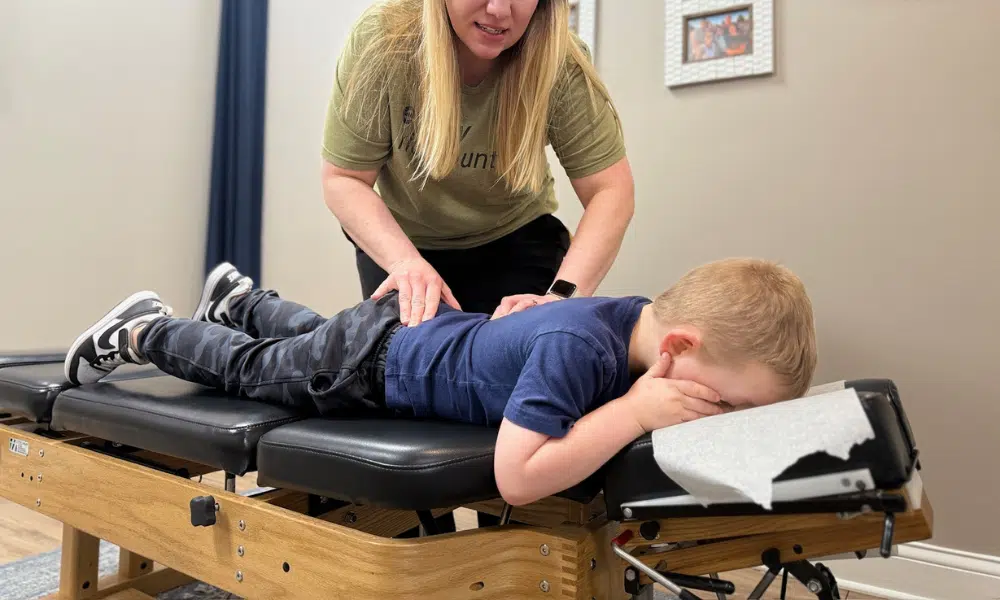
We believe that the key to helping children overcome speech delays lies in addressing the root cause of the problem: nervous system dysregulation. Our unique approach, Neurologically-Focused Chiropractic Care, is designed to identify and address the underlying neurological imbalances that can impact a child’s speech development.
Central to our philosophy is the understanding that subluxation can lead to imbalances in the Autonomic Nervous System and vagus nerve. These imbalances can interfere with the proper development and function of the neural pathways responsible for speech and language.
Subluxation can disrupt the delicate balance between the sympathetic and parasympathetic branches of the Autonomic Nervous System, leading to chronic stress and impaired nervous system regulation. Additionally, dysfunction in the vagus nerve, which plays a crucial role in regulating speech, swallowing, and vocal cord function, can further contribute to speech delays.
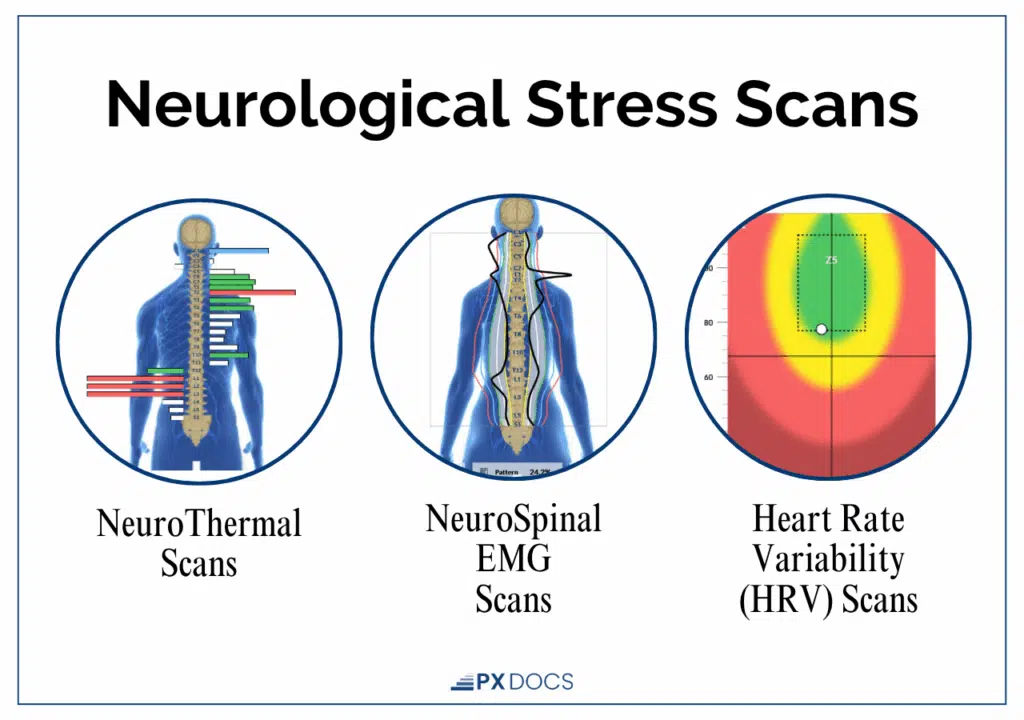
To accurately identify areas of neurological stress and dysfunction, PX Docs practitioners use advanced diagnostic tools called INSiGHT scans. These scans include:
- Thermal scanning: Measures temperature differences along the nervous system, indicating areas of inflammation and autonomic nervous system imbalance
- Surface electromyography (sEMG): Assesses neuromuscular tension and imbalances related to subluxation
- Heart rate variability (HRV): Evaluates the balance between the sympathetic and parasympathetic nervous systems and overall neurological adaptability
By analyzing the results of these scans, our doctors can pinpoint the specific areas of the nervous system that require attention and develop personalized care plans to address each child’s unique needs.
The benefits of Neurologically-Focused Chiropractic Care for children with speech delays are far-reaching. Not only do many children experience improvements in their communication skills, but they also often show enhanced overall development, including better coordination, emotional regulation, and immune function.
Moreover, our approach is entirely drug-free and non-invasive, making it a safe and natural choice for supporting children’s healthy development.
Empowering Parents to Take Action
If you suspect your child may have a speech delay, it’s essential to trust your instincts and take action. Early intervention is crucial for helping children overcome developmental challenges and reach their full potential.
One of the most important steps you can take is to have your child evaluated by the experts at PX Docs, who specialize in assessing nervous system function. By focusing on the nervous system first, we uncover the root causes that may be affecting your child’s development and set the stage for more effective progress. A Neurologically-Focused Approach to care ensures that therapies like speech or occupational therapy build on a strong, properly functioning foundation—helping your child reach their full potential faster.
We believe that every child deserves the opportunity to thrive, and we’re committed to empowering parents with the knowledge and resources they need to make informed decisions about their child’s health.
By understanding the impact of subluxation, autonomic nervous system imbalance, and vagus nerve dysfunction on speech development, you can take a proactive approach to support your child’s well-being.
Reaching Your Child’s Communication Potential
Speech delay in toddlers is a common concern for parents; in fact, it is the most common developmental delay in children. While it can be a source of worry and frustration, it’s important to remember that hope and help are available.
Our Neurologically-Focused Chiropractic Care approach aims to identify and address the neurological imbalances that can impact a child’s speech development. By utilizing advanced diagnostic tools and providing personalized care plans and adjustments, we strive to restore optimal nervous system function and create a solid foundation for communication skills to flourish.
If you’re ready to take the next step in supporting your child’s speech development, we invite you to visit the PX Docs Directory and find a qualified practitioner near you. Our compassionate and knowledgeable doctors are dedicated to helping children overcome challenges and reach their full potential.
Remember, as a parent, you are your child’s greatest advocate. By seeking a Neurologically-Focused approach to care and trusting your instincts, you can empower your child to reach their communication potential and thrive in all aspects of their life.