

As a parent, it’s tough to watch your child struggle — whether it’s mood swings, digestive issues, trouble focusing, or getting sick over and over again. You just want them to feel steady, confident, and capable of handling whatever life throws their way.
Stress is a normal part of life. Our kids’ bodies were designed to adapt to challenges, recover, and bounce back. But today, over 40% of children are facing chronic conditions — asthma, allergies, ADHD, anxiety, and more — and it’s clear that their nervous systems are having a harder time keeping up.
The key isn’t just treating symptoms; it’s understanding how their body handles stress in the first place. A major player in that process is the Hypothalamic-Pituitary-Adrenal (HPA) axis — the system that helps the body respond to stress and return to balance. When the HPA axis gets out of sync, kids don’t adapt as well. Everyday challenges feel bigger, reactions feel stronger, and recovering from stress becomes much harder than it should.
In this article, we’ll break down how imbalances in the HPA axis impact your child’s ability to adapt — and, more importantly, how a Neurologically-Focused approach can help restore balance, resilience, and the capacity to handle life with more ease, no matter what health challenges they’re facing.
What is the HPA Axis?
The Hypothalamic-Pituitary-Adrenal (HPA) axis is a complex network of three endocrine glands that work together to regulate our body’s response to stress and maintain overall balance, or homeostasis. Think of the HPA axis as your body’s built-in alarm system, ready to respond to any perceived threat or challenge.
The three main components of the HPA axis are:
- Hypothalamus: Located at the base of the brain, the hypothalamus is the command center of the HPA axis. It receives input from various parts of the brain and body, assesses potential stressors, and initiates the stress response when necessary.
- Pituitary Gland: Often referred to as the “master gland,” the pituitary gland is situated just below the hypothalamus. It receives signals from the hypothalamus and secretes hormones that regulate various bodily functions, including adrenal gland activity.
- Adrenal Glands: Situated atop the kidneys, the adrenal glands are the final target of the HPA axis. They produce and release cortisol, the primary stress hormone, in response to signals from the pituitary gland.
The primary function of the HPA axis is to mobilize the body’s resources in times of stress, preparing us to either confront the challenge head-on or escape to safety. This “fight or flight” response is crucial for our survival, but when the HPA axis is constantly activated due to chronic stress, it can lead to imbalances that affect nearly every system in the body.
A well-functioning HPA axis is essential for maintaining optimal health and resilience in the face of life’s challenges. However, various factors can disrupt the balance of the HPA axis, setting the stage for a wide range of chronic health issues.
How the HPA Axis Works
The Hypothalamic-Pituitary-Adrenal axis is a fascinating example of the body’s innate wisdom, constantly working to maintain balance and adapt to life’s challenges. Let’s take a closer look at how this intricate system responds to stress and regulates various bodily functions.
Stress Response Mechanism:
- When the hypothalamus perceives a stressor, it releases Corticotropin-Releasing Hormone (CRH).
- CRH travels to the pituitary gland, triggering the release of Adrenocorticotropic Hormone (ACTH).
- ACTH enters the bloodstream and makes its way to the adrenal glands, signaling them to produce and release cortisol.
- Cortisol, the primary stress hormone, initiates a cascade of physiological changes designed to help the body cope with the stressor, such as increased heart rate, blood pressure, and blood sugar levels.
The HPA axis has a built-in regulatory mechanism called the negative feedback loop to prevent the stress response from spiraling out of control. As cortisol levels rise, they signal the hypothalamus and pituitary gland to reduce the production of CRH and ACTH, respectively. This helps to bring the stress response to a close once the perceived threat has passed, allowing the body to return to a state of equilibrium.
Beyond its role in the stress response, the HPA axis regulates various body systems, ensuring they work together seamlessly to maintain optimal health. These systems include:
- Metabolic System: The HPA axis helps regulate blood sugar levels, energy storage, and expenditure.
- Cardiovascular System: Cortisol released by the HPA axis has been found to affect arteries and blood pressure.
- Immune System: The HPA axis plays a key role in regulating inflammation and immune function.
- Reproductive System: Studies show that chronic HPA axis activation can disrupt reproductive hormones and sexual function.
- Central Nervous System: Research has proven that the HPA axis influences mood, memory, and cognitive function by its interactions with various brain regions.
The HPA axis doesn’t operate on its own — it’s completely controlled and coordinated by the nervous system. The brain and brainstem act as the command center, constantly taking in information about your child’s environment, stress levels, and internal state. When the nervous system is calm and regulated, it signals the HPA axis to function smoothly, helping the body handle stress and return to balance. But when the nervous system is overwhelmed or stuck in fight-or-flight, those same signals become distorted, causing the HPA axis to overreact, underreact, or stay “on” far longer than it should. That’s why supporting the nervous system is essential if we want the HPA axis — and your child’s stress response — to work the way it was designed to
What is HPA Axis Dysfunction? Factors Leading to The “Perfect Storm”
While the HPA axis is designed to help us adapt to life’s challenges, various factors can disrupt its delicate balance, leading to dysfunction. At PX Docs, we refer to this phenomenon as the “Perfect Storm“—a combination of stressors that can overwhelm the developing nervous system and set the stage for chronic health issues.
The “Perfect Storm” often begins before a child is even born, with the mother’s experience of stress and anxiety during pregnancy or even prior to that in preconception or fertility challenges. Research has shown that maternal stress can have a significant impact on fetal development, including the development of the HPA axis. When a mother experiences chronic stress, her body releases higher levels of stress hormones, which can cross the placenta and affect the growing baby.
Birth trauma and interventions can also contribute to the development of HPA axis dysfunction. Procedures such as forceps delivery, vacuum extraction, and cesarean section can cause physical strain and injury to the delicate tissues of the upper neck and brainstem, leading to subluxation and nervous system dysfunction.
Early childhood stressors, such as exposure to toxins and antibiotic use, can further exacerbate the problem. These factors can cause the nervous system to become stuck in a state of “fight or flight,” perpetuating the cycle of stress and dysfunction. This can lead to challenges like colic, reflux, and chronic ear infections.
The consequences of HPA axis dysfunction can be far-reaching, affecting nearly every aspect of a child’s health and well-being. Some potential consequences include:
- Immune System Dysfunction: Chronic HPA axis activation can suppress immune function, leading to increased susceptibility to inflammation and autoimmune conditions.
- Mental Health Conditions: HPA axis imbalances have been linked to a higher risk of anxiety, depression, and other mood conditions.
- Metabolic Diseases: Dysregulation of the HPA axis can contribute to the development of obesity, insulin resistance, and type 2 diabetes.
- Cardiovascular Diseases: It’s been found that prolonged exposure to high cortisol levels can lead to hypertension, stroke, and an increased risk of heart attacks.
- Sensory Processing Challenges: When the HPA axis is chronically activated, the brain shifts into “survival mode,” prioritizing threat detection over higher-level processing. This affects the areas of the brain responsible for filtering, organizing, and integrating sensory information. Children may become overly sensitive to sounds, textures, lights, and movement, or they may appear under-responsive and disconnected. Elevated stress hormones can also disrupt vagus nerve function, making it harder for the nervous system to regulate sensory input. The result is a child who struggles to adapt to everyday environments, transitions, and stimuli—not because they’re “being difficult,” but because their nervous system is overwhelmed.
By understanding The “Perfect Storm” and its potential impact on the HPA axis, parents and healthcare providers can take proactive steps to support healthy nervous system regulation and help prevent the development of chronic health issues.
The PX Docs Approach to HPA Axis Dysfunction
As a parent, it can be frustrating and disheartening to watch your child struggle with chronic health issues, only to be met with a lack of answers and limited care options from conventional medical approaches. Often, these approaches focus on managing symptoms through medication without addressing the underlying cause of the dysfunction.
At PX Docs, we understand that true healing requires a different approach – one that targets the root of the problem: nervous system imbalance and subluxation. Our Neurologically-Focused Chiropractic Care is designed to identify and correct these underlying issues, providing a foundation for optimal health and well-being.
Using advanced diagnostic tools such as INSiGHT scans, our doctors can pinpoint areas of nervous system dysregulation and develop targeted care plans to restore balance. By gently addressing subluxation and promoting proper nervous system balance, we help to regulate the HPA axis and support its healthy function.
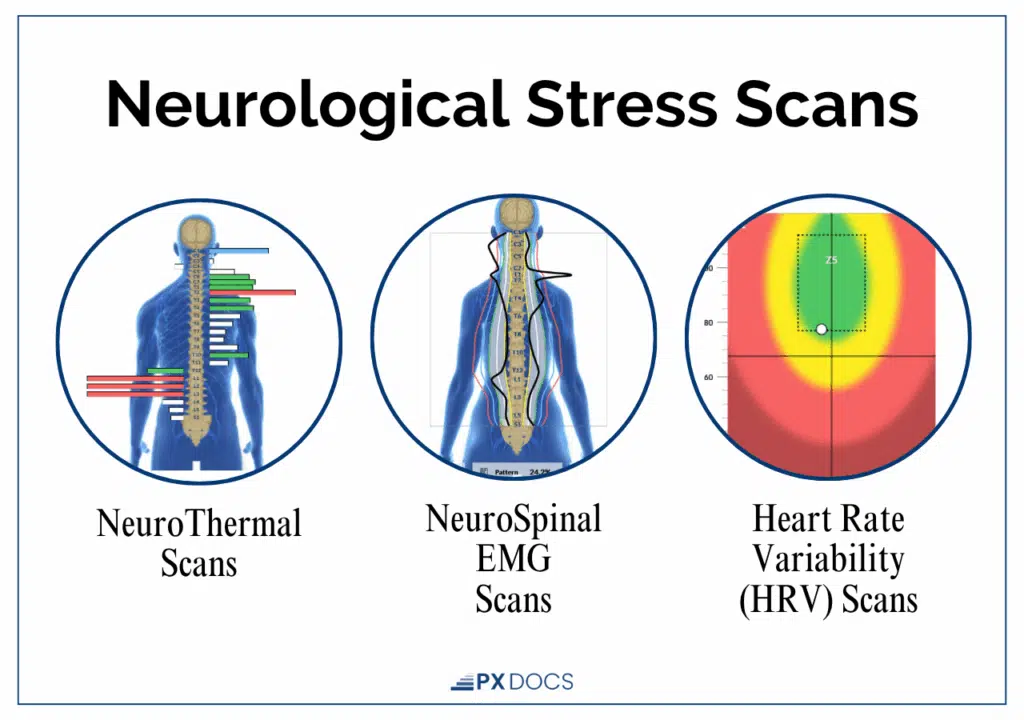
The benefits of this approach extend far beyond symptom relief. By optimizing HPA axis function, Neurologically-Focused Chiropractic Care can help to:
- Improve stress resilience: A well-regulated HPA axis enables children to better adapt to life’s challenges, bouncing back from stressors more easily.
- Enhance immune function: Balancing the HPA axis can help to reduce chronic inflammation and support a robust, responsive immune system.
- Promote emotional well-being: HPA axis dysfunction has been linked to mood disorders, and correcting imbalances can help to promote emotional stability and reduce the risk of anxiety and depression.
- Support optimal growth and development: A healthy HPA axis is crucial for regulating the hormones and processes that drive physical, cognitive, and social development.
By addressing the root cause of HPA axis dysfunction, rather than simply masking symptoms, Neurologically-Focused Chiropractic Care offers a pathway to lasting health and vitality. It’s a transformative approach that empowers parents to take control of their child’s well-being and unlock their full potential.
Empowering Parents to Support Their Child’s Health
As a parent, you play a crucial role in supporting your child’s health and well-being. By understanding the signs of HPA axis dysfunction and the importance of early intervention, you can take proactive steps to help your child thrive.
Some common signs of HPA axis dysfunction in children include:
- Frequent illnesses and slow recovery from infections
- Difficulty coping with stress or changes in routine
- Mood swings, anxiety, or depression
- Sleep disturbances or fatigue
- Digestive issues or food sensitivities
- Developmental delays or behavioral challenges
If you notice any of these signs in your child, it’s essential to seek help from a qualified healthcare provider who understands the role of the nervous system in overall health. Early intervention can make a significant difference in your child’s long-term well-being, preventing chronic health issues from taking root.
In addition to Neurologically-Focused Chiropractic Care, there are many things you can do at home to support your child’s HPA axis health:
- Create a nurturing, responsive environment that promotes feelings of safety and security
- Establish predictable routines to help your child feel grounded and secure
- Encourage regular physical activity and time in nature to reduce stress and promote balance
- Practice relaxation techniques, such as deep breathing or mindfulness, together as a family
- Prioritize sleep and nutrition to provide the building blocks for healthy development
By taking a proactive, drug-free approach to your child’s health, you can empower them to reach their full potential and navigate life’s challenges with resilience and vitality.
Supporting Your Child’s Innate Potential
The Hypothalamic-Pituitary-Adrenal axis is a complex and fascinating system that plays a vital role in our overall health and well-being. By understanding its function and the factors that can lead to dysfunction, we can take steps to support its healthy regulation and promote optimal development in our children.
Our mission is to empower parents with the knowledge and resources they need to make informed decisions about their child’s health. We believe that by addressing the root cause of HPA axis dysfunction through Neurologically-Focused Chiropractic Care, we can help children unlock their innate potential and thrive in all aspects of life.If you suspect your child may be struggling with HPA axis dysfunction, or if you simply want to give them the best possible foundation for lifelong health, we invite you to visit the PX Docs directory and find a qualified practitioner in your area. Together, we can create a brighter, healthier future for the next generation.