
Why Kids Get Stuck in the “Sick Cycle” After the Holidays
January and February bring some of the highest rates of childhood illness all year. While some of this is simply seasonal, there’s something else happening that makes post-holiday immune struggles particularly stubborn.
Research shows that even one night of disrupted sleep can suppress immune function afterward. Sugar consumption directly impacts white blood cell activity for hours at a time, and when kids are eating treats at multiple gatherings over several weeks, that effect compounds. Stress hormones from travel and routine disruption remain elevated long after you return home.
The result? Kids who never fully recover between illnesses. They get a cold, seem to get slightly better, then immediately catch something else. What we see clinically is a pattern of nervous system dysregulation that keeps children stuck in what we call the “can’t kick the sick” cycle.
Their immune systems aren’t weak; they’re just overwhelmed and operating without the proper neurological control they need to function effectively.
The Holiday “Perfect Storm” Your Child’s Body Experienced
The holidays aren’t just exhausting for you; they’re neurologically overwhelming for your child. Here’s what actually happened:
- Late nights and disrupted sleep schedules interrupt growth hormone release and the cellular repair your child’s immune system needs. The cortisol patterns that regulate stress response get thrown off, and it can take weeks to reestablish them, not just a few days of “back to normal” bedtime.
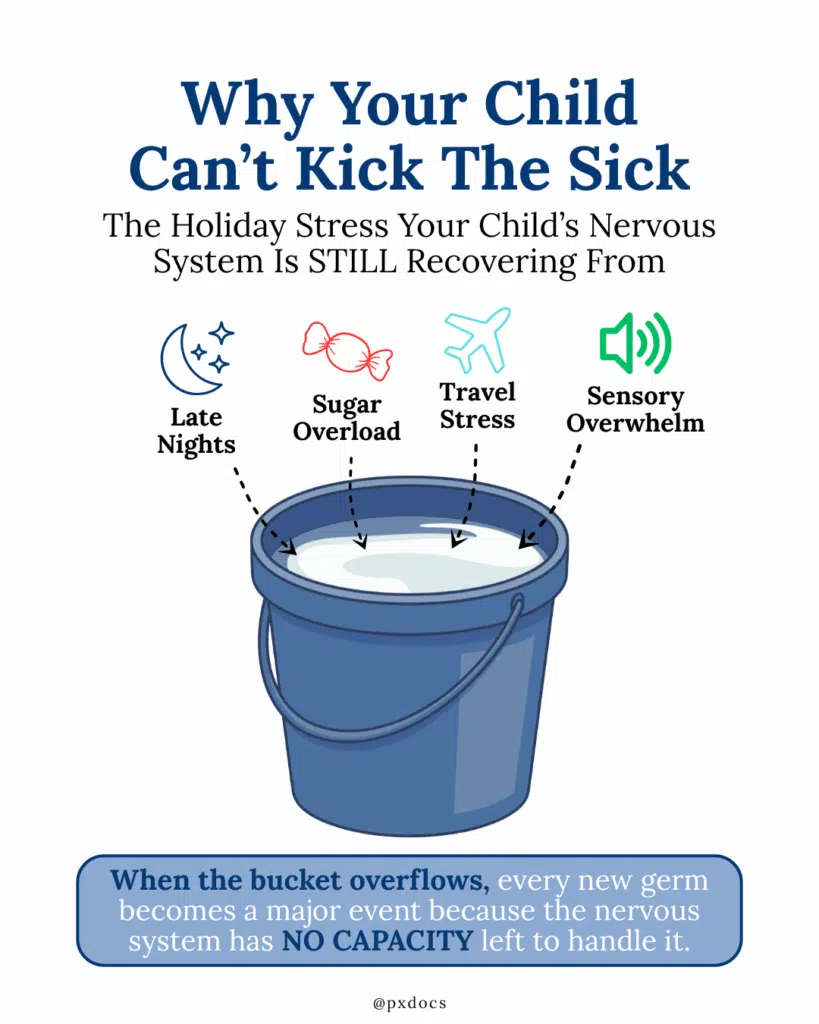
- Sugar overload at every gathering. Here’s what most parents don’t realize: sugar directly competes with Vitamin C for absorption at the cellular level. It also triggers inflammatory responses and disrupts the gut bacteria that make up 80% of your child’s immune system.
- Travel stress and constant new environments. Even if your child seemed excited, their nervous system could still be on high alert. Your child’s body sees each new environment as a potential threat, keeping their sympathetic nervous system, the “gas pedal”, pressed down hard.
- Excitement combined with sensory overwhelm. Loud gatherings, unexpected visitors, disrupted routines. Even “good” stress is still stress to a developing nervous system that thrives on predictability.
Here’s the critical piece: each of these stressors individually would be manageable. But when they all happen at once, over several weeks, the nervous system becomes overwhelmed. This creates what we call The “Perfect Storm” which is a cascade of stress that results in subluxation and dysautonomia, a state where the body gets stuck in fight-or-flight mode and can’t shift back to rest, digest, and heal.
Your Child’s Immune System Needs a Working Nervous System
Here’s what conventional medicine won’t tell you: your child’s immune system doesn’t operate independently. It’s completely controlled and regulated by the nervous system, specifically the vagus nerve—the longest cranial nerve in the body.
Think of the vagus nerve as the “cheat code” for immune function. When it’s working properly, it regulates inflammatory responses, controls lymphatic drainage (which is why kids get ear infections when this system backs up), manages gut immune function, where up to 80% of immunity lives, and modulates stress hormone production. The vagus nerve is the off-switch for inflammation.
But when holiday stress pushes your child’s nervous system into fight-or-flight mode, and it can’t shift back, the immune system becomes simultaneously suppressed (can’t fight effectively), hyperactive (overreacting to minor triggers), and exhausted (no reserves left). This is vagus nerve dysfunction in action.
You’ve probably noticed the visible signs: pale skin despite eating well, dark circles under their eyes that won’t fade, constant mouth breathing, and congestion that never fully clears. Your child gets sick, gets slightly better, then immediately gets sick again.
Here’s a helpful way to understand it: imagine your child’s stress capacity as a bucket. Before the holidays, that bucket might have already been half full from birth trauma, prenatal stress, or early childhood illnesses. Then the holidays dump in weeks of late nights, sugar, and travel stress. Now the bucket is overflowing, and there’s no room for even minor stressors. Every new germ becomes a major event because the nervous system has no capacity left to handle it effectively.
The 4-Pillar Plan to Rebuild Your Child’s Immune Resilience
Here’s what most parents miss: the ORDER of interventions matters as much as the interventions themselves. This is the proven framework that’s helped families break from the constant illness cycle.
Pillar 1: Restore Nervous System Function FIRST
This has to come first. Without proper nervous system function, nothing else works optimally. Vitamins can’t be absorbed properly when the gut is in sympathetic dominance. Sleep won’t be restorative when the body can’t activate parasympathetic nervous system function—the “brake pedal” that allows rest and healing.
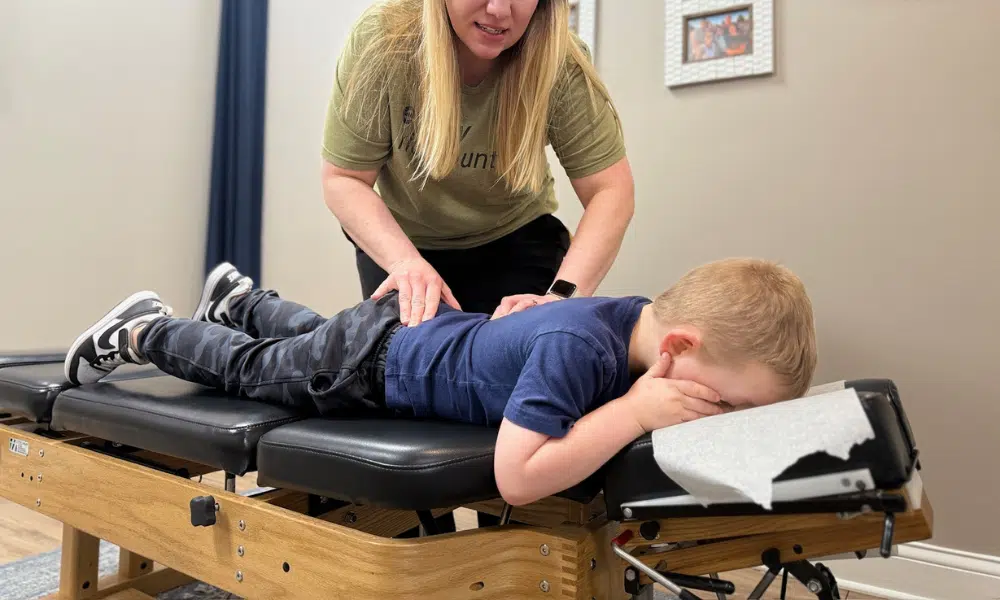
Neurologically-Focused Chiropractic Care removes the interference (subluxation) that is keeping your child’s nervous system stuck in stress mode. Gentle, specific adjustments help restore vagus nerve function and allow the autonomic nervous system to shift out of fight-or-flight. INSiGHT scans objectively measure this, showing exactly where the nervous system is stuck and tracking improvements over time.
Give this time before expecting major changes. The nervous system needs time to release accumulated stress patterns and rebuild healthy function.
Pillar 2: Reestablish Sleep as Non-Negotiable
Once the nervous system starts shifting out of stress mode, sleep becomes the foundation. Back to a consistent bedtime, even on weekends. Dark, cool room. No screens for two hours before bed. A calm, predictable routine.
Young kids need 10-12 hours, older kids need 9-11 hours. Growth hormone release, immune system repair, cellular detoxification, and nervous system reorganization all happen during deep sleep. Most parents see noticeable immune improvements within 7-10 days of consistent sleep.
Pillar 3: Get Them Moving Again
Your child’s lymphatic system (critical for immune function) doesn’t have a pump; it relies on movement to circulate and drain properly.
Aim for a minimum of 60 minutes of active play daily. Outside time is particularly important. Bundle up and get outside as much as possible. Movement activates lymphatic drainage, boosts natural killer cell activity, and helps regulate sleep and appetite.
Pillar 4: Clean Up the Diet (Sugar Detox)
Try cutting out processed sugar for at least 2 weeks. Focus on nutrient-dense whole foods, such as quality proteins, healthy fats, fruits, vegetables, bone broth, and real dairy. Plenty of water to support detoxification. If your child has excessive mucus or congestion, minimize dairy temporarily.
We know that being perfect on this is sometimes impossible. Strive to do 80% of these consistently to see a difference.
Natural Immune Support That Actually Works
Once the foundation (nervous system, sleep, movement, and clean eating) is in place, these targeted supports work significantly better.
Daily Immune Boosters for everyday support:
- Vitamin C: Supports white blood cell function and counteracts the inflammatory effects of stress
- Vitamin D: Critical for immune regulation, especially January through March when sun exposure is minimal
- Bee Propolis: Used by humans for its antimicrobial and anti-inflammatory properties
- Probiotics: Restore gut health after holiday sugar overload; 80% of immune function originates in the gut
- Omega-3 fatty acids: Reduce systemic inflammation from holiday stress
- Whole food smoothies: Pack concentrated nutrition into picky eaters
Long-Term Immune Builders for lasting resilience:
- Zinc: Critical for immune cell development and function, often depleted during stress and illness
- Vitamin A: Supports mucous membranes, your child’s first line of defense
- Bone broth: Provides gut-healing compounds and essential minerals
- Fermented foods: Rebuild healthy gut bacteria (yogurt, kefir, sauerkraut)
- Colorful produce: More variety equals more diverse phytonutrients
Building true immune resilience takes 90-180 days, not just a few weeks. You’re rebuilding your child’s long-term capacity to stay healthy.
When Your Child Gets Sick Right Now
If your child is actively battling illness, here’s the targeted approach that supports their body’s natural healing process.
- For fevers: Let them work unless they reach dangerous levels and signs of lethargy. Fever is your child’s immune system creating an inhospitable environment for pathogens. Focus on comfort and hydration. Know when to worry: lethargy, difficulty breathing, or severe signs that require immediate medical attention.
- For congestion and cough: Humidifier, elderberry syrup, raw honey for cough in kids over age one, plenty of fluids.
- For ear discomfort: Garlic mullein oil drops, warm compress, extra chiropractic adjustments.
- For sore throat: Raw local honey, warm liquids.
Always consult your child’s healthcare provider for guidance, especially for young infants or concerning symptoms.
Here’s something most parents don’t know: getting adjusted more frequently during acute illness helps. Adjustments support lymphatic drainage, restore vagus nerve function, and help the body complete healing more efficiently. Illnesses that used to last two weeks can now resolve in three to five days.
How Neurologically-Focused Chiropractic Care Restores Immune Function
At PX Docs, we’ve worked with thousands of families stuck in this exact pattern. The cycle: nervous system stressed → immune system suppressed → chronic illness → more stress → worse immune function. You have to break the cycle at the root: the nervous system.
INSiGHT scans identify exactly where you or your child’s nervous system is stuck in stress mode. Through gentle, specific adjustments, we remove the subluxation patterns that built up over the holidays, and often long before them.

As adjustments restore proper nervous system function, the vagus nerve comes back online. The body can shift out of constant fight-or-flight. The “brake pedal” starts working again. Inflammatory responses stuck in the “on” position can finally turn off. Lymphatic drainage starts flowing. The gut can properly digest and absorb nutrients and regulate immune responses.
We’re not just caring for the signs or suppressing immune responses. We’re restoring the nervous system’s ability to control and regulate immunity the way it was designed to function.Find a trained Neurologically-Focused Pediatric Chiropractor in your area through the PX Docs directory to schedule your child’s evaluation and take the first step toward breaking free from the “can’t kick the sick” cycle. Real healing is possible, and it starts with the nervous system.