
Why Is My Baby Crying in Their Sleep?
You finally got your baby to sleep, then 20 minutes later you hear crying from the monitor—but when you check, their eyes are still closed. Your baby is crying, making distressed sounds, maybe even thrashing around, yet they haven’t fully woken up.
If your baby frequently cries while sleeping, struggles to stay asleep, or can only sleep when held, that’s beyond typical infant sleep patterns. That’s a signal.
This article will cover the conventional explanations—sleep cycles, developmental leaps, teething, and all the reasons babies cry without fully waking. But we’ll also go deeper. We’ll explain the neurological reasons some babies struggle more than others, why their nervous systems can’t transition smoothly through sleep stages, and what that means for your baby’s development if left unaddressed.
Because your instinct says that something’s different? You’re right
How Baby Sleep Cycles Work (And Why They’re Different From Adults)
Your baby’s sleep looks nothing like yours. And that difference matters when you’re trying to understand why they cry in their sleep.
Adults spend about 20–25% of their night in active (REM) sleep, but babies spend roughly half of their sleep time there. During this active phase, their brains are incredibly busy processing, learning, and developing, which is why you see twitching, facial movements, irregular breathing, and sometimes brief crying.
It’s not distress, it’s development.
Because infant sleep cycles last only 45–60 minutes (compared to the 90-minute adult cycle), babies move between light and deep sleep much more often. Each transition creates a natural wake point where they might stir, cry out, or fully wake. Their nervous system is still immature, so these shifts can feel like jerky gear changes rather than smooth transitions.
What most sleep resources leave out is the role of the nervous system. When a baby’s nervous system is dysregulated, these natural transitions become harder. Instead of momentary stirring, you get crying. Instead of settling back to sleep, you get wake-ups. The mechanism that should guide them smoothly through sleep cycles simply isn’t functioning as well as it could.
7 Reasons Babies Cry in Their Sleep
1. Sleep Cycle Transitions
The most common reason babies cry in sleep happens during those 45-60 minute cycle transitions. As your baby shifts from deep sleep to light sleep, they partially rouse. Most babies make sounds, whimpering, grunting, or brief crying, then settle back within 30-60 seconds.
This typically peaks around 2-4 months when sleep cycles are maturing but haven’t fully organized yet.
2. Teething Pain
Teething pain doesn’t take a break at night. For many babies, it actually feels worse during sleep when there are fewer distractions. The pressure of emerging teeth can cause discomfort that shows up as crying or whimpering during sleep, usually starting around 6 months.
Signs it’s teething: drooling, swollen gums, hand-to-mouth behavior during the day, and crying that responds to teething interventions.
3. Hunger or Growth Spurts
Newborns and young infants need to eat frequently, sometimes every 2-3 hours around the clock. During growth spurts (typically around 2 weeks, 6 weeks, 3 months, 6 months, and 9 months), the need intensifies. Your baby may cry out in sleep as their body signals hunger, even before fully waking.
You’ll often see your baby rooting, sucking on their hands, or making increasingly insistent sounds before their eyes open.
4. Physical Discomfort
Temperature, wet diapers, gas, and uncomfortable positioning—all can trigger crying in sleep. Babies can’t adjust their blankets, roll away from discomfort, or fix problems themselves. They cry out, sometimes without fully waking, as their body registers that something isn’t right.
Gas is particularly common. When your baby’s digestive system processes milk, air bubbles can create pressure that’s painful enough to disturb sleep but not always enough to fully wake them.
5. Moro (Startle) Reflex
The Moro reflex—that sudden arm-flinging, body-jerking response—is a primitive survival reflex present from birth through about 4-6 months. When your baby transitions from one sleep stage to another, that shift can activate the Moro reflex.
The reflex itself can wake them partway, causing them to cry even though there’s no external threat. Some babies have much stronger Moro reflexes than others, startling themselves awake multiple times per night.
6. Developmental Leaps and Milestones
Learning to roll, sit, crawl, or stand doesn’t stop when your baby falls asleep. During sleep, their brain processes and practices these new skills. You might see your baby moving in their sleep—practicing rolling, doing “crawling” motions, even pulling to stand.
These practice sessions can disrupt sleep enough to cause crying, especially if your baby gets stuck in a position or if the movement startles them awake.
7. Illness or Ear Infections
Ear infections, colds, reflux, and other illnesses cause pain that worsens when lying flat. Your baby may fall asleep initially, but then cry out as pressure builds, congestion shifts, or reflux acts up. This crying usually sounds different—more distressed, harder to soothe, often accompanied by other symptoms like fever or unusual fussiness when awake.
These are all valid reasons babies cry in their sleep. Your pediatrician can rule out medical causes. Sleep consultants can help with cycle transitions and habits.
But if your baby cries frequently—multiple times every night, struggling to stay asleep for more than 20-30 minutes, only sleeping when held—there’s a neurological layer underneath all of this. Sometimes the issue isn’t what’s happening at any given moment.
It’s that your baby’s nervous system can’t handle normal stressors smoothly. Can’t transition between sleep stages without major disruption. Can’t activate the deep rest they need.
The Neurological Reason Some Babies Cry More Than Others
Let’s be clear about something. Occasional sleep crying is normal. Brief vocalizations during sleep cycle transitions are totally expected. But constant crying, multiple times per night, needing to be held just to sleep at all? That’s not temperament. That’s not “some babies are just like that.” That’s nervous system dysregulation.
Research backs this up. A 2021 study published in Frontiers in Pediatrics by Jan Hoeve evaluated 120 colicky babies and 117 non-colicky babies using a clinical vestibular dysregulation index. Results showed 98.3% of colicky babies scored positive for vestibular dysfunction compared to only 23.9% of non-colicky babies.
Think about that. Nearly every baby with extreme crying and sleep disruption showed measurable brainstem dysfunction. This is what happens when subluxation is present. A neurological dysfunction where interference patterns disrupt how the brain and body communicate. Like static on a phone line. The message gets garbled.
In babies, this subluxation is very common at the upper cervical spine and brainstem, right where the Autonomic Nervous System is controlled. When there’s dysfunction here, your baby’s body can’t regulate basic functions like sleep, digestion, and stress response well.
The result? Sympathetic dominance. Your baby gets stuck in survival mode, even during sleep. Their nervous system keeps signaling danger when there isn’t any. And you can’t just calm down a nervous system that’s physiologically stuck in fight-or-flight.
How Birth Trauma and Early Stress Create Sleep Struggles
This didn’t start when your baby was born. It started before.
We call it the “Perfect Storm,” a sequence of early-life stressors that accumulate and interact to disrupt neurological development. Not genetic destiny. Environmental cascade.
It starts before birth. Prenatal stress (maternal anxiety, difficult pregnancy, fertility challenges) creates a flood of stress hormones that cross the placenta. Your baby’s developing nervous system can get bathed in cortisol, essentially pre-programmed for high alert.
Then comes birth. C-sections, forceps applying pressure to the skull, vacuum extraction, prolonged labor, induction, and cord-wrapping all create physical trauma to your baby’s upper cervical spine and brainstem. The very first stress to their nervous system happens in those critical moments.
Finally, when babies enter the world, antibiotics, medications, environmental chemicals, and everyday toxins can easily add even more stress to their already sensitive nervous system.
But it continues. Colic, reflux, and constipation in those early weeks aren’t separate issues; they’re all expressions of the same underlying problem. Subluxation creates vagus nerve dysfunction, leading to dysautonomia. Each symptom perpetuates the others.
This is why some babies struggle so much more than others. Same parents, different birth experiences. One baby sleeps through the night at 8 weeks. The other screams for hours. It’s not about you. It’s about what happened to their nervous system during the most vulnerable period of development.
They don’t grow out of it; they grow into it. That colicky baby who can’t sleep becomes the toddler with constant meltdowns. The toddler with meltdowns becomes the kid diagnosed with ADHD. The neurology doesn’t change. It just gets different labels.
Not blaming parents. Not saying you caused this. Understanding what happened so we can help your baby’s nervous system heal.
Why Your Baby Can’t “Just Calm Down”
Think of your baby’s nervous system like a car with a Ferrari engine but 1978 Ford Fiesta brakes. The gas pedal (Sympathetic Nervous System) is powerful—great for alertness and responding to needs. But the brake pedal (parasympathetic/vagus nerve) barely works. To fall into deep sleep, your baby needs strong brakes. Without them, they cycle through light sleep only, waking frequently, crying as their body tries and fails to relax.
This is the sympathetic-parasympathetic imbalance at the heart of sleep struggles.
The gas pedal, your baby’s Sympathetic Nervous System, stays stuck on. Fight-or-flight during sleep. Heart rate elevated. Muscle tension maintained. Cortisol levels are high. Every small shift in sleep stage feels like a threat.
The brake pedal, the parasympathetic system controlled by the vagus nerve, can’t engage. Your baby literally can’t access the deep rest state needed for quality sleep. They stay in light, fragile sleep that breaks apart easily.
Some babies only sleep when held because your heartbeat, warmth, and movement provide external regulation they can’t generate on their own. You become their brake pedal.
This explains why all the sleep training techniques fail. You’re trying to modify behavior when the real problem is neurological. Your baby’s nervous system physically can’t do what you’re asking. It’s like telling someone with broken brakes to just stop faster.
How to Respond: When to Wait vs. When to Help
When you hear your baby cry in sleep, wait 30-60 seconds before intervening. Watch for escalation versus de-escalation.
If the crying is brief, softens, or stops on its own, your baby is likely transitioning through a sleep cycle and will settle. Rushing in can actually wake them fully when they would have stayed asleep.
If the crying intensifies, continues past a minute, or your baby’s eyes open, they need help.
What to do:
- Keep the room dark. Dim lighting only if needed.
- Avoid excessive stimulation. No talking, playing, or bright lights.
- Gentle touch on their chest or belly (where vagal pathways run) can help more than picking them up immediately.
- Check for physical needs: diaper, temperature, hunger.
These strategies help in the moment. But if your baby cries in sleep frequently, you’re addressing the signs while the neurological dysfunction persists.
How We Identify Nervous System Dysfunction
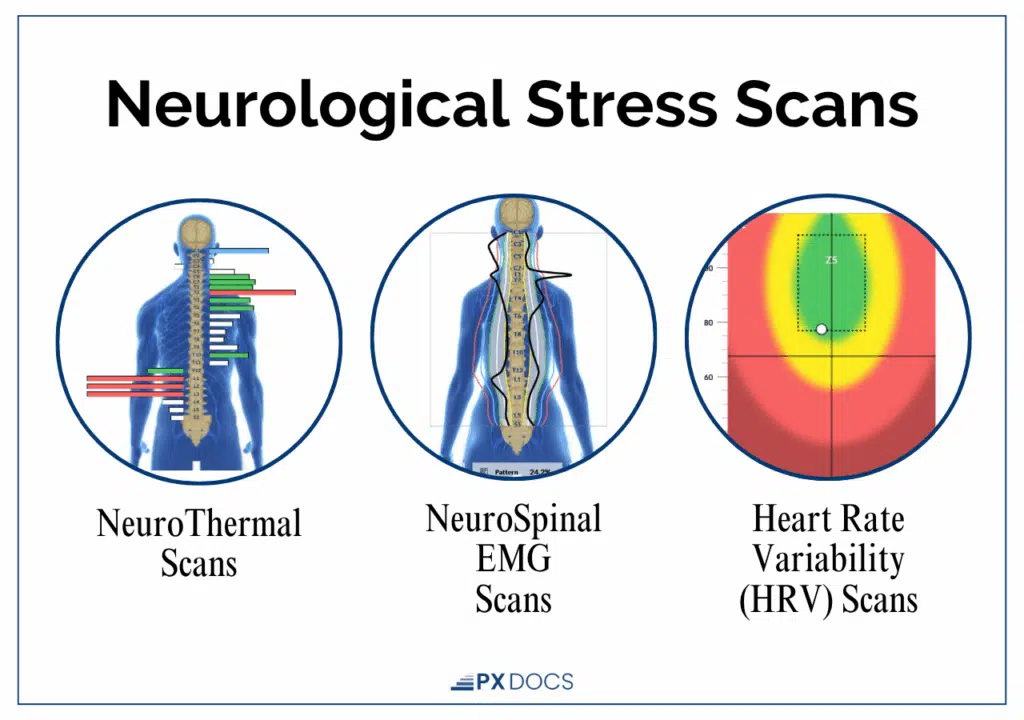
Traditional exams can’t measure nervous system function. INSiGHT Scans fill that gap. These scans measure exactly what’s dysregulated:
- NeuroThermal scans show dysautonomia patterns, temperature differences along the spine indicating autonomic dysfunction. When one side runs hot and the other cold, that’s sympathetic dominance, visually confirmed.
- NeuroSpinal EMG reveals where subluxation is creating tension and disorganization. The scan measures electrical activity in muscles along the neurospinal system, showing where your baby’s nervous system is stuck in stress mode.
- Heart Rate Variability measures whether your baby can access the parasympathetic state needed for deep sleep. Low HRV means weak vagal tone, that broken brake pedal we talked about.
INSiGHT technology is completely safe and backed by research for reliability and accuracy. It doesn’t put anything into your baby’s body—it simply “reads” important information like temperature, heart rate, and electrical activity. In many cases, babies can even stay asleep the entire time!
This tool is incredibly valuable because it provides objective data when everyone else is saying, “Everything looks fine.” For many parents, seeing this information is a huge relief—they finally understand what’s really going on.
Equally important, the INSiGHT gives us the ability to create a highly personalized care plan designed to support your baby’s nervous system and help it get back on track, so your child can thrive.
Addressing the Root Cause with Gentle Adjustments for Better Sleep
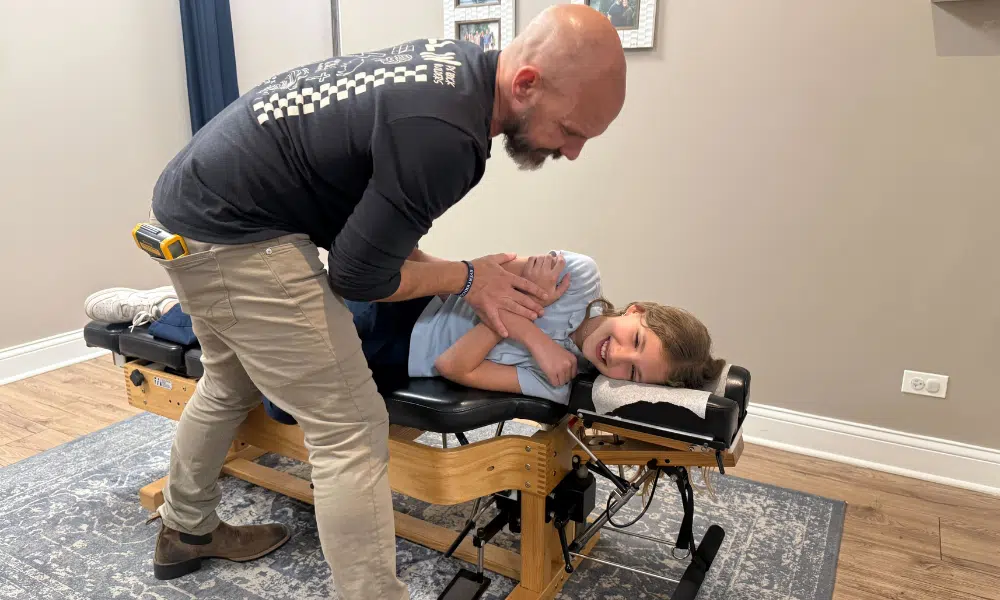
Neurologically-Focused Chiropractic adjustments remove subluxation interference at the brainstem and upper cervical spine, where vagus nerve function is controlled. As the nervous system rebalances, sleep naturally improves.
We’re not caring for sleep conditions. We’re optimizing nervous system function so your baby can sleep naturally.
When babies receive care from birth, what we call “chiro babies,” the difference we see is remarkable. And it’s all because of nervous system regulation. They’re calm but alert. They sleep deeply. They eat well. They have healthier development. Parents actually enjoy the baby phase rather than just survive it.
This integrates beautifully with other therapies, too. Once the nervous system is regulated, other interventions work better. Sleep training becomes possible. Feeding therapy makes progress. Because you’ve addressed the foundation, everything else builds on.
When Sleep Crying Requires Medical Attention
Medical attention may be necessary in case of a more serious emergency.
See your trusted medical provider immediately if your baby has:
- Fever over 100.4°F
- Difficulty breathing or irregular breathing patterns
- Persistent distress lasting 2-3+ hours despite all interventions
- Accompanying signs like vomiting, rash, lethargy
- Sudden changes in crying pattern or overall behavior
These could indicate ear infection, reflux, respiratory infection, or other conditions requiring medical care.
Always trust your gut when it comes to your child’s health.
Your Baby’s Nervous System Holds the Key
You’ve been told this is normal. That your baby will grow out of it. That some babies just don’t sleep well. But you know it’s different. You see your baby struggling. You feel in your gut that something’s wrong.
Trust that instinct. You’re right.
Your baby isn’t broken, just dysregulated and needing support. When a baby’s nervous system gets stuck in survival mode after birth trauma or prenatal stress, they can’t access the deep rest they need. But that dysregulation can be measured objectively through INSiGHT scans and addressed through Neurologically-Focused Chiropractic Care.
This isn’t about waiting it out or managing symptoms. It’s about addressing the root cause, nervous system dysfunction, so your baby can sleep naturally, develop optimally, and thrive. We encourage you to visit our directory to find a PX Docs practitioner who can assess your baby’s nervous system and create a personalized care plan. Because your baby deserves more than “normal.” They deserve to sleep deeply, wake happy, and show you what regulated really looks like.