
For countless parents, the joy of welcoming a new baby is overshadowed by the heartbreaking realization that their child has suffered a birth injury. While some birth injuries are immediately apparent, others may not be recognized until the child fails to meet important developmental milestones.
Every hour in the United States, three babies are born with birth injuries, which affects approximately 7 out of every 1,000 deliveries. Sadly, many families feel hopeless and alone, as conventional medical approaches often do not provide the answers and solutions they urgently need.
We understand that birth injuries are not just physical traumas, but can have far-reaching neurological consequences that impact a child’s overall health and development. We recognize that these injuries often result from a “Perfect Storm” of factors, including stress during pregnancy, birth interventions, and early life stressors, which can disrupt the delicate balance of the nervous system.
While traditional healthcare may focus on caring for the immediate symptoms of birth injuries, our PX Docs network is committed to digging deeper and identifying and addressing the root causes of nervous system dysregulation from birth stress. Through our unique, drug-free approach, we empower families with the knowledge and support they need to help their children thrive in the face of adversity.
Whether your child is struggling with the aftermath of a difficult labor or delivery or you’re seeking to prevent a birth injury altogether, we’re here to offer hope, guidance, and a path forward.
Understanding Birth Injuries
Birth injuries refer to any damage that occurs to a baby during the labor and delivery process. These injuries can range from mild bruising to more severe complications affecting the brain, nerves, and bones. While some types of birth injuries are immediately recognizable, others may not become apparent until the child experiences developmental delays or struggles to meet critical milestones.
Some common types of birth injuries include:
- Soft tissue injuries: These include bruising, swelling, and lacerations caused by pressure or friction during delivery. Caput succedaneum, a swelling of the soft tissues of the scalp, is a common soft tissue birth trauma example.
- Cranial injuries: Trauma to the head during delivery can result in injuries such as cephalohematoma (a collection of blood under the scalp) and subgaleal hematoma (bleeding between the skull and scalp).
- Nerve injuries: Damage to the nerves during delivery can lead to conditions like brachial plexus injury (affecting the arms and hands), facial nerve palsy, and laryngeal nerve damage (impacting breathing and swallowing).
- Bone injuries: Fractures, particularly of the clavicle (collarbone) and long bones of the arms or legs, can occur during difficult deliveries. Epiphyseal displacement (separation of the growth plate from the bone) is another type of bone injury.
Several factors can contribute to the occurrence of birth injuries, including:
- Difficult or prolonged labor: When labor fails to progress normally, the baby may be subjected to excessive pressure or prolonged exposure to the forces of contractions.
- Abnormal fetal position or size: Babies who are larger than average (fetal macrosomia) or in a breech position (feet or buttocks first), which only accounts for 3-4% of full-term pregnancies, are at a higher risk of birth injuries such as shoulder dystocia.
- Maternal factors: The shape and size of the mother’s pelvis, mother’s stress levels, as well as maternal obesity, can increase the likelihood of a difficult delivery and subsequent birth injuries.
- Use of assistive devices: While tools like forceps and vacuum extractors can be lifesaving in certain situations, their use may also increase the risk of birth injuries.
- Hospital pressure and timelines: Rushed interventions or strict labor timelines can lead to unnecessary force, increased interventions, and a higher risk of birth trauma.
Conventional medical approaches to birth injuries often focus on caring for outward symptoms but don’t also address the underlying neurological dysfunction. This limited perspective can leave many children struggling with the long-term consequences of birth injuries without receiving the comprehensive care they need.
It’s important to understand that even if your child didn’t have an obvious or visible “injury” after birth, interventions and birth stress can still create internal neurological tension. The pressure placed on the brain, spinal cord, and brainstem during challenging births can set the stage for hidden dysfunction that isn’t immediately recognized.
These issues often show up later as feeding struggles, colic, reflux, sleep challenges, sensory sensitivities, delayed milestones, or behavioral concerns — all signs that the nervous system is working overtime and needs support to fully regulate and heal.
The “Perfect Storm” of Factors Contributing to Birth Injuries
At PX Docs, we often refer to the combination of factors that can lead to birth injuries and neurological dysfunction as The “Perfect Storm.” This term describes the cumulative impact of various physical, chemical, and emotional stressors that can overwhelm a child’s developing nervous system, setting the stage for a wide range of health challenges.
One of the key elements of The “Perfect Storm” is the role of stress and trauma during pregnancy and even the preconception phase. Studies show that when a mother experiences chronic stress, her body releases higher levels of stress hormones, such as cortisol, which can cross the placenta and affect the developing brain of the fetus. This exposure can alter the baby’s nervous system development, making it more susceptible to dysfunction and dysregulation later in life.
This heightened state of stress doesn’t just influence fetal development — it also plays a significant role in how the birth process unfolds. A nervous system stuck in stress mode can contribute to stalled labor, abnormal fetal positioning, increased medical interventions, and a more difficult delivery overall. When both mom and baby enter birth already under neurological tension, the likelihood of birth trauma, complications, and long-term nervous system dysregulation increases. In this way, prenatal stress becomes a major contributor to the Perfect Storm that so many kids start life in.
Birth trauma, interventions, and complications can also contribute to The “Perfect Storm” of factors leading to birth injuries. Procedures such as forceps delivery, vacuum extraction, and cesarean section can cause physical strain and trauma to the baby’s delicate nervous system, leading to misalignment, tension, and interference in the brain & nervous system’s ability to regulate the body.
Other contributing factors can include cord-wrapping, inductions that place added stress on both mom and baby, breech or abnormal positioning, or even the manual pulling, twisting, and traction used by a provider to help deliver the baby. Each of these scenarios can introduce excessive force to the head and neck, leading to subtle but impactful neurological dysfunction.
It’s important to emphasize that although some of these interventions can be truly life-saving in the moment, they can still leave behind long-term effects on the nervous system if not identified and addressed early. This is why so many children show signs of tension, dysregulation, or developmental challenges months — or even years — after birth, even when everything initially appeared “normal.”
All of the above stressors can cause disruption in neurological communication, known as subluxation, characterized by misalignments, tension, and restricted mobility within the neurospinal system.
When subluxation occurs, it can disrupt the proper functioning of the Autonomic Nervous System, which controls and coordinates many of the body’s vital functions. This disruption, known as dysautonomia, can manifest as an imbalance between the Sympathetic and Parasympathetic Nervous Systems, leading to a wide range of signs and health challenges.
Other early life stressors can further compound the effects of birth injuries and neurological dysfunction. These may include:
- Early exposure to medications, such as antibiotics, can disrupt the gut microbiome and impact the gut-brain axis
- Environmental toxins and pollutants
- Poor nutrition and nutrient deficiencies
- Chronic illness or infections
By understanding the “Perfect Storm” of factors that contribute to birth injuries and neurological dysfunction, parents and healthcare providers can take a more proactive approach to identifying and addressing the root causes of a child’s health challenges.
The Neurological Impact of Birth Injuries
The nervous system is the master control center of the body, regulating and coordinating all functions essential for health and development. When birth injuries occur, they can disrupt the delicate balance of the nervous system, leading to potential health challenges that may impact a child throughout their lifetime.
Birth injuries can impact nervous system regulation, primarily through subluxation. This neurological interference can lead to various signs and conditions, depending on the subluxation’s location and severity.
Birth injuries and subluxation can also lead to dysautonomia. When dysautonomia occurs, the Sympathetic Nervous System can become overactive, while the Parasympathetic Nervous System becomes underactive. This imbalance can lead to a wide range of signs, including digestive issues, sleep disturbances, emotional and behavioral challenges, and immune dysfunction.
If left unaddressed, the neurological dysfunction caused by birth injuries can have far-reaching effects on a child’s health and development. Some early signs may include difficulty with feeding or digestion, trouble sleeping, or colic-like behaviors. Often, a mom can just tell when her baby is uncomfortable — that intuition is powerful and shouldn’t be ignored.
Some potential long-term effects may include:
- Developmental delays in motor skills, speech, and social interaction
- Sensory processing issues and heightened sensitivity to environmental stimuli
- Chronic pain and tension in the body
- Digestive conditions and gut health imbalances
- Immune system dysfunction and increased susceptibility to illness
Moreover, there may be a correlation between birth injuries and the development of neurological conditions, such as:
- Attention Deficit Hyperactivity Disorder (ADHD)
- Autism Spectrum Disorders
- Seizures and epilepsy
- Learning conditions and cognitive challenges
- And more
By understanding the neurological impact of birth injuries and the potential long-term consequences of unaddressed dysfunction, parents and healthcare providers can take proactive steps to support a child’s healthy development and prevent the onset of more severe health challenges.
PX Docs’ Approach to Addressing Birth Injuries
We understand that addressing the root causes of birth injuries is essential for promoting optimal health and development in children. Our unique approach focuses on identifying and correcting the neurological dysfunction that can result from the strains and traumas of birth, allowing the body to heal naturally and function at its best.
Central to our approach is the use of INSiGHT scans, a revolutionary technology that enables us to assess a child’s nervous system function and pinpoint areas of subluxation and dysregulation. By providing a detailed analysis of a child’s neurological health, INSiGHT scans enable our doctors to develop targeted, customized care plans that address each child’s specific needs and challenges.
Take Eli, for example. After a traumatic birth and long stay in the NICU, he was struggling with terrible gas, choking reflux, constipation, and latching issues. Their daily life was a constant battle, and they felt utterly helpless.
But when they found Neurologically-Focused Pediatric Chiropractic, everything changed. Eli began receiving consistent nervous system adjustments that helped calm and regulate his body, enabling him to experience normal, healthy functions with ease.
Those nervous system changes are reflected in his scans below.
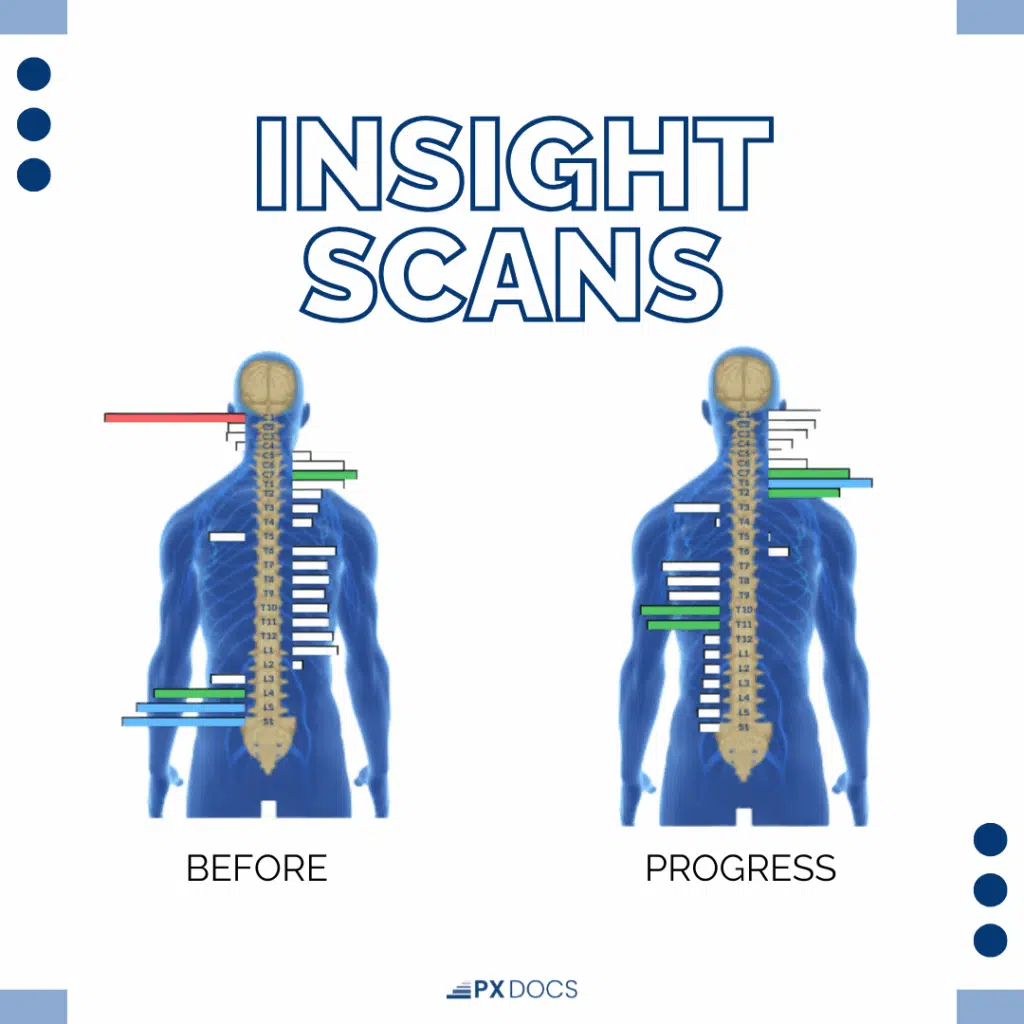
But beyond the measurable improvements, the true transformation is seen in their daily lives.
There were fewer spit-ups, and his reflux vanished. Constipation was a thing of the past, and he latched easily and nursed effectively.
Today, their lives are transformed. Mom says, “We have none of the issues we dealt with prior. Eli is always smiling, incredibly strong physically, and seems to have a pretty tough immune system. For being born a trimester early, he’s developing and growing amazingly. “
We recognize that every child’s needs are unique and that there is no one-size-fits-all approach to addressing birth injuries. That’s why we take the time to develop personalized care plans for each child we serve, taking into account their individual health history, current challenges, and future goals. By tailoring our care to each child’s specific needs, we can help them achieve optimal health and reach their full potential.
Empowering Parents and Promoting Optimal Healing
As a parent, learning that your child has suffered a birth injury can be overwhelming and frightening. However, it’s important to remember that with the proper support and interventions, your child can thrive and reach their full potential. We believe that giving parents the knowledge and resources is key to promoting optimal healing and development for children who have experienced birth injuries.
One of the most critical steps in addressing birth injuries is early intervention. The sooner neurological dysfunction is identified and addressed, the better the child’s outcomes. That’s why we encourage parents to seek out Neurologically-Focused Chiropractic Care as soon as possible after a birth injury is suspected or diagnosed.
In addition to seeking out specialized care, it’s essential for parents to collaborate with other trusted healthcare providers to ensure that their child receives comprehensive support. This may include working with functional pediatricians, occupational therapists, speech therapists, and other specialists who can provide targeted interventions based on the child’s specific needs.
However, it’s important to note that for these other integrative therapies and supports to be most helpful, your child’s nervous system must be calm and regulated! And Neurologically-Focused Chiropractic is a key tool to address that.
There are also many natural strategies that parents can incorporate into their child’s daily life to support healing and development after a birth injury. Some simple yet effective tips include:
- Providing a nurturing, low-stress environment that promotes feelings of safety and security
- Encouraging plenty of skin-to-skin contact and bonding activities
- Offering a nutrient-dense, whole-foods diet to support healthy growth and development
- Engaging in gentle, age-appropriate exercises and activities to promote motor skill development and coordination
- Prioritizing restful sleep and establishing consistent sleep routines to support nervous system regulation
Nurturing Your Child’s Potential
Birth injuries can have a profound impact on a child’s health and development, but they do not have to define their future. By understanding the neurological basis of birth injuries and seeking out compassionate, drug-free care, parents can help their children overcome challenges and reach their full potential.
Our mission is to give families the knowledge, resources, and support they need to navigate the journey of healing after a birth injury. Through our unique approach to Neurologically-Focused Chiropractic Care, we help children build a strong foundation for optimal health and development without relying on potentially harmful drugs or invasive interventions.
If your child has suffered a birth injury, we encourage you to reach out to a PX Docs provider in your area. Our dedicated team of experts is here to listen to your concerns, answer your questions, and develop a personalized care plan that meets your child’s unique needs. Together, we can help your child thrive and achieve their greatest potential.
Don’t wait to take the first step on your child’s path to healing. Visit our PX Docs directory today to find a qualified provider near you and schedule a consultation. Your child deserves the very best in Neurologically-Focused Care—let us help you give them the gift of a healthy, vibrant future.