
Does your child seem emotionally disconnected—present physically but absent mentally? Maybe they’re exhausted despite adequate sleep, withdrawn from activities they once enjoyed, or appearing numb to experiences that should spark joy or excitement. You’ve brought your concerns to your pediatrician only to hear “it’s just a phase” or “give it time.” But your gut tells you something’s off.
If this sounds familiar, you’re not imagining it.
What you’re likely observing is often dorsal vagal shutdown, a neurological response where your child’s nervous system has essentially hit the brakes so hard that they’re stuck in a state of protective disconnection. This isn’t a behavioral issue. It’s your child’s Autonomic Nervous System in survival mode, and this state often begins much earlier than anyone realizes, sometimes even before birth.
At PX Docs, we’ve worked with thousands of families dealing with what you’re facing right now. What sets us apart is our ability to objectively measure nervous system function using INSiGHT scanning technology and our understanding that the root cause of chronic shutdown often starts during pregnancy or birth, which is exactly why so many conventional approaches haven’t worked.
What Is Dorsal Vagal Shutdown?
Dorsal vagal shutdown is an involuntary nervous system response to what your child’s body perceives as an inescapable threat. It’s not a conscious choice; it’s an automatic survival mechanism.
When your child’s nervous system detects danger, it first tries fight or flight (the Sympathetic Nervous System, the gas pedal that revs everything up). But when the threat feels too overwhelming or inescapable, it hits the emergency brake. Hard.
This is dorsal vagal shutdown. Your child’s body is essentially “playing dead” neurologically. Heart rate slows. Breathing becomes shallow. Digestion slows. Energy drops.
Here’s what’s critical: this response should be temporary. But in many children, the nervous system gets stuck in this state for weeks, months, or even years.
This is different from the freeze response. Freeze is still sympathetic, high energy, but immobilized (think deer in headlights). Dorsal vagal shutdown goes beyond freeze. The brake pedal has been slammed so hard that the entire system has ‘stalled out’. Your child isn’t frozen with high energy; they’re collapsed with little energy.
Your child’s nervous system isn’t broken. It’s stuck. And that matters, because “stuck” doesn’t mean permanent. When the nervous system is given the right support, it has an incredible ability to regulate, adapt, and heal.
Recognizing the Signs
Dorsal vagal shutdown creates a distinct pattern across physical, emotional, and cognitive domains:
- Physical signs: Extreme fatigue that rest doesn’t fix, low energy and physical heaviness, cold hands and feet, slowed heart rate and shallow breathing, chronic digestive issues (especially constipation).
- Emotional and behavioral signs: Emotional numbness (can’t feel joy or sadness), the “checked out” look, where nobody’s home, social withdrawal, flat facial expressions, apathy toward previously enjoyed activities.
- Cognitive indicators: Brain fog and difficulty concentrating, slowed processing speed, memory issues, dissociation, and disconnection from the body.
Acute vs. Chronic Shutdown
- Acute shutdown is temporary: your child experiences something overwhelming, goes into shutdown for hours or days, then their nervous system returns to regulation. This is the system working as designed.
- Chronic shutdown is different. The nervous system gets stuck in shutdown mode for weeks, months, or years and can’t find its way out. This isn’t just about a specific trauma that needs processing—it’s about underlying nervous system dysfunction that needs addressing when stress builds up over time, or when one event exceeds the body’s capacity to adapt.
Children in chronic shutdown often had warning signs much earlier. The baby who had colic, reflux, and chronic constipation. The toddler who was constantly sick with ear infections. The preschooler who struggled with sensory issues and meltdowns. These weren’t separate problems; they were early manifestations of a dysregulated nervous system.
What Causes Dorsal Vagal Shutdown? The Perfect Storm
Here’s where the conventional understanding often falls short. Most approaches focus exclusively on emotional trauma in older children or adults, on one specific event that triggers shutdown.
But in our work with thousands of families at PX Docs, we’ve identified a pattern that changes everything: the neurological dysfunction leading to chronic dorsal vagal shutdown often begins much earlier than anyone realizes. Sometimes even before birth.
We call this pattern the “Perfect Storm.”
The “Perfect Storm” Framework
The “Perfect Storm” isn’t a single event. It’s a combination of stressors that accumulate and interact to disrupt your child’s nervous system development, starting very early in life.
Component 1: Early Exposure to Neurological Stress
The story often begins before your child takes their first breath. Maternal stress during pregnancy—whether from fertility challenges, work stress, anxiety, or depression—doesn’t stay contained in mom’s body. Stress hormones, such as cortisol, cross the placenta and can affect the developing fetal nervous system.
Think of that umbilical cord as an electrical connection between mom’s nervous system and baby’s developing nervous system. When mom’s nervous system is in chronic stress mode, baby’s nervous system is developing in that stressed environment. The nervous system is being programmed with sympathetic dominance as its baseline “normal.”
This isn’t about blaming mothers. This is about understanding that the vulnerability to nervous system dysfunction can be established before birth.
Component 2: Birth Trauma and Interventions
Then comes the birth itself. Interventions like C-sections, forceps delivery, vacuum extraction, induction, or even prolonged labor all create mechanical stress on the baby’s head, neck, and delicate brainstem. We’re talking about yanking, twisting, and pulling of up to 43 pounds on an infant whose bones haven’t fully formed yet and whose nervous system is at its most vulnerable developmental stage.
During birth, the upper cervical spine and brainstem region are particularly vulnerable. This area houses the brainstem and the exit point of the vagus nerve, a major regulator of autonomic function. Physical stress here can alter neurological signaling, affecting regulation, digestion, sleep, and overall nervous system development.
This birth trauma sets the stage for vagus nerve dysfunction from day one. The Parasympathetic Nervous System, that brake pedal that should help your child rest, digest, and regulate, is already compromised before they’ve had a chance to feed or sleep for the first time.
Component 3: Early Childhood Stressors
Once a child is born, today’s world adds even more strain to an already developing nervous system. Children are exposed to a unique combination of environmental stressors, such as pesticides, plastics, air pollution, and food additives, alongside medical stressors like frequent antibiotics, reflux or allergy medications, and repeated illness early in life.
This often shows up in ways parents recognize right away:
- colic and reflux
- eczema, digestive issues, and constipation
- recurrent ear infections or chronic congestion
- Sleep disturbances
- frequent illness
These are not random phases or things children simply “grow out of.” They are early signs that the nervous system is struggling to regulate, recover, and adapt.
The Effects
By the time you’re seeing dorsal vagal shutdown—that checked-out, disconnected, exhausted state—your child’s nervous system has been under siege for years. The sympathetic system (the gas pedal) has been floored trying to manage all these stressors. Eventually, it can’t sustain that level of activation. The system crashes. The brake pedal slams down so hard that everything stalls out.
This is chronic dorsal vagal shutdown. Not from one trauma. From accumulated stress on a nervous system that’s been dysregulated since birth or before.
The Neurological Impact: Subluxation & Dysautonomia
Here’s the important mechanism that connects everything: subluxation. Subluxation is far more than just a structural issue – it’s a neurological interference that disrupts the function, regulation, and adaptability of the nervous system. It occurs when stress, whether physical, chemical, or emotional, overwhelms the nervous system, leading to dysautonomia – a state of imbalance between the sympathetic (fight-or-flight) and parasympathetic (rest, digest, heal) nervous systems.
When stressors like birth trauma, especially, create subluxation in the upper cervical spine, it interferes with the vagus nerve’s ability to communicate between the brain and body. This disrupted communication means your child’s Parasympathetic Nervous System—that brake pedal that should promote rest, digestion, and healing—can’t function properly from the start.
It sounds almost too simple, but the neck really acts like an on-off switch for the nervous system. When you have interference in the upper neck, you’re messing with the vagus nerve. And when you mess with the vagus nerve, you mess with digestion, sleep, immune function, emotional regulation, and everything else.
Think of your child’s nervous system like a car. The sympathetic system is the gas pedal. The parasympathetic system is the brake. Both are necessary and healthy when working properly.
But when subluxation creates interference, the gas pedal gets stuck in the down position. Your child’s body thinks it’s constantly in danger. They live in a state of sympathetic dominance — fight-or-flight mode 24/7. This is dysautonomia: the Autonomic Nervous System out of balance.
Eventually, after months or years of chronic sympathetic activation, the system can’t sustain it. The parasympathetic system doesn’t gradually take over. It crashes. The brake pedal slams so hard the car doesn’t just slow down—it completely stalls out. This is dorsal vagal shutdown.
The Connection to Bigger Challenges
Chronic dorsal vagal shutdown is often the foundation for multiple conditions and diagnoses: Autism Spectrum Disorder, ADHD, Sensory Processing Disorder, anxiety, depression, developmental delays, and chronic digestive issues.
The social engagement system requires a regulated nervous system. When a child is stuck in dorsal vagal shutdown, this system is offline. Social interaction feels overwhelming. The sensory system is dysregulated. Many behaviors associated with these conditions are protective responses from a nervous system stuck in shutdown mode.
A pattern we often see is early nervous system stress that, over time, contributes to sensory challenges, developmental delays, and a range of diagnoses. Rather than being completely separate conditions, these patterns are often connected by a nervous system that spends more time in a protective, stress-based state.
Children don’t “grow out of” nervous system dysfunction. They grow into increasingly complex presentations of it.
Why Traditional Methods Often Fall Short
If you’ve tried therapy, medications, behavioral strategies, dietary changes, or supplements and found that progress plateaus or improvements don’t stick, you’re not alone. These approaches provide value, sometimes significant value, but they often miss a critical component.
Most interventions focus on symptoms or behavioral modification. All of this can help. But here’s the limitation: if the underlying nervous system dysfunction creating the shutdown state hasn’t been addressed, you’re trying to build on a cracked foundation.
You can’t think your way out of nervous system shutdown. This is an autonomic function—below conscious awareness. When physical interference is present, the Autonomic Nervous System remains dysregulated no matter how many top-down interventions you try.
This doesn’t mean therapy or other interventions are worthless. It means they work better, sometimes dramatically better, when the nervous system foundation is addressed first. When you remove the interference and restore proper nervous system function, your child has the capacity to actually benefit from therapy. The interventions that weren’t working before suddenly start working because the nervous system can finally adapt.
Addressing Dorsal Vagal Shutdown at the Source
When you understand that chronic dorsal vagal shutdown often stems from nervous system dysfunction beginning at or even before birth, the solution becomes clearer: address the interference at its source.
How Neurologically-Focused Chiropractic Care Helps
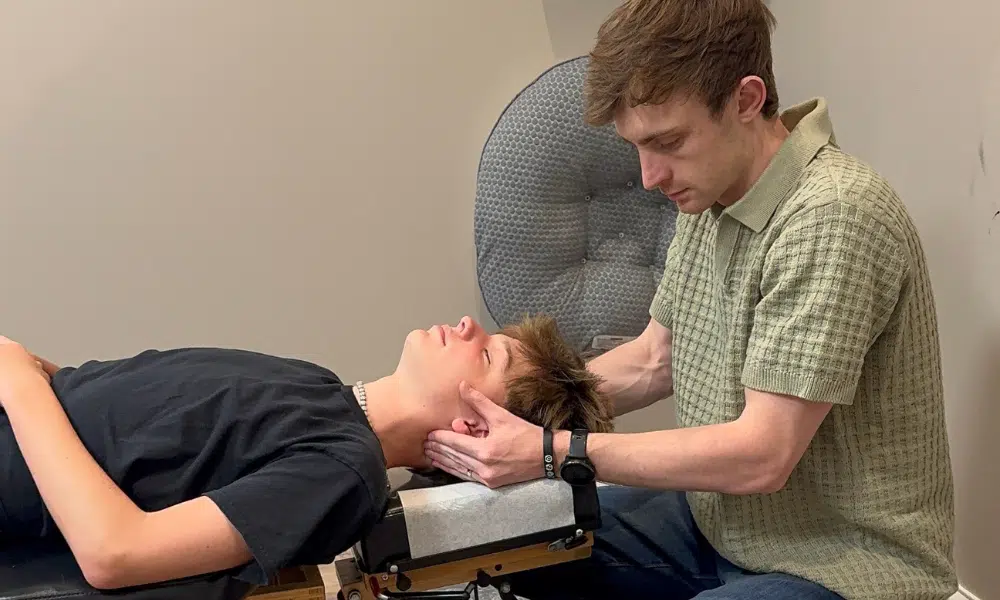
Neurologically-Focused Chiropractic Care identifies and corrects subluxation, that interference creating neurological dysfunction. Our care addresses the nervous system naturally while paying close attention to vagus nerve function, including key areas of the upper cervical spine that are commonly affected during birth.
The adjustments are gentle, specific, and completely different from what you might picture. The pressure we use is about what you’d use to check a tomato for ripeness, extremely gentle but precisely targeted.
The goal is to remove neurological interference so the nervous system can shift from sympathetic dominance back to balanced regulation. We’re helping the brake pedal start working properly again, so it doesn’t have to slam down into shutdown.
The INSiGHT Scanning Difference
One of the biggest challenges with nervous system dysfunction is that it’s invisible. You can’t see subluxation on an X-ray. You can’t measure shutdown with a blood test. Parents know something’s wrong, but they’ve been told repeatedly that everything is “fine.”
This is where INSiGHT scanning technology becomes a game-changer.
INSiGHT scans provide objective neurological measurements:
- Heart Rate Variability (HRV) scanning measures your child’s nervous system adaptability and stress response. Low HRV indicates a nervous system stuck in either sympathetic overdrive or dorsal vagal shutdown. As we correct subluxation, HRV improves, showing increased resilience.
- Surface EMG scanning measures neuromuscular tension patterns along the spine, revealing where subluxation is present. As care progresses, we see these tension patterns release and balance.
- Thermal scanning shows temperature differences along the neurospinal system, revealing Autonomic Nervous System imbalances (dysautonomia).
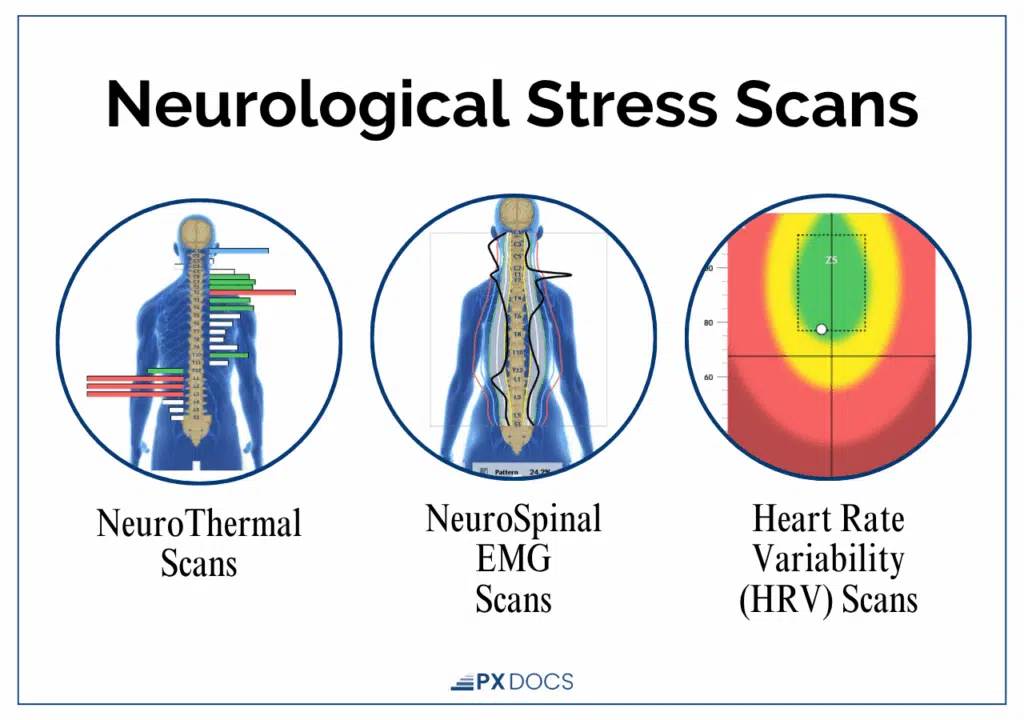
For parents, this means finally having objective proof that what you’ve been observing is real, measurable, and—most importantly—improvable. The scans show nervous system dysfunction before we start care, then track progress as we clear subluxation and restore function.
Often, parents see the scans improving before their child’s symptoms change. This is inside-out healing: the nervous system functions improve first, then the outward challenges begin to resolve.
Your Child Is Designed to Heal
Nervous systems are designed to heal. When interference is removed, the body knows what to do. Neuroplasticity is most active during childhood, meaning children have a remarkable capacity to recover when we address dysfunction early.
When you remove the subluxation that creates interference, you restore proper vagal function and autonomic balance, and your child’s body can finally adapt, heal, and thrive.
Conclusion
Dorsal vagal shutdown is your child’s nervous system stuck in a protective state—a brake pedal slammed so hard that everything has stalled out. What appears as emotional disconnection, physical exhaustion, and behavioral withdrawal is actually a neurological response that often began much earlier than anyone realizes.
The “Perfect Storm” of prenatal stress, birth trauma, and early childhood stressors creates the foundation for chronic nervous system dysregulation. When subluxation interferes with vagus nerve function, your child’s Autonomic Nervous System can’t regulate properly. They get stuck, first in sympathetic overdrive, then eventually crashing into dorsal vagal shutdown.
Traditional approaches that focus only on the signs or behavior miss this underlying dysfunction. But when you address the physical interference—when you correct subluxation and restore proper nervous system function—healing becomes possible. We encourage you to visit our PX Docs directory to find a Neurologically-Focused Practitioner near you.
You’re not imagining what you’ve been seeing. Your child’s struggles are real, they have a neurological cause, and most importantly, they have a solution. Welcome to understanding that healing starts with the nervous system.