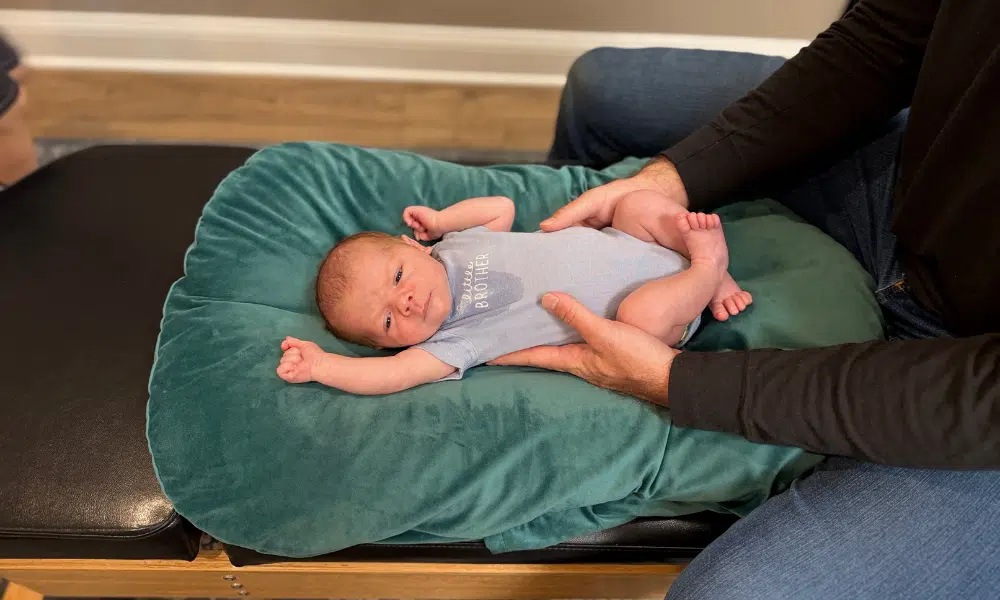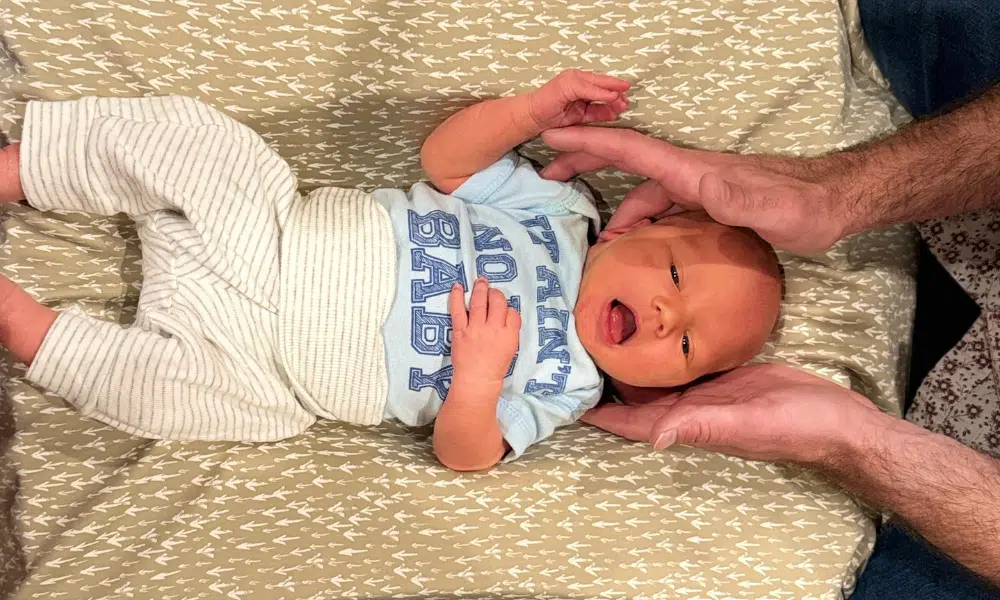
For up to 50% of school-age children, the return to school after the holidays isn’t just difficult, it’s a full nervous system crashout marked by explosive meltdowns, debilitating anxiety, and complete behavioral dysregulation.
You know the pattern. Sunday nights are filled with dread. Monday mornings that turn into two-hour battles over getting dressed. Your child, who was relatively calm all summer and Christmas break, suddenly can’t handle the thought of walking into school. The backpack triggers a meltdown. The mention of homework causes a shutdown.
You’ve tried everything the pediatrician suggested— the visual schedules, the color-coded calendars, the rewards charts, the “just give it a few more weeks” patience. But here’s what conventional medicine misses: the back-to-school crashout isn’t a behavior problem or an adjustment issue. It’s a nervous system problem. And until you understand what’s actually happening in your child’s brain and nervous system during transitions, you’ll keep spinning your wheels with strategies that can’t work because the foundation isn’t there.
What is Back-to-School Crashout?
Back-to-school crashout is a severe nervous system dysregulation triggered by the transition from summer or a holiday to school routines, characterized by explosive behavioral meltdowns, debilitating anxiety, and physical signs that go far beyond typical adjustment struggles.
Unlike normal first-week jitters that resolve within days, this represents a complete Autonomic Nervous System overwhelm that can start weeks before school begins and persist for months into the school year.
This isn’t your child being difficult or dramatic. It’s their nervous system, literally unable to handle the transition. Normal back-to-school anxiety might mean some butterflies, a few tears on the first day, or needing extra reassurance for a week or two. Back-to-school crashout means your child’s entire system, physical, emotional, behavioral, and cognitive, is in crisis mode.
Parents recognize the crashout through patterns that feel extreme compared to other kids:
Physical Signs
- Stomach aches every morning (sometimes leading to vomiting)
- Headaches that weren’t there all summer or on holiday
- Getting sick constantly once school starts
- Sleep completely falls apart: can’t fall asleep, wakes up exhausted
Emotional Dysregulation
- Panic attacks about school-related tasks
- Crying episodes that last hours
- Complete emotional shutdown or going numb
- Rage that seems to come out of nowhere
Behavioral Responses
- Explosive meltdowns over getting dressed or packing the backpack
- Flat-out school refusal: hiding, running, physically resisting
- Aggression toward siblings, parents, or even themselves
- Rigid, inflexible thinking: can’t handle any changes to the plan
Cognitive Struggles
- Can’t focus on simple school preparation tasks
- Catastrophic thinking: “everything will be terrible”
- Executive function collapses: can’t organize materials, remember steps
- Seems incapable of problem-solving things they could handle in summer
If you’re reading this list thinking, “that’s my child exactly,” you’re not alone. And here’s what matters most: there’s a neurological reason why transitions are genuinely impossible for some kids.
The Anxiety That Steals Childhood
What makes back-to-school anxiety particularly heartbreaking isn’t just what it does to your child—it’s what it steals from them. Anxiety doesn’t just cause suffering; it robs kids of experiences, joy, and the ability to be fully present in their own lives. Your child wants to enjoy school, make friends, and feel excited about learning. But anxiety keeps them locked in a prison of “what ifs” and perceived threats.
Here’s what conventional medicine gets wrong about anxiety in children: they care for it as primarily emotional or psychological. But the anxiety starts in the body first. Look at what happens physically before the emotional anxiety even kicks in. Your child’s muscles are constantly tense, especially in their neck and jaw. They can’t breathe deeply because their diaphragm is locked up. Their digestive system is a mess. Their sleep architecture is destroyed. Then we wonder why they’re anxious?
The nervous system piece that matters most: when there’s subluxation affecting the brainstem and upper cervical spine, the nervous system perceives danger everywhere, even in safe situations. School or homeschool Co-op may not be threatening, but to a nervous system stuck in sympathetic dominance, it might as well be a war zone. The anxiety isn’t irrational; it’s the logical response to a nervous system that’s constantly signaling threat.
This is why your child might completely withdraw as school approaches. They pull back from activities they used to enjoy. They stop wanting to see friends. They avoid anything new or challenging. Anxiety causes this withdrawal from life itself, and transitions like back-to-school become impossible hurdles rather than exciting opportunities.
Why Transitions Are Neurologically Harder for Some Kids
Here’s the simple truth: for children experiencing back-to-school crashouts, their gas pedal (Sympathetic Nervous System) is already dysregulated. Their nervous system has been running in fight-or-flight mode for so long that it’s become the default setting. Summer or Christmas break might have looked less chaotic because there were fewer demands, but their nervous system was still revved up underneath. Now you’re asking that already-overwhelmed system to handle a massive transition, and it just can’t.
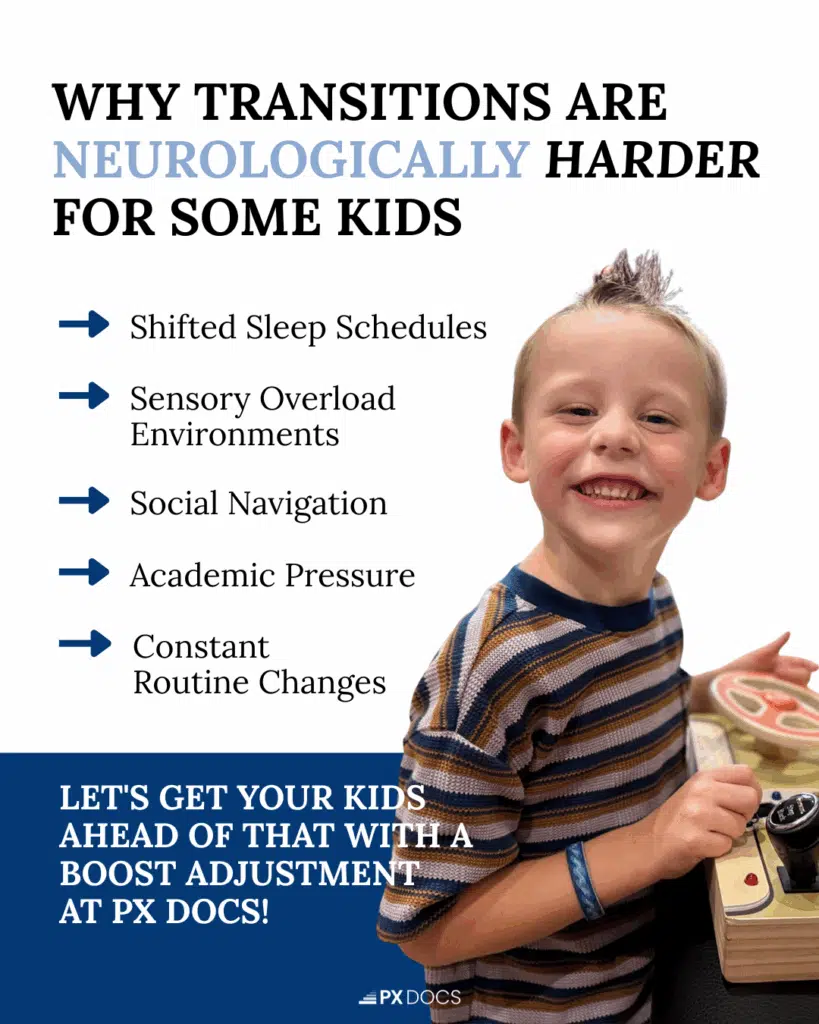
Transitions require enormous amounts of nervous system flexibility. Your child needs a functioning parasympathetic “brake pedal” to slow down, adapt, and regulate through changes. But when that brake pedal is offline due to vagus nerve dysfunction, transitions don’t just feel hard, they become neurologically impossible. The routine changes, sensory demands, social pressure, and academic expectations create a “Perfect Storm” of stress that their nervous system simply cannot process.
The shift hits particularly hard because it’s not just one change; it’s multiple simultaneous demands on an already-taxed system. Sleep schedules shift. Sensory environments change dramatically (fluorescent lights instead of sunshine, cafeteria noise instead of backyard play, classroom smells and textures).
Social navigation requirements include reading social cues, managing peer interactions, and following group instructions. Academic performance pressure returns. New routines and expectations come at them from every direction. For a nervous system stuck in sympathetic dominance, this isn’t just stressful; it’s a complete system overload.
This didn’t start with back-to-school anxiety. The “Perfect Storm” likely began much earlier with prenatal stress affecting nervous system development, birth trauma creating upper cervical subluxation, early childhood illness patterns, and chronic stress accumulation. Your child’s nervous system has been under pressure for years. Back-to-school just happens to be the tipping point where the cracks finally show.
Why Standard Approaches Fall Short
Behavioral strategies like reward charts and visual schedules can help… once the nervous system can actually use them. Medications like SSRIs or stimulants might take the edge off the traits. Therapy provides coping skills. School accommodations through 504 plans or IEPs create necessary support. These interventions have value, and many families need them as part of a comprehensive approach.
But here’s the piece that gets missed: the amazing tips and tricks learned in therapy and through other support can only work best when a functioning nervous system is present. You can’t CBT your way out of a stuck gas pedal. You can’t use a visual schedule to calm a nervous system that’s perceiving threats everywhere. You can’t reward-chart your way to parasympathetic activation. It’s like asking someone having a panic attack to just relax and breathe deeply. The advice isn’t wrong, but the nervous system isn’t yet capable of following it.
The missing piece is nervous system regulation and sometimes repair. That has to come first.
The 4 Strategies That Work (When the Nervous System Can Use Them)
The strategies in our back-to-school guide aren’t just nice-to-haves—they’re neurological necessities. But here’s the key that changes everything: they work exponentially better when the nervous system can actually receive and process them.
- Reset Sleep Schedules Early
During summer and holiday break, most kids stay up later and sleep in longer. But an erratic schedule and lack of sleep can wreak havoc on an ADHD + SPD brain that thrives on routine. To minimize the shock of early mornings, start gradually adjusting bedtimes and wake times a few weeks before school starts.
Aim to:
- Shift sleep and wake times earlier by 15 minutes every few days
- Establish a consistent, calm bedtime routine
- Turn off screens at least 1 hour before bed
- Create a cool, dark, quiet sleep environment
- Add in some supportive supplements like magnesium, essential oils,
- or sleepy-time tea
- Have your child wake up at the same time every day, even on weekends
Ensuring your child’s internal clock is primed and ready will make those first weeks of early rising much less painful for everyone. Plus, adequate sleep is crucial for focus, emotional regulation, and overall brain function.
- Get Organized as a Family
Organizational systems reduce decision fatigue for an overwhelmed nervous system. Visual supports plus physical locations for everything, including:
- Backpack
- Shoes
- Lunch box
- Papers
This minimizes morning chaos. Prepping the night before reduces morning stress load.
The key is simplicity over perfection—a dysregulated child can’t handle complex systems. But they also can’t handle disorganization. You need just enough structure without overwhelming an already-taxed system.
- Prioritize Exercise & Free Movement
Movement and exercise act as neurological medicine. Research shows that even just 15 minutes of movement before school can change the entire day. Morning exercise “kickstarts” the nervous system, provides proprioceptive input that calms sympathetic activation, and releases neurotransmitters needed for focus and regulation.
This gives the brain the sensory input it needs to organize itself.
- Set Up a Distraction-Free Study Space
Distraction-free study spaces matter because a dysregulated nervous system can’t filter stimuli effectively. What seems like mild background noise to you feels like an assault to a child in sympathetic dominance. A quiet, organized space reduces sensory load. White noise can help mask unpredictable sounds. A controlled environment means less nervous system drain. But creating the perfect study space won’t help if the nervous system is too overwhelmed to focus in the first place.
These four strategies are essential. But so many families tell us: “We did all of this, and it didn’t work.” That’s because there’s a fifth strategy—the one that makes all the others actually work.
The Missing Foundation: Nervous System Regulation
Here’s what we see clinically: families doing all the right things with minimal results. Perfect sleep routines that don’t produce actual rest. Organizational systems that the child can’t follow. Exercise that doesn’t calm. Study spaces that still lead to meltdowns. They’ve tried everything, and nothing sticks. Then they address the nervous system, and suddenly everything works. The sleep routine actually produces sleep. The organizational systems make sense. Exercise calms instead of just exhausting. The study space becomes usable.
It’s not that the strategies were wrong. It’s because the nervous system couldn’t use them.
Neurologically-Focused Chiropractic Care addresses the root issue: stuck tension in the upper cervical spine from birth trauma, chronic sympathetic activation, and vagus nerve dysfunction. Specific adjustments release the physical interference that’s been keeping your child’s nervous system locked in fight-or-flight. Think of these adjustments as “micro-doses of exercise” for a dysregulated brain—gentle, specific input that helps the nervous system remember how to regulate.
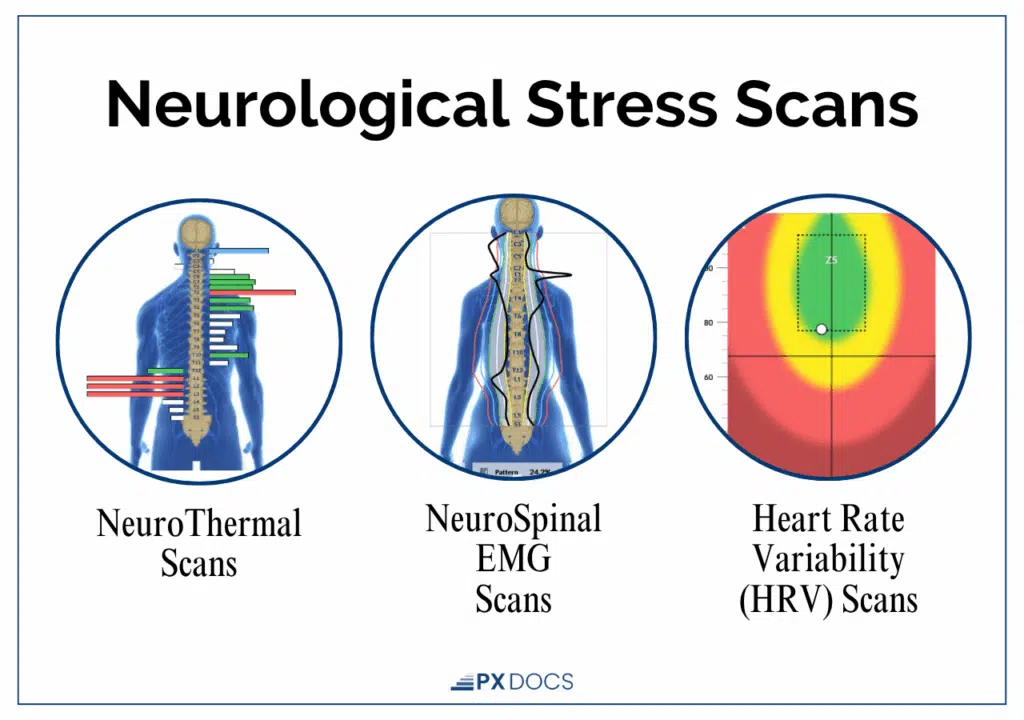
At PX Docs, we use INSiGHT scanning technology to show you exactly where your child’s nervous system is stuck. These scans measure nervous system function, autonomic balance, and specific stress patterns. You can see the dysregulation; it’s not guesswork. Then, care plans get customized based on your child’s individual patterns.
Kids who couldn’t make it through a school day without multiple meltdowns start thriving. Morning battles that lasted hours become manageable. School calls every day have become rare exceptions. Individual results vary, but the pattern holds: address the nervous system first, and everything else finally falls into place.
The Rest of the School Year Can Be Different
The back-to-school crashout isn’t a character flaw, a parenting failure, or proof that your child “just can’t handle school.” It’s a nervous system crying for help. And here’s the hopeful truth: the same neuroplasticity that allowed stress patterns to get stuck can allow new patterns to form. Your child is designed to adapt, regulate, and thrive.
Don’t wait until you’re three weeks into the school year, drowning in crisis mode and getting daily calls from school. Start with a nervous system evaluation. Choose doctors who understand that behavior is neurology, that transitions require regulation, and that healing happens from the inside out.
Your child’s brain wants to work properly. Their nervous system wants to regulate. They want to handle transitions, enjoy school, and feel calm in their own body. Sometimes they just need help getting unstuck. The rest of the school year can be different when you address the nervous system first; everything else finally works.