

For countless parents, watching their child struggle with autism can feel like an endless battle. The daily challenges of managing meltdowns, navigating sensory overload, working on gut health, and supporting social interactions can leave families feeling overwhelmed and desperate for answers.
If you’re searching for the real root causes behind your child’s autism—and looking for answers that reach far beyond conventional labels and medication—you’re not alone.
Recent estimates suggest that 1 in 31 children in the United States has an autism Spectrum Disorder—a rate that has tripled over the past two decades and shows no signs of slowing down
While autism is a complex condition with multiple contributing factors, there is growing evidence that points to one critical piece of the puzzle: the nervous system. At PX Docs, we believe that understanding the neurological foundation of autism is key to providing effective, drug-free care that gets to the heart of the matter.
We’ll dive deep into what the latest research reveals about brain differences in autism, explore the “Perfect Storm” of factors that can lead to nervous system dysregulation, and share how our unique approach of Neurologically-Focused Chiropractic Care aims to restore balance and unlock your child’s full potential.
By the end, you’ll have a new perspective on autism—one that empowers you with hope and the tools to support your child’s healthy development from the inside out.
Why Autism Doesn’t “Start” in the Brain
While brain imaging has revealed fascinating insights into how autism manifests neurologically, a critical question remains: do these brain differences represent the cause of autism, or are they the result of something deeper?
At PX Docs, we believe the answer lies in a deeper understanding of neurodevelopment and nervous system function. The brain and nervous system are by far the most intricate, advanced, and important systems of the body, which is why, as we dive in, you’ll see that there are many interconnected components that weave together nervous system dysfunction and autism.
In the same breath, we promise to go deep and cover this topic more extensively than anyone else has, while also keeping it super simple, easy to understand, and take action – the most important part.
One thing you’ll understand for sure by the time we finish this article is that autism doesn’t actually start in the brain—it ends up there.
The Bottom-Up Development Reality
In utero, the human nervous system develops from the bottom up, not the top down. The brainstem and spinal cord form first, laying the essential foundation for all higher brain functions. This means that when early development is disrupted by factors such as excess maternal stress or environmental toxicity, it can create a ripple effect that alters how the entire brain wires, organizes, and functions.
Think of it like building a house: if the foundation is unstable, every floor built on top will be affected. In the same way, when the foundational layers of the nervous system are impacted before birth, the developing brain is forced to compensate and adapt around that dysfunction, often shaping long-term regulation, behavior, and development.
The Brain Responds to the Body
As your child grows, it’s important to understand that the brain isn’t just a command center—it’s a highly responsive sensory organ, constantly shaped by the input it receives from the body.
From the earliest stages of life, every breath, gut signal, movement, heartbeat, and sensation sends critical messages upward to the brain. This sensory input isn’t background noise—it’s fuel for development. It shapes neural pathways, regulates emotions, drives cognitive function, and influences long-term brain health.
But when that sensory input is disrupted, when the signals reaching the brain are chaotic, inconsistent, or stress-filled, the brain can’t develop and regulate the way it’s designed to. Instead of growing in a state of balance and safety, it adapts to stress.
When a child is exposed to early stressors—such as birth trauma (vacuum, forceps, C-section), chemical stress (medications, toxins, antibiotics), or emotional stress (maternal stress, separation, overstimulation)—it can create significant tension and imbalance in the nervous system.
This shift in your child’s nervous system is called subluxation. Subluxation is a neurological interference that disrupts the function, regulation, and adaptability of the nervous system. It occurs when stress, whether physical, chemical, or emotional, overwhelms the nervous system, leading to dysregulation or dysautonomia – a state of imbalance between the sympathetic (fight-or-flight) and parasympathetic (rest, digest, heal) nervous systems.
This dysregulation disrupts the normal flow of neurological input from the body to the brain, replacing clear, calming signals with chronic stress signals. Instead of being able to organize and regulate itself with ease, the brain begins to adapt around this dysfunction, developing in a state of defense, sensitivity, or imbalance.
Over time, this stress-based pattern can impact every aspect of a child’s development: digestion, sleep, immune function, behavior, and emotional regulation. And because the nervous system builds in a step-by-step sequence, unresolved nervous system dysregulation keeps the brain stuck in survival mode, interfering with the child’s ability to grow, heal, and thrive.
Where Autism Really Begins
The neurological dysfunction that eventually manifests as autism typically begins in four key areas:
- The Brainstem and Upper Cervical Spine: Controls fundamental functions like arousal, attention, and sensory filtering. Subluxation here disrupts the foundation of nervous system function.
- The Vagus Nerve: Responsible for “rest, digest, and regulate” functions, social engagement, and gut-brain communication. Dysfunction here explains many of autism’s core challenges.
- The Autonomic + Central Nervous System: When stuck in sympathetic “fight or flight” dominance, it becomes impossible to access the calm, regulated state necessary for learning and social connection.
- The Neuro-Motor System: While nearly everyone in the autism community has heard of the “gut-brain connection,” an even more important and neurologically essential connection point is the sensorimotor or “neuro-motor” input system into the brain. Simply put, the way the muscles and neurosensory system communicate with the brain and brainstem is far more “potent” and important than even the gut-brain connection.
Understanding that autism can stem from these foundational nervous system disruptions completely shifts how we approach care. Instead of chasing symptoms or compensations with conventional treatments, therapies, and medications, we can address the root neurological dysfunctions that create the brain changes in the first place.
When we address that dysfunction at its foundation, the brain’s remarkable capacity for neuroplasticity allows for genuine healing and transformation.
What Do We Know About the Brain in Autism?
Over the past few decades, advances in brain imaging technology have allowed researchers to peek inside the brains of individuals with autism like never before. While no two individuals with autism have identical brain structure and function, consistent patterns have emerged that provide valuable insights into the neurological underpinnings of autism.
One key area of difference is in the physical structure of the brain. Studies have found that individuals with autism often have atypical cortical folding patterns, particularly in regions involved in processing social and emotional information. This altered cortical architecture is thought to reflect disruptions in early brain development.
At a more microscopic level, autism has been linked to differences in synaptic density—the number of connections between brain cells. A groundbreaking study published in 2022 found that individuals with autism had 17% lower synaptic density across the whole brain compared to neurotypical controls and that this difference correlated with the severity of social difficulties.
Digging deeper into this lower synaptic density finding using our Perfect Storm, subluxation, and decreased sensorimotor input scientific theory and understanding really helps us put this specific puzzle together. If subluxation is present and there is less sensory and proprioceptive input into the brain of children with autism, there will then be less synaptic growth and density due to the foundational decrease in input. Put simply, less demand leads to less “bridge building” of these core synapses.
Autism also involves differences in the function and connectivity of brain regions, not just their structure. Numerous studies have identified patterns of both under-connectivity and over-connectivity in the brains of individuals with autism:
- Long-range connections between distant brain regions tend to be weaker and less coordinated, which may contribute to difficulties with complex information processing and integration.
- Short-range connections within localized brain networks tend to be stronger and more active, which may underlie the focused interests and attention to detail often seen in autism.
- Atypical lateralization (asymmetry between the left and right hemispheres) has also been found, which may affect language development and other specialized brain functions.
Once again, all of these studies fit perfectly together with our understanding of how subluxation, dysregulation, dysautonomia, nervous system dysregulation, vagus nerve dysfunction, and these other related parts fit together with these studies and a brain-based picture of autism. Digging even deeper, we know that subluxation and developmental diaschisis theories link together, meaning that the original site of injury and dysfunction (subluxation) could be located, for example, in the spine or brainstem, while the brain-based dysfunction is at a distal site such as the prefrontal or parietal cortex.
Beyond these structural and functional abnormalities, autism likely involves imbalances in brain chemistry and neurotransmitter systems. While the exact mechanisms are still being uncovered, studies suggest that disruptions in the balance of excitatory and inhibitory neurotransmitters, as well as inflammation in the brain, may play a role. Environmental factors like prenatal stress, toxin exposure, and nutrient deficiencies are also being explored as potential modulators of these neurological differences.
It’s important to note that the brain differences associated with autism are not static—they evolve across the lifespan. Studies have found that many of the structural and connectivity abnormalities are most pronounced in early childhood and tend to normalize to some degree by adulthood. However, the lingering impacts on brain function and behavior often persist, underscoring the importance of early intervention and ongoing support.
While researchers are still working to connect the dots between autism’s neurological differences and its diverse behavioral manifestations, these brain-based insights provide a valuable foundation for understanding autism as a whole-body, nervous system-based condition.
The “Perfect Storm” Model of Autism
So, how do the brain differences in autism arise? At PX Docs, we understand autism not as a single, isolated event but rather as the result of a “Perfect Storm” of multiple factors that converge to alter the course of neurodevelopment.
And while autism eventually presents as differences in brain function and development, the earliest disruptions often begin elsewhere in the body. Autism is not simply a condition based upon genetics or poor gut health; it’s much more intricate, multi-faceted, and neurologically-based than that. The most common place the roots of autism can be found is within the neurospinal and sensorimotor system – the two main systems nearly every other healthcare professional and provider completely skips over.
These underlying imbalances—whether in the motor system, gut, immune system, or nervous system itself—can set the stage for the brain-based challenges we commonly associate with autism. That’s why the most effective, root-cause-focused approaches don’t just target social, emotional, or behavioral signs—they support the whole child, addressing both brain and body together for deeper, more lasting healing.
This “Perfect Storm” often begins before a child is even born, with the mother’s experiences during pregnancy. Numerous studies have found that preconception and prenatal stress, whether from life events, environmental toxins, or infections, can significantly increase the risk of autism and other neurodevelopmental conditions. This is thought to occur through the effects of maternal stress hormones and inflammation on the developing fetal brain.
The storm often intensifies during the birth process itself, particularly when interventions like C-sections, induction, forceps deliveries, or vacuum extraction are used. While these measures can be lifesaving in certain circumstances, they also introduce a significant amount of physical stress and trauma to the infant’s delicate nervous system. The sudden compression and twisting forces can cause stress and tension within the brainstem, spine, and cranium, leading to neurological dysfunction (known as subluxation).
This birth trauma, combined with the lingering effects of prenatal stress, sets the stage for further neurological and physiological challenges in the critical early weeks and months of life. Infants with subluxation and altered nervous system function often struggle with issues like difficulty latching and feeding, which then leads to reflux, colic, poor sleep, and sensory sensitivities. We now know these to be early signs of autism. These challenges are not only distressing for parents but also reflect an underlying state of Autonomic Nervous System imbalance (dysautonomia).
As the storm rages on, it often takes a toll on the developing gut-brain axis as well. Infants with neurological dysfunction are more prone to gastrointestinal issues like constipation, diarrhea, and food intolerances. This can lead to chronic inflammation and altered gut microbiome composition, which may give feedback to the brain to further exacerbate autism-related traits and behaviors.
The end result of this “Perfect Storm” is complex factors of neurological, physiological, and behavioral challenges that manifest as autism. While the exact mix of contributing factors may vary from one individual to the next, the common denominator is a disruption in the healthy development and function of the nervous system.
Autism as Nervous System Dysfunction
At first glance, the diverse array of signs and challenges associated with autism can seem overwhelming and disconnected. But when we view autism through the foundational lens of nervous system dysfunction, a clearer picture begins to emerge.
One of the most influential theories in this regard is the Polyvagal Theory, developed by Dr. Stephen Porges. This theory highlights the critical role of the Autonomic Nervous System, particularly the vagus nerve, in regulating our physiological state, social engagement, and emotional responses.
In autism, the Polyvagal Theory suggests that disruptions in the Autonomic Nervous System can lead to a state of chronic “fight or flight” activation, making it difficult for individuals to achieve a calm, regulated state conducive to social interaction and learning. This may manifest as hyperarousal, sensory sensitivities, anxiety, or withdrawal in social situations.
Closely related to the Autonomic Nervous System is the cerebellum, a region of the brain that has emerged as a key player in autism. While traditionally associated with motor coordination, the cerebellum is now understood to be involved in a wide range of cognitive, emotional, and sensory functions as well.
In autism, studies have found differences in cerebellar structure and connectivity that may contribute to challenges with:
- Motor coordination and balance
- Altered proprioceptive input
- Sensory processing and integration
- Language and communication skills
- Social cognition and perspective-taking
- Emotional regulation and anxiety
Another critical area of focus in autism is the brainstem, which serves as a relay station for incoming sensory information and plays a vital role in regulating arousal, attention, and basic physiological functions. Dysfunction in the brainstem, often related to birth trauma or subluxation, can lead to sensory overload and difficulty with self-regulation. This may manifest as:
- Hyperactivity and impulsivity
- Inattention and distractibility
- Sensory seeking or avoidance behaviors
- Sleep disturbances and digestive issues
While these neurological differences in autism can seem daunting, it’s important to remember that the brain is remarkably adaptable and capable of change throughout life. This property, known as neuroplasticity, means that with the right support and interventions, individuals with autism can develop new neural pathways and improve their functioning over time.
The PX Docs Approach: Neurologically-Focused Chiropractic Care
At PX Docs, we understand that navigating the complex world of autism can be overwhelming for families. That’s why we’ve developed a unique approach to care that combines the latest research on autism’s neurological foundation with a personalized, drug-free care plan philosophy.
At the core of our approach are INSiGHT scans—cutting-edge diagnostic tools that allow us to visualize and quantify areas of neurological stress and imbalance in the brain and nervous system. Using a combination of surface electromyography (sEMG), infrared thermography, and Heart Rate Variability (HRV) analysis, these scans provide a detailed roadmap of each individual’s unique pattern of subluxation and dysautonomia.
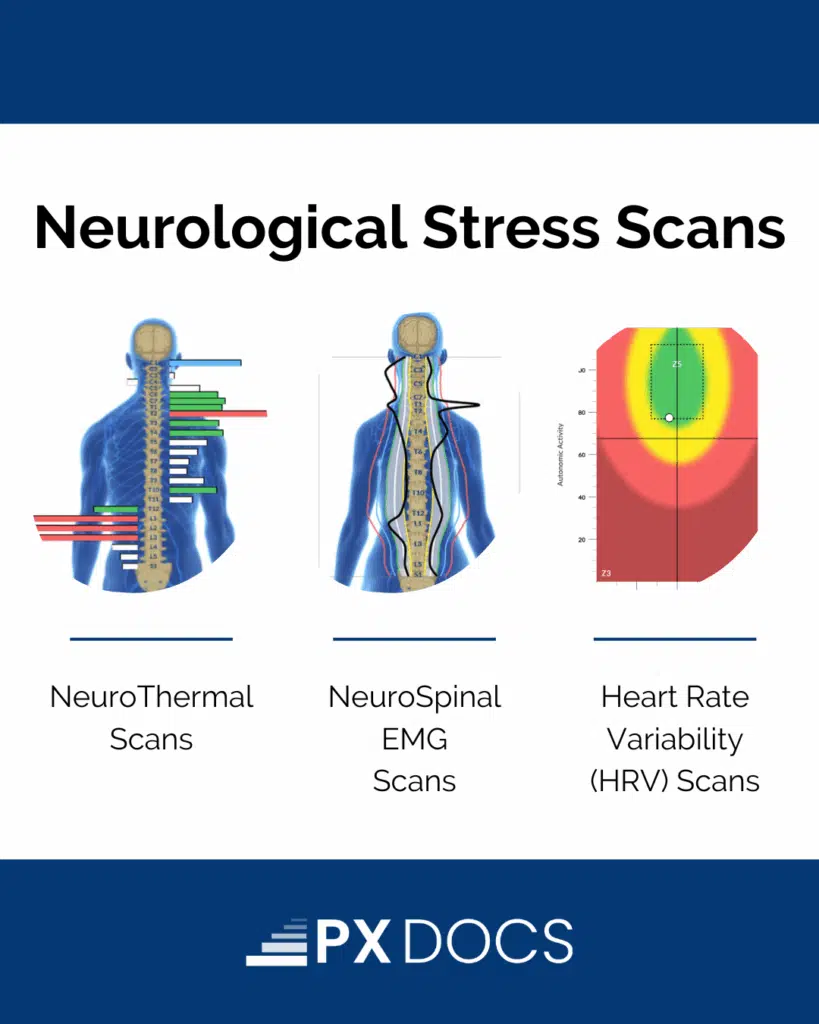
With this information, our doctors develop customized care plans that incorporate specific chiropractic adjustments to reduce subluxation and promote optimal nervous system regulation. Unlike traditional chiropractic care that focuses solely on spinal alignment, our Neurologically-Focused approach targets the specific areas of the nervous system that are most involved in autism, including:
- The upper cervical region, which houses the brainstem and plays a critical role in regulating sensory input, arousal, and attention
- The vagus nerve, which serves as the main conduit between the brain and the digestive, immune, and Autonomic Nervous Systems
- Key regions of the brain involved in sensory processing, emotional regulation, and higher-order cognition, such as the cerebellum and prefrontal cortex
- Transitional zones and the neuro-core, which are key components within the body and neurospinal system that really control sensorimotor tone, balance, coordination, symmetry, and efficiency
By effectively stimulating these areas and promoting better neural communication, our adjustments help to create a foundation for more organized and efficient brain function. Over time, this can lead to improvements in a wide range of autism-related challenges, from sensory processing and emotional dysregulation to social engagement and learning.
It is important to note that before those bigger breakthroughs take place, we often see what we call “neuro soft signs” begin to shift — and these are absolutely essential. These soft signs include improvements in sleep patterns, more regular digestion and bowel movements, and a calming of sensory sensitivities. They’re the early indicators that the nervous system is starting to regulate and heal — the first signs that the brain is getting out of survival mode and back into a state where it can grow, connect, and adapt.
But our approach doesn’t stop at chiropractic care alone. We recognize that autism is a complex, multifaceted condition that often requires a collaborative, multidisciplinary approach. That’s why we work closely with other healthcare providers, educators, and therapists to ensure that each individual receives the comprehensive support they need to thrive.
Whether it’s partnering with occupational therapists to develop sensory-based strategies, collaborating with speech-language pathologists to support communication skills, or consulting with functional medicine practitioners to address underlying medical issues, we believe in a team approach that puts the individual and family at the center.
Empowering Parents with a New Perspective
As a parent of a child with autism, you may have experienced firsthand the limitations and frustrations of the conventional medical approach. Too often, the focus is on managing surface-level signs through medication, behavioral therapies, and accommodations, without addressing the underlying neurological root causes.
While these conventional approaches can provide some support and relief, they often fall short of promoting true healing and transformation. Medications may help to control challenging behaviors or improve focus in the short term, but they come with a host of potential side effects and do little to address the core neurological imbalances at play.
Additionally, today, many parents also report similar frustrations with the functional or integrative medical approach to autism. While much more natural and holistic than conventional medicine, these labs and treatment protocols still take a more medical approach of “outside in” using supplements, vitamins, homeopathic remedies, and so forth to help fill in the gaps that nervous system dysfunction and dysautonomia put forth in the first place. So while this approach gets a layer or two deeper than a traditional pediatrician or neurologist does, it often fails to dig all the way down to the foundational root cause – nervous system dysfunction.
At PX Docs, we believe that there is a better way. By shifting our focus to the underlying neurological factors that contribute to autism’s diverse struggles and symptoms, we can unlock the potential for natural, drug-free healing that gets to the true root of the issue.
Our Neurologically-Focused approach, based on the latest research on autism, the brain, and the nervous system, provides a new path forward for families seeking sustainable, transformative change.
In our PX Docs offices, we’ve had the privilege of witnessing children make truly life-changing transformations — like Nolan’s journey, for example. When Nolan first came to us, he was completely nonverbal and struggled significantly with basic motor skills, including walking. Today, after consistent neurologically-focused chiropractic care, Nolan is not only walking — he’s running, making great improvements in speech, and learning how to self-regulate.
His story is one of many we’ve seen, where children once facing overwhelming developmental challenges begin to thrive in ways their families were told might never be possible. These are the miracles we get to experience every day — and they’re a direct reflection of what happens when the nervous system and brain are given the support and care they need to heal, connect, and thrive.
If you’re ready to explore a new perspective on autism and unlock your child’s full potential, we invite you to visit our PX Docs Directory. Our dedicated team of practitioners is here to guide and support you every step of the way, with compassion, expertise, and a deep commitment to helping your child thrive.