
If your child’s handwriting looks like a struggle, messy letters, uneven spacing, complaints of a tired or aching hand, you’re probably wondering if something deeper is going on. Dysgraphia affects an estimated 5% to 20% of children, and it’s one of the most underdiagnosed learning challenges out there.
But here’s what most articles about dysgraphia won’t tell you: this isn’t just a “handwriting problem.” Dysgraphia is a neurological condition, meaning it starts in the brain and nervous system, not in the hand. And when you understand the neurological roots of why your child can’t get their brilliant ideas onto paper, a whole new world of answers and solutions opens up.
At PX Docs, we’ve seen countless children who struggle with writing, fine motor coordination, and the frustration that comes with both. What we’ve found is that there’s almost always more going on beneath the surface, and it often traces back to nervous system dysfunction that started long before your child ever picked up a pencil.
What Is Dysgraphia?
Dysgraphia is a neurological condition that makes it difficult for a child to write. It can affect the physical act of forming letters, the cognitive process of translating thoughts into written words, or both. The term comes from the Greek words “dys” (impaired) and “graphia” (writing by hand).
It’s important to understand that dysgraphia has nothing to do with intelligence. Your child might have incredible ideas, a rich vocabulary, and strong verbal skills, but when it comes time to put those thoughts on paper, everything falls apart. That disconnect between what they know and what they can produce in writing is one of the hallmarks of this condition.
The Diagnostic and Statistical Manual of Mental Disorders (DSM-5) doesn’t list dysgraphia as a standalone diagnosis. Instead, it falls under the broader category of “specific learning disorder with impairment in written expression.” But regardless of what it’s called on paper, the challenges your child faces are very real and deserve attention.
Dysgraphia Subtypes
There are generally three recognized subtypes of dysgraphia:
Dyslexic dysgraphia (linguistic dysgraphia) involves a breakdown between the parts of the brain responsible for how words sound and how they look in written form. Kids with this type often have poor spontaneous writing and spelling, but their ability to copy text and draw is usually preserved.
Motor dysgraphia relates to the fine motor skills needed for the physical act of writing. Children with motor dysgraphia struggle to hold a pencil properly, form letters consistently, and write without significant fatigue or pain. Their spelling may be fine when done orally, but they just can’t get it down on paper legibly.
Spatial dysgraphia affects how a child perceives and uses the space needed for writing. Letter spacing is inconsistent, lines drift up or down the page, and drawing ability is also affected. Like motor dysgraphia, oral spelling is typically preserved.
Many children present with features of more than one subtype, which is why a thorough evaluation is so important.
Signs and Symptoms of Dysgraphia
Recognizing dysgraphia early makes a real difference. The signs can show up as early as preschool, but they often become most obvious once a child starts formal writing instruction in kindergarten and first grade.
Motor-Related Signs
The physical side of dysgraphia shows up in how your child handles the mechanics of writing. You might notice an awkward or overly tight pencil grip, where they’re practically white-knuckling the pencil. Letter formation is inconsistent; sometimes letters are too big, sometimes too small, and the spacing between words is all over the place.
Writing tends to be painfully slow, and your child may complain that their hand hurts or gets tired quickly. You might also see them avoiding writing tasks altogether, or their body posture during writing looks contorted and uncomfortable.
Cognitive-Related Signs
On the cognitive side, children with dysgraphia often struggle with spelling, grammar, punctuation, and sentence structure. They might have great ideas verbally, but can’t organize them into coherent written form. Written assignments may be unusually brief, not because they don’t have anything to say, but because the act of producing written text is so exhausting that they give up early.
They may also leave out words from sentences, struggle with capitalization rules, or reverse letters well past the age when that’s developmentally typical.
Emotional and Behavioral Signs
What doesn’t get talked about enough is the emotional toll. Children with dysgraphia often develop anxiety around writing tasks, low self-esteem about their schoolwork, and frustration that can look like behavioral problems.
They may be labeled “lazy” or “not trying hard enough” when, in reality, they’re working harder than most of their peers; their nervous system just isn’t cooperating.
What Causes Dysgraphia? The Conventional View
Conventional medicine recognizes dysgraphia as a neurological condition, but the conversation usually stops there. Most resources will tell you the exact cause is unknown, that it seems to run in families, and that several areas of the brain are involved in the writing process.
And that much is true. Research shows that writing in children involves widespread brain activation across the frontal, temporal, parietal, and occipital lobes, as well as the cerebellum. Neuroimaging studies have revealed that children with dysgraphia show different patterns of brain connectivity compared to typical writers; specifically, they tend to have less efficient neural connections during writing tasks.
The conventional approach typically identifies these contributing factors:
- Neurological differences in how the brain processes and produces written language. Multiple brain regions need to work together to coordinate the complex act of writing, from retrieving the visual image of a letter to planning the motor movements to actually executing them with a pencil.
- Fine motor skill deficits affect the physical ability to control a writing instrument. This includes issues with hand strength, finger dexterity, and motor planning.
- Working memory challenges make it hard to hold information in mind while simultaneously performing the motor act of writing. A child might lose their train of thought because so much cognitive energy goes toward simply forming letters.
- Co-occurring conditions like ADHD, dyslexia, and Autism Spectrum Disorder. Research has found that dysgraphia is present in approximately 56% of children with ADHD and 56% of children with Autism, with even higher rates (71-72%) in children who also have a reading or math learning disability.
This is all valuable information. But there’s a critical question that conventional medicine doesn’t ask: Why is this child’s brain wired this way? What happened to their nervous system that created these disrupted patterns in the first place?
The Neurological Root Causes Most Providers Miss
This is where things get really interesting for parents who’ve been told “we don’t know why” or “your child will just need accommodations.” At PX Docs, we don’t stop at identifying the symptoms; we trace them back to their neurological origins.
Here’s what we know: writing is one of the most neurologically complex tasks a child can perform. It requires the simultaneous coordination of motor planning, fine motor execution, visual-spatial processing, language retrieval, working memory, and sensory feedback, all happening in real time. That means writing is essentially a stress test for the entire nervous system.
The Role of Nervous System Dysregulation
For many children with dysgraphia, the deeper issue isn’t that their brain “doesn’t know how to write”; it’s that their nervous system is stuck in a state of chronic stress, disconnection, and dysregulation. When a child’s Autonomic Nervous System is locked into sympathetic dominance, what we call being stuck on the “gas pedal”, their body is prioritizing survival over skill development.
Think about it this way: if your child’s nervous system is constantly running in fight-or-flight mode, the brain is directing resources toward self-protection, not toward the precise, coordinated motor planning needed for handwriting. Fine motor skills require a calm, regulated nervous system. They require the “brake pedal,” the Parasympathetic Nervous System, to be online and functioning.
This is why so many children with dysgraphia also struggle with focus, emotional regulation, sensory processing, and other challenges. These aren’t separate, unrelated problems. They’re all expressions of the same underlying nervous system dysfunction.
The “Perfect Storm”
At PX Docs, we often refer to the combination of factors that can contribute to neurological challenges like dysgraphia as “The Perfect Storm.” This concept describes how a series of events and stressors, often beginning very early in life, can create a cascading effect that disrupts the normal development and function of the nervous system.
- Prenatal stress and maternal health play a significant role. When a mother experiences chronic stress during pregnancy, elevated cortisol levels can cross the placenta and affect how the baby’s nervous system develops. This prenatal stress exposure can make the developing nervous system more reactive and less adaptable from the very start.
- Birth trauma and interventions are another critical factor. Procedures like C-sections, forceps delivery, vacuum extraction, and induction can create physical stress to the baby’s delicate brainstem and upper cervical region. This area is particularly important because it’s the gateway for vagus nerve signaling, the primary nerve responsible for activating the parasympathetic “rest, regulate, and digest” functions. When birth trauma affects this region, it can set the stage for the kind of nervous system dysregulation that can show up later as motor planning difficulties, fine motor challenges, and yes, dysgraphia.
- Early childhood stressors then compound the problem. Frequent illnesses, antibiotic use, and other environmental stressors can keep the nervous system stuck in that sympathetic-dominant state, making it harder for the child’s brain to develop the precise neurological pathways needed for complex tasks like writing.
Subluxation and Motor Development
At the heart of this neurological dysfunction is what we call subluxation, a state of misalignment, fixation, and neurological interference in the neurospinal system that disrupts proper communication between the brain and body. Subluxation isn’t just a structural issue; it’s a neurological one. When subluxation is present, it disrupts the flow of proprioceptive information (the body’s sense of where it is in space) and motor signaling between the brain and the extremities.
This matters enormously for dysgraphia. Handwriting requires incredibly precise proprioceptive feedback; your brain needs to know exactly where your fingers are, how hard you’re pressing, and how your hand is positioned, all without looking. When subluxation disrupts this sensorimotor loop, the result is exactly what you see in dysgraphia: inconsistent letter formation, poor spatial awareness on the page, difficulty with pressure control, and motor fatigue.
Every pediatric development expert knows that if gross and fine motor delays set in early, that child is more likely to struggle with brain-based neurosensory challenges later in life. The motor system is foundational; when it’s compromised by nervous system dysfunction, everything that builds on it (including writing) is affected.
A Neurological Approach to Dysgraphia
It’s important to note that INSiGHT scanning technology does not diagnose medical conditions, and Neurologically-Focused Chiropractic Care is certainly not a treatment or cure for dysgraphia or any other condition, not even back pain. Instead, these INSiGHT Scans help us track down the root cause of nervous system dysfunction and dysregulation, and build customized care plans and adjusting protocols to help shift the nervous system back into a state of balance, regulation, and resilience.
At PX Docs, we use INSiGHT Scans to objectively assess how well a child’s nervous system is functioning. This assessment includes three components:
- Heart Rate Variability (HRV) Analysis measures the balance between the sympathetic nervous system (“fight-or-flight”) and parasympathetic nervous system (“rest, regulate, and digest”) branches of the Autonomic Nervous System. For children with dysgraphia, this often reveals a nervous system stuck in sympathetic overdrive, which explains why fine-motor precision suffers.
- Surface Electromyography (sEMG) assesses the electrical activity of muscles along the spine, helping to identify areas of tension and altered neuromuscular function or proprioception. In children with writing difficulties, we often see patterns of neuromotor tension that correlate directly with poor motor coordination and control.
- Thermal Scanning uses infrared sensors to measure temperature differences along the spine, which can indicate areas of dysautonomia, an imbalance in the Autonomic Nervous System.
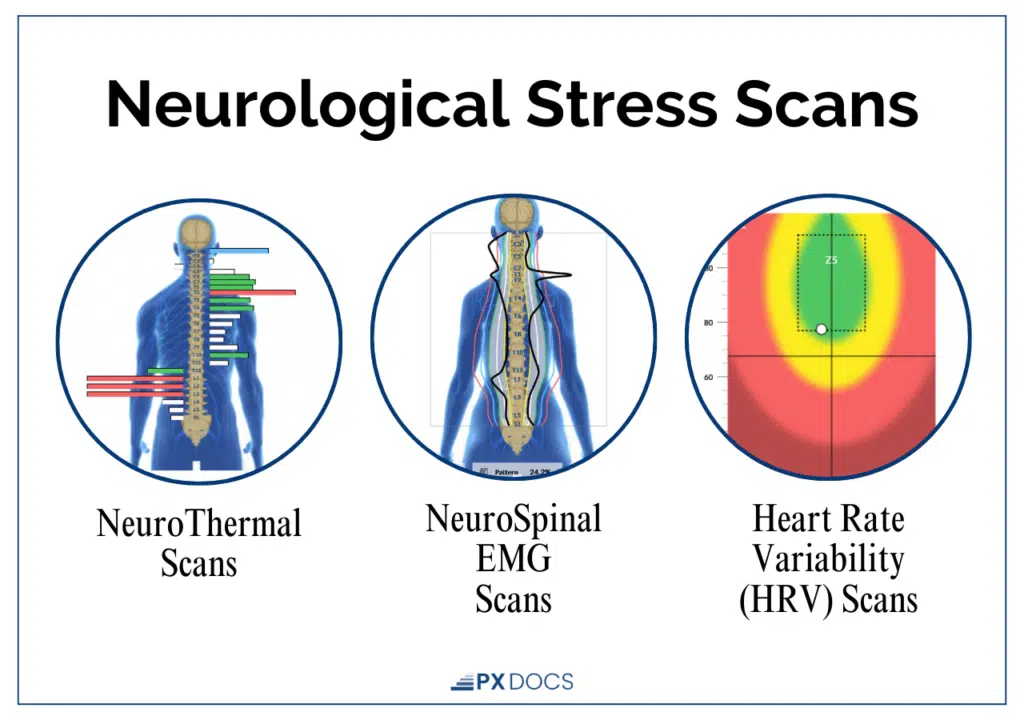
What makes these scans valuable is their ability to detect subtle changes in neurological function. For a child with dysgraphia, the scans can reveal exactly where in the neurospinal system the interference is occurring, giving us a roadmap for care rather than a one-size-fits-all approach.
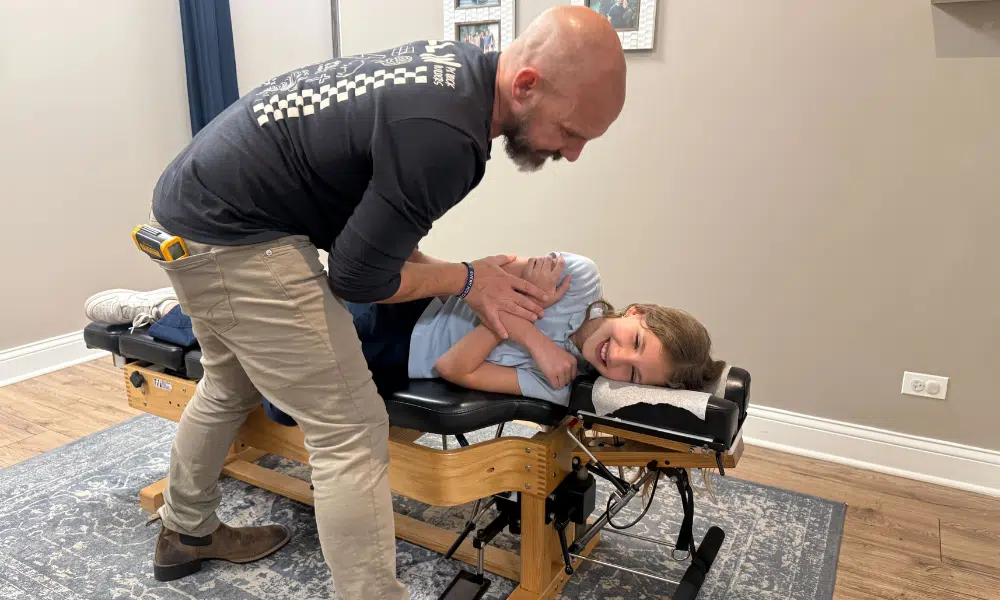
Neurologically-Focused Chiropractic Care works by addressing subluxation, the neurological interference that’s disrupting your child’s brain-body communication. Gentle, precise adjustments help restore proper signaling between the brain and the body, particularly in areas critical for motor planning and fine motor execution.
Conclusion
Dysgraphia is far more than messy handwriting. It’s a neurological condition that reflects how your child’s brain and nervous system are functioning, and understanding the root causes makes the path forward much clearer.
Conventional approaches like occupational therapy and classroom accommodations play an important role. But for many families, the missing piece has been understanding why their child’s nervous system isn’t supporting the writing process. The Perfect Storm of prenatal stress, birth trauma, and early childhood stressors can create the kind of nervous system dysfunction that shows up as motor planning difficulties, fine motor challenges, and dysgraphia. Your child’s struggles with writing make sense. They have a cause. And most importantly, there are answers beyond just coping strategies. Talk to your pediatrician about evaluation and therapy options, and visit the PX Docs Directory to find a Neurologically-Focused Chiropractor near you who can assess your child’s nervous system function and create a plan to help them thrive.