

You’re here because you’ve heard about polyvagal exercises—box breathing, grounding, cold exposure—tools that are supposed to calm the nervous system. And for many adults healing from trauma, they can help. But here’s what often gets missed: if a child’s nervous system never developed proper regulation in the first place, you’re not retraining anything. You’re trying to build a system that never fully came online.
At PX Docs, we’ve worked with thousands of families whose kids didn’t respond to the usual approaches. These parents have tried everything. Some kids can’t tolerate the exercises at all. Others do them “right” and still struggle with meltdowns, poor sleep, digestive issues, or constant fight-or-flight. That’s because the issue isn’t behavioral, it’s neurological.
When early stress, birth trauma, or physical interference disrupts vagus nerve function, exercises alone can’t fix it.
We’ll walk you through the common polyvagal exercises—but more importantly, it will explain why they sometimes fail to make lasting change and what actually needs to happen first.
Understanding Polyvagal Theory
Polyvagal theory was developed by Dr. Stephen Porges in the 1990s. He discovered that your Autonomic Nervous System has three states, not two:
- Ventral vagal (safe and social): Where your child should spend most of their time. Heart rate is steady, breathing is calm, digestion works, and they can focus and learn. This is where growth happens.
- Sympathetic (fight or flight): Your body’s alarm system. Many kids get stuck here—constant anxiety, hyperactivity, can’t settle down. Their body thinks they’re being chased by a bear all day.
- Dorsal vagal shutdown: The emergency brake. When fight or flight doesn’t work, the nervous system shuts down. In kids, this looks like spacing out, appearing “checked out,” or going limp during meltdowns.
Oftentimes, these exercises only work temporarily because the nervous system is deeply stuck in fight-or-flight after years of accumulated stress.
Here’s the critical piece: many regulation exercises are designed to help the nervous system shift back into a calm, safe state after stress or trauma. They work best when the system has previously experienced and learned how to access those regulated states.
But what happens when the nervous system never fully developed the ability to access that calm, regulated state in the first place? Or has been stuck in a chronic stress pattern for so long that it’s extremely difficult to get back?
In these situations, calming techniques like breathing exercises, sensory tools, or mindfulness strategies can certainly help in the moment, but they often don’t create lasting change. That’s because the nervous system doesn’t just need reminders to calm down — it needs repair.
The communication pathways between the brain and body need to be restored so the nervous system can properly regulate itself in the first place. When neurological interference is present, the signals that should allow a child to access calm, connection, focus, and flexibility simply aren’t flowing the way they should.
This is why the goal isn’t just to add more regulation techniques. The goal is to restore and repair the nervous system’s ability to regulate itself. When that foundation improves, the strategies parents and therapists are already using finally start to work the way they’re supposed to.
The Vagus Nerve Connection
The vagus nerve runs from your brainstem through your neck, chest, and abdomen. It controls or influences almost every major system. When it’s working right, everything flows. When it’s not, you see problems everywhere.
I tell families: “What happens in Vagus doesn’t stay in Vagus.” Here’s what vagus nerve dysfunction actually looks like in children:
- Digestive problems: Chronic constipation unresponsive to diet changes. Reflux. Stomach aches with no medical explanation. Extreme pickiness because eating is genuinely uncomfortable.
- Immune dysregulation: Getting every cold. Chronic ear infections. Recurring strep. Allergies are getting worse. Eczema. The immune system can’t properly regulate inflammation.
- Heart and breathing issues: Rapid heart rate at rest. Difficulty calming after activity. Shallow chest breathing instead of deep belly breaths. Breath-holding during tantrums.
- Speech and communication: Speech delays despite therapy. Articulation problems. Monotone voice. Difficulty projecting voice. Selective mutism or going nonverbal when stressed.
- Motor challenges: Delayed milestones. Poor coordination. Toe-walking past age 3. W-sitting. Clumsy, accident-prone. The nervous system can’t settle into the calm state needed for refined movement.
- Sleep dysfunction: Taking hours to fall asleep. Waking multiple times. Restless sleep. Night terrors. Waking exhausted. The nervous system can’t shift from daytime to nighttime states.
- Social and emotional struggles: Poor eye contact. Flat affect. Can’t read emotions. Difficulty making friends. Intense emotions—0 to 100 in seconds. Long meltdowns that nothing interrupts.
Parents suddenly realize, it’s not seven separate problems. It’s one nervous system that can’t function properly.
The Honest Assessment of Polyvagal Exercises
Let’s talk about the exercises themselves. Here are the main ones, what they’re supposed to do, and insight about when they work best and when they don’t.
- Deep Breathing (box breathing, belly breaths): Supposed to activate the Parasympathetic Nervous System through the vagus nerve. Works great if your child’s vagus nerve has proper tone and they’re just stressed. Doesn’t work when there’s physical interference —you’re trying to activate a system that’s offline.
- Grounding Techniques (five senses exercises, physical grounding): Brings attention to the present and interrupts the stress response. But many kids have sensory processing challenges precisely because their nervous system is dysregulated. Asking them to focus on sensory input when their sensory system is overwhelmed is like asking someone to listen better when the volume’s maxed out.
- Cold Water Exposure (cold washcloth, ice): One of the fastest ways to trigger a physiological shift. Studies have found that it reduces cortisol levels while promoting endorphin production. It can provide temporary relief even in the presence of underlying dysfunction because it’s such a strong stimulus.
- Vocal Toning (humming, singing): Direct vibration stimulates the vagus nerve. One of the better options because it’s physical stimulation. But if the vagus nerve is compressed at the brainstem or upper neck, the vibration can’t travel properly.
- Movement (yoga, heavy work, intentional movement): Provides calming proprioceptive input. Actually, one of the best tools because it doesn’t rely on conscious control. However, kids with significant dysfunction often seek extreme movement because they need intense input to feel anything. The regulation doesn’t stick.
Parents come in who’ve done all these exercises religiously. Sometimes they work perfectly (that’s the hope), but sometimes, things are only better for 10 minutes. Then they’re right back where they started. That’s not a failure of effort—that’s a sign something deeper is going on.
When Exercises Aren’t Enough
So what’s actually happening? Let me walk you through what creates chronic nervous system dysfunction in children.
The “Perfect Storm”
Your child wasn’t born with a diagnosis. They were born with a nervous system that couldn’t develop properly because of what we call “The Perfect Storm.”
- Early neurological stress: When mom experiences significant stress during pregnancy—fertility challenges, IVF, previous loss, life trauma—stress hormones cross the placenta. The baby’s nervous system is programmed to detect danger. Its baseline “normal” becomes sympathetic dominance.
- Birth trauma: C-sections, vacuum extraction, forceps, inductions, prolonged labor, and other birth interventions—all create physical force on the baby’s head and neck. The upper cervical spine houses the brainstem and vagus nerve exit point. Birth trauma can physically compress or irritate the vagus nerve. This is subluxation, neurological dysfunction caused by physical interference.
- Early childhood stressors: Frequent antibiotics. Reflux meds. Environmental toxins. Each creates additional stress on a nervous system that has never achieved regulation. The dysregulation compounds. The fussy baby becomes the colicky baby, becomes the toddler with sensory issues, becomes the school-age child with ADHD or Autism.
They don’t grow out of it. They grow into it.
Subluxation
If there’s physical compression of the vagus nerve at the brainstem or upper cervical spine, no amount of breathing exercises will fix that interference.
You’re standing on a garden hose. You can adjust the pressure at the spigot all you want. But until you move your foot off the hose, the flow stays restricted.
Subluxation is the foot on the hose. Polyvagal exercises are adjusting the spigot.
What INSiGHT Scans Show
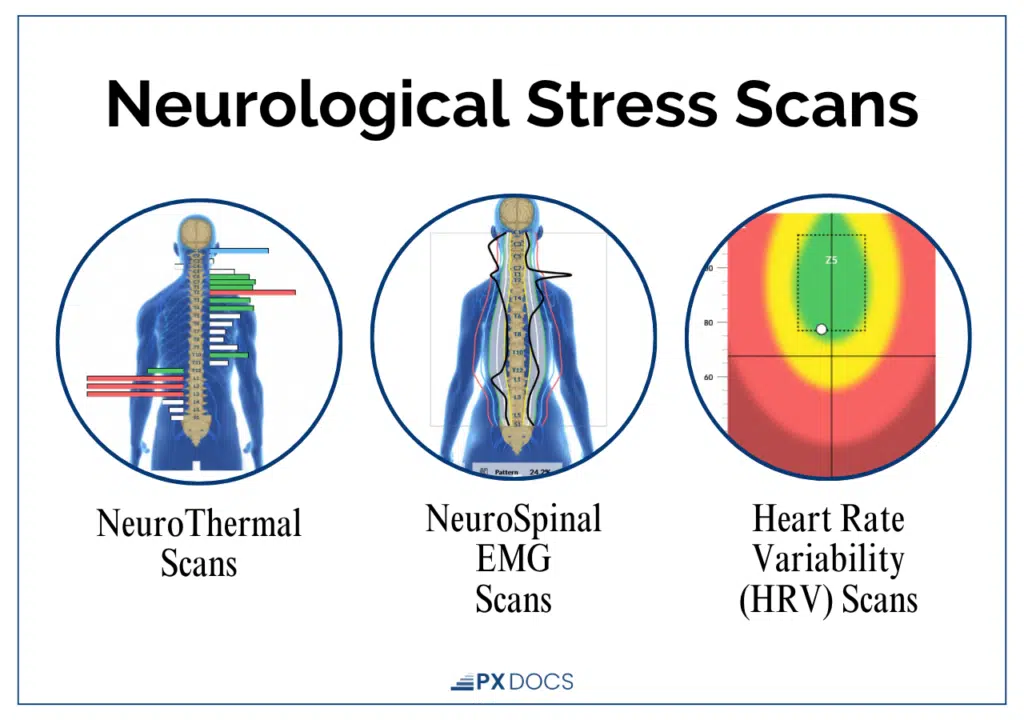
We use INSiGHT scanning technology to measure what’s objectively happening with your child’s nervous system. The scans measure:
- Heart Rate Variability (HRV): Shows the balance between sympathetic and parasympathetic branches. Kids with poor vagal tone have low heart rate variability—their heart rate stays stuck at one speed.
- Surface EMG: Measures electrical activity in spinal muscles, showing us where tension and dysregulation are centered.
- Thermal Scanning: Measures temperature differences along the spine. Where there’s dysautonomia, we see abnormal patterns.
When we look at scans of kids who’ve been doing polyvagal exercises with minimal results, I can see why. Massive subluxation at the upper neck. Sympathetic system maxed out. Parasympathetic suppressed. The vagus nerve is essentially offline.
No breathing exercise can fix that.
Nervous System Optimization First
You have to address neurological interference first. Once you remove the blockage on the vagus nerve, the nervous system can begin to self-regulate. Then, polyvagal exercises actually become effective.
How Neurologically-Focused Chiropractic Care Works
The adjustments we do aren’t cracking and popping. We use precise, gentle pressure to release tension patterns that create interference. When we adjust the upper cervical spine, we’re taking pressure off the brainstem and vagus nerve. We’re allowing the nervous system to communicate properly. The body already knows how to regulate; we’re removing what’s blocking it.
The Healing Sequence
Changes often happen in a predictable order:
- Sleep improves first
- Digestion comes next
- Immune function strengthens
- Motor control improves
- Sensory processing improves
- Communication and social engagement improve
This sequence makes sense when you understand that the vagus nerve controls these systems in this order. Sleep and digestion are primitive functions; they come online first. Social engagement is advanced; it develops last.
Then Exercises Actually Work
Once the nervous system is functioning properly, all those polyvagal exercises you’ve been trying actually become effective. The breathing exercises work because there’s a functioning vagus nerve to respond. The grounding techniques work because sensory processing is online.
The exercises become tools for fine-tuning an already-functioning system rather than desperate attempts to jumpstart one that’s offline.
This is where everything else you’ve tried starts working, too. The diet that barely helped before now makes a noticeable difference. The supplements get absorbed. The therapies progress faster because the child’s nervous system can integrate what they’re learning.
You have to “get the nervous system online first.” It’s the foundation. When you try to build interventions on a dysregulated nervous system, you’re building on sand.
Your Child Is Designed to Heal
If you’re recognizing your child in these descriptions, this isn’t your fault. You’ve been doing the exercises. Following the protocols. When things didn’t improve, you probably blamed yourself.
But if there’s neurological interference preventing your child’s nervous system from functioning properly, no amount of effort with exercises alone is going to fix that. It’s a missing piece you didn’t know to look for.
Your child’s nervous system is designed to heal. When you remove the interference, the body knows what to do. It’s been trying to regulate this whole time. It just couldn’t get past the roadblock. Visit the PX Docs directory to find a trained Neurologically-Focused Chiropractor who can properly assess and address subluxation and vagus nerve dysfunction. Your child deserves more than trait management. They deserve a nervous system that works.