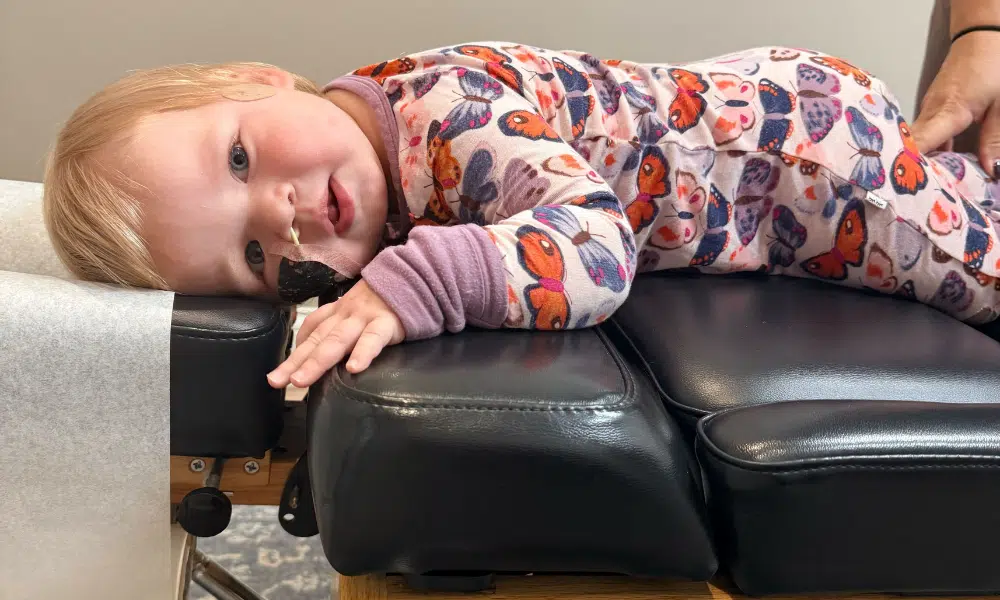

Viral sleep videos circulate widely, promising instant results through simple techniques like gently stroking a baby’s nose with a tissue. These methods are often presented as universal solutions, yet many infants continue to struggle with sleep well past midnight despite repeated attempts.
Common sleep strategies such as white noise, swaddling, the 5 S’s, extended rocking, and bouncing are frequently used with little lasting success. In many cases, infants wake immediately when placed down, even after long periods of soothing.
What is rarely addressed is the role of the nervous system. Popular sleep tricks are effective only when an infant’s nervous system is capable of shifting into a regulated, restful state. When the nervous system remains in a heightened state of arousal, no external technique can force the transition into sleep.
Why Traditional Sleep Tricks Fail for Some Babies
Think of your baby’s nervous system like a car with two pedals. The gas pedal is the Sympathetic Nervous System, alert and active. The brake pedal is the Parasympathetic Nervous System, rest, and sleep.
Sleep requires taking your foot off the gas and pressing the brake. Heart rate slows. Breathing deepens. Muscles relax.
But when subluxation—neurological interference—creates tension in the upper neck where the brainstem exits, the brake pedal doesn’t work right. Your baby’s nervous system gets stuck in sympathetic dominance. Running on the gas pedal only, 24 hours a day.
This isn’t about being overtired. It’s about their Autonomic Nervous System being neurologically incapable of making the shift from awake to asleep. They want to sleep. Their bodies can’t physically get there.
You see this in babies who act “wired” despite exhaustion, startle easily and stay startled, can’t self-soothe no matter what you try, and seem uncomfortable in their own body, arching, stiffening, constantly moving.
The “Perfect Storm” That Starts Before Birth
At PX Docs, we call this the “Perfect Storm,” three layers of stress that overwhelm developing nervous systems.
- Stage 1: Prenatal Stress. Chronic stress during pregnancy means cortisol crosses the placenta. Research shows prenatal stress alters fetal development, programming the sympathetic system to run hot and parasympathetic to stay suppressed.
- Stage 2: Birth Interventions. Common birth interventions—such as C-sections, forceps, vacuum extraction, induction, or prolonged labor—can create physical and neurological stress, especially in the upper neck and brainstem. This creates subluxation right where the vagus nerve emerges—where all signals for sleep need to flow freely.
- Stage 3: Early Stressors: Modern babies face an unprecedented mix of stressors—even in their first months: antibiotics, environmental toxins, food additives, and early overstimulation from lights, sounds, or screens. This cumulative stress can overwhelm a baby’s developing nervous system, leaving it stuck in sympathetic dominance and making it harder for them to calm and sleep.
This stress often shows up as colic, reflux, constipation, or ear infections. Each adds stress to an already overwhelmed nervous system. But here’s what conventional pediatrics misses: these aren’t separate problems. They’re all symptoms of the same root cause—nervous system dysfunction from subluxation. The vagus nerve, which regulates sleep, also controls digestion and immune function, linking these seemingly separate challenges.
Do the Tissue Trick and Quick Hacks Actually Work?
The Tissue Technique: What Parents Report
The method is simple: stroke a tissue down your baby’s face in a slow, repetitive rhythm. For babies with regulated nervous systems, this tactile stimulation activates the parasympathetic response. It’s enough to tip them from “sleepy but awake” to “actually asleep.”
But for babies with subluxation preventing proper parasympathetic function? That signal gets blocked. The nerve pathways needed to process “safe, time to sleep” aren’t working. The technique is fine. The infrastructure for it to work is broken.
Why Results Vary Wildly Between Babies
White noise mimics womb sounds. Swaddling provides benefits like deep pressure that tells the nervous system, “you’re safe.” The 5 S’s method (Swaddle, Side, Shushing, Swinging, Sucking) addresses multiple sensory systems simultaneously. Pacifiers directly activate the vagus nerve through rhythmic sucking.
These methods all attempt to activate the Parasympathetic Nervous System. They work for babies whose nervous systems can receive that message. But with subluxation, the message can’t get through effectively.
This is what conventional sleep advice completely misses. Articles about sleep training assume the neurological infrastructure for sleep is intact. Your baby doesn’t need a better technique. They need the neurological interference removed so the technique can actually work.
How Your Baby’s Nervous System Controls Sleep
The vagus nerve runs from the brainstem down through the neck, chest, and abdomen, connecting to virtually every major organ. It controls heart rate, breathing, digestion, inflammatory response, and emotional regulation.
When vagal tone is strong, your baby can shift smoothly from alert to calm, awake to asleep. When subluxation in the upper cervical spine interferes with vagus nerve function, your baby gets stuck in sympathetic dominance. Heart rate stays elevated. Digestion gets disrupted. Sleep becomes nearly impossible.
This explains why babies with sleep struggles almost always have other issues too. It’s the same nerve controlling all these functions.
Research published in Frontiers in Pediatrics found that chiropractic care improved vestibular dysregulation in colicky babies, with significant increases in sleep duration. When adjusted, babies sleep longer because nervous system function improves at the source.
Even more importantly, in our experience with thousands of babies, we see a pattern that brings families real relief. Babies who once slept in short bursts, cried for hours, or struggled with digestion often begin to settle almost immediately after care. Naps get longer, nights are calmer, and the fussiness that weighed on parents starts to lift. These changes aren’t just small wins—they’re a signal that the nervous system is finally finding balance.
Like Rocco, for example: Mom said, “After his very first adjustment, he slept from 8 pm to 4 am! After the first three, we noticed him moving his head more frequently while sleeping, which was so cool (and relieving) to see!”
Normal vs. Dysregulated Sleep Patterns
Normal: Takes 10-20 minutes to fall asleep. Sleeps 2-4 hour stretches overnight. Naps last 45-60 minutes. Gets better at sleep over time.
Dysregulated red flags:
- Takes 30-45+ minutes to fall asleep consistently
- Wakes every 45-60 minutes all night
- Naps only 20-30 minutes maximum
- Wakes up screaming, not just fussing
- Arching back, strong head-turning preference, difficulty feeding, hands fisted tight beyond 4 months
These aren’t about sleep training. They’re about a nervous system neurologically incapable of maintaining parasympathetic activation.
Quick Methods That Support Nervous System Regulation
These techniques work best when foundational interference is addressed:
- Optimize Sleep Environment: Dim lights 30 minutes before sleep. Temperature 68-72°F. White noise at 50-60 decibels. No screens, bright lights, or loud sounds.
- Use the 5 S’s with Neurological Context: Each method targets parasympathetic activation. If your baby fights the swaddle violently, this may indicate sensory processing issues due to subluxation.
- Infant Massage: Research shows that massage reduces cortisol while increasing parasympathetic activation. Light forehead stroking, gentle ear and jaw massage.
- Predictable Routines: Same sequence every time. Your baby’s nervous system learns to recognize the pattern and begin shifting toward rest.
- Catch Early Sleep Cues: Yawning, eye rubbing, decreased activity. Act within 5-10 minutes. For babies with dysfunction, the window between “sleepy” and “overtired” is incredibly small.
- Address Digestive Comfort: Reflux, colic, and sleep issues stem from the same source—vagus nerve dysfunction.
- Safe Contact Sleep When Needed: Your baby’s nervous system regulates through connection with yours. When done safely, this provides necessary co-regulation while working on the root cause.
How Addressing Subluxation Creates Consistent Sleep
It’s important to note that Neurologically-Focused Chiropractic Care is not a treatment or cure for sleep conditions or any other condition, not even back pain. Instead, we identify subluxation through INSiGHT scanning and restore nervous system communication through gentle adjustments—removing interference that prevents self-regulation.
We don’t cure sleep conditions; we restore nervous system function, and sleep improves as a natural result.
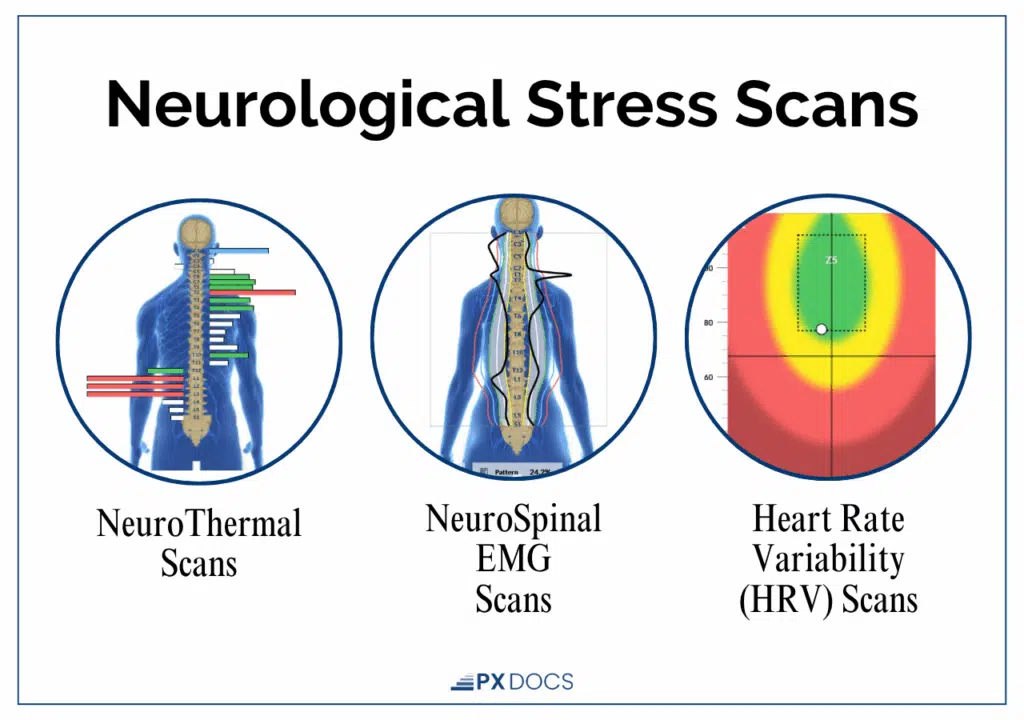
INSiGHT Scans: Objective Assessment
- Heart Rate Variability (HRV) shows whether your baby’s stuck in sympathetic mode or has a healthy balance.
- Surface EMG reveals muscle tension patterns from subluxation.
- Thermal imaging detects inflammation and dysfunction along the neurospinal system.
These scans show exactly where interference exists—no guessing. This is objective data that changes as nervous system function improves.
Typical improvements parents report:
- Falling asleep faster
- Longer sleep stretches
- Easier to soothe when waking
- Bonus improvements: feeding, digestion, and an overall ‘happier baby’
Getting Your Baby the Sleep You Need
If home strategies aren’t working or you want to be proactive and check for neurological stress before challenges show or get worse, don’t hesitate to reach out to your local PX Doc!
PX Docs providers are trained in pediatric neurology, use INSiGHT scanning for objective assessment, and understand the “Perfect Storm” framework. We’re here to support you and give you real hope, answers, and help!
Remember: babies need sleep and a calm, regulated nervous system to thrive—don’t settle for the idea that your child simply has to “grow out of it.”
Beyond the 40-Second Promise
You’re not failing as a parent. Your baby’s nervous system is just stuck, and that’s fixable.
While the tissue trick might work in 40 seconds for babies with regulated nervous systems, lasting sleep patterns require addressing the “Perfect Storm” that created the dysfunction. Quick techniques plus root-cause resolution equal lasting results.
There is hope—and it starts with understanding what’s really happening neurologically when you’re trying to put a baby to sleep in 40 seconds. We encourage you to visit the PX Docs directory to find a Neurologically-Focused practitioner near you. You and your family are our priority.