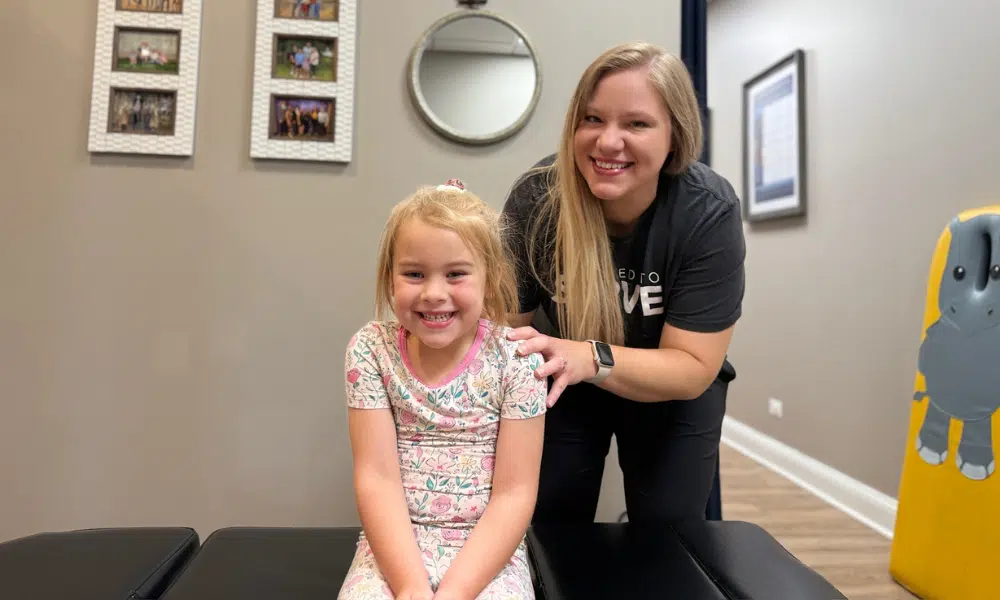
You brought your kid in because they were struggling. The meltdowns, the sleep issues, the sensory overload, the gut problems, you’d tried everything else, and nothing was working.
Then you found Neurologically-Focused Chiropractic Care and started seeing real changes on your child’s INSiGHT Scans. Maybe those changes have even started showing up at home—better sleep, easier mornings, fewer explosions at the dinner table.
But here’s the thing nobody talks about enough: your child’s nervous system didn’t develop totally on its own. It learned how to function from yours. And if your nervous system is still stuck in overdrive, running on caffeine, adrenaline, and sheer willpower, it’s going to keep pulling your child’s nervous system back into stress mode, even as their care progresses. We know this isn’t your intent and that you’re always trying to do your very best, giving 100% in every aspect of life.
This is co-regulation. And that’s why it’s your turn to get scanned and adjusted!
Your Nervous System Is Your Child’s Template
Co-regulation is the process where a calm, regulated adult’s nervous system helps a child’s nervous system find balance. It’s not a parenting technique. It’s not something you do with your words or your breathing exercises (although those help). It’s something your nervous system does automatically—or can’t do, if it’s stuck.
Think of it like this. Your Autonomic Nervous System has two main settings:
- The Sympathetic Nervous System “gas pedal” (fight or flight)
- The Parasympathetic Nervous System “brake pedal” (rest, digest, and regulate).
The vagus nerve runs this whole system. When your vagus nerve is working well, you can handle stress, come back down, and help your child do the same.
But when subluxation—a pattern of misalignment, fixation, and neurological interference in the neurospinal system—has your nervous system locked in sympathetic overdrive, your brake pedal doesn’t work the way it should. You can’t co-regulate what you can’t regulate yourself. And your child feels it. Their nervous system mirrors yours, whether you want it to or not.
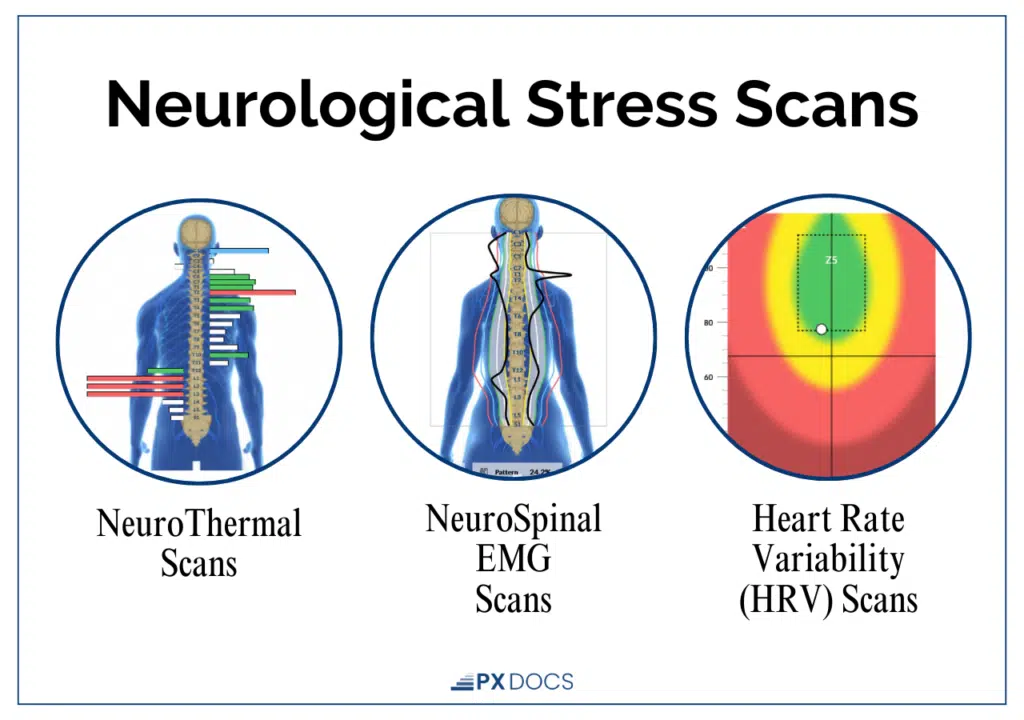
Research shows that when parent and child co-regulate well, their heart rate patterns actually sync up. Our INSiGHT Scans can reveal whether that synchronization is happening, or what’s blocking it.
What Happens When Mom Gets Adjusted
We see this pattern all the time in our offices. A child is making progress with care, but they hit a plateau. The scans are improving, but at home, the meltdowns are still happening, the bedtime battles are still real, and mom is still white-knuckling through every day.
Then the PX Doc suggests scanning mom. And her scans look nearly identical to her child’s initial scans—stuck in sympathetic dominance, dysautonomia patterns throughout, very little parasympathetic reserve. And exhausted.
When mom starts care, something shifts for the whole family. Not just for her child—for her. The nervous system controls and coordinates every system in the body, and when it’s finally able to shift out of constant stress mode, moms often notice changes they didn’t even know were connected.
It’s important to note that INSiGHT Scanning technology does not diagnose medical conditions, and Neurologically-Focused Chiropractic Care is certainly not a “treatment or cure” for any condition, not even back pain. Instead, these scans help us find the root cause of nervous system dysfunction and dysregulation, and build customized care plans to help shift the nervous system back toward balance, regulation, and resilience.
Factors Leading to Why Adjustments are Needed
Let’s be honest. Moms carry a lot. Years of accumulated stress. The physical, emotional, and chemical don’t just disappear because you’re “pushing through.” That stress gets stored in the body as subluxation patterns, and over time, it shows up in ways most people don’t connect to their nervous system.
Hormonal Regulation
Your nervous system directly influences the HPA (hypothalamic-pituitary-adrenal) axis and the HPG (hypothalamic-pituitary-gonadal) axis—the systems that control your stress hormones, reproductive hormones, and everything in between.
When subluxation keeps your Sympathetic Nervous System running hot, it disrupts that hormonal balance. Moms often notice that their cycles regulate, their mood stabilizes, and the constant feeling of being “wired but tired” finally starts to ease once care begins.
Exhaustion and Fatigue
The kind of tired that sleep doesn’t fix? That’s your nervous system running out of reserves. When you’re stuck in sympathetic dominance, your body is burning through energy just trying to survive the day.
Chiropractic adjustments help activate the parasympathetic “brake pedal” side of the nervous system—the rest, digest, and recover mode your body desperately needs. Many moms report a noticeable shift in their energy within the first few weeks of care.
Sleep Quality
You might be in bed for seven or eight hours, but if your nervous system can’t downshift, you’re not getting the deep, restorative sleep your body needs.
Improving nervous system regulation often means moms actually wake up feeling rested, sometimes for the first time in years.
Emotional Regulation
The short fuse. The tears that come out of nowhere. The feeling that you’re one spilled cup of milk away from losing it. That’s a dysregulated nervous system.
When your body is stuck in survival mode, your brain’s ability to process emotions and respond calmly is compromised. As the nervous system shifts back toward balance, moms often find they have more patience, more presence, and more capacity to handle the daily chaos without falling apart.
Postpartum Recovery
For moms still in the thick of the postpartum period, nervous system support matters even more. Approximately 10-20% of mothers experience postpartum depression, and research shows a correlation between prolonged HPA axis dysregulation and PPD.
The postpartum hormonal shift, with estrogen, progesterone, and cortisol dropping dramatically after delivery, is the most intense hormonal change in a woman’s life. Supporting the nervous system through that transition can make a real difference.
The Multiplication Effect
Our PX DOCS team puts it simply: “Calm mom = calmer child = calmer family. Stressed mom = more stressed child = family chaos.”
It’s not a guilt trip. It’s neuroscience. Your child’s nervous system is still learning regulation from yours. When you get adjusted, and your nervous system starts functioning better, your child’s nervous system has a better template to learn from.
The co-regulation that’s supposed to happen naturally actually can happen, because your brake pedal is finally working.
This is why care plans at PX Docs offices often include the whole family. It’s how the nervous system works. Clinical observation consistently shows improved outcomes when entire families receive care together.
It’s Your Turn, Mom
You’ve spent months, maybe years, researching, advocating, driving to appointments, managing therapies, fighting for your child. You’ve put yourself last on every list. And you’ve probably told yourself that you’ll take care of yourself “when things settle down.”
But here’s what we know: things settle down faster when your nervous system is part of the equation. Your child needs you to be regulated, not just present. And you deserve to feel like yourself again, not the exhausted, short-fused, running-on-empty version of yourself that stress has created.
Getting scanned takes about 15-20 minutes. It’s painless, it’s objective, and it shows exactly what’s happening in your nervous system. No guessing. Visit the PX Docs Directory to find a trained Neurologically-Focused Chiropractor near you who can scan and care for your whole family. Because the best thing you can do for your child’s nervous system might just be taking care of your own.