
Oppositional Defiant Disorder (ODD) is a childhood behavioral diagnosis defined by a persistent pattern of angry or irritable mood, argumentative and defiant behavior toward authority figures, and vindictiveness lasting at least six months. What that clinical definition doesn’t tell you is why a child’s nervous system gets stuck in that pattern in the first place.
This article is about that second part.
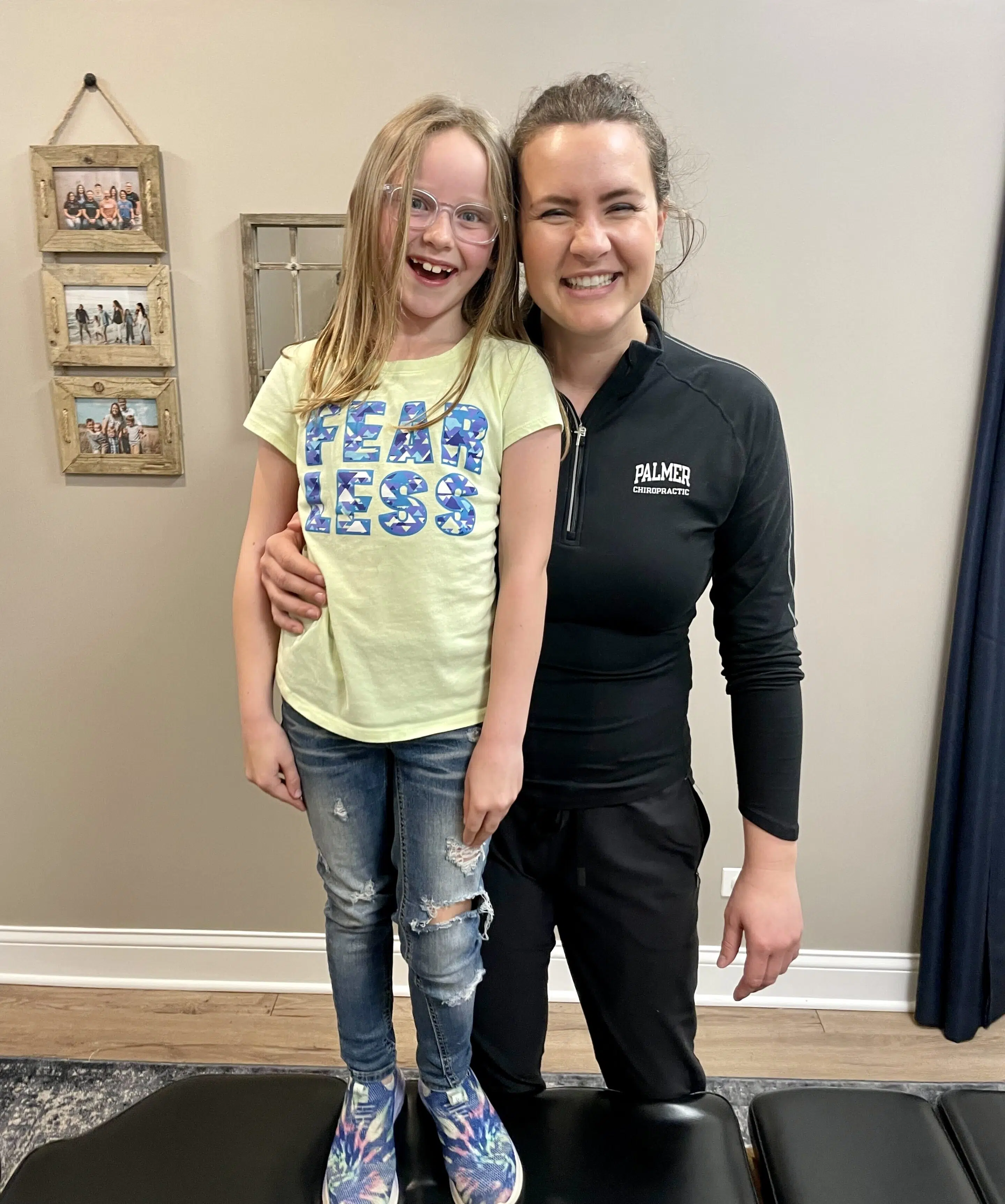
As a parent, it’s heartbreaking to watch your child struggle this way. For Mattox’s mother, the goal was simple: she wanted her son to find some ease within himself. She wanted his real personality to come through instead of being buried under the arguing and the outbursts.
Mattox’s family is not unusual. According to the DSM-5-TR, ODD affects roughly 3.3% of children, with community studies putting the range anywhere from 2.6% to 15.6% depending on how it’s measured. For those families, an ordinary Tuesday morning can feel like a negotiation you’re guaranteed to lose.
Here at PX Docs, we look at this differently than most. We’re not focused on the label. We’re focused on what’s happening inside your child’s nervous system that makes regulation so hard, and what can be done about it.
What is ODD in Children?
Children who meet criteria for ODD show a persistent pattern of behavioral issues falling into three categories:
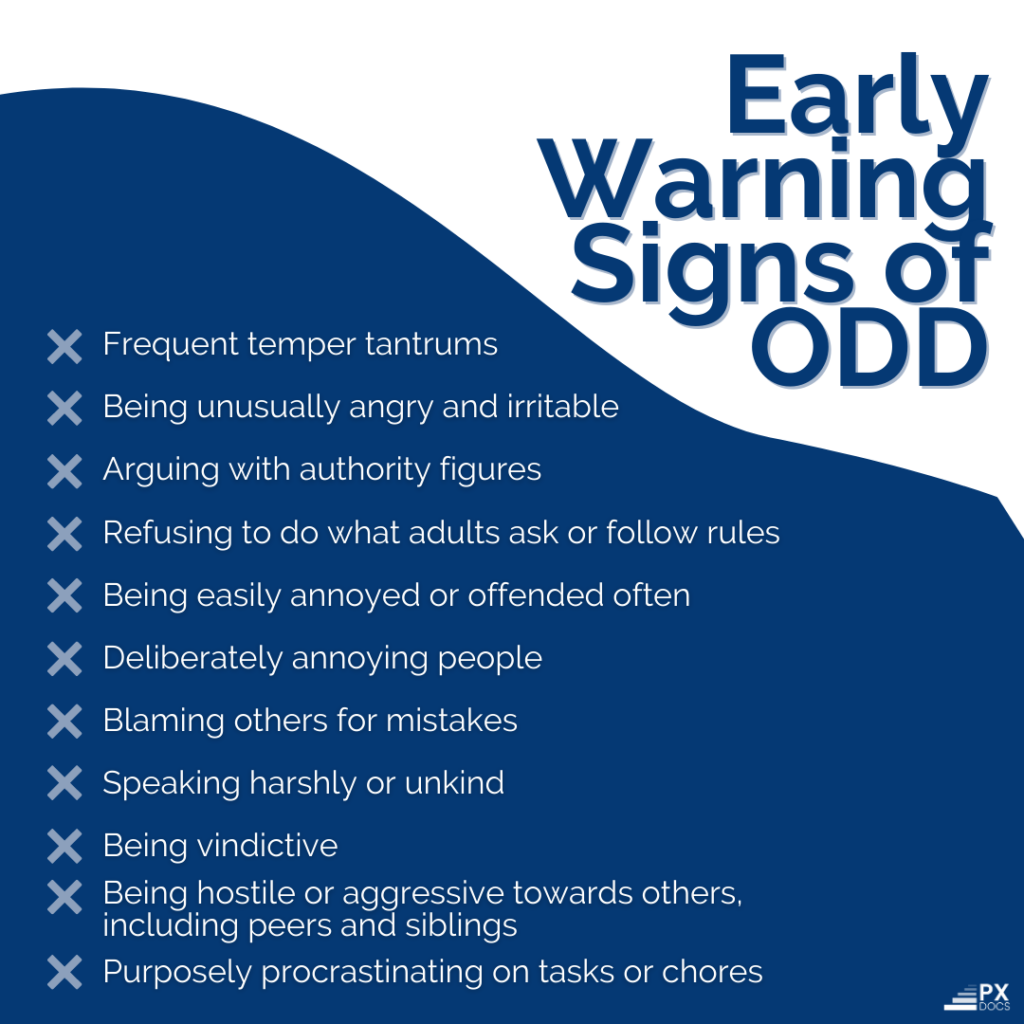
- Angry or irritable mood: losing their temper often, being touchy or easily annoyed, staying angry and resentful.
- Argumentative or defiant behavior: arguing with adults, refusing to follow rules or requests, deliberately annoying people, blaming others for their own mistakes.
- Vindictiveness: being spiteful or seeking revenge, at least twice within a six-month window.
For a diagnosis, a clinician looks for at least four of these behaviors occurring frequently, with people other than siblings, over at least six months, causing real disruption at home, at school, or socially. Severity is graded by how many settings the behaviors show up in: one setting is mild, two is moderate, three or more is severe.
That last detail matters more than parents realize. A child who falls apart only at home is telling you something different than a child who falls apart everywhere.
Is It ODD, or Is It a Dysregulated Nervous System?
Every kid is oppositional sometimes. Toddlers discovering the word “no,” six-year-olds testing limits, teenagers pushing back on curfew: that’s development, not dysfunction. ODD criteria are meant to separate typical defiance from something more persistent, and they do a reasonable job of that.
But here’s what the criteria can’t do. They describe behavior. They don’t explain where the behavior comes from.
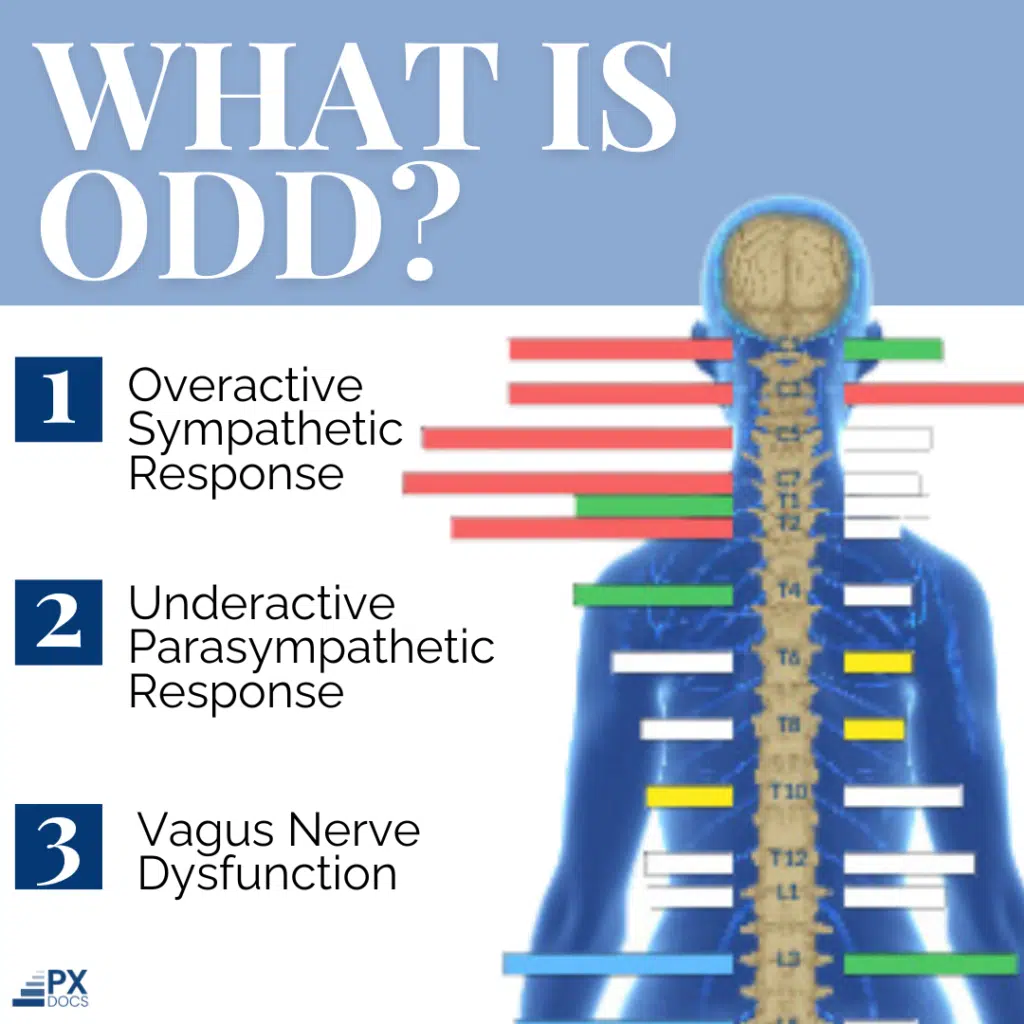
Think of your child’s Autonomic Nervous System as having a gas pedal and a brake pedal. The sympathetic branch is the gas: fight or flight, ready for action, on alert. The parasympathetic branch is the brake: rest, digest, calm down, recover. A regulated child moves between the two smoothly. They can ramp up when they need to and settle back down afterward.
When a child is stuck with the gas pedal pinned to the floor, everything looks like a threat. A request to put shoes on registers the way a fire alarm would. The child isn’t choosing to escalate. Their system has already escalated, and the behavior you’re seeing is what comes out the other side.
We call that state sympathetic dominance, and when it becomes the default setting, it’s a form of nervous system dysregulation. Dysautonomia is the clinical term for this imbalance within the Autonomic Nervous System: too much sympathetic activation, not enough parasympathetic recovery.
A child in that state can look defiant. They can also look anxious, or inattentive, or sensory-avoidant, depending on the kid and the day. Same underlying problem, different surface presentation. That’s why so many of these labels overlap.
How ODD Overlaps With Other Diagnoses
ODD almost never shows up alone. A study of 2,400 children ages 3 to 17 found that 53% of those with the combined presentation of ADHD also met criteria for ODD, and that figure climbed to 62% when Autism was present alongside it.
A few distinctions worth understanding:
- ODD and ADHD: ADHD centers on attention, impulse control, and activity level. ODD centers on emotional reactivity and defiance. They co-occur constantly, and impulsivity can easily look like willful rule-breaking.
- ODD and Conduct Disorder: Conduct Disorder involves aggression toward people or animals, property destruction, theft, and rule violations of a different magnitude. Not every child with ODD develops it.
- ODD and Disruptive Mood Dysregulation Disorder: DMDD involves a persistently irritable mood between outbursts, lasting at least a year. When a child meets criteria for both, DMDD takes precedence.
- ODD and Autism, anxiety, or trauma: all three can produce behavior that reads as defiance but is actually overwhelm, avoidance, or a protective stress response.
Sorting this out matters. A dysregulated child and a child who’s genuinely choosing to push back need different things from you.
Does ODD Go Away on Its Own?
Often, yes, at least as far as the diagnosis goes. Follow-up research compiled by the American Academy of Child and Adolescent Psychiatry indicates that roughly 67% of children diagnosed with ODD no longer meet criteria within three years. Prevalence declines with age overall.
But there’s a second half to that finding. About 30% go on to develop Conduct Disorder, and the risk runs roughly three times higher for children first diagnosed at preschool age. Children diagnosed early are also more likely to show up years later with ADHD, anxiety, or mood difficulties.
Read those two numbers together, and a pattern emerges. The behavior often changes shape. Whether the underlying dysregulation resolves is a separate question from whether the child keeps meeting criteria for a particular set of behavioral descriptors. A nervous system that never learned to find its brake pedal doesn’t stop being dysregulated at age twelve. It just expresses that dysregulation differently.
Which is why we’d rather address the foundation early than wait to see which label comes next.
The Neurological Roots of ODD
The Autonomic Nervous System runs the functions your child never thinks about: heart rate, digestion, immune response, and how quickly they recover from stress. When that system loses its balance, emotional regulation is one of the first things to suffer.
At the center of the brake pedal side sits the vagus nerve, the longest cranial nerve in the body, running from the brainstem down through the neck, chest, and abdomen. It regulates heart rate, digestion, inflammation, immune function, and the gut-brain axis. It’s also central to emotional regulation and social engagement.
Vagal tone, meaning how well that nerve is doing its job, is commonly measured through heart rate variability (HRV). Higher resting HRV generally reflects a nervous system with more options available to it, and lower HRV tracks with greater difficulty regulating emotion.
Now, an honest note on the research. You’ll find articles claiming that children with ODD simply have low vagal tone. The evidence is messier than that. One study of boys aged 8 to 12 found that those with ODD or Conduct Disorder had higher resting heart rates than controls, but their HRV didn’t differ as a group. What did emerge were distinct autonomic profiles within the group: children whose aggression was reactive, meaning it erupted in response to something, showed high baseline arousal paired with low HRV under stress. Children with a different aggression pattern showed close to the opposite.
We think that finding is important, and not because it undercuts the neurological argument. It’s because it means you can’t assume anything about a specific child from a diagnostic label. Two kids carrying the same three letters can have opposite nervous system patterns. Which is exactly why we measure instead of guess.
Subluxation and Nervous System Interference
One thing that can keep a child’s nervous system locked in that gas-pedal state is subluxation.
Subluxation is a pattern of neurological dysfunction within the neurospinal system involving three components:
- Misalignment of the neurospinal segments
- Fixation or restricted motion of those segments
- Neurological interference that disrupts communication between the brain and body.
All three matter. It isn’t simply a bone out of place.
The fixation piece is where the neurological consequences begin. Restricted motion means reduced sensory input traveling from the joints and muscles up into the brain. The brain relies on that input to know where the body is and how safe the environment is. Degrade the input, and you degrade the brain’s ability to regulate what comes next.
When this interference shows up in the upper neck and brainstem region, where vagus nerve function is most vulnerable, it can contribute to exactly the sympathetic dominance and dysautonomia pattern described above.
The Perfect Storm™ of ODD Development
Nervous system dysregulation doesn’t appear out of nowhere. It accumulates. The Perfect Storm™, a framework developed by Dr. Tony Ebel, describes the sequence of neurological stressors that can overwhelm a developing nervous system before a child ever reaches school age.
- Prenatal stress and maternal health: Maternal stress during pregnancy shapes fetal nervous system development. A population study following 7,994 mother-offspring pairs found that when mothers experienced persistent depressive signs across both pregnancy and the postpartum year, their children carried a fourfold increased risk of ODD over time. Third-trimester symptoms alone raised the risk by 72%.
- Birth trauma and interventions: Difficult deliveries involving prolonged labor, forceps, vacuum extraction, or cesarean section place mechanical stress on an infant’s upper neck and brainstem, the exact region where vagus nerve function is most vulnerable.
- Early antibiotic and medication exposure: Repeated early exposures disrupt the developing gut microbiome, and through the gut-brain axis, that disruption reaches mood and impulse regulation.
- Early life stressors and sensory load: Chronic stress, family instability, and sensory overload during critical developmental windows all push the nervous system further toward the gas pedal.
Most parents we talk with can point to at least two or three of these. That’s usually the moment things start making sense.
Where Conventional Approaches Stop Short
Parents dealing with ODD are typically offered two things: behavioral intervention and medication. Both have their place, and we’re not here to tell you otherwise.
Parent management training has the strongest evidence base of any ODD intervention, and it helps real families. Cognitive behavioral approaches and school-based supports help too. Psychotropic medications, including antipsychotics prescribed for aggression, can reduce the intensity of outbursts in the short term, though the side effect burden in this population is significant and often weighs against their use.
Here’s the limitation, and it’s a structural one rather than a criticism of anyone’s effort.
Both approaches work at the level of signs and behavior. Behavioral strategies ask a child to access regulation skills. Medication dampens the intensity of the response. Neither one asks whether the child’s nervous system is physically capable of accessing those skills in the moment.
If a child’s system is stuck in survival mode, the skills training has nowhere to land. That’s why so many families describe doing everything right and still hitting a wall. It isn’t that the strategies were wrong. It’s that the foundation underneath them wasn’t addressed first.
We’ve seen this sequencing question play out often enough that Dr. Tony discussed it at length in a podcast conversation with a mother who is also a behavioral specialist, whose child didn’t respond to any intervention until the nervous system piece was addressed. Order of operations turns out to matter enormously.
How We Assess Nervous System Function: INSiGHT Scans
This is where we stop guessing.
INSiGHT Scans are three neurological assessment technologies used by Neurologically-Focused Chiropractors. NeuroThermal scanning uses infrared thermography to assess autonomic function. NeuroCore surface electromyography (sEMG) measures muscle tone and tension patterns along the neurospinal system. Heart Rate Variability testing measures autonomic balance directly, giving us an objective read on vagal tone rather than an assumption about it.
It’s important to note that this technology does not diagnose medical conditions, and Neurologically-Focused Chiropractic Care is certainly not a treatment or cure for Oppositional Defiant Disorder or any other condition, not even back pain. Instead, these INSiGHT Scans help us track down the root cause of nervous system dysfunction and dysregulation, and build customized care plans and adjusting protocols to help shift the nervous system back into a state of balance, regulation, and resilience.
Given what the research shows about how much autonomic patterns vary between children who share the same diagnosis, this objective measurement isn’t a nice extra. It’s the whole point.
The PX Docs Approach: Neurologically-Focused Chiropractic Care
Our work addresses subluxation and the nervous system dysfunction that comes with it. We’re not treating a diagnosis. We’re working to reduce neurological interference so your child’s own regulatory capacity has room to come back online.
The practical implication is about sequencing. When subluxation and dysregulation go unaddressed, parenting strategies and behavioral therapy tend to deliver less than they should. When the nervous system becomes more regulated and adaptable, parents and providers alike frequently report that those same interventions, along with dietary changes and school supports, suddenly get real traction. The tools didn’t change. The child’s capacity to use them did.
Results vary from child to child, and this work belongs alongside your existing care team, not in place of it.
Mattox’s Story
When Mattox first came to PX Docs, his family had reached a breaking point. Despite everything they’d tried, the defiance and emotional outbursts were wearing everyone down.
His initial sEMG scan showed significant neurosensory tension and dysregulation throughout his neurospinal system. When a scan comes back full of reds and blacks, with severe counter-torque tension through the cervical region, it tells us that the child’s nervous system is locked into sympathetic overdrive and sensory overload. That’s not a behavior problem. That’s a physiology problem producing behavior.
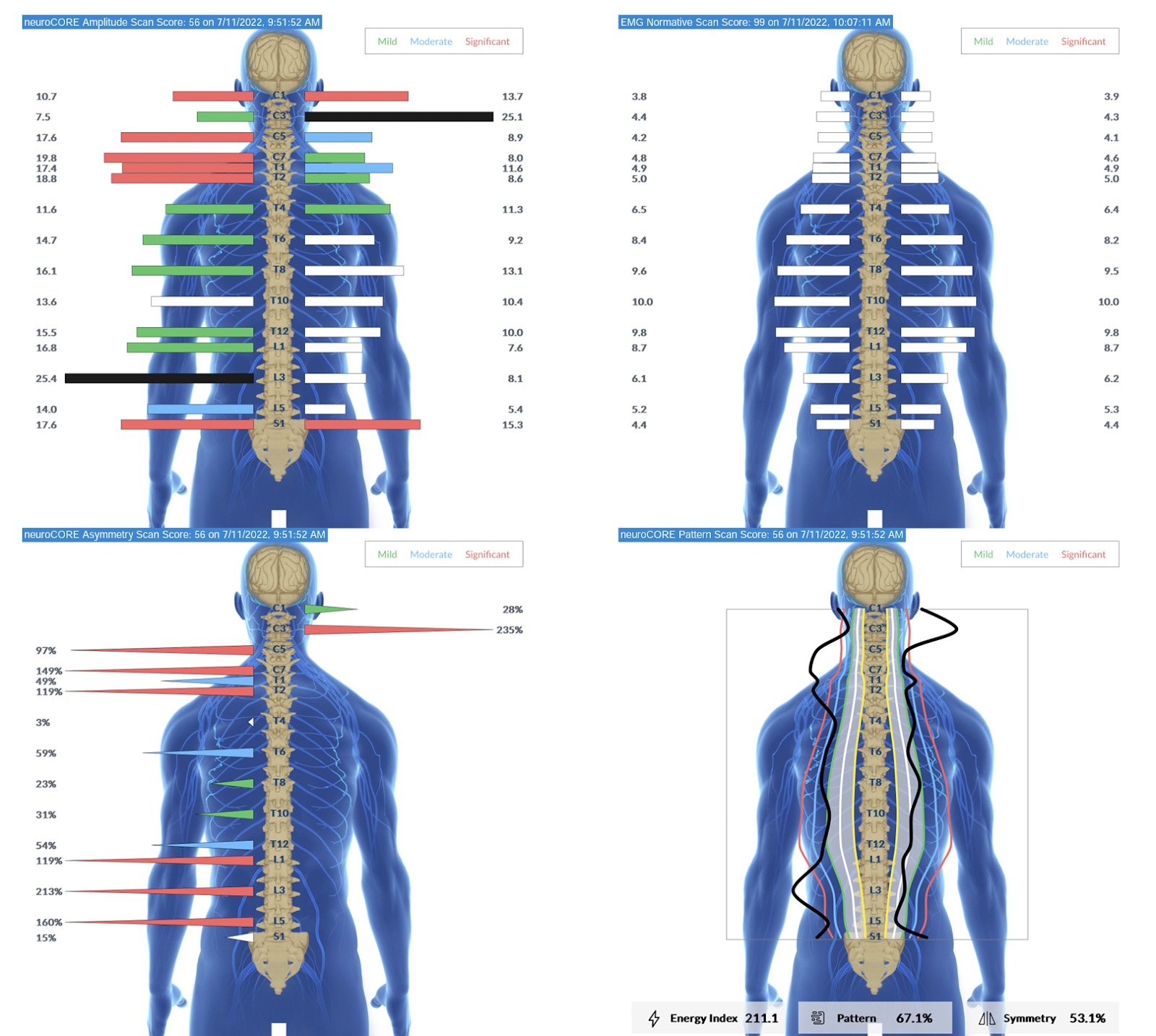
As Mattox moved through care, his family started noticing changes. He was calmer. More cooperative. Better able to come back down after getting upset. Meltdowns became less frequent, and he could engage with his family and peers in ways that had felt out of reach before.
His personality came through. That’s what his mom wanted from the start.
Finding Hope for Your Child
If you’ve been managing this for years, being told to be more consistent, and feeling like you’re failing at something everyone else finds manageable, we want you to hear this clearly: your child isn’t broken, and you aren’t doing it wrong.
A child stuck in survival mode is not choosing to make your life difficult. They’re stuck. And stuck is a physiological state, which means it’s something that can be measured and worked with rather than simply endured.
If you’re ready to find out what’s actually happening in your child’s nervous system, visit our PX Docs Directory and find a PX Doc near you. A baseline scan is where it starts. Progress scans along the way tell us whether the system is genuinely responding, and if it isn’t, the plan changes. We don’t guess. We test.
Your child’s personality is in there. Let’s get the interference out of the way so it can come through.
– Dr. Tony Ebel
PS. If you’re the kind of parent who wants the full science behind what’s driving your child’s struggles, dig into our online webinar on The Perfect Storm™. It runs about half an hour, so you can fit it in over lunch or after the kids are down. Get access here.
PX Docs has established sourcing guidelines and relies on relevant and credible sources for the data, facts, and expert insights we reference. You can learn more about our mission, ethics, and how we cite sources in our editorial policy.