
School refusal is a child’s persistent difficulty attending or remaining in school for a full day, driven by emotional distress rather than defiance or disinterest. It affects an estimated 2–5% of school-age children and is distinct from truancy. Children experiencing school refusal genuinely want to attend, but their nervous system responds to the school environment with anxiety, panic, or physical symptoms that make attendance feel impossible.
Every parent knows the difference between a child who doesn’t want to go to school and a child who can’t. When your child is sobbing at the door, complaining of stomach aches every Sunday night, or having full-blown panic attacks in the school parking lot. That’s a nervous system in crisis.
But here’s what frustrates so many families: the conventional approach jumps straight to behavioral therapy and medication without ever asking why your child’s nervous system is responding to school like it’s a life-threatening situation.
At PX Docs, we see school refusal differently.
What Is the Difference Between School Refusal and Truancy?
School refusal and truancy look similar on the attendance sheet, but they’re fundamentally different problems. Truancy involves a child choosing to skip school, often to pursue other activities, without significant emotional distress. School refusal involves genuine anxiety, fear, or panic that makes school attendance feel physically and emotionally impossible for the child.
The clinical literature makes this distinction clear. According to Kearney and Silverman’s widely used functional model, school refusal behavior falls into four categories: avoidance of stimuli that provoke negative emotions, escape from uncomfortable social or evaluative situations, attention-seeking from caregivers, and pursuit of tangible rewards outside school.
What’s important for parents to understand is that school refusal isn’t a diagnosis itself. It’s a behavioral pattern that signals deeper dysfunction—and that dysfunction often begins well before your child ever sets foot in a classroom.
What Are the Signs and Symptoms of School Refusal?
The most common signs of school refusal include physical complaints such as stomach aches, headaches, and nausea on school mornings; emotional escalation, including:
- Crying, panic attacks, and meltdowns
- Avoidance behaviors like frequent nurse’s office visits
- Disrupted sleep patterns
- Progressive social withdrawal.
These signs typically build gradually over weeks or months and often intensify on Sunday evenings.
Recognizing the signs early gives families the best chance of addressing the root cause before it escalates.
- Physical complaints are often the first signal. Your child may report frequent stomach aches, headaches, nausea, or dizziness—especially on school mornings or Sunday evenings. These aren’t made up. When a child’s nervous system is dysregulated, the physical symptoms are very real. The gut and the brain are directly connected through the vagus nerve, and when that nerve is under stress, digestive symptoms like nausea and stomach pain are among the first to appear.
- Emotional escalation around school is another hallmark. This can look like crying spells in the morning, clinging to parents at drop-off, meltdowns when discussing school, excessive worry about what might happen at school, or panic attacks that seem completely out of proportion to the situation.
- Avoidance behaviors develop as the pattern deepens. Your child may spend increasing time in the nurse’s office, beg to come home after just an hour or two, refuse to get dressed or eat breakfast on school days, or develop elaborate routines and rituals that delay departure.
- Sleep disruption is one of the most commonly overlooked signs. Children with school refusal often have trouble falling asleep on school nights, experience frequent nightmares, wake up unrested, or can’t get out of bed in the morning—not because they’re lazy, but because their nervous system never fully enters the deep, restorative sleep stages it needs.
- Social withdrawal often accompanies school refusal, especially in older children. Your child may pull back from friendships, avoid extracurricular activities, spend increasing time alone, and resist any situation that involves social interaction outside the family.
What Causes School Refusal in Children?
School refusal is most commonly associated with separation anxiety, social anxiety, academic pressure, bullying, and major life transitions. However, these conventional triggers don’t explain why some children develop school refusal while others facing identical stressors don’t. The underlying factor is often nervous system resilience—specifically, the balance between the sympathetic “fight or flight” response and the parasympathetic “rest and regulate” response within the Autonomic Nervous System.
This is where the conventional conversation usually stops at anxiety, bullying, or academic struggles. And those can certainly play a role. But in our clinical experience, they’re rarely the full picture.
The Neurological Root Cause
When we work with families dealing with school refusal, we almost always find a deeper pattern at play. The child’s Autonomic Nervous System, the part that controls their fight-or-flight response and their ability to rest, regulate, and recover, is out of balance.
Think of the Autonomic Nervous System like a car with a gas pedal and a brake pedal. The Sympathetic Nervous System is the gas pedal; it revs the body up for action, stress, and protection. The Parasympathetic Nervous System is the brake pedal; it calms, regulates, and restores.
In children with school refusal, the gas pedal has been stuck down for a long time. Their nervous system is locked in a state of sympathetic dominance, perceiving threats everywhere—even in environments that should feel safe, like a classroom.
This isn’t a character flaw. It’s neurology.
The “Perfect Storm” Behind School Refusal
At PX Docs, we’ve identified a pattern we call “The Perfect Storm,” a combination of early life stressors that accumulate and overwhelm a child’s developing nervous system. For many children with school refusal, that storm began years before the morning battles.
Prenatal stress and maternal health challenges are often the first factor. Research shows that prenatal stress floods the developing fetus with elevated cortisol levels, which can alter how the baby’s nervous system develops. One study tracking mothers through pregnancy and into the postpartum period found that infants born to mothers with the highest stress levels were 22% more “reactive” than infants of less-stressed mothers, and demonstrated poorer recovery from stressors—a pattern that indicates reduced parasympathetic function from the very start.
Birth trauma and interventions represent the second wave. Complications during labor and delivery—prolonged labor, fetal distress, the use of forceps, vacuum extraction, induction, or cesarean section—can place significant physical strain on a baby’s upper neck and brainstem region. This area is where the vagus nerve exits the skull and begins its journey through the body. Physical stress to this region during birth can create subluxation—a pattern of neurological dysfunction in the spine.
Early childhood stressors further compound the picture. Chronic ear infections, rounds of antibiotics, food sensitivities, poor sleep from infancy, and even the sensory overload of our modern environment add layer upon layer of stress to an already overwhelmed nervous system.
By the time school arrives, this child doesn’t have a behavior problem. They have a nervous system that was never given the chance to develop the resilience needed to handle the normal stressors of a school day.
How Does the Vagus Nerve Affect School Refusal?
The vagus nerve is the longest cranial nerve in the body, extending from the brainstem through the neck, chest, and abdomen. It serves as the primary driver of the Parasympathetic Nervous System, regulating heart rate, digestion, immune function, inflammation, and emotional regulation. When vagus nerve function is compromised, a child’s nervous system can’t distinguish between safe environments and threatening ones, which is exactly what drives school refusal behavior.
The vagus nerve is one of the most important and least understood pieces of the school refusal puzzle. Beyond its role in digestion and heart rate, Dr. Stephen Porges’ Polyvagal Theory has shown that the vagus nerve is also the foundation of our social engagement system. When the vagus nerve is functioning well, a child can read facial expressions, interpret tone of voice, make eye contact comfortably, and feel safe in social situations.
When vagus nerve function is compromised, what we call vagus nerve dysfunction, a child’s nervous system can’t distinguish between a safe environment and a threatening one.
This is exactly what we see in school refusal. The child’s vagus nerve often isn’t functioning well enough to activate the social engagement system. Instead, their nervous system defaults to fight-or-flight (anxiety, panic, meltdowns) or freeze (withdrawal, shutdown, inability to function).
Those morning stomach aches? That’s the vagus nerve sending distress signals from the gut to the brain. The panic attacks in the car? That’s a Sympathetic Nervous System that perceives the school environment as genuinely dangerous. The inability to sleep the night before? That’s a nervous system that can’t downshift into the restorative parasympathetic state.
It’s all connected. And it all comes back to nervous system function.
How Does Neurologically-Focused Chiropractic Care Address School Refusal?
Neurologically-Focused Chiropractic Care addresses school refusal by identifying and correcting subluxation—patterns of neurological dysfunction in the spine that keep the nervous system locked in a sympathetic-dominant, fight-or-flight state. Using INSiGHT scanning technology to objectively measure nervous system function, Neurologically-Focused Chiropractors build customized care plans that help shift the nervous system back toward balance, regulation, and resilience.
This is where Neurologically-Focused Chiropractic Care offers families something no other approach can: the ability to measure and address the neurological root cause of their child’s struggles.
How Are INSiGHT Scans Used to Find the Root Cause?
INSiGHT scanning technology includes three components:
- Heart Rate Variability (HRV) analysis, which measures the balance between the sympathetic and parasympathetic branches of the Autonomic Nervous System
- Surface Electromyography (sEMG), which assesses the electrical activity of muscles along the spine to identify areas of tension and altered neuromuscular function
- Thermal Scanning, which uses infrared sensors to measure temperature differences along the spine that can indicate areas of dysautonomia.
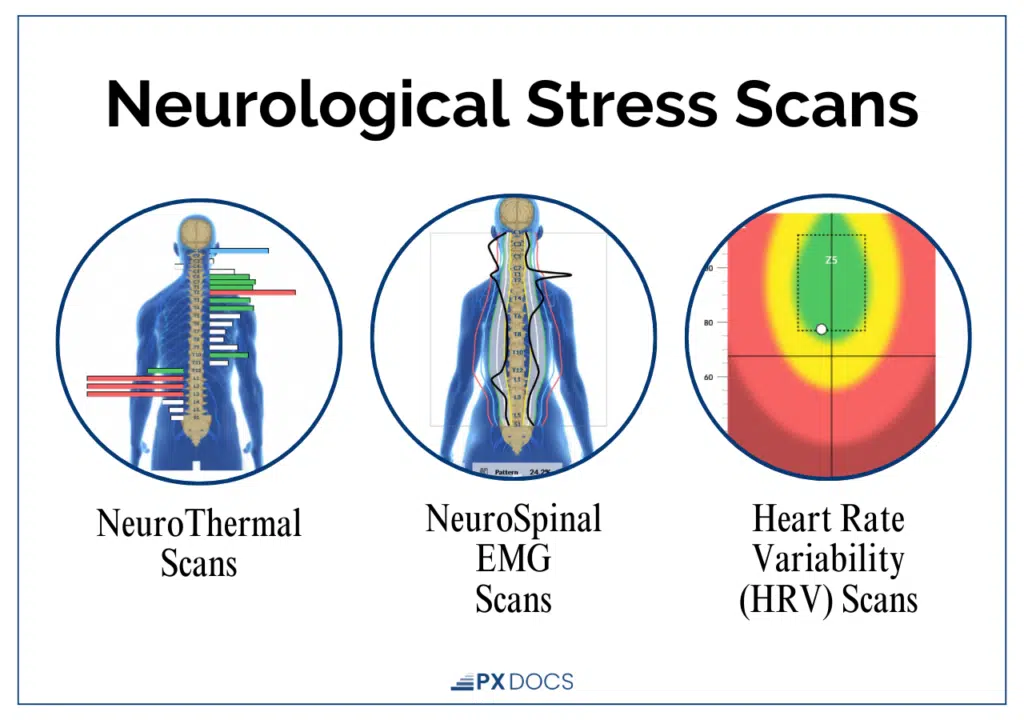
It’s important to note that this technology does not diagnose medical conditions, and Neurologically-Focused Chiropractic Care is certainly not a treatment or cure for school refusal or any other condition, not even back pain. Instead, these INSiGHT Scans help us track down the root cause of nervous system dysfunction and dysregulation, and build customized care plans and adjust protocols to help shift the nervous system back into a state of balance, regulation, and resilience.
For parents who have been told “there’s nothing physically wrong” while watching their child fall apart every school morning, these scans often provide the first objective evidence of what they’ve known in their gut all along: something is wrong, and it’s neurological.
Addressing Subluxation and Restoring Nervous System Balance
When subluxation is present, particularly in the upper cervical region, where the brainstem and vagus nerve are most vulnerable, the nervous system can’t function as it’s designed to. The sympathetic gas pedal stays stuck down. The parasympathetic brake pedal can’t engage. And the child stays locked in survival mode.
Neurologically-Focused Chiropractic adjustments are specifically designed to address these areas of subluxation and neurological interference. The goal isn’t to “cure” anxiety or school refusal. The goal is to help the nervous system release the stored stress and tension that’s keeping it stuck in a dysregulated state.
As the nervous system begins to shift, families often notice a predictable sequence of improvements. Sleep typically improves first—deeper, more restorative, and easier to initiate. Digestive function often follows, with those chronic stomach aches beginning to ease. Emotional regulation comes next, with fewer meltdowns and a greater capacity to handle stress. As the nervous system continues to rebalance, the child’s ability to engage socially and tolerate challenging environments, including school, steadily improves.
What Can Parents Do About School Refusal?
Parents dealing with school refusal can take several immediate steps: validate the child’s distress as a real nervous system response rather than manipulation, track patterns including sleep, digestion, and sensory sensitivities, maintain communication with school staff, avoid punishment-based responses that add more stress to a dysregulated nervous system, and explore whether a pattern of nervous system challenges predating the school refusal points to a neurological root cause.
If your child is struggling with school refusal, you don’t have to choose between approaches. Here are steps you can take while also exploring the neurological root cause.
- Validate your child’s experience. Their distress is real, not manipulative. Saying “I can see this is really hard for you” goes further than “You have to go to school.” A child whose nervous system is in fight-or-flight mode literally cannot reason their way out of it; the survival brain has taken over, and the thinking brain has gone offline.
- Track the patterns. Note when symptoms started, what makes them worse, what makes them better, and whether your child has a history of sleep difficulties, digestive issues, sensory sensitivities, or emotional dysregulation that predates the school refusal. These patterns often reveal the neurological thread connecting everything.
- Maintain open communication with your child’s school. Work with teachers and counselors to create a supportive plan, but don’t settle for accommodation alone. Accommodations manage the situation; they don’t resolve it.
- Avoid the punishment trap. One of the biggest mistakes well-meaning parents make is treating school refusal as defiance and responding with consequences—such as taking away screens, grounding, or forcing the child into the car. When a child’s nervous system is genuinely stuck in fight-or-flight, punishment doesn’t change the neurology. It actually adds more stress to an already overwhelmed system, worsening the problem. This doesn’t mean there are no expectations. It means the expectations need to be paired with real support for the underlying nervous system dysfunction.
- Explore the nervous system connection. If your child’s school refusal came with a history of colic, ear infections, sleep difficulties, anxiety, sensory challenges, or any pattern that suggests their nervous system has been struggling since early in life, there may be a neurological root cause that no one has looked at yet.
Taking the Next Step
School refusal can make parents feel completely helpless. You’re caught between a child who’s falling apart and a system that expects them to just push through it.
But here’s what I want you to hear: your child isn’t broken, and this isn’t your fault. When “The Perfect Storm” has been building for years, school refusal is actually a logical response. The nervous system is doing exactly what it’s designed to do when it perceives danger. The problem is that it’s perceiving danger where there isn’t any.
The good news is that the nervous system can change. But first, someone has to look at it, measure it, and address the root cause—not just the symptoms showing up at the classroom door. That’s what Neurologically-Focused Chiropractic Care is designed to do. We encourage you to visit the PX Docs directory to find a practitioner near you!
Frequently Asked Questions About School Refusal
Can school refusal go away on its own?
School refusal occasionally resolves with time and supportive parenting, but it often worsens without intervention. When the underlying issue is nervous system dysregulation, particularly sympathetic dominance and vagus nerve dysfunction, the neurological patterns that drive school refusal tend to persist or escalate unless the root cause is addressed directly.
Is school refusal the same as anxiety?
School refusal is not a clinical diagnosis but rather a behavioral pattern that often co-occurs with anxiety conditions, separation anxiety, social phobia, and generalized anxiety. However, school refusal can also occur in children with ADHD, Sensory Processing Disorder, or other conditions rooted in nervous system dysregulation, without a formal anxiety diagnosis.
At what age does school refusal most commonly start?
School refusal most commonly emerges between ages 5–7 (school entry) and again between ages 10–13 (middle school transition). These transitions place increased demands on a child’s nervous system for social engagement, emotional regulation, and sensory processing—all functions regulated by the vagus nerve and Autonomic Nervous System.
How long does it take to resolve school refusal?
The timeline for resolving school refusal depends on the severity and duration of the underlying nervous system dysfunction. Families who address the neurological root cause through Neurologically-Focused Chiropractic Care often report improvements in sleep and digestive function within weeks, with emotional regulation and school tolerance building progressively as the nervous system continues to rebalance.
Should I force my child to go to school if they have school refusal?
Forcing a child with school refusal to attend school through punishment or pressure typically worsens the problem. When a child’s nervous system is locked in fight-or-flight mode, their response isn’t behavioral defiance; it’s a neurological survival response. A more effective approach pairs clear expectations with genuine support for the underlying nervous system dysfunction driving the distress.