
You’ve tried everything. The yoga classes, meditation apps, and breathwork exercises. You’ve eliminated gluten and dairy, invested in high-quality supplements, tried cold plunges and infrared saunas.
Maybe you’ve spent thousands on functional medicine testing, gut protocols, and detox programs. Yet despite all your efforts, nothing seems to stick – your family’s health still continues to struggle.
The anxiety returns, the meltdowns and stimming continue, the sleep issues persist, and your body (or your child’s body) just won’t shift out of stress mode.
It’s not that these approaches don’t work. The problem runs deeper than that.
According to recent studies, an alarming 40% of children now suffer from at least one chronic health condition, from digestive conditions to respiratory challenges to neurological conditions like ADHD and anxiety. For adults, the statistics are equally staggering. This unprecedented epidemic of poor health is leaving countless families feeling hopeless, exhausted, and desperate for answers.
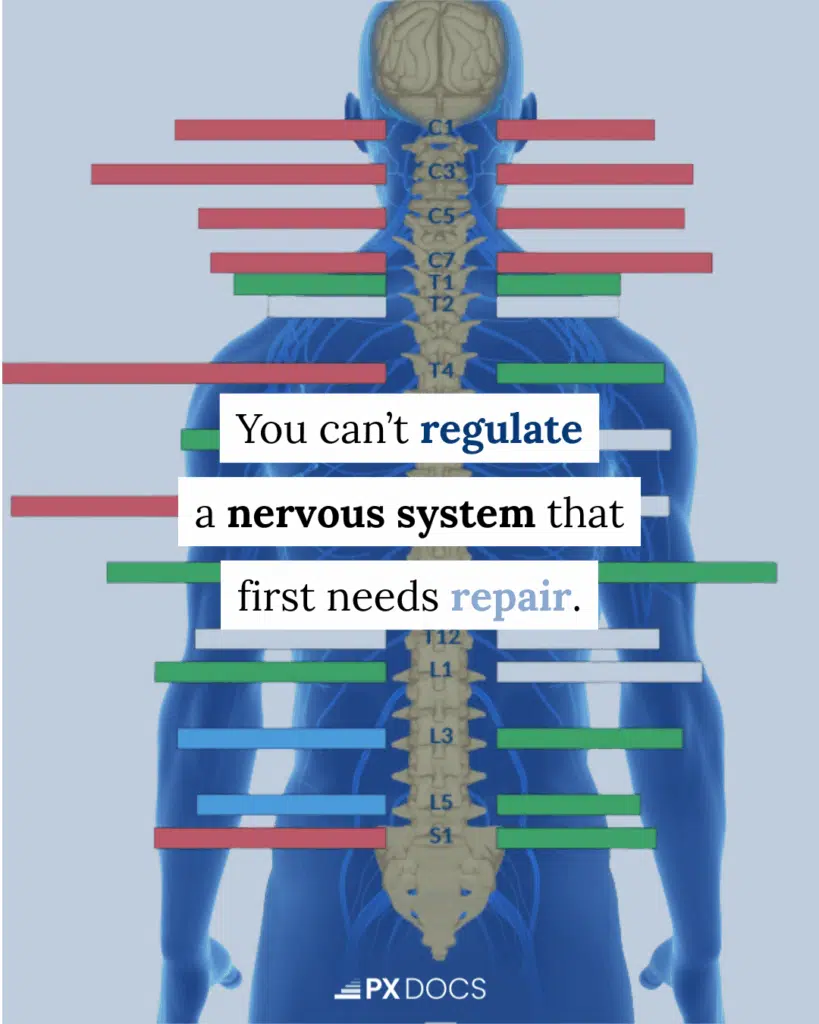
You’re trying to regulate a nervous system that first needs to be repaired. The real root of your exhaustion, gut issues, anxiety, or your child’s developmental delays might not be something you can breathe your way out of. It could be the neurological “wiring” itself. And until you address that foundation first, everything else ends up as just surface-level band-aids.
Breaking Down the Difference Between Nervous System Repair & Regulation
To understand why so many well-intentioned approaches fall short, you need to grasp the fundamental difference between nervous system repair and nervous system regulation.
Nervous System Repair addresses the actual dysfunction within the nervous system, most often caused by past trauma and the accumulation of stress that leads to something called subluxation. Subluxation causes legitimate neurological interference and dysfunction, disrupting and distorting neurosensory and sensorimotor input into the brain. When subluxation persists, and especially when it becomes chronic, no yoga stretches, breathing exercises, or supplements can unlock the deepest layer of nervous system dysfunction.
This approach works to restore optimal neurosensory input and address underlying problems at their root level, allowing the nervous system to function efficiently on its own. Think of it like repairing faulty wiring in your home’s electrical system. When the wiring is damaged or connections are disrupted, it doesn’t matter how many times you flip the light switch – the lights will flicker, dim, or fail completely until the actual electrical problem is fixed.
Taking it one step deeper, subluxation within the upper cervical and thoracic transition zones often leads to significant vagus nerve dysfunction. This means that the primary nerve that activates and stimulates the parasympathetic nervous system (which you’ll learn next is essential for regulation) is shut down or significantly interfered with. So any attempt to stimulate the vagus nerve via breathing exercises or devices will fall short if the vagus nerve has subluxation and deeper layers of dysfunction along its path.
Nervous System Regulation, on the other hand, includes practices that help an already intact nervous system shift into calmer, more balanced states. These are the tools most people are familiar with: breathing exercises, yoga, meditation, cold therapy, supplements, and various other wellness practices. They work by engaging the parasympathetic “rest and digest” response, training the body to downshift out of acute stress and build resilience over time. This is similar to learning to adjust the dimmer switch or thermostat in a home where the electrical system is already functioning properly.
Here’s the critical distinction: Repair is fixing the engine. Regulation is learning how to drive it smoothly. You can take all the driving lessons in the world, but if the engine itself is broken, you’re not going anywhere. That’s why nervous system repair must come first for those dealing with chronic health challenges – it addresses the foundational dysfunction that prevents all those other wonderful tools from working as intended.
The Body Keeps the Score: Understanding Stored Trauma
Psychiatrist Bessel van der Kolk revolutionized our understanding of trauma with his landmark book The Body Keeps the Score. His research demonstrates what many have intuitively known: trauma – whether physical, emotional, or toxic – isn’t just processed and filed away in our minds. It’s stored somatically, meaning it lives in the actual tissues, structures, and nervous system of the body, often far below our conscious awareness.
The nervous system is alive in every single living tissue, organ, gland, cell, and system in your body. Yes, trauma affects muscles and fascia, but more importantly, it creates profound disruption in the neurological pathways themselves – this might be in the spine, brainstem, and/or vagus nerve. When your body encounters overwhelming stress or trauma, it goes into protection mode. This is a brilliant survival mechanism in the moment, but that protective state can become locked in, creating a pattern of dysfunction that persists long after the initial threat is gone.
This is why traditional talk therapy, while valuable, often isn’t enough for people dealing with chronic physical symptoms. You simply can’t talk your way out of trauma that’s stored in your neurospinal system, brainstem, and vagus nerve. Similarly, you can’t breathe away physical subluxation patterns that have been locked into your nervous system since birth trauma or early childhood stress. The body’s protective response creates actual neurological interference – measurable dysfunction in how your brain and body communicate.
There’s a fundamental principle in neuroscience: you can’t be in growth (healing) and protection at the same time. When your nervous system is stuck in that sympathetic dominant protective, survival-oriented state, all the meditation and supplements in the world won’t create lasting change because the foundation itself, the neurological wiring, is still in lock-down mode. This is where nervous system repair becomes essential.
You need to adjust it out, not just talk it out or breathe it out.
The “Perfect Storm” of Why Deep Dysfunction Requires Deep Repair
At PX Docs, we often refer to the combination of factors that lead to profound nervous system dysfunction as The “Perfect Storm.” This concept describes how a series of stressors and traumatic events, often beginning before birth, create a cascading effect that disrupts normal nervous system development and locks the body into patterns of dysfunction that run far deeper than most people, or most doctors, realize.
The “Perfect Storm” typically includes four main components. First, prenatal stress and fertility challenges play a significant role. When a mother experiences high levels of stress, anxiety, or takes certain medications during pregnancy, stress hormones like cortisol can directly impact the developing baby. This sets the stage for neurological imbalance before the child even takes their first breath.
Second, birth interventions and trauma create some of the most significant physical stress to an infant’s delicate nervous system. With cesarean section rates at 1 in 3 births in the United States, far exceeding the World Health Organization’s recommended 10-15%, and countless more births involving forceps, vacuum extraction, or induction, the physical strain placed on an infant’s brainstem, upper neck, and vagus nerve is profound. This creates what we call subluxation, a neurological interference that disrupts the brain’s ability to communicate properly with the rest of the body.
Third, early childhood stressors, health challenges, and excessive exposure to toxins and medications compound the problem and often tip it over the edge.
Colic, reflux, and constipation aren’t just normal infant struggles; they’re early warning signs of nervous system dysfunction. When these issues lead to frequent ear infections and those infections lead to repeated rounds of antibiotics, the gut microbiome becomes disrupted, the immune system becomes compromised, and neurological dysfunction deepens.
Once those three all-too-common layers of stress, trauma, and toxicity set in during these sensitive stages of development, they can cause delays in motor milestones – difficulty with tummy time, skipped crawling, late walking, speech delays, and other developmental challenges – all signs that the nervous system isn’t developing or functioning as it should.
Here’s the crucial point: the level of multi-faceted stress and trauma that most children go through, and that many adults have accumulated over their lifetimes, locks the neurospinal system into such a deeply subluxated, stuck state that surface-level interventions simply can’t get through deep enough to create lasting change.
It’s not that these other approaches are wrong. It’s that the dysfunction is too severe and deeply rooted for them to address on their own. For most adult and pediatric patients today, dealing with the stuck and stored trauma in the somatic system (subluxation) is the required first step – repair, then regulation.
Why Your Regulation Tools Keep Failing
Perhaps you’ve been that parent who eliminated every potential trigger food from your child’s diet. You’ve spent thousands of dollars on supplements, enzymes, and probiotics. You practice family yoga together, you’ve tried meditation apps designed for kids, and you maintain consistent bedtime routines with all the right sleep hygiene practices. Yet your child still struggles with meltdowns, can’t focus at school, won’t sleep through the night, or battles constant digestive issues.
Or maybe you’re the adult who has invested in your own healing journey, breathwork courses, therapy, cold plunges, red light therapy, and every gut-healing protocol available. You may see temporary improvements and even feel better for a few weeks, but then everything resets. The anxiety returns, the digestive issues flare up again, and the fatigue comes back with a vengeance.
This isn’t because you’re doing something wrong. It’s because when the nervous system is stuck in sympathetic dominance – when subluxation creates constant “noise” and interference in the system—when the vagus nerve is dysfunctional from early trauma – regulation tools are like trying to change the thermostat when the furnace itself is broken. The problem isn’t with your willingness to regulate. The problem is that the system itself needs repair first.
Clinical signs that you or your child needs nervous system repair before regulation tools will work include:
- Therapies and interventions don’t stick or provide lasting results
- Gut health protocols work temporarily, then plateau or regress
- Constant relapses or flare-ups after periods of improvement
- High reactivity to small triggers or minor stressors
- Low Heart Rate Variability (HRV) on any wearable device
- Quickly “resetting” back to a stressed state, even after calming activities
- Other interventions provide only temporary, surface-level relief
The good news? Nervous system repair opens the door for all those regulation tools to finally work as intended. Once the system is in a “ready state,” with the foundational wiring fixed, breathwork becomes more effective, supplements are better absorbed and utilized, dietary changes have a more significant impact, and the body’s innate healing capacity can finally be activated.
What Nervous System Repair Actually Does
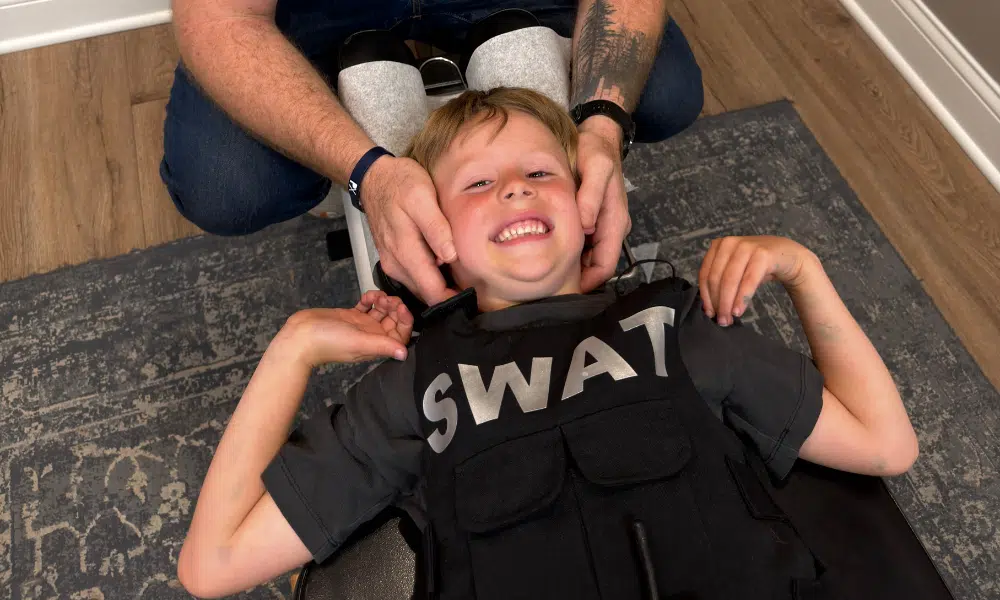
When most people think of chiropractic care, they picture someone “cracking backs” for pain relief. But Neurologically-Focused Chiropractic Care is something entirely different. It’s functional neurological repair that addresses the root cause of dysfunction rather than just masking the signs or providing temporary relief.
Let’s talk about subluxation in clear terms. Subluxation isn’t primarily about bones being “out of place,” it’s about neurological dysfunction with three key components – altered neurosensory input, neurological interference, and disrupted brain-body communication. When subluxation is present, it creates what we call dysautonomia, an imbalance in the Autonomic Nervous System where the sympathetic “gas pedal” becomes stuck on, and the parasympathetic “brake pedal” becomes suppressed and underactive.
Neurologically-Focused Chiropractic adjustments work by restoring proper sensorimotor input to the brain, balancing the sympathetic and parasympathetic branches of the nervous system, reactivating vagus nerve function, and increasing the nervous system’s overall adaptability.
The vagus nerve – the longest cranial nerve that extends from the brainstem through the neck to the abdomen – is particularly crucial. It controls digestion, heart rate, inflammation, immune response, and even emotional regulation and behavior. When this nerve is damaged during birth trauma or suppressed by chronic stress patterns, it can contribute to many of the chronic signs both parents and children struggle with.
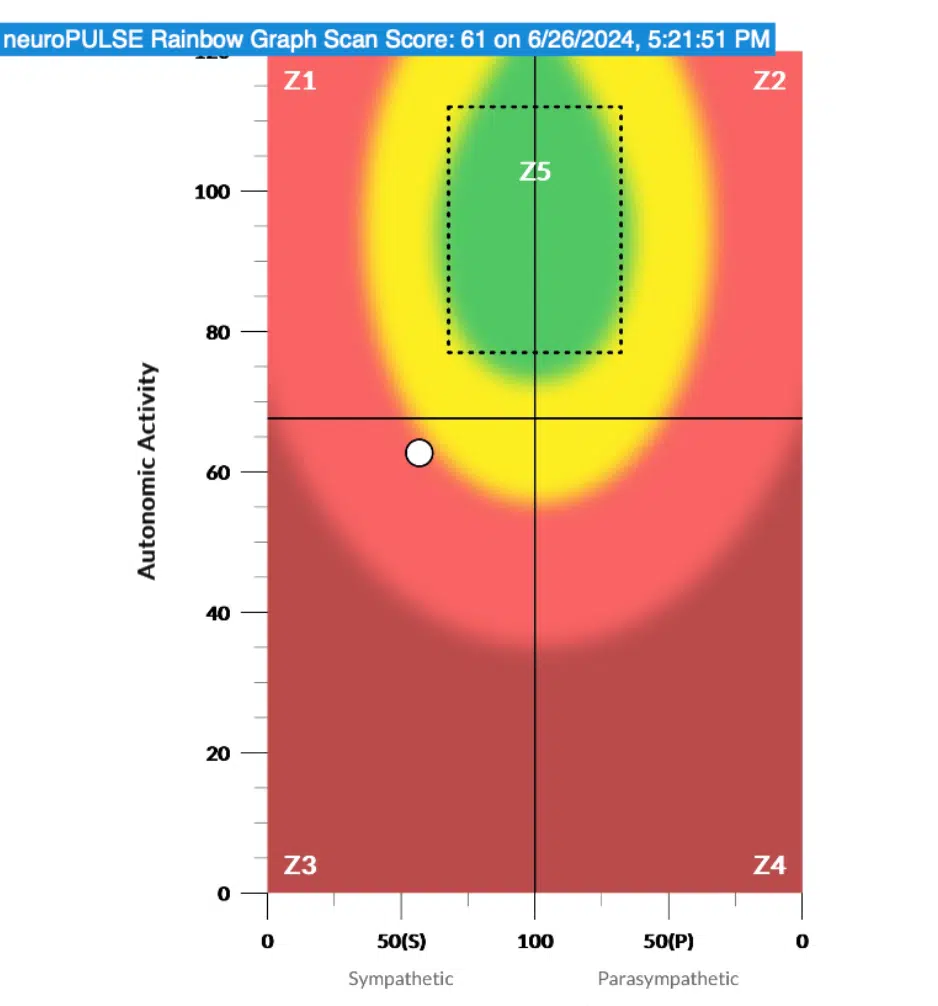
At PX Docs offices, we use advanced INSiGHT Scans to objectively measure nervous system dysfunction. These scans can visualize sympathetic dominance, identify subluxation and dysregulation patterns, and track progress throughout the care process. This isn’t guesswork; it’s a measurable, objective assessment of how your nervous system is actually functioning.
Below are a series of scans where the patient is clearly stuck in sympathetic dominance, meaning that they need to seek out nervous system repair before nervous system regulation exercises and interventions are likely to be effective.

The Right Sequence: Repair First, Then Regulate
Once you understand that repair must come before regulation, the question becomes: how do these approaches work together? The answer is beautifully synergistic when applied in the proper sequence.
Healing starts with repairing the nervous system — whether it’s your child’s or your own. Through Neurologically-Focused Chiropractic Care, the body begins to unwind years of built-up stress and tension. As balance returns and the vagus nerve wakes back up, the nervous system becomes calmer, stronger, and more adaptable. That’s when those “regulation” tools — breathing, movement, mindfulness — finally start working the way they’re supposed to.
Several complementary therapies work beautifully alongside chiropractic care – but they are most effective after the foundational repair has begun.
- Movement-based therapies like PT, OT, and Speech help with muscle and sensory challenges – but true progress starts in the nervous system. Once subluxation and dysfunction are cleared, the brain and body can finally rewire and coordinate more effectively.
- Breathwork and vagus nerve exercises provide direct access to parasympathetic activation, but they’re far more effective once the vagus nerve itself is functioning properly.
- Craniosacral therapy gently releases tension patterns in the skull and spine, complementing the neurological work of chiropractic adjustments.
- Neurofeedback offers top-down brain training, but it creates more lasting results after bottom-up repair has established a stable foundation.
Nutritional support, gut-healing protocols, and high-quality supplements are essential, but they work exponentially better when the nervous system can properly coordinate digestion, absorption, and immune function. Healing the brain through the gut is like flying from Chicago to New York with a layover in Singapore – you might get there, but it’s a much longer, more complicated route than going straight through the neurospinal system.
Movement practices like yoga build body awareness and proprioceptive input, but the nervous system must be able to receive and process that input correctly for maximum benefit.
These tools aren’t wrong or ineffective. They’re just insufficient on their own when deeper neurological dysfunction is present. When combined with nervous system repair in the right sequence, they create powerful, lasting transformation instead of temporary relief that fades away.
Taking the First Step Toward True Healing
If you’re reading this and recognizing patterns in your own story or your child’s struggles, you’re likely wondering – what do I do next?
First, understand the signs that nervous system repair should be your starting point. If you’ve tried multiple approaches without lasting results, if you see temporary improvements that inevitably plateau, if you or your child shows high stress reactivity to minor triggers, or if multiple body systems seem affected simultaneously (gut, immune, sleep, behavior, development), these are strong indicators that foundational neurological dysfunction needs to be addressed first.
The first practical step is to find a PX Docs Chiropractor who understands the depth of nervous system dysfunction and knows how to address it at its root level. A comprehensive evaluation with INSiGHT Scans will reveal your specific subluxation patterns, HRV, and measure your Autonomic Nervous System balance, providing objective data about how your nervous system is currently functioning. From there, a personalized care plan can address your unique neurological needs.
How Long Does It Take to Repair the Nervous System?
This is an important part of the process to discuss clearly – nervous system healing can take a long time and come with quite a few ups and downs. This is the most frustrating part for both parents looking to get their children healthy again and adult patients looking to get optimal and complete healing for themselves.
When we really look at the Perfect Storm that stacks up and adds up for our kids, and how stressful, toxic, and overwhelming life often is for us parents, it starts to make sense how deep the dysfunction and subluxation can really get within our nervous systems.
This means that it often takes many months, and sometimes even years, for true nervous system repair and foundational healing to occur.
Trust the process. Nervous system repair takes time because it’s not a quick fix or a band-aid solution. It’s true foundational healing that leads to massive improvements in quality of life and true transformation, especially for those struggling with one or more chronic conditions.
With enough time and repetition, nervous system repair creates lasting change by addressing the actual foundation of health. As your nervous system becomes more balanced, regulated, and adaptable, you’ll likely find that all those other tools and therapies you’ve invested in finally start working the way they’re supposed to.
Your Nervous System Can Reset the Scorecard
Your body isn’t broken. Your child’s nervous system isn’t either. What you’re experiencing is the result of accumulated stress, trauma, and dysfunction that has locked your system into protective patterns it can no longer escape on its own. The regulation tools you’ve been trying are valuable and important. They just can’t be your foundation.
You deserve to heal at the foundation, so your nervous system can become truly adaptable, resilient, and free. As Bessel van der Kolk taught us, the body keeps the score, but through Neurologically-Focused Chiropractic Care, the body can reset the scorecard and experience the healing you’ve been searching for.
The transformation you’re hoping for isn’t about adding more to your already overwhelming plate. It’s about finally addressing what has been missing all along: the foundational neurological repair that makes everything else possible. Your family can experience the joy, calm, health, and connection you deserve.Visit the PX Docs Directory to find a qualified practitioner near you and take the first step toward true, lasting healing. Download our Perfect Storm guide to learn more about how early life stressors impact nervous system development and what you can do about it. Your journey toward real, root-cause healing starts with one adjustment, one step toward repairing the foundation so regulation can finally work the way it’s meant to.