
Have you ever felt that rush of joy watching your child take their first steps or catch a ball for the first time? These exciting moments are more than just cute memories—they’re important milestones in your child’s gross motor skill development. Gross motor skills involve the large muscles of the body and are essential for everyday movements such as crawling, walking, running, and climbing.
But did you know that behind every coordinated leap and balanced step is a deeper connection between the brain, spinal cord, and muscles? The nervous system plays a crucial role in gross motor development, and any disruptions to this system can impact your child’s ability to achieve these key motor milestones.
As a parent, understanding the timeline of gross motor skill development and the factors that can influence it is crucial for supporting your child’s overall growth and well-being. By recognizing the signs of typical development, identifying potential challenges early on, and knowing when to seek support, you can help your child build a strong foundation for a lifetime of healthy movement and exploration.
So, let’s look at gross motor skills, beginning with the moment your infant lifts their head and progressing to the phase when they can run confidently across the playground. In this exploration, we’ll explore how the body works and why a well-functioning nervous system plays such a big role in your child’s milestones.
What are Gross Motor Skills?
Gross motor skills are the abilities that allow us to perform large, whole-body movements. These skills involve the large muscles of the arms, legs, torso, and feet and require proper coordination between the brain, spinal cord, and muscles. From the moment your baby lifts their head during tummy time to the day they confidently run and jump on the playground, they are developing and refining their gross motor skills.
It’s important to note that gross motor skills differ from fine motor skills, which involve the small muscles in the hands, fingers, and wrists. Fine motor skills are used for more intricate tasks, such as grasping a toy, drawing, or buttoning a shirt. While both types of skills are essential for overall development, gross motor skills form the foundation for fine motor skills and many of the movements and activities children engage in every day.
Big, whole-body movements flood the brain with sensory input and proprioceptive feedback that “wake up” and organize the nervous system. When this foundation is strong, children are best prepared to execute fine motor skills and even higher-level skills like speech, emotional regulation, and the other milestones parents care about most.
Gross motor skills play a crucial role in a child’s physical, cognitive, and social-emotional development. Physically, these skills enable children to explore their environment, engage in active play, and participate in sports and other physical activities. This not only helps them maintain a healthy weight and build strong bones and muscles but also supports cardiovascular health and overall fitness.
In terms of cognitive development, gross motor skills have a profound impact on cognitive functions and learning. As children move and explore, they are constantly receiving sensory input that helps them understand their surroundings and develop spatial awareness. This, in turn, supports the development of skills like problem-solving, decision-making, and creativity.
Finally, gross motor skills are essential for social-emotional development. As children gain confidence in their physical abilities, they are more likely to engage in social play with their peers. This helps them build friendships, learn to cooperate and share, and develop a sense of self-esteem, empathy, and independence.
Some examples of gross motor skills include:
- Crawling
- Walking
- Running
- Jumping
- Climbing
- Throwing and catching a ball
- Kicking a ball
- Balancing on one foot
- Hopping
- Skipping
As you can see, gross motor skills encompass a wide range of movements and abilities that are essential for everyday life. By understanding the importance of these skills and the role of the nervous system in their development, parents can better support their child’s growth and intervene early if any challenges arise.
Gross Motor Skill Milestone Examples by Age
As children grow and develop, it is important that they achieve gross motor skill milestones in a predictable sequence. However, it’s essential to remember that each child is unique and may reach these milestones at slightly different times.
The following is a general guide to the gross motor skills examples that your child may display at various ages, but don’t be alarmed if your child’s timeline varies somewhat.
Newborn to 3 months:
- Lifts head briefly during tummy time
- Rolls from front to back
- Kicks legs and moves arms symmetrically
- Begins to push up on arms during tummy time
3 to 6 months:
- Rolls from back to front and front to back
- Sits with support
- Bears weight on legs when held in standing position
- Reaches for toys while sitting with support
6 to 9 months:
- Sits independently
- Crawls on hands and knees
- Pulls to stand using furniture
- Walks with hands held
9 to 12 months:
- Stands independently
- Walks independently, often with a wide stance
- Climbs on low furniture
- Begins to walk up stairs with support
1 to 2 years:
- Walks confidently and starts to run
- Climbs on and off furniture independently
- Walks up and down stairs with support
- Kicks a ball forward
- Throws a ball overhand
2 to 3 years:
- Runs easily and jumps with both feet
- Walks up and down stairs, alternating feet
- Climbs playground equipment
- Pedals a tricycle
- Catches a large ball with arms extended
4 to 5 years:
- Hops on one foot
- Skips and gallops
- Walks on a balance beam
- Throws a ball with accuracy
- Catches a small ball with their hands
Behind each of these milestones is a complex interplay of neurological development and muscle control. The brain, spinal cord, and nerves must work together seamlessly to allow for the precise movements required for skills like walking, running, and climbing. Any disruptions to this delicate system, such as those caused by birth trauma, excessive prenatal stress, early exposures to toxins, or other early childhood stressors, can impact a child’s ability to achieve these milestones on a typical timeline or in the right sequence.
While some variation in the timing of gross motor skill development is normal, significant delays may indicate an underlying developmental issue. If you have concerns about your child’s gross motor development, trust your instincts and discuss them with your trusted healthcare provider or a Neurologically-Focused Pediatric Chiropractor. Early intervention can make a significant difference in addressing any challenges and supporting your child’s overall development.
The Neurological Factors that Can Affect Gross Motor Development
To fully understand gross motor delays, we need to look underneath the surface and explore the neurological factors that often drive these challenges. At the center of gross motor development is the nervous system — the communication highway between the brain and the entire body.
When the nervous system is calm, coordinated, and communicating well, it gives children the best chance to develop balance, coordination, posture, strength, and fluid whole-body movement. But when there are disruptions or imbalances in the nervous system, such as subluxation or chronic dysregulation, gross motor development can easily fall behind.
Subluxation creates both misalignment and fixation within the neurospinal system, leading to altered movement, decreased proprioception, and distorted sensory input. When the brain isn’t receiving accurate information about where the body is in space, it becomes much harder for a child to develop coordinated, confident gross motor skills. Simply put, subluxation equals neurological interference — especially within the sensorimotor system — making it a major contributor to gross motor delays.
Nervous system dysregulation further interrupts the flow of sensory input and motor output, creating a mismatch between what the brain is trying to do and what the body can actually execute. This disorganized communication leads to delays in crawling, walking, balance, coordination, and other foundational gross motor milestones.
When we address these underlying neurological stressors, the body finally has the clarity and coordination it needs to make real progress — often in ways parents have been hoping for but haven’t seen yet. And when the nervous system is functioning better, therapies like PT, OT, and other motor-based supports become far more effective, because the brain is finally ready to receive, integrate, and build on what those therapies are trying to teach.
Gross Motor Skills: Examples of Delays or Difficulties
As a parent, it’s natural to want the best for your child and to ensure that they are developing typically. While some variation in the timing of gross motor skill milestones is normal, it’s important to be aware of potential red flags that may indicate a need for further evaluation and support.
Some signs that your child may be experiencing gross motor developmental delays or difficulties include:
Infants (0-12 months):
- Not lifting head during tummy time by 3 months
- Not rolling over in either direction by 6 months
- Not sitting unsupported by 9 months
- Not crawling or bottom-shuffling by 12 months
Toddlers (1-3 years):
- Not walking independently by 18 months
- Not climbing stairs with support by 2 years
- Not jumping in place by 2.5 years
- Not pedaling a tricycle by 3 years
Preschoolers (3-5 years):
- Difficulty running, jumping, or climbing compared to peers
- Avoidance of gross motor activities or playground equipment
- Frequent falls or clumsiness
- Difficulty with balance coordination
If you notice any of these signs or have concerns about your child’s gross motor development, it’s essential to trust your instincts and seek support. Early intervention can make a significant difference in addressing any underlying issues and helping your child build the skills they need to thrive.
Research has shown that gross motor skill delays in early childhood can have long-term impacts, causing relationship difficulties, mental health problems, and emotional problems such as depression and anxiety. Children who struggle with gross motor skills may be less likely to engage in physical activity, which can lead to issues with weight management, cardiovascular health, and bone density. They may also experience challenges with self-esteem, social interactions, and academic performance.
By identifying and addressing gross motor skill delays early on, parents and healthcare providers can help children avoid these potential long-term consequences.
Supporting Gross Motor Skill Development
If you suspect that your child may be experiencing gross motor skill delays or difficulties, know that there are steps you can take to address them and support their development. We believe in a drug-free, Neurologically-Focused approach that addresses the root causes of gross motor skill challenges, because it’s backed by science and has changed thousands and thousands of lives in clinical practice.
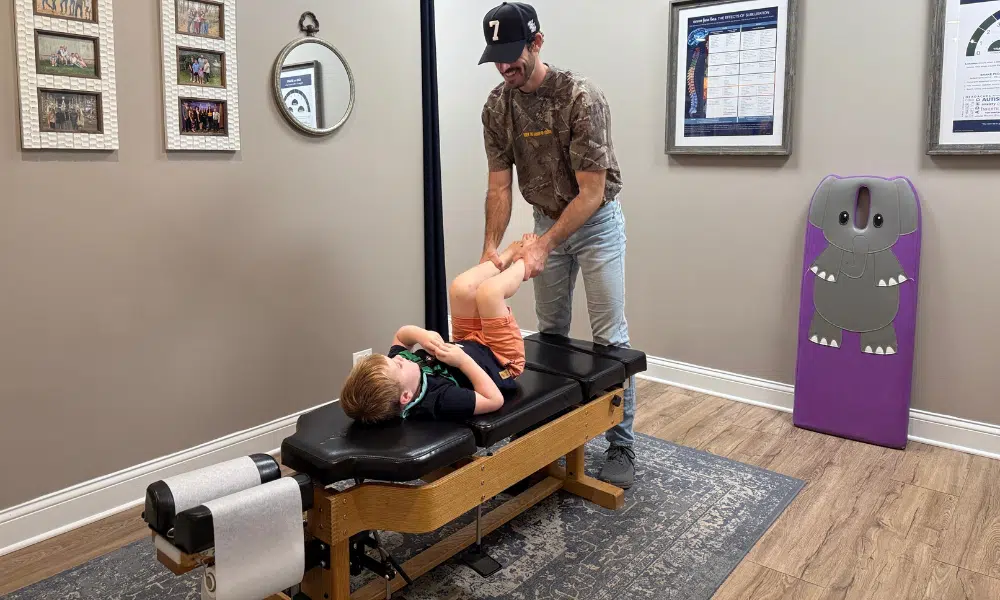
Neurologically-Focused Chiropractic Care is the key component of this approach. Our trained pediatric chiropractors use state-of-the-art INSiGHT scans to identify areas of subluxation and nervous system dysregulation that may be impacting your child’s gross motor development.

They allow us to create truly personalized care plans, and by gently addressing these areas through specific adjustments, we help restore proper nervous system regulation. That gives your child’s body the best possible chance to develop, adapt, and heal the way it was designed to.
Take Frank, for example. Frank’s parents knew something deeper was going on when his motor challenges — weak upper body strength, trouble with stairs, and overall poor coordination — were paired with sudden, explosive emotions that didn’t match his sweet personality.
“It’s so hard knowing something is wrong but not knowing how to help,” his mom shared.
It wasn’t until they got his INSiGHT scans and addressed his nervous system through Neurologically-Focused Chiropractic Care that everything started to shift. As his scans improved and his proprioception and regulation strengthened, both his gross motor skills and his emotional regulation transformed.
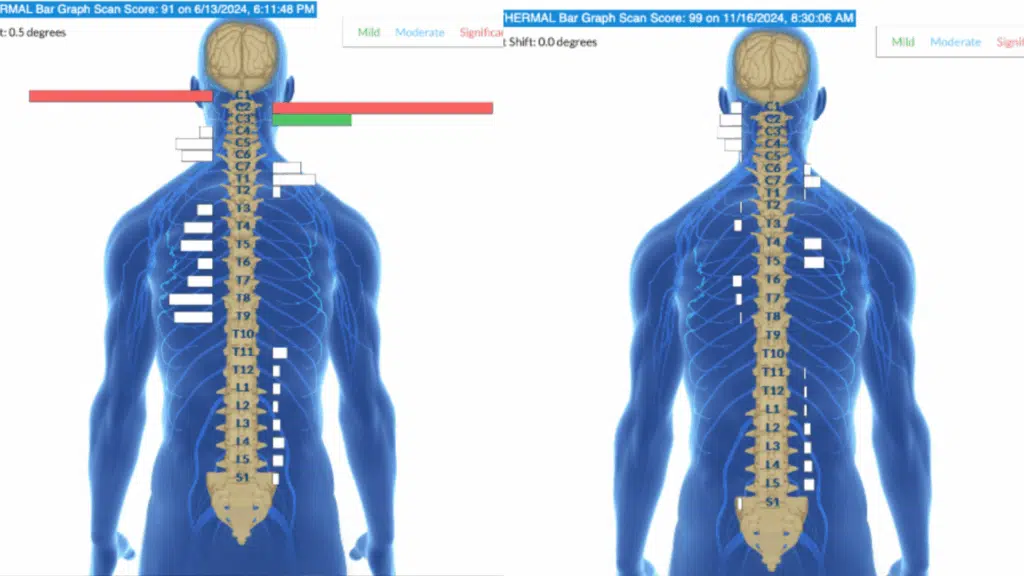
Today, Frank is climbing, carrying toys upstairs, and using his arms with confidence. Not to mention, his emotions are finally calmer and regulated. His mom says trusting her instincts and finding the right team made all the difference.
Supporting Gross Motor Skill Development At Home
In addition to Neurologically-Focused Chiropractic Care, there are many age-appropriate activities and exercises you can do at home to support your child’s development. Some helpful gross motor skills examples include:
Infants:
- Plenty of supervised tummy time to strengthen neck, shoulder, and arm muscles
- Gently guiding your baby’s legs in a bicycle motion to promote coordination
- Encouraging reaching and grasping for toys during playtime
Toddlers:
- Playing catch with a large, soft, ball to develop throwing and catching skills
- Creating obstacle courses with cushions and tunnels to encourage climbing and crawling
- Dancing to music to promote balance and coordination
Preschoolers:
- Playing hopscotch or jumping rope to develop jumping and hopping skills
- Practicing balance by walking on a low beam or line on the ground
- Engaging in structured sports or movement classes, such as soccer or gymnastics
Remember, the key is to make gross motor skill practice fun and engaging for your child. By creating a supportive environment that encourages exploration and celebrates progress, you can help your child develop a lifelong love of movement and physical activity.
Empowering Your Child’s Development
We understand that every child’s journey is unique. That’s why we take a personalized, whole-child approach to gross motor skill development, considering not just the physical aspects of movement but also the cognitive, emotional, and social factors that can impact a child’s progress.
Our team of Neurologically-Focused Pediatric Chiropractors is dedicated to helping children reach their full potential. By identifying and addressing the root causes of gross motor skill challenges, we help families avoid the frustration and discouragement that can come with a “wait and see” approach or a reliance on therapies alone.
If you have concerns about your child’s gross motor development, we encourage you to trust your instincts and take action. Visit our PX Docs directory to find a qualified provider near you who can assess your child’s unique needs and create a personalized care plan to support their growth and development.
Remember, you are your child’s greatest advocate. By seeking out the support and resources they need to thrive, you are setting them up for a lifetime of healthy movement, confident exploration, and boundless potential.