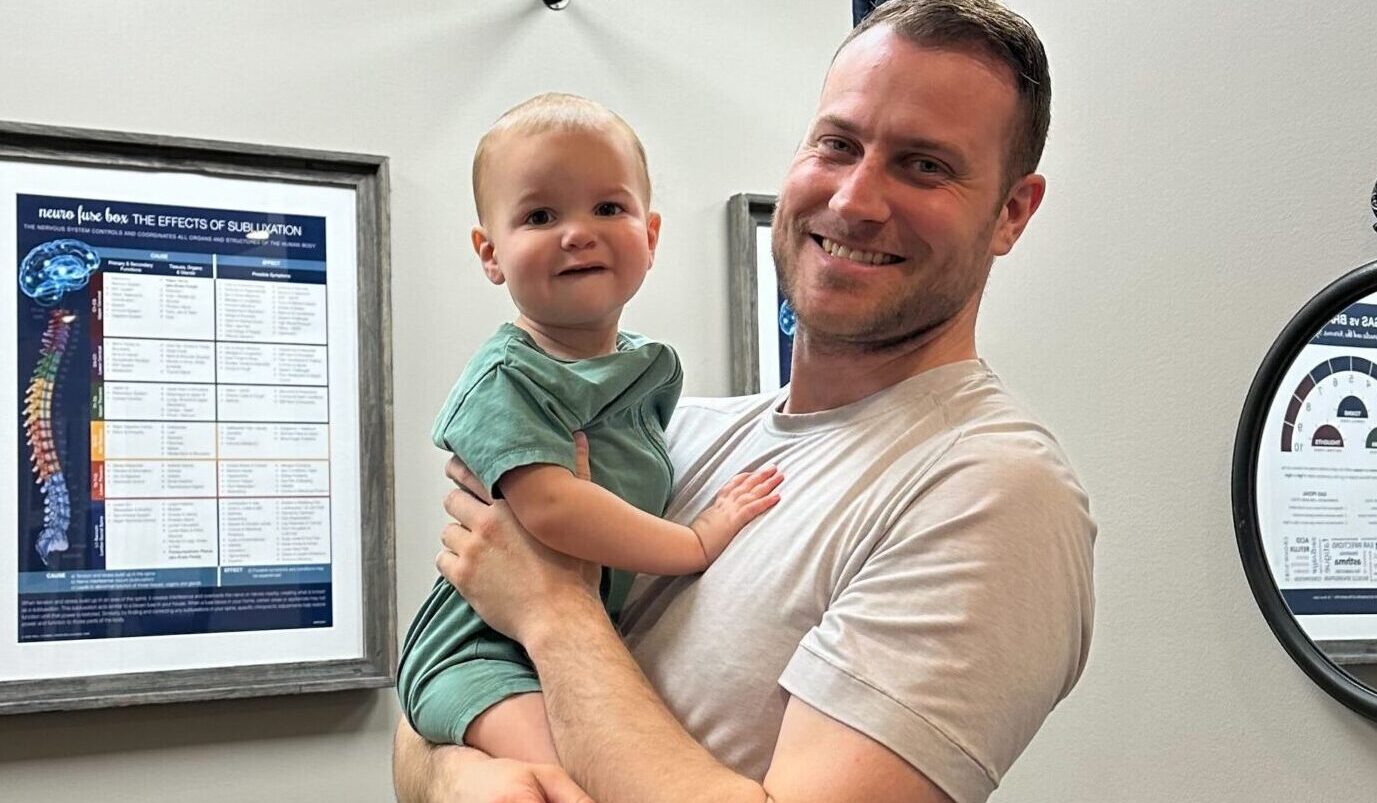

Dad burnout is the chronic physical, emotional, and mental exhaustion fathers experience when the demands of parenting, work, and daily life overwhelm the nervous system’s ability to recover. Unlike ordinary tiredness, which improves with rest, dad burnout involves a nervous system stuck in sympathetic “fight or flight” mode, leading to persistent fatigue, irritability, emotional detachment, and declining physical health. Neurologically-Focused Chiropractic Care offers a root-cause approach by identifying and addressing the nervous system dysfunction driving burnout, helping dads restore energy, regulate stress, and show up as the fathers and husbands they want to be.
Hey there, dads. Let’s be real—being a father is the greatest role you’ll ever have, but it also comes with hidden pressures that can leave you feeling stressed, worn out, and wondering how you’re supposed to keep up with it all. Between work deadlines, family responsibilities, and trying to maintain your own health, it’s no surprise that 48% of parents describe their stress as completely overwhelming, according to a 2024 U.S. Surgeon General advisory on parental mental health.
But here’s the thing—when you neglect your own well-being, you’re not just running yourself into the ground. You’re also limiting your ability to be the best possible dad and husband for your family. It’s time to break free from the hidden pressures of fatherhood and step into your full potential.
What Is Dad Burnout and Why Are So Many Fathers Struggling?
Dad burnout, sometimes called “depleted dad syndrome,” isn’t just being tired after a long day. It’s a state of chronic physical, emotional, and mental exhaustion that builds over weeks and months when you’re constantly running on empty without adequate recovery time.
According to the Pew Research Center, about 24% of fathers say parenting is stressful all or most of the time. And that number climbs significantly higher for dads with young children under 5. Today’s dads spend roughly seven times more on childcare than fathers did in the 1970s, a good thing, but without any reduction in work expectations. That combination creates a pressure cooker that eventually boils over.
Here’s what makes it even harder: most dads don’t talk about it. They internalize the stress, push through the exhaustion, and try to “tough it out.” They’ve been conditioned to believe that struggling means they’re weak, when in reality, their nervous system is simply overwhelmed and stuck in survival mode.
The signs of dad burnout often include persistent fatigue that doesn’t improve with sleep, emotional detachment from your kids or partner, increased irritability over small things, loss of interest in activities you used to enjoy, brain fog and difficulty concentrating, and physical complaints like headaches, muscle tension, and digestive issues.
If you’re reading that list and checking off more than a couple, you’re not failing. Your nervous system is telling you something.
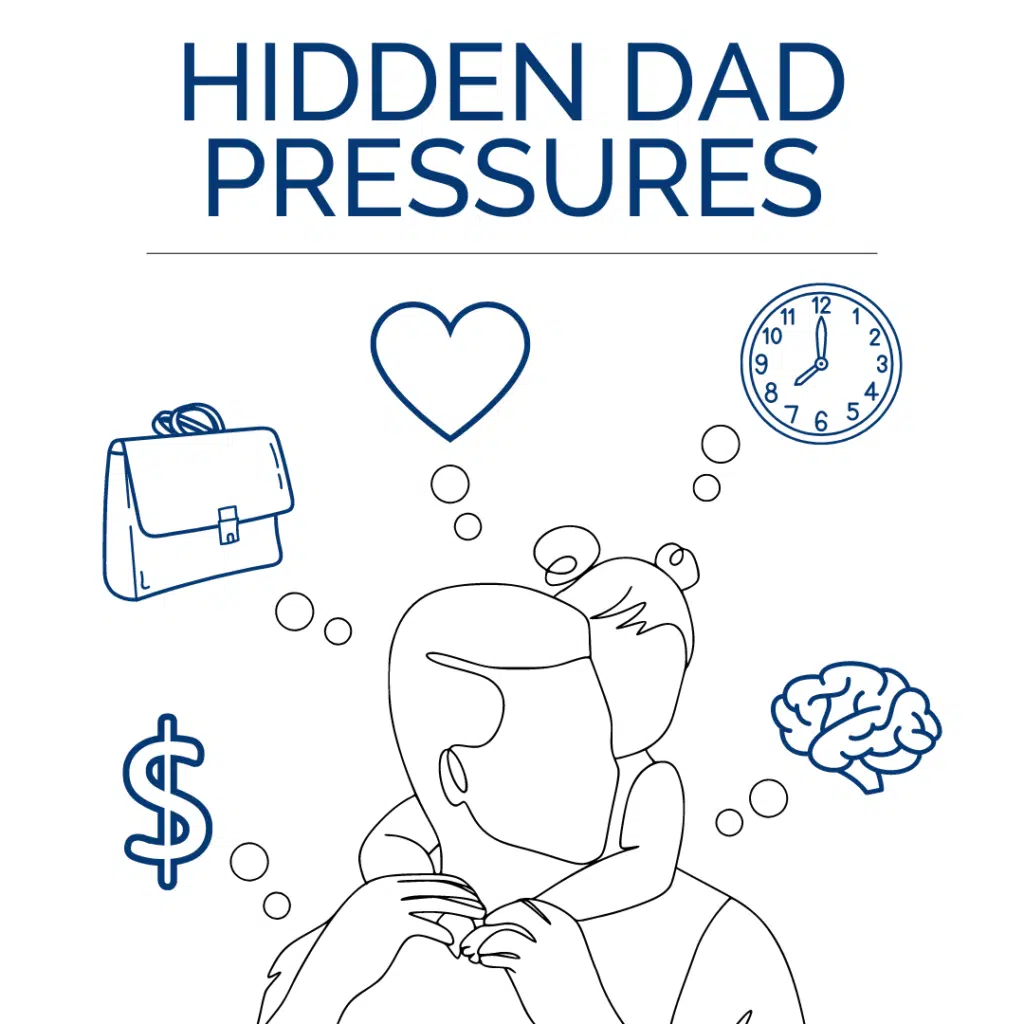
The Science Behind Dad Stress and Nervous System Dysfunction
When you’re constantly in “go mode”—work stress, financial pressure, family logistics, sleep deprivation—your nervous system gets stuck in what we call sympathetic dominance. Think of your Autonomic Nervous System like a car with two pedals. The Sympathetic Nervous System is your “gas pedal,” it revs you up for action, deadlines, and emergencies. The Parasympathetic Nervous System is your “brake pedal,” it’s what lets you rest, digest, recover, and actually be present with your family.
Here’s the problem: when stress becomes chronic, that gas pedal gets stuck to the floor. Your brake pedal, driven largely by the vagus nerve, can’t engage properly. This state of imbalance is what’s called dysautonomia, and it’s at the root of why you feel exhausted even after sleeping, why your patience is shot by 5 PM, and why your body is breaking down.
Chronic sympathetic dominance causes your body to pump out cortisol around the clock. Research has shown that prolonged stress suppresses the hypothalamic-pituitary-gonadal (HPG) axis, which directly inhibits testosterone production. That means the chronic stress isn’t just making you tired—it’s tanking your testosterone, ramping up inflammation, contributing to weight gain (the dreaded “dad bod”), disrupting your sleep quality, and making it nearly impossible to recover.
When your nervous system is stuck in this survival mode, being the dad you want to be becomes an uphill battle. You find yourself struggling to play with your kids after work, lacking the energy to exercise or eat well, and having a hard time being kind, empathetic, and fun to be around. Over time, this takes a real toll on your relationships and your own self-worth.
Why Don’t Most Dads Ask for Help?
This is one of the most important and most overlooked parts of the dad burnout conversation. Research consistently shows that men are far less likely than women to seek support for mental health challenges. Many fathers don’t even recognize what they’re experiencing as burnout because they’ve normalized it.
There’s a cultural script that says dads should be the steady ones. The providers. The ones who hold it all together. And when you can’t keep up with that impossible standard, the default response isn’t to get help—it’s to push harder. But pushing harder when your nervous system is already depleted is like flooring the gas pedal on an overheating engine. You’re not going to get further. You’re going to break down.
The truth is, asking for help isn’t a weakness. It’s the smartest thing you can do for your family. Because a depleted, dysregulated dad can’t show up the way he wants to, no matter how much willpower he throws at it.
How Stress Affects Your Ability to Be the Dad You Want to Be
Here’s what most dads don’t realize: when your nervous system is stuck in fight-or-flight, it doesn’t just affect your energy. It changes how you think, feel, and relate to the people you love most.
Sympathetic dominance impacts your sleep, keeping you wired at night and exhausted in the morning. It disrupts your digestion, contributing to gut issues, bloating, and poor nutrient absorption. It lowers your ability to regulate emotions, so you snap at your kids or withdraw from your partner over things that wouldn’t normally bother you. It reduces your cognitive function—that “brain fog” isn’t in your head, it’s a neurological response to chronic stress overload.
In other words, the frustration you feel isn’t a character flaw. It’s a neurological state. And neurological states can be changed.
5 Strategies to Help Dads De-Stress and Recharge
Ready to start clawing back your energy and your presence? Here are five evidence-backed changes every dad should start building into his life:
- Make movement non-negotiable. Even 20-30 minutes of walking, lifting, or playing with your kids gets your body out of that stuck sympathetic state. Movement tells your nervous system it’s safe to shift gears. Don’t overthink the “perfect workout,” just move daily.
- Practice intentional breathing. Deep, slow belly breathing is one of the fastest ways to activate your Parasympathetic Nervous System and stimulate the vagus nerve. Try 5 minutes of box breathing (inhale 4 seconds, hold 4, exhale 4, hold 4) before bed or during your commute. It sounds simple, but it’s neurologically powerful.
- Fuel your body like it matters. When you’re running on cortisol, your body craves sugar and processed food. Fight back by prioritizing protein, healthy fats, and hydration. Your nervous system and your hormones depend on real fuel, not convenience food.
- Ask for help—and mean it. Talk to your partner about how you’re feeling. Connect with other dads who get it. Consider working with a healthcare provider who actually looks at how your nervous system is functioning, not just your symptoms.
- Prioritize sleep like your life depends on it. Because it does. Establish a consistent bedtime, keep screens out of the bedroom, and create a wind-down routine. Your nervous system does its most important repair work while you sleep; if you’re shortchanging it, everything else suffers.
The Ultimate “Cheat Code” for Dads: Neurologically-Focused Chiropractic Care
For many dads, the idea of working out, eating clean, and meditating sounds great in theory—but when you’re already exhausted and running on fumes, where do you even start?
That’s where Neurologically-Focused Chiropractic Care comes in as the ultimate “cheat code” to kick-start your recovery.
Here’s the concept: if your nervous system is stuck in sympathetic overdrive, all the lifestyle changes in the world are going to feel like pushing a boulder uphill. But when you address the root neurological cause, the subluxation patterns that are keeping your nervous system locked in fight-or-flight, everything else starts to fall into place.
Subluxation is more than just a spinal misalignment. It’s a combination of misalignment, fixation, and neurological interference that disrupts how your brain communicates with the rest of your body. When subluxation is present in the upper cervical and spinal regions, it can directly interfere with vagus nerve function—your body’s primary “brake pedal” pathway.
Dads who get adjusted consistently report better sleep, more energy, improved mood, less pain and tension, clearer thinking, and a greater ability to be patient and present with their families. Don’t overthink this—if you’re anxious, exhausted, and out of gas right now, take the first month or two and just start getting adjusted. This one move will be the catalyst that sparks everything else into place when your energy returns and you finally take charge of your health again.
Throughout our PX Docs offices, we’ve seen dad after dad transform through Neurologically-Focused Chiropractic Care. By addressing the root cause of stress and dysfunction in their nervous systems, these dads were able to reclaim parts of themselves they thought were gone and show up as the husbands, fathers, and leaders they always wanted to be.
How Do INSiGHT Scans Help Identify Dad Burnout?
The first step is to get your nervous system properly assessed with INSiGHT Scans at your local PX Docs office. INSiGHT Scans are a set of three neurological assessment technologies used by Neurologically-Focused Chiropractors:
- NeuroThermal scans measure temperature differences along the spine that indicate areas of dysautonomia.
- NeuroSpinal EMG scans assess neuromuscular tension and asymmetry.
- Heart Rate Variability (HRV) testing evaluates the balance between your sympathetic and Parasympathetic Nervous Systems.
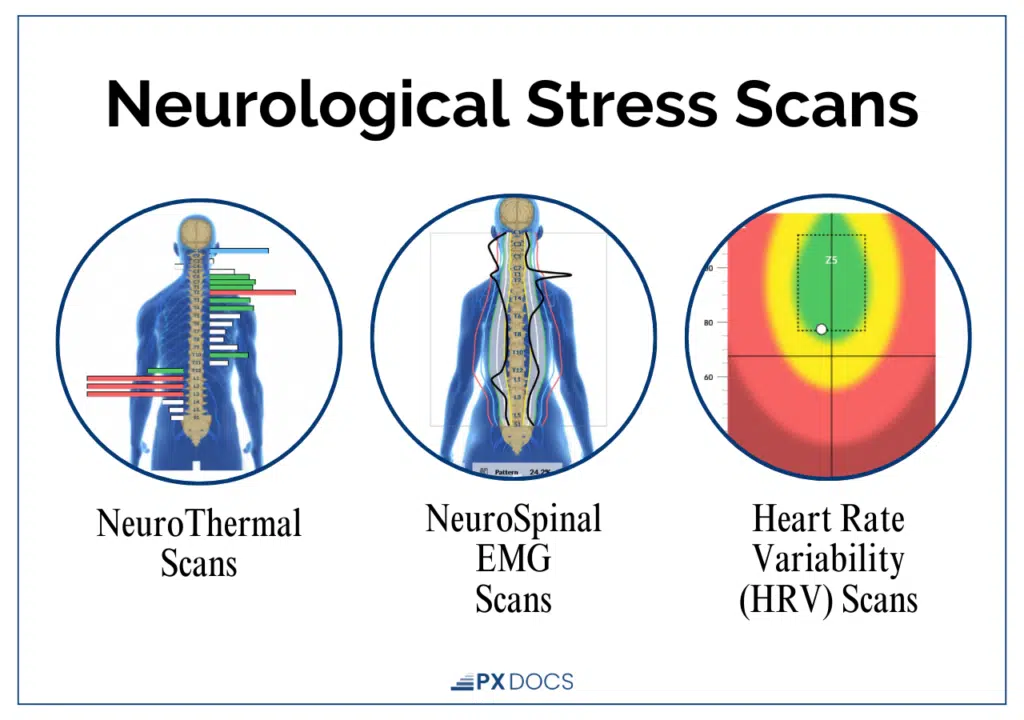
It’s important to understand that these scans don’t diagnose medical conditions, and Neurologically-Focused Chiropractic Care is not a treatment or cure for any condition—not even back pain. What these scans do is give you and your doctor an objective picture of how your nervous system is actually functioning, so care can be targeted at the specific patterns of dysfunction driving your symptoms.
For dads stuck in burnout, the HRV scan is especially revealing. It shows exactly how much (or how little) your parasympathetic brake pedal is engaging. When we see a nervous system locked in sympathetic dominance with depleted vagal tone, we know exactly where to focus care, and dads can see and track their own progress on follow-up scans.
Frequently Asked Questions
What is depleted dad syndrome?
Depleted dad syndrome describes the chronic physical, emotional, and mental exhaustion that fathers experience when the demands of parenting, work, and life consistently exceed their nervous system’s ability to recover. While it’s not a formal medical diagnosis, it parallels the concept of parental burnout and involves a nervous system stuck in sympathetic fight-or-flight mode.
Is dad burnout the same as depression?
Dad burnout and depression can share overlapping symptoms like fatigue, irritability, and emotional withdrawal, but they’re not the same thing. Burnout is primarily driven by chronic stress and nervous system dysregulation—it’s a state of depletion, not necessarily a clinical mood disorder. That said, prolonged burnout can develop into depression if left unaddressed, so it’s important to get the right support early.
Can chiropractic care really help with stress and burnout?
Neurologically-Focused Chiropractic Care specifically targets the nervous system dysfunction that keeps dads stuck in chronic fight-or-flight mode. By identifying and addressing subluxation—the combination of misalignment, fixation, and neurological interference in the spine—this care helps restore proper communication between the brain and body, allowing the parasympathetic “brake pedal” system to re-engage.
How long does it take to recover from dad burnout?
Recovery depends on how long the nervous system has been stuck in sympathetic dominance and how depleted the body’s reserves are. Most dads who begin consistent Neurologically-Focused Chiropractic Care report noticeable improvements in sleep, energy, and mood within the first 4-8 weeks. Full restoration of nervous system function typically takes longer and benefits from ongoing wellness care combined with the lifestyle strategies outlined above.
What’s the first step I should take if I think I’m burned out?
Start by getting your nervous system assessed. A Neurological INSiGHT Scan at your local PX Docs office gives you an objective baseline of how your nervous system is functioning. From there, your PX Doc can create a targeted care plan to help your body shift out of survival mode and into recovery. Check out the PX Docs directory to find a provider near you.